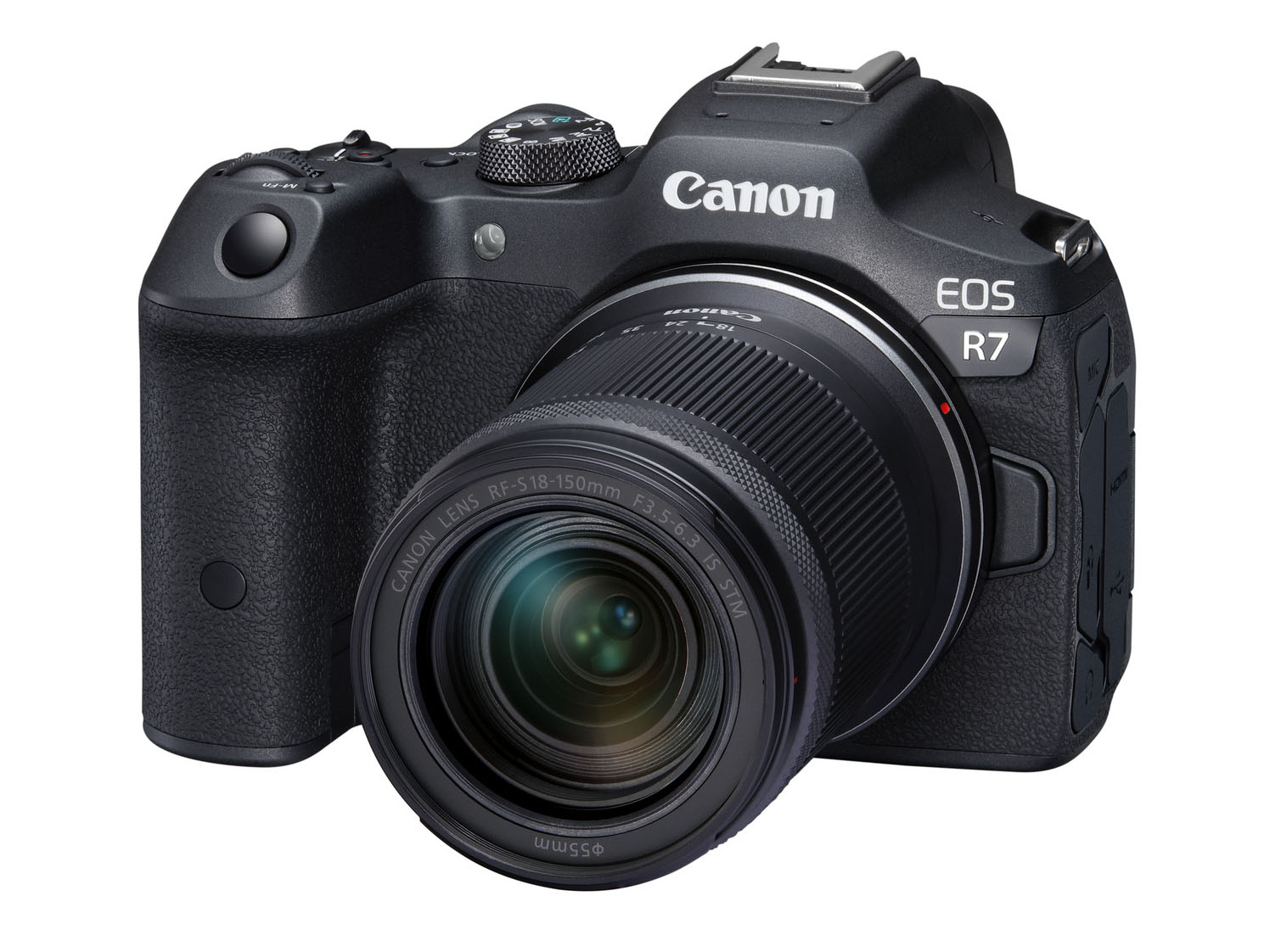
EOS-M is Dead. So where’s my RF Equivalents?

I know it is not related to the EOS-M system discussion, but an RF-S lens I wish more than anything else that Canon would make, is a modern mirrorless replacement of the "prosumer quality" RF-S 15-85mm. And yes, the 15mm is very important, but also give it some reach. If not 15-85mm then at least 15-70mm. I recently had an accident with my old 15-85mm and afterwards photos had an unsharp area in the right side of the lens. And while maybe not everyone would notice, it definitely annoyed me enough to stop using it. I tried using EF-S 17-55/2.8 and Sigma 17-40/1.8 instead, but while they definitely are good lenses for some purposes, they just wasn't anywhere near the 15-85mm as a general purpose zoom. So I found myself suddenly bringing my Powershot G5 X II on all my casual walks instead of my EOS R7. I have a lot of RF lenses, but my RF mount camera was suddenly very uninteresting without the 15-85mm as my bread and potatoes lens.

I was lucky, I recently found a new good used copy of the 15-85mm. The seller claims he only (bought and) used the lens on a 2-week vacation in 2011. And I have no reason not to believe him. But better still, would be an updated modern RF-mount version.
The Sigma RF-S 18-50mm f2.8 is pretty much a perfect travel, all around compact and sharp lens. It's my main lens for my aps-c setup. Not sure Canon even needs to make anything to match it unless they add IS.
Upvote 0

EOS-M is Dead. So where’s my RF Equivalents?

I have the M62 and I think it's a great camera. It's not perfect, nor are the lenses, but at least you have the option to change for a slight improvement. The way the LCD screen flips, the relatively small size and weight and many useful features make it a perfect all-round travel companion. The ultimate test for a new small camera with interchangeable lenses is my winter jacket pocket test - It has to fit! :-)
  • Like
Reactions: 1 user
Upvote 0

Sony Announces the Sony A7 V

  • Canon’s R5 launched at $3,900; the R5 Mark II launched at $4,300.
  • Sony’s ZV-E10 launched at $700; the ZV-E10 II launched at $1,000, and tariffs later pushed it to $1,200.

Economic conditions have been soft, and at the same time manufacturers have raised prices across most individual models. That combination means consumers gravitate toward more affordable bodies—where the year-to-year price increases are smaller—causing the average sale price to remain flat or fall even though the actual prices of individual cameras are going up.
Have you ever heard of inflation?

The R5 was launched in August 2020 for 3900$. The R5 Mk II was launched in August 2024 for 4300$. When you adjust 3900$ for US inflation from 2020 to 2024, that 3900$ price would be 4740$, i.e. 21% price increase.

You can check the numbers for yourself:
  • Like
Reactions: 1 users
Upvote 0

EOS-M is Dead. So where’s my RF Equivalents?

Great article.

The lens I miss most on RF is the EF-M 22mm f/2.0.
This was such a great street photography lens. It's equivalent of almost exactly 35mm is considered the perfect focal length by many street photographers, and also by Fujifilm (the X100 series also has that equivalent focal length). It's also super light and unobtrusive, totally incomparable to the RF 24mm. But yes, mysteriously, that lens did not get ported to RF. I wonder why. Was it too good for what it cost?
Instead, we got the RF 28mm f/2.8, which is a whole other focal range on APS-C and feels more like a 50mm.
To me, it almost seems like Canon is getting ready to ditch their APS-C lineup, which so far has been treated like a stepchild.
Upvote 0

EOS-M is Dead. So where’s my RF Equivalents?

Nice article!

I also miss the cameras, or better the philosophy of high-end and comact of the EOS-M system.

I really liked the compact nature of the EOS-M system. I bought the M50 II (two actually) after I transitioned from the 5D III to the R5 and bought a R as a second camera. The M50 II had clean HDMI output so, like @mb66energy I could use it in multi-camera ISO recordings during COVID times. However, the compact nature of the camera was the main value to me. I got it with the 15-45mm which was great, but the EF-M 22mm F2 was by far the most used lens for me. I really loved that lens! I considered an M6 II, but the lack of EVF just was a deal breaker for me. The add-on EVF just looked wrong and I never tried it. I've since sold all my EF-M lenses/bodies.

I use the R50 in the same manner as I used the M50 II. I actually have two R50's. The R50 has significant advantages over the M50 II, the Digic X and advanced AF is great, but also it supports the UVC/UAC standards, so can be used as a webcam with no HDMI capture card/cables and no special Canon software. I used the RF-S 18-150 with the R50 quite a bit, until the Sigma RF-S lenses came out.

I now use the Sigma 18-50mm f/2.8 most of the time with the R50. It is an excelent combo! I also have the 10-18mm f/2.8 and the 16mm f/1.4, 23mm f/1.4, 30mm f/1.4 and 56mm f/1.4 . I use these as a compact kit for many situations. I really like the 18-50 and 10-18 zooms because they are compact and f/2.8. The 56mm f/1.4 prime is nice because it is compact and has the two stops advantage over the 18-50 for portraits. The 30 and 23 are larger. The 23 is large enough, larger than both zooms, that I don't really like bringing it with me. The 16mm f/1.4 is huge in comparison and mostly a webcam/video use lens for me. I'm not really into video, this is just talking heads type use.

What I really, really, really want is an RF-S 22mm F2. [Canon, please, please, please]. R50 + RF-S 22mm F2 = :) .

Perhaps even more than an RF-S 22mm F2 lens, I'd like to see an R50L. Not an R50 II, second version of an entry level camera, but a "Luxury" camera in the R50 form-factor. It would probably mean Canon needs a revamped lens line-up to go with it, if the strategy is to sell lenses.

My personal wish list:

- Improved sensor, improved low-light performance, fast enough readout to avoid the need for mechanical shutter of any kind.
- 24MP, or even 20MP if it makes a high IQ sensor more feasible.
- Burst rate can be kept at the current 15fps. But I want a bigger buffer.
- Pre-capture.
- ES shutter only
- IBIS
- Another exposure wheel (preferably two, though this would require some creativity...)
- A bit better EVF, though without adding bulk.
- Video features can remain the same as the current R50 or improved in some way.
- Customization ability more on par with higher end models

It could cost the same as an R7 and that would be fine. I'm sure I'm missing other features I'd like, but you get the idea.
Upvote 0

Sony Announces the Sony A7 V

Anecdotal evidence along with looking at their financials. Canon sells a lot more cameras than Sony however Sony brings in more revenue than Canon.

Canon sells a lot of entry level cameras and Sony doesn't try to compete with that market. The cheapest current gen Sony apsc camera is the ZV-10 II which came out in 2024 is $1300. Meanwhile Canon released their answer in the R50V in 2025 and it's almost $600 cheaper.

Go into any Best Buy and there are an assortment of Canon cameras that you can buy for around $500 or less and/or an assortment of kit lenses. This is the entry level space for a hobbyist. Again Sony doesn't even try to compete in this space. Their entry level ZV-E10 II at $1300 is clearly marketed to content creators and has "Content Creator" in the description of the camera on their webstie.

On the photography side if you want a Sony entry level camera you'd be looking at the A6400 which still has an MSRP of $1,100 and came out in early 2019. The current generation of that camera is the A6700 (A6500 and A6600 are discontiued) and that camera is a $1600. The A6700 and ZV-E10 II are also essentially the same camera with the same sensor. The ZV-E10 II is just stripped down (No EVF for example) to catch the "creator" crowd.

Heck Canon's NEW Powershot released this year has a 1.4" sensor and retail for $1000. Meanwhile the RX100 VII which came out 6 YEARS ago has a smaller 1" sensor and is $1700!

I'm sure both companies have a fair amount of hobbyist among their custormer base but Sony does not seem to be targeting this crowd and as I mention their strategy seems to be to push pricing up as fast as possible and position themselves in the premium category and avoid direct competition with the Chinese.

Sony built their mirrorless brand off of marketing on Youtube with influencers. Their content is aimed at selling the cameras to other people who need those cameras to make more content. Whereas the Canon people (Jared Polin, Peter McKinnon, etc.) aren't really selling the cameras as much as making money showcasing what they do.

All the people I know who shoot Sony cycle through multiple cameras with 2 - 3 years. It's why the release very similar cameras with slight differences. The A7IV for example get complained about here because its too small. But in the Sony world you buy the A7IV and then they release the A7CII which is the exact same camera but in an even smaller body and no EVF. So they buy that camera as a B cam and then use it for travel. But both those cameras can't do 4k60 without a crop. So now that they released the A75, a lot of thost people will sell their A7IV and upgrade. Then in a year or so they will release the A7CIII which will be the same as the A7V but again smaller. And the cycle repeats itself.
I‘ll summarize your “answer” for you: You have no data to backup your claims.
  • Like
Reactions: 1 user
Upvote 0

Show your Bird Portraits

While @foda and @ISv are getting their spectacular close-ups of rare colourful birds, what do I get. Well, a rare scarce winter visitor Red-necked Grebe in non-breeding plumage was reported a short drive away. At 80-100m from the shore, it needed to be pointed out to me and I got one shot in focus of the dull bird in grey light of less than 400 px width at 800mm with the R5ii. Oh well, some shots are just for the record and for the twitchers they just need only to give it a tick.

View attachment 227069
That's plenty good enough for an ID shot. On many of my trips some listers have to settle for a "heard" in order to tick a species.
  • Like
Reactions: 2 users
Upvote 0

Sony Announces the Sony A7 V

A large part of the Sony customer base isn't hobbyist like what you see here. Their base is comprized of content creators and Youtuber's using their cameras to try and make a living.
Do you have any data to back up that statement? Sony had a 28.5% market share of camera’s sold in 2024. That is about 2.33 million camera’s……
Anecdotal evidence along with looking at their financials. Canon sells a lot more cameras than Sony however Sony brings in more revenue than Canon.
All the people I know who shoot Sony...
2.3 million cameras sold vs. all the people you know. Lol. The financial data speak to what was spent, your unsupported claim was about who was doing the spending.

So, no data to back up your statement. I'm not sure you even understand what data are or how to determine if they are relevant to an issue. At least you know how to ignore data that refute your claims, so...good job? :rolleyes:
Upvote 0

Sony Announces the Sony A7 V

Do you have any data to back up that statement? Sony had a 28.5% market share of camera’s sold in 2024. That is about 2.33 million camera’s……

Source: The Nikkei Industry Map 2026 via Sony Alpha Rumors.
I think this is very far from reality :)


Many of those are 5-to-9 joes like me and some random people with moderate to high interest in photography.

Anecdotal evidence along with looking at their financials. Canon sells a lot more cameras than Sony however Sony brings in more revenue than Canon.

Canon sells a lot of entry level cameras and Sony doesn't try to compete with that market. The cheapest current gen Sony apsc camera is the ZV-10 II which came out in 2024 is $1300. Meanwhile Canon released their answer in the R50V in 2025 and it's almost $600 cheaper.

Go into any Best Buy and there are an assortment of Canon cameras that you can buy for around $500 or less and/or an assortment of kit lenses. This is the entry level space for a hobbyist. Again Sony doesn't even try to compete in this space. Their entry level ZV-E10 II at $1300 is clearly marketed to content creators and has "Content Creator" in the description of the camera on their webstie.

On the photography side if you want a Sony entry level camera you'd be looking at the A6400 which still has an MSRP of $1,100 and came out in early 2019. The current generation of that camera is the A6700 (A6500 and A6600 are discontiued) and that camera is a $1600. The A6700 and ZV-E10 II are also essentially the same camera with the same sensor. The ZV-E10 II is just stripped down (No EVF for example) to catch the "creator" crowd.

Heck Canon's NEW Powershot released this year has a 1.4" sensor and retail for $1000. Meanwhile the RX100 VII which came out 6 YEARS ago has a smaller 1" sensor and is $1700!

I'm sure both companies have a fair amount of hobbyist among their custormer base but Sony does not seem to be targeting this crowd and as I mention their strategy seems to be to push pricing up as fast as possible and position themselves in the premium category and avoid direct competition with the Chinese.

Sony built their mirrorless brand off of marketing on Youtube with influencers. Their content is aimed at selling the cameras to other people who need those cameras to make more content. Whereas the Canon people (Jared Polin, Peter McKinnon, etc.) aren't really selling the cameras as much as making money showcasing what they do.

All the people I know who shoot Sony cycle through multiple cameras with 2 - 3 years. It's why the release very similar cameras with slight differences. The A7IV for example get complained about here because its too small. But in the Sony world you buy the A7IV and then they release the A7CII which is the exact same camera but in an even smaller body and no EVF. So they buy that camera as a B cam and then use it for travel. But both those cameras can't do 4k60 without a crop. So now that they released the A75, a lot of thost people will sell their A7IV and upgrade. Then in a year or so they will release the A7CIII which will be the same as the A7V but again smaller. And the cycle repeats itself.
Upvote 0

Japan BCN Sales for January 2025

I don't.
Reading their financial statements, Canon is obsessed with a market share goal of around 50% for some reason.
They price their cameras to meet that goal.

I agree. Canon's image relies on being the standard. Canon is not a brand that most people are going to be familiar with outside of cameras. So if you are new to cameras you're going to easily see that Canon sells the most so they're a likely statring point. Sony already has brand recognition with plenty of other electronics and Fuji appeals based of the retro look of their cameras. Nikon seems to tbe the odd man out.
Nikon seems to put profit first.
This seems to be changing. Nikon priced thei ZR very aggresively as well as discounted the Z6III as well. It looks like they are now trying to cut prices in an attempt to claw back market share.

Looking at the actual lineup makes it look less straightforward.
The R1 is more expensive than anything Nikon makes, the R5 II is priced between the Z8 and Z9, and the Z30 is pretty cheap.

The line comparison to me looks like

Z5II - R8 (Entry level)
Z6III - R6miii (Midrange)
Z8/Z9 - R5mii (Premium)
Nothing - R1(Flagship - Sports)

Nikon currently doesn't have a true flaghip as the Z9 is essentially a Z8 in a larger body. With that being said I think there is an arugment that the R5mii is Canon's top camera and the R1 is more of a sports camera. The R5mii is more versatile and the R1 is basically for someone who prioritises speed at all cost. Similar to the A1 and the A9 for Sony.
  • Like
Reactions: 1 user
Upvote 0

EOS-M is Dead. So where’s my RF Equivalents?

I was so satisfied with my M50 in 2018 that I later bought two M50 ii bodies to have a light capable tool for photo and good 1080p video. R50 V is a great camera but loosing the EVF is big deal for me after using that camera since it came out. Just a VGA-res viewfinder (640x480) would help in a strong way for (1) shooting in bright light and (2) as third point with body contact to avoid shaking.
EDIT:
EF-M 32 is a really great lens with stellar IQ over the whole aperture and focus range. Small, light ... just a tool without real flaws. I liked it for photo and it's now resting in my "video studio" on an M50 ii for youtube stuff where the clean HDMI is fed into an ISO recording device, sometimes with a 2nd camera and the computer screen cast.
Upvote 0

Canon’s disdain for APS-C users.

I love my Fuji X stuff (OG user here, no Tiktok bandwagoner), but Canons have a certain no-fuss way about them that i wish they made an equivalent APS-C system. i'd dump my X gear in a heartbeat. Give me something tiny, something metallic. something with steel dials and buttons. give me steel lenses. give me something highly compact and highly premium.
Upvote 0

EOS-M is Dead. So where’s my RF Equivalents?

I'm an original M pre-orderer day 1 LAUNCH of the M series and all the Ms after it. My 22-2 had been all around the world. If Canon made an M-equivalent RF camera--that is TINY--M6 era/style or even M50, as SMALL as those and with specialized lenses for it (primes) i'd be all over it. The "tiny" RF-S cameras thus far have junky looking and cheap looking dials and buttons, and do not have the metallic premium feel the M6 had. The M6 was the last great camera that kept things small and nice. I sold my M6 a little while ago but I do miss it.
Upvote 0

Sony Announces the Sony A7 V

I forget where I heard it, but someone said that for Sony to do 7K / Open Gate would require codec modifications and that was a possible reason why Sony didn't want to do it.

Don't take that as gospel though, seems odd that Sony would have such a brittle codec.

I heard the same. My understanding is that its a software issue and instead of addressing it now on a lower tier camera they would push it off and tackle the change for a higher end model and then let that trickle down.. Their is a Sony Rep on record saying they don't think open gate is a feature their customers will actually use enough for them to address it now. While I disagree I see the corparate greed side of them knowing no one in the E mount ecosystem is going to leave over that one feature.
Upvote 0

Sony Announces the Sony A7 V

Your overall argument that the bottom of the market is eroding and cameras are moving upmarket is based on your assertion that MILC prices are 'exploding'. That data show that assertion to be false. It was true through 2022, but in 2023 the MILC average unit price fell from its 2022 peak down to ~$800, and it remained flat for 2024. For the first 10 months of 2025, it was ~$750 but factoring in the difference in relative currency adjusts that to...wait for it...$800.
The average sale price in a given year mainly reflects the mix of cameras sold, not the pricing trend of individual models. If a company sells a higher proportion of entry-level bodies one year and more premium bodies the next, the average price will naturally shift—even if individual model prices are rising.

Nikon’s own financial statements make this point clear:

"Despite projections of mid-to-long-term strength in the DCIL market, a downward shift in product mix, effects from priceincreases due to tariffs, and signs of slowing growth in certainemerging markets are currently observed."

In other words, Nikon is selling more lower-end models in high volume—specifically the Z5 II, which sells for $1,850, compared to the original Z5’s $1,400 launch price. The individual model price increased by $450, but because Nikon isn’t currently moving high volumes of Z8s or Z9s, the average price per unit still drops.

You see the same trend with Sony and Canon:

  • Sony’s A7 III launched in 2018 at $2,000.
  • Canon’s R6 launched in 2020 at $2,500, and Sony followed with the A7 IV in 2021 at $2,500.
  • Today, the R6 Mark III is $2,800 and the A7 V is $2,900.
Other bodies show the same pattern:

  • Canon’s R5 launched at $3,900; the R5 Mark II launched at $4,300.
  • Sony’s ZV-E10 launched at $700; the ZV-E10 II launched at $1,000, and tariffs later pushed it to $1,200.

Economic conditions have been soft, and at the same time manufacturers have raised prices across most individual models. That combination means consumers gravitate toward more affordable bodies—where the year-to-year price increases are smaller—causing the average sale price to remain flat or fall even though the actual prices of individual cameras are going up.

"The next couple months will be telling." LOL, so now you're asserting that even though the average unit price has been flat for the past 34 months, the next two months will prove you right. Really?

If you look at the CIPA numbers the average value of units shipped varys considerably from month to month. WIth Both Canon and Sony releasing their very popular middle of the road camera it will be interesting to see what happens in the upcoming months.
Upvote 0

Japan BCN Sales for January 2025

Canon's new cameras were $4000+, Nikon's were what? $700+?

I think Canon would take that trade of a decrease of basically rounding error on overall sales, for selling units that are around 3 to 4x as expensive as the aforementioned nikon releases. (and so would Canon's retailers) happily.
I don't.
Reading their financial statements, Canon is obsessed with a market share goal of around 50% for some reason.
They price their cameras to meet that goal.
Nikon seems to put profit first.
Looking at the actual lineup makes it look less straightforward.
The R1 is more expensive than anything Nikon makes, the R5 II is priced between the Z8 and Z9, and the Z30 is pretty cheap.
Upvote 0

Filter

Forum statistics

Threads
37,274
Messages
967,084
Members
24,634
Latest member
Mcsnows

Gallery statistics

Categories
1
Albums
29
Uploaded media
353
Embedded media
1
Comments
25
Disk usage
982.4 MB