What We Want to See in the Retro Canon EOS R8 Mark II

When I travel with the R8, I take the 270EX II ‘just in case’.
Yes that' what I sometimes do, that way you have proper fill flash for hss with wide apertures. Unfortunately though, its just one more thing to remember to bring and its still bulky/not twistable when not needed or for in-home use, so I don't leave it on the camera.

I own lots of flashes, but my favourite flash is the built-in flash because I dont have to worry about charging it or putting it on if I need it for snapshots. I can just pop it up, and it doesn't get knocked when not in use, or add hardly any weight. With modern iso, they dont need to be powerful to make a big difference.

I own lots of big flashes, but I've never found a small flash that I love more than a built in flash. My favourite is the one on my little M6 cos' it bounces, but bounce is not necessary. I do still love the direct flash look with -1 exp comp or -1 fec. I dont like dingy/shady shots of faces, flash means I'm in control of the light and have options.

Edit: actually thinking about it, my favourite built in flash is the one on the Ricoh GRII. HSS and perfectly configurable controls. You can switch from ttl with super fast fec, to manual output (i e. For zero delay/ subject blink) really quickly.

With the 28mm, an r8ii would be brilliant to sling round the shoulder for casual outings, but unless it has a flash, I'd honestly prefer an r10 with ef-s 24mm.
  • Like
Reactions: 1 user
Upvote 0

EOS R1, EOS R5 Mark II, EOS R6 Mark III Firmware Coming in May?

How do you handle lens that don't have a lens control ring to assign ISO to, or the lens control ring is switched between focus and control ring?
Not an issue, for me.

First off, I don’t have many of either. Lenses without a control ring, I only have three EF-mount lenses – the 600/4 II that I only use in Fv, and the TS-E 17/24 where I’m composing on the rear LCD anyway, so I use that to set ISO.

I have only two RF lenses that lack a dedicated control ring, the 24-240 and the 28/2.8. I use those lenses only when traveling, and therefore on my R8 exclusively. They are only used handheld on the go, so autofocus and auto ISO only.

If you haven’t used Fv mode, I suggest you give it a try. I put off doing so for a long time, but after trying it I disabled Av and Tv modes on my R3 then my R1, and the only modes I use are M and Fv (more accurately, I use just three C# modes based on Fv, and have also disabled Fv, such that with mode changing assigned to the M.Fn button I can rapidly cycle through just the three C# modes and M).

Fv came with the EOS R, and is designed to enable easy manual control of the three sides of the exposure triangle with just two dials.
  • Like
Reactions: 1 users
Upvote 0

RF (not RF- S) Auto Focus lenses from 3 3rd party manufacturers

I learned from this side that Canon Says it’s up to Sigma to Make Full-Frame RF Lenses

However others seem to have more information:

Plenty of RF lenses coming

I see Short Vids on Youtube claiming that Sigma, Tamron and Viltrox got several full frame lenses green lighted from Canon.
Several from Sigma , among others the 35-100 2,8 from Tamron and a single lens from Viltrox

All is quiet here on the forum.

Do I hunt for a late Aprils Fool Joke or is there some big news coming?

Viltrox to make RF-S Mount lenses soon?

So no rfs lenses in the pipeline?
Viltrox once released some lenses for RF. Canon made a bunch of legal threats and Viltrox pulled those lenses and removed all mention of them from their website. It's as though the lenses never existed, but they did. Same thing happened with Samyang with the same result.

Canon has always been the most aggressively anti-third-party glass, and now they have patents on the mount & protocols to effectively block RF users from having choice.

If choice is important to you, RF is the wrong mount to own.
Upvote 0

What We Want to See in the Retro Canon EOS R8 Mark II

More than a little bit bigger, which for some would be a significant negative and not at all an improvement.

Personally, I like that the R8 uses the LP-E17, because it shares that battery with other cameras that I have and often travel with – the PowerShot V1, M6II and my full spectrum M6. Three of those bodies can charge the battery in-camera, meaning I don't even need to bring the wall-wart charger.
Yes the size of the R8 is a massive advantage. Thats also ironically why Id love to see a built in flash.

Paired with the 28mm and a 50mm, there would be no lens shadow, and you don't need to bring a flash when travelling light. Its a real shame that you can buy the best full frame cameras but if you want a built in flash, you always need the aps-c. It makes little sense to me. If Im using a big lens, I will pack a big flash.
  • Like
Reactions: 1 user
Upvote 0

What We Want to See in the Retro Canon EOS R8 Mark II

Crop the 28mm by 1.25 and you have a 35mm. On a 32MP sensor, you'll have 20.5MP left.
Yes that's why it would be great to see Canon bring back the 1.3 crop mode from the 5DS (i.e. like aps-h) where you can compose in the focal length you plan to keep, and still have the raw file.

Digital cropping is amazing with the lens quality and resolution these days. Thats why popular compact cameras like the leica q3 and fuji x100 employ it. I'd often rather crop a f1.4 prime by 1.3x or 1.6x than use an f4 zoom of the same size. Even cropped, the f1.4 output will have potential for shallower depth of field. The 1.3x raw crop would be amazing for the 28mm pancake.

As photographers we typically want to compose and think in the focal length of the output. So technically while the image quality would be much more than adequate, the actual photographs would still have been composed at 28mm unless I use a 35mm ovf (something I love to do on flat top cameras but which looks silly and gives up a lot with an r5 or r8 etc...) not to mention cropping every file in post is time consuming. The Leica q3 files keep the full raw but apply the crop automatically in the file so you don't have to adjust unless you need to...
Upvote 0

EOS R1, EOS R5 Mark II, EOS R6 Mark III Firmware Coming in May?

I suppose those are possible, but I don’t think they’re at all likely. Call Canon directly.

How often do you manually adjust ISO in a hurry? Personally, I almost never do so outside of situations where I have ample time, Auto ISO is my usual setting in both Fv and M (those are the only modes I use). On my R1, I have ISO assigned to the lens control ring and EC assigned to the Quick Control Dial (on the back around the Set button), so when I need EC it’s easy to dial in with my thumb, without taking my eye from the viewfinder.

If I need to set ISO manually, which I do when setting up flash shooting, or on a tripod, I have time to adjust it using the lens control ring or the rear LCD.
Thank! Good idea. I like your assigning of exposure compensation to the back wheel in manual mode with auto ISO so it similar to where it is assigned in Av and Tv. How do you handle lens that don't have a lens control ring to assign ISO to, or the lens control ring is switched between focus and control ring?
Upvote 0

EOS R1, EOS R5 Mark II, EOS R6 Mark III Firmware Coming in May?

Awesome — thanks for the detailed reply! That all makes sense to me. I'll have to give it a go myself when I land and have a minute. Usually if I'm in M I'm running strobes and even with ambient mixes I like to lock it all down. Always fun to try new approaches, though.
This is interesting. I agree that I find M just fine, but I tend to not use it in auto ISO mode. For that I have Fv.

What I would expect (my camera is packed for a trip or I'd test) is that in auto ISO mode M would target a balanced image -- i.e., an exposure of +/- 0, to put it in a crude way. Which is probably why Canon doesn't bother in M mode — either the image is balanced, or you're being "creative."

Let's assume that's how it works for a second — the balanced image of 0 is the target. If I had auto ISO on but the shutter and aperture were set in such a way that auto ISO cannot achieve a balanced image (e.g., my lens cap is on because it's a really slow coffee morning) would the idea be that an EC metric showed that 0 could not be achieved? i.e., -3 or worse.

But even if, wouldn't a histogram achieve such? To such a degree of the JPEG conversion, at any rate.

@Noise — what is the effect and use that you're trying to achieve?
Would like the +/- exposure compensation button on top of R1 to enable the front dial to offset the exposure ( ISO selected by camera) when in manual mode with auto ISO. Currently it changes f-stop. I dislike currently having to take my eye away from viewfinder to touch the exposure compensation scale at the bottom of the screen to adjust exposure compensation.
  • Like
Reactions: 1 user
Upvote 0

EF 24-105 and EF 70-200 II dropped support

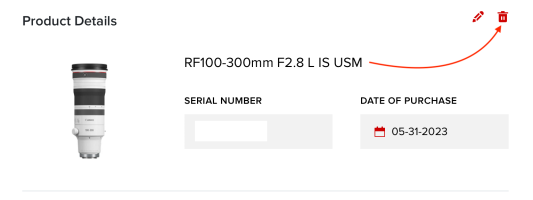
gang, I got notice today that My EF 24-105 F4 and EF 870-200 II are being unsupported at the end of the month. (May/June) Anyone else get notice? Also, I no Longer have these lens and can someone point me on How to drop them from my Canon hardware list? I know it may affect my CPS classification.
got reply but several Camera and Lens does not give me option to delete. 70-200 and the two 7D Mark II
Upvote 0

Way Too Soon: A Canon EOS R5 Mark III Wishlist

It’s always a bit surprising to me how much criticism the Canon EOS R5 Mark II receives. These cameras are remarkable feats of engineering, and every design is a compromise. There’s only so much capability you can fit into an R5-sized body before something has to give. As a general-purpose, “one camera does everything well” tool, the R5 II is outstanding. Having recently upgraded from the Canon EOS 5D (purchased when it first came out), I’ve been very pleased with mine.

That said, I’m not the target customer for an R5 III.

If Canon follows the same path as before, the R5 III will likely be a Pareto refinement, slightly better in every spec, but fundamentally the same kind of camera. And for many users, that’s exactly right. But for some of us, the R5 II is already overbuilt in areas we don’t need (30 fps, advanced video), while still not fully optimized for what we care about most.

Personally, I’d trade some of that versatility for a more specialized tool.

The camera I would buy tomorrow (and which Canon might be able to introduce soon) would look similar to the R5, but with a different set of priorities. In particular:
  • a meaningful jump in resolution (80+ MP)
  • a higher-end EVF closer to the Canon EOS R1
To make that work within a similar form factor, I would happily trade:
  • reduced burst rate (10–12 fps is more than enough)
  • most or all video features
In other words, a stills-first camera designed for maximum detail, tonality, and rendering. Something aimed at landscape, fine art, studio, real estate, and large-format print work. Photography where ultimate image quality matters more than speed or hybrid capability.

Canon currently has speed-first bodies (R1/R3) and highly capable generalists (R5 II), but no dedicated image-quality-first camera. This would fill that gap.

Call it an R5S, an R4, or something else entirely. I suspect there’s a meaningful audience for a body that prioritizes image quality over versatility.

The R5 II is an outstanding generalist, and I’m sure the R5 III will be even better. I just think there’s room alongside it for a true image quality specialist.
  • Like
Reactions: 1 user
Upvote 0

EF 24-105 and EF 70-200 II dropped support

Canon Japan has a list of lenses for which service has ended:

...and a list of lenses for which service has not yet ended but will at some specified or TBD date:

To delete a product you no longer have, log into your MyCanon account, the landing page should show a few products with a View All link at the top right, click that, then click on a product, then click the delete button (trash can icon) at the upper right corner.

Screenshot 2026-05-04 at 10.55.57 PM.png
Upvote 0

Canon EOS R6 V Specs: Active Cooling and more…

I have been begging and crying for a compact ff for years. Now it's here and I can't decide to be happy or sad.
It's the usual - it's too big, too heavy, too expensive.

- 5X(!) the _current_ price of the R50V, it's basically the price of the R6m3
- only 20% smaller than the R6m3 while the R50V is more than 40%(!) smaller than the R50 despite the R50 already being small
- only 100g lighter than the R6m3
- SONY's 33MP and 60MP ff compact is 40% smaller than the R6V!!!!! What is happening here?!?!

OK, maybe I'm looking at it wrong and this is absolutely a cinema camera since it's doing 7K raw and should be compared to C series only and by no means is this a ff compact for photography, any such capability is just a sideeffect...as in C series.
In that case, I need to wait for R8V maybe?


S9 showed me the promise of small ff than's not a leica or so (also the sigma bf). It's WONDERFUL. I'm not sure why the r8 design is so uninspired/goofy considering how sexy the m62 was, and it has no ibis either.
  • Like
Reactions: 1 users
Upvote 0

Head Turning Canon Tilt-Shift Optical Designs

I'm thinking the 24mm TS-R may not be out until 2027. I don't expect a 180mm-ish macro until late 2026 at the earliest. Canon's strategy seems to have shifted slightly. The smaller photography market has made them more respectful of retailers' lens stocks. The automated manufacturing ramp-up seems to take longer too, as they aren't just designing the lens but also the machine to select matched lens components and build that lens. So even though the 180 macro lens is long gone, we still haven't seen a new R-series lens to replace it. The stock of 50mm and 90mm TS-E lenses is not low enough imho to permit release of their replacements yet; maybe late 2028 or into 2029?

With all the bulk in the schematics, perhaps they'll *finally* build TS-R lenses with a collar so they can be used the way that gawd/Scheimpflug/Carpentier intended? Perhaps they'll take drop-in filters? And record the tilt and shift settings in EXIF data? There may be another year or two of revisions on some before all the final designs are done. I'm guessing the 24mm will show up first because the stock is quite low and it's the most popular focal length TS-E.
Upvote 0

Show your Bird Portraits

Do you think we should complain to Canon that our well-used 200-800s haven't broken in two?
Even though the RF 200-800mm is not an L lens, it is well built and mine has survived a lot of rough handling and inclement weather in the years that I have had it. However, I always retract the lens and tighten the zoom ring when I am not actively photographing.
Upvote 0

Lens Design?

I suspect that many of the posts have not been made with full understanding of my preference for
HandHeld.
Not sure why you would think so, but I really doubt that’s the case. The concepts of signal to noise and lens design don’t depend on whether you are handholding or using a tripod. One of the points about shooting with a long lens in “low light“ is that often happens at light levels that would not normally be considered limiting, but when one needs a 1/2000 s shutter speed for a bird in flight, the amount of light reaching the sensor is low, even though to your eyes there is plenty of light.

Personally, I shoot a variety of subjects, some of which require tripod shooting (e.g., blue hour and astro, because handholding for a 30 s exposure is not really feasible). But most of my bird shooting is handheld, including most of my shooting with the EF 600/4L II (which I typically use with a 1.4x extender, currently the RF 1.4x). The exception to that is winter raptors, where I will sometimes set up in a spot for an hour or two waiting for a snowy owl to take off, and in that case I use a tripod and side-mount gimbal for the 600/4.
Upvote 0

Filter

Forum statistics

Threads
37,473
Messages
975,062
Members
24,816
Latest member
GLBDD

Gallery statistics

Categories
1
Albums
29
Uploaded media
372
Embedded media
1
Comments
25
Disk usage
1 GB