Show your Bird Portraits

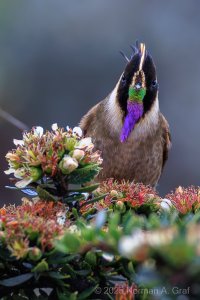
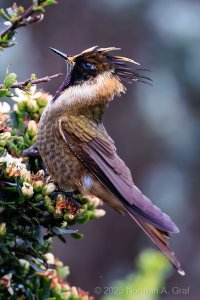
The Buffy Helmetcrest is a hummingbird endemic to the high elevations of the Central Colombian Andes. I photographed this individual feeding on Espeletia flowers at almost 14,000 feet in Parque Nacional Natural Los Nevados.

R5MkII RF200-800mm

2025-11-27-09-14-31_7X4A8877_R5MkII.JPG
2025-11-27-09-14-55_7X4A8918_R5MkII.JPG
 
  • Like
  • Love
  • Wow
Reactions: 17 users
Upvote 0
The Buffy Helmetcrest is a hummingbird endemic to the high elevations of the Central Colombian Andes. I photographed this individual feeding on Espeletia flowers at almost 14,000 feet in Parque Nacional Natural Los Nevados.

R5MkII RF200-800mm

View attachment 227036
View attachment 227037
Gorgeous bird. Needs extra horsepower to hover at those altitudes, but I see it is more of a gripper than a hoverer. Makes sense when the air is that thin.
 
Last edited:
  • Like
Reactions: 1 user
Upvote 0
The Buffy Helmetcrest is a hummingbird endemic to the high elevations of the Central Colombian Andes. I photographed this individual feeding on Espeletia flowers at almost 14,000 feet in Parque Nacional Natural Los Nevados.

R5MkII RF200-800mm

View attachment 227036
View attachment 227037
Gorgeous bird and beautiful photos! BTW it's not about the horse power: it's about how it utilize (efficiency!!!) the available O2!
 
  • Like
Reactions: 1 user
Upvote 0
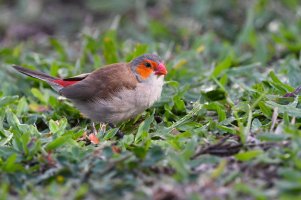
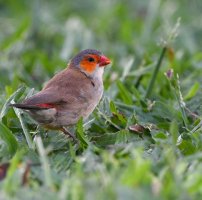
Last Tuesday I spent ~2.5h looking for the Orange-cheeked Waxbill and didn't find it... To look for this bird between hundreds of Common Waxbills is like looking for a needle in big pile of straw. The differences are more than obvious but if the bird is not flashing orange cheeks or red rump between the grass it's almost impossible to figure out who is who from several meters! The bird is of the size of the Eurasian Wren mostly because of the longer tail!
Today: I just entered the park and there was a tight flock of 30-50 Waxbills. In ~ 20-30 sec suddenly RED RUMP (Click, I didn't ask you for jumping/dancing emoji because the chance to find that single bird was really miserable...) !!!!!!!!!!
I saved about 50 photos, here are the once where one can see the most important differences from the Common Waxbill (last posted photos of that one on page 1624 - for comparison).
After that took a burst of nicely posing White Eye and rushed home to see what I have done on big screen. To say that I'm happy now like a mice in Cheddar is like nothing to say :ROFLMAO:! Bird in the grass/shade hardly can make photos like the bird in light and colorful background but the star here is that bird in the grass!!!

DSC_4887.jpgDSC_5007.jpgDSC_5042.jpg
 
  • Like
  • Love
Reactions: 15 users
Upvote 0
Last Tuesday I spent ~2.5h looking for the Orange-cheeked Waxbill and didn't find it... To look for this bird between hundreds of Common Waxbills is like looking for a needle in big pile of straw. The differences are more than obvious but if the bird is not flashing orange cheeks or red rump between the grass it's almost impossible to figure out who is who from several meters! The bird is of the size of the Eurasian Wren mostly because of the longer tail!
Today: I just entered the park and there was a tight flock of 30-50 Waxbills. In ~ 20-30 sec suddenly RED RUMP (Click, I didn't ask you for jumping/dancing emoji because the chance to find that single bird was really miserable...) !!!!!!!!!!
I saved about 50 photos, here are the once where one can see the most important differences from the Common Waxbill (last posted photos of that one on page 1624 - for comparison).
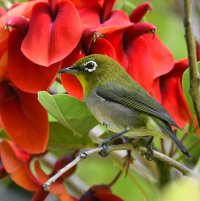
After that took a burst of nicely posing White Eye and rushed home to see what I have done on big screen. To say that I'm happy now like a mice in Cheddar is like nothing to say :ROFLMAO:! Bird in the grass/shade hardly can make photos like the bird in light and colorful background but the star here is that bird in the grass!!!

View attachment 227049View attachment 227050View attachment 227051

Congratulations on finding and photographing your target species! And kudos on sticking with it.
Beautiful portrait of the White-eye as well.
 
  • Like
Reactions: 1 user
Upvote 0
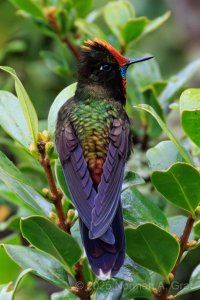
The Rainbow-bearded Thornbill is a hummingbird found at the higher elevations of the Andes from central Colombia to northern Peru. I photographed this individual high in the páramo above treeline in Parque Nacional Natural Los Nevados, Colombia.

R5MkII RF200-800mm

7X4A0575_1.jpg7X4A0453.jpg
 
  • Like
  • Love
Reactions: 13 users
Upvote 0
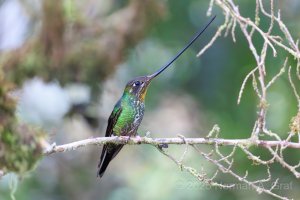
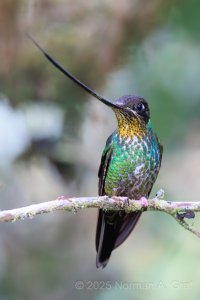
The Sword-billed Hummingbird inhabits the temperate zone of the Andes from Venezuela to Bolivia and has the longest bill in relation to its body size of any bird in the world. I photographed this individual while birding in the Giles Fuertesi ProAves Reserve, Colombia, November, 2025. The yellow coloration on the throat of this female is due to pollen accumulated as it fed on the flowers of Brugmansia, Datura, Passiflora and other flowers with long corollas.

R5MkII RF200-800mm

7X4A0564.jpg7X4A0575.jpg
 
  • Like
Reactions: 13 users
Upvote 0
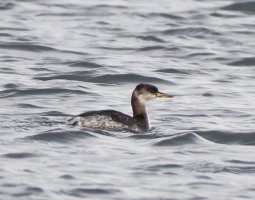
While @foda and @ISv are getting their spectacular close-ups of rare colourful birds, what do I get. Well, a rare scarce winter visitor Red-necked Grebe in non-breeding plumage was reported a short drive away. At 80-100m from the shore, it needed to be pointed out to me and I got one shot in focus of the dull bird in grey light of less than 400 px width at 800mm with the R5ii. Oh well, some shots are just for the record and for the twitchers they just need only to give it a tick.

6L8A1584-DxO_Red_necked_Grebe.jpg
 
  • Like
Reactions: 9 users
Upvote 0
The Sword-billed Hummingbird inhabits the temperate zone of the Andes from Venezuela to Bolivia and has the longest bill in relation to its body size of any bird in the world. I photographed this individual while birding in the Giles Fuertesi ProAves Reserve, Colombia, November, 2025. The yellow coloration on the throat of this female is due to pollen accumulated as it fed on the flowers of Brugmansia, Datura, Passiflora and other flowers with long corollas.

R5MkII RF200-800mm

This is the first time I've seen this bird. Thank you for sharing. Great shots, Sir!
 
  • Like
Reactions: 1 user
Upvote 0
While @foda and @ISv are getting their spectacular close-ups of rare colourful birds, what do I get. Well, a rare scarce winter visitor Red-necked Grebe in non-breeding plumage was reported a short drive away. At 80-100m from the shore, it needed to be pointed out to me and I got one shot in focus of the dull bird in grey light of less than 400 px width at 800mm with the R5ii. Oh well, some shots are just for the record and for the twitchers they just need only to give it a tick.

Nice observation. Thanks for sharing, Alan.
 
Upvote 0
While @foda and @ISv are getting their spectacular close-ups of rare colourful birds, what do I get. Well, a rare scarce winter visitor Red-necked Grebe in non-breeding plumage was reported a short drive away. At 80-100m from the shore, it needed to be pointed out to me and I got one shot in focus of the dull bird in grey light of less than 400 px width at 800mm with the R5ii. Oh well, some shots are just for the record and for the twitchers they just need only to give it a tick.

View attachment 227069
That's plenty good enough for an ID shot. On many of my trips some listers have to settle for a "heard" in order to tick a species.
 
  • Like
Reactions: 2 users
Upvote 0
While @foda and @ISv are getting their spectacular close-ups of rare colourful birds, what do I get. Well, a rare scarce winter visitor Red-necked Grebe in non-breeding plumage was reported a short drive away. At 80-100m from the shore, it needed to be pointed out to me and I got one shot in focus of the dull bird in grey light of less than 400 px width at 800mm with the R5ii. Oh well, some shots are just for the record and for the twitchers they just need only to give it a tick.

View attachment 227069
Alan it's a nice photo. And maybe if it is there in a couple of months it will have a red neck. There is a place about 60 Km from home that is supposed to have one of these. I go each year (late Jan to late Feb) and I never find it. Anybody else finds it (and posts a photo). Up to now I have tried 5 times in three years...
 
  • Like
Reactions: 1 user
Upvote 0
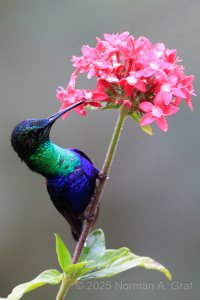
The male Crowned Woodnymph often appears to be all dark, but when the light hits it just right the brilliant emerald and violet plumage is stunning. I photographed this individual while birding at La Florida, Bosque de Las Aves, at km 18, Colombia, November, 2025.

R5MkII RF200-800mm

2025-11-18-11-36-37_7X4A8871_R5MkII.jpg
 
  • Like
  • Wow
Reactions: 13 users
Upvote 0
The male Crowned Woodnymph often appears to be all dark, but when the light hits it just right the brilliant emerald and violet plumage is stunning. I photographed this individual while birding at La Florida, Bosque de Las Aves, at km 18, Colombia, November, 2025.

R5MkII RF200-800mm

View attachment 227077

I love your exotic hummingbirds. I have a bunch of hummers who live in the back yard, but mostly Anna's with a few Rufus in the summer. You have found some very unusual species.
 
  • Like
Reactions: 1 user
Upvote 0