Upvote
0
On all of the "VX series Exakta bodies you could replace the eye-level viewfinder with a waist-level finder, the operation of which would be a lot like this. I still have a VX IIb and a VX IIa, and I know I still have a waist-level finder around too.This reminds me when, back in seventies, I was using my father's Exa Original. It was using a folding mirror as a shutter. During exposure, viewer would go dark. And you could replace the viewing prism/eyepiece with top open box looking at matt glass ended loup.
I still have some 135 size ‘analog memory cassettes’ hanging around.
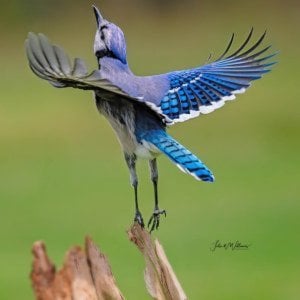
Thanks. I shared it more to show some of the behavior of this species than to post a great photo (which it isn't). Collared Incas routinely back off after drinking from feeders, hover a bit, then flash their tails before departing. It's a good opportunity to get some in-flight photos away from the feeder itself. Here's another, more formal, portrait photo from the same encounter.Norman and CR,
Great shots, guys.

DxO used to do its superb noise reduction by old-fashioned number crunching, and added ML only recently. I wonder how much AI they actually use?
Yeah, makes me really miss my first Canon prime, the EF 85/1.8.By the way, I don't like those vertical purple fringes.![]()
Thank you!Here's the same image, still in DxO but with all corrections turned off (so as close to RAW as you can get, more so than Canon because DPP will force the distortion correction and DxO does not), pushed 3 stops. No NR. Below it are the top left and bottom left corners at 100%.
Yeah, wherever it might be an issue that context is not this context. Unless maybe someone just takes Canon's RAW and does their own thing.Very noisy, but the noise still looks even without any 'lattice, moire, etc.' artifacts.
I do use DPP. And what you said...I don't use Canon's software to convert RAW images, except on the few occasions when I have a camera that's too new for DxO to support (and in that case, I usually shoot RAW+JPG so I can have usable images immediately, then I go back and properly convert them later. I loathe DPP's workflow.
The TS is the one lens series that I'd love to add to my collection. Yet to justify it past want, but I'm looking for excuses.DxO is using AI for the noise reduction, but I have no idea what's going on under the hood (if anything) in terms of the interaction of NR algorithms with lens correction profiles.
I've certainly seen fixed pattern noise artifacts when pushing images from older Canon sensors (5DII, for example). Once Canon updated their lithography (at the time of the 5DIV, IIRC) the FPN issues pretty much went away (as did most of the internet complaints about Canon's poor low ISO DR). I can't say I've seen artifacts from perspective correction of architecture shots, but I usually do those with a TS-E lens and not software.
It wouldn't surprise me if DXO takes the time to do the math and refinement.I use DxO PhotoLab, but they also have PureRAW that offers similar corrections more easily integrated into other workflows (e.g. with plugins for LR and PS).
This is what Canon’s neural network image processing tool does.I'm not sure where in the pipeline that noise is adjusted or refined (if refined, depending on the model), but I wouldn't be surprised if Canon uses their a) knowledge of the sensor, b) knowledge of the lens behaviour (DLO data), and C) a pipeline to make a final trained-AI adjustment to the noise in the image. That could be done as part of generating the RAW image (a phase 1 adjustment to the sensor read) and in generating a DLO-derived TIFF, HEIC, or JPEG (a phase 2 output image adjustment as part of the DLO system).
DxO used to do its superb noise reduction by old-fashioned number crunching, and added ML only recently. I wonder how much AI they actually use?DxO is using AI for the noise reduction, but I have no idea what's going on under the hood (if anything) in terms of the interaction of NR algorithms with lens correction profiles.
Here's the same image, still in DxO but with all corrections turned off (so as close to RAW as you can get, more so than Canon because DPP will force the distortion correction and DxO does not), pushed 3 stops. No NR. Below it are the top left and bottom left corners at 100%.I have to agree that your samples are very uniform. I see nothing wrong with that noise, and if preserved in that way after "reasonable" edits then I'd be happy to hand if off as final work.
But, you mentioned the use of DXO and it has a reputation for achieving nice outcomes. What about pre-DXO? What about RAW?


I don't use Canon's software to convert RAW images, except on the few occasions when I have a camera that's too new for DxO to support (and in that case, I usually shoot RAW+JPG so I can have usable images immediately, then I go back and properly convert them later. I loathe DPP's workflow.In general Canon has been continuously working to improve their noise, which is why in part the higher ISO values become more usable. I'm not sure where in the pipeline that noise is adjusted or refined (if refined, depending on the model), but I wouldn't be surprised if Canon uses their a) knowledge of the sensor, b) knowledge of the lens behaviour (DLO data), and C) a pipeline to make a final trained-AI adjustment to the noise in the image. That could be done as part of generating the RAW image (a phase 1 adjustment to the sensor read) and in generating a DLO-derived TIFF, HEIC, or JPEG (a phase 2 output image adjustment as part of the DLO system). If any part of that is, in fact, true then that would go a long way to explaining the stellar VCM performance in the example image graciously provided by @neuroanatomist.
I've certainly seen fixed pattern noise artifacts when pushing images from older Canon sensors (5DII, for example). Once Canon updated their lithography (at the time of the 5DIV, IIRC) the FPN issues pretty much went away (as did most of the internet complaints about Canon's poor low ISO DR). I can't say I've seen artifacts from perspective correction of architecture shots, but I usually do those with a TS-E lens and not software.To @zardoz's point, I have witnessed myself bad artifact generation / deterioration when boosting aspects of an image and making other nudges (like correcting a building perspective). So I know it happens in scenarios, and when I first saw @zardoz's post it made sense to me that the noise might be presented in a manner that would lend itself as described. But, I don't own an image circle compromised lens (in the physical sense) so without driving to my local store and grabbing some test photos I can't see it for myself (and I don't generally trust Internet posts on these topics these days).
I use DxO PhotoLab, but they also have PureRAW that offers similar corrections more easily integrated into other workflows (e.g. with plugins for LR and PS).But if it would otherwise happen in the VCM world then Canon or DXO is doing a bang-up job of creating a final image that hides the issue to some reasonable degree. If that same process would generate a TIFF or DNG for use in other apps, either via Canon's software or a direct import by, say, Photoshop then bravo to Canon for going the extra step!
Pentax, Leica, Sony, it has been a long and rough journey until you saw the light and bought a CanonShall I confess that I loved my Pentax MX?
Edit: I forgot my ME...
I have to agree that your samples are very uniform. I see nothing wrong with that noise, and if preserved in that way after "reasonable" edits then I'd be happy to hand if off as final work.Or point out the problem in the examples that I posted above, because I don’t see it.
I suspect that gives away too much of the secret sauce. An interesting point, big pharma companies often will give away their source code as part of articles and general demonstrations of research thrust, but they seldom give away in-house data — because the in-house data would communicate a lot of trade secrets, hard-won insights, tiny little things that will add up to big competitive differences in drugs, etc. Ditto here for Canon's DLO corrections, which would probably communicate very interesting things about material behaviour, light behaviour between and through lenses, etc. Canon is simply making everyone else do the reverse engineering and math that Canon achieved during the design, manufacturing, and test processes themselves.I wish there was a way for manufactures to share their lens correction data properly.
Possible an open source file format?
This way Lightroom etc. can benefit from the exact correction data to use in their lens profiles. Also, this would work in other ways. It would allow third party lens manufacturers to give their lens correction data to Canon, Nikon, etc. for use with in camera correction.
I remember selling the A3000 back when!Oh, I absolutely agree! In fact, here's one of those discerning elites (or obtuse plebeian, take your pick):
View attachment 228088
...none other than 15 year old me on Christmas morning, holding my first SLR fresh from the box – a Pentax A3000.
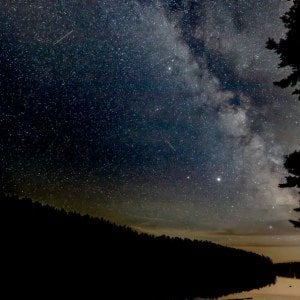
I have limited experience with Milky Way shooting, but I will mention that regarding light pollution filters, several manufacturers (Kolari, Kase, Astronomik, perhaps others) make light pollution filters that 'clip in' (or magnetically attach) inside the camera body and thus will work with any lens including those without front filter threads. I have a set of Kolari magnetic in-body ND filters (3-, 6- and 10-stop) and they work very well.What I want is a 16mm or 17mm f/1.4 lens for Milky Way Core images. Options:
Canon 14mm 1.4. It seems overly compromised. It is also too wide, but cropping is not an issue. It does not take light pollution filters. I have the Canon 20mm 1.4 and I like it, BTW.
Sigma 14mm 1.4 plus a Sony or Sigma camera. It is too wide, but cropping is not an issue. It does not take light pollution filters.
Sigma 12mm 1.4. Clearly, I would have to crop. Someone kindly pointed out Dustin Abbott’s review and images. Lenstip also reviewed this lens. It appears I could crop to ~15mm FOV, using a 4:3 aspect ratio. It takes light pollution filters.
Please critique the above.