Upvote
0
The same lens (same optical formula, same MTF curves) is also sold under the Cheecar brand, in addition to Pergear, 7Artisans, and now Brightin Star.
I don’t understand the marketing under so many different names. You would think it would lower the appeal.The same lens (same optical formula, same MTF curves) is also sold under the Cheecar brand, in addition to Pergear, 7Artisans, and now Brightin Star.


Denoise in Photoshop takes a minute per image on my MacBook Air with M4 and 24 GB, which is dismally slow. PL9 is much faster, and speeds up on cropping RAW whereas PS Denoise speed does not increase - it clearly denoises the whole image and not just the cropped area. In my tests, PL9, and even old PL6, is slightly sharper. I wish PS was better as I need the Adobe suite for my work and it would save me buying DxO.In my experience, they are pretty similar. Photolab has a few more handles to tweak for optimization, but if you are working in LR, you need to transfer a fat TIFF or DNG back for the result. Since LR now will do NR without generating an extra file, it does save space. I have found that LR NR followed by processing in Topaz with additional NR and sharpening typically produces the most favorable result. The exception is Photolab seems to do a bit better job with small sensor cameras, but Topaz is still beneficial as a secondary process, particularly for sharpening. With wide lenses that don't fill the image circle and need corner stretching, Photolab often will give you a larger image, particularly if you break away from the default aspect ratio. Note that processing in Topaz when you are primarily in LR also results in a large secondary file (I use TIFF) . All three tools are dismally slow without a good GPU (preferably Nvidia). Curious to see if Neuro has had similar experience.
The same lens (same optical formula, same MTF curves) is also sold under the Cheecar brand, in addition to Pergear, 7Artisans, and now Brightin Star.I'm happy to learn about this stuff. I can't dive deep into everything. For me, Brightin Star are just nice people. These don't sell like hotcakes, there really isn't a revenue stream. I tend to promote the nice ones.
I might dive a bit deeper down the road. I have enjoyed their 50 f/1 and 9mm 5.6. not claiming optical excellence!
Indeed. I had a Rokinon 14/2.8 for EF, which was a good copy that I got after returning the first one. That's only one of two lenses that I've returned for a better copy (the other being the RF 14/1.4L VCM).Bower is also sold as Rokinon (US) or Samyang (EU). We call them the 'Samyang lottery' due to their poor quality control. Many lenses are decentred, but the 'good' ones are well suitable!
In my experience, they are pretty similar. Photolab has a few more handles to tweak for optimization, but if you are working in LR, you need to transfer a fat TIFF or DNG back for the result. Since LR now will do NR without generating an extra file, it does save space. I have found that LR NR followed by processing in Topaz with additional NR and sharpening typically produces the most favorable result. The exception is Photolab seems to do a bit better job with small sensor cameras, but Topaz is still beneficial as a secondary process, particularly for sharpening. With wide lenses that don't fill the image circle and need corner stretching, Photolab often will give you a larger image, particularly if you break away from the default aspect ratio. Note that processing in Topaz when you are primarily in LR also results in a large secondary file (I use TIFF) . All three tools are dismally slow without a good GPU (preferably Nvidia). Curious to see if Neuro has had similar experience.How does that compare to Lightroom's Denoise?
Are you letting the camera determine the exposure when you zoom or are you maintaining the same ISO, shutter speed and aperture? When shooting wide angle in my living room, the automatic exposure is dominated by the room lights and white walls and ceiling. When I zoom in on a bunch of black lenses, the camera changes the exposure because what it thinks is 18% gray differs between the two scenes. The lenses in the wide angle shot are darker than in the close up shot. It has nothing to do with the fact that the lens has different apertures at different focal length because the camera tells the lens what aperture to use. This is different than in the dark ages of the 1970s when the user told the camera the film ISO (then known as ASA) and manually set the aperture and shutter speed. I do not miss those days!I’m a video shooter (but not content creator) I prefer a constant aperture for video…so generally I find myself using the smaller end of the aperture on the long end.. and thus getting the short end of the stick when varying zoom - to keep exposure from changing during zooming
Two totally different beast for different assignments in my books.I can understand preferring the RF 85mm f/1.4L VCM if the RF 85mm f/1.2L feels too big, heavy, or awkward. That would make sense.
But I don’t quite follow the jump from “the RF 85mm f/1.2L is too big” to “a 50-150mm f/2 or 100-400mm zoom would be great.” The RF 85mm f/1.2L is about 103 mm wide, 117 mm long, and 1195 g. The Sony 50-150mm f/2 GM and 100-400mm GM are similar in diameter, roughly twice as long, and heavier. Those are not exactly small, discreet, easy-handling lenses either.
To me, the more interesting question is what Canon could do with a redesigned stills-first RF 85mm f/1.2L II. The current lens is optically legendary, but compared with newer RF designs it feels bulky. The RF 135mm f/1.8L shows how good Canon can be when optical performance, autofocus confidence, and handling all come together.
Imagine a new RF 85mm f/1.2L II with a slimmer barrel, a more modern internal focusing design, faster AF, the same or better rendering, and maybe even IS. Canon’s recent lenses suggest there is still room to improve both handling and usability without giving up what made the original special.
I get that zooms are popular, and Canon should absolutely keep building them. But some of us are still waiting (and hoping!)for Canon’s next generation of stills-first halo primes.
I really don't get why so many people want Canon to copy Sony. Don´t get me wrong, some of their newer offerings are great, but yet there is a lot of potential to do things differently. Furthermore, looking at Canons line-up some lenses just don't need copying.a 50-150 AND a 100-400 like Sony's would be great
I can understand preferring the RF 85mm f/1.4L VCM if the RF 85mm f/1.2L feels too big, heavy, or awkward. That would make sense......We don't think Canon is going to make some pointless prime like an RF 85mm f/1L. Sure, it'd be the only one out there, but that's just chasing numbers and serves no real purpose........
I bought a 85 1.2 and returned it after a week! Nice glass but just too big, heavy and awkward.
I ordered the 1.4 version instead.
a 50-150 AND a 100-400 like Sony's would be great
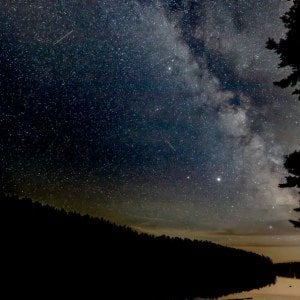
I probably got a bit lucky with my Bower. It's not a perfect lens by any stretch but it is good and consistent. Yes, I recall it also being sold as Rokinon and Samyang. Same exact lens basically. Glad I got a decent one - I had really poor luck with a Sigma 20 mm f/1.8 many years ago, maybe around 2004 or so. That Siggy was severely decentered. Center and one side in focus, other side way out. If you nailed focus on the one side, the rest was way out. A trip to Sigma for repair netted NO change.Bower is also sold as Rokinon (US) or Samyang (EU). We call them the 'Samyang lottery' due to their poor quality control. Many lenses are decentred, but the 'good' ones are well suitable! Therefore I only use their premium line, called Rokinon SP and Samyang XP which has a better quality control. So I can only compare the Brightin 14/2.8 against the Samyang XP 14/2.4 and I use them only for astro photography (mostly polar light): The Samyang is more heavy, more expensive, has slightly less coma and less vignette (and is slightly faster). The Pergear/7Artisan/Brightin 14/2.8 is lighter, cheaper (!), has slightly more coma (but I would still call it low), and a strong vignette. I tested several Pergear and 7Artisan 14/2.8 lenses and they have a similar quality control as the Samyang XP serie. That means most lenses are well centered. The Brightin Star/7Artisan/Pergear 14/2.8 seems to have problems with flares from strong light sources.
Bower is also sold as Rokinon (US) or Samyang (EU). We call them the 'Samyang lottery' due to their poor quality control. Many lenses are decentred, but the 'good' ones are well suitable! Therefore I only use their premium line, called Rokinon SP and Samyang XP which has a better quality control. So I can only compare the Brightin 14/2.8 against the Samyang XP 14/2.4 and I use them only for astro photography (mostly polar light): The Samyang is more heavy, more expensive, has slightly less coma and less vignette (and is slightly faster). The Pergear/7Artisan/Brightin 14/2.8 is lighter, cheaper (!), has slightly more coma (but I would still call it low), and a strong vignette. I tested several Pergear and 7Artisan 14/2.8 lenses and they have a similar quality control as the Samyang XP serie. That means most lenses are well centered. The Brightin Star/7Artisan/Pergear 14/2.8 seems to have problems with flares from strong light sources.I'm still chugging along with my Bower EF mount 14/2.8 which has 14 elements in 12 groups. A different optical design, of course, given that the lens is designed for EF. As often as I use it, which is almost never, I'm fine with what I have.
It'll be interesting to see what this Brightin Star/7Artisan/Pergear lens is like compared to the EF 14/2.8. Price and feature-wise, they're in the same ballpark.
Perhaps a “world’s first” could be an f/2 zoom with OIS - correct me if I am wrong, but I don’t believe anyone has done an f/2 with optical IS yet? So maybe something like 24-70mm f/2.0L IS. That adds some weight gain, though.Yep or the R5C which doesn't have IBIS. I would prefer a lens like this with IS.
I’m a video shooter (but not content creator) I prefer a constant aperture for video…so generally I find myself using the smaller end of the aperture on the long end.. and thus getting the short end of the stick when varying zoom - to keep exposure from changing during zooming.How well do video shooters / content creators like zoom lenses that change aperture as you zoom?
maybe Canon finally has some epic RF-S lenses in the pipeline
Well, I never visit a city without the 24 TS-E. I hate converging lines, and I am not so fond of cropping 10mm shots. I also have no real use for wider than 15mm. It could change after I get my RF 20-50mm, needing a bit wider than 20mm. Selling the 15-35 ? No! Too good!You can always add the 10-20Works well in densely built cities and also for landscapes with interesting subjects in the foreground. Takes some of the photos I would normally use the TS-E 24mm for.