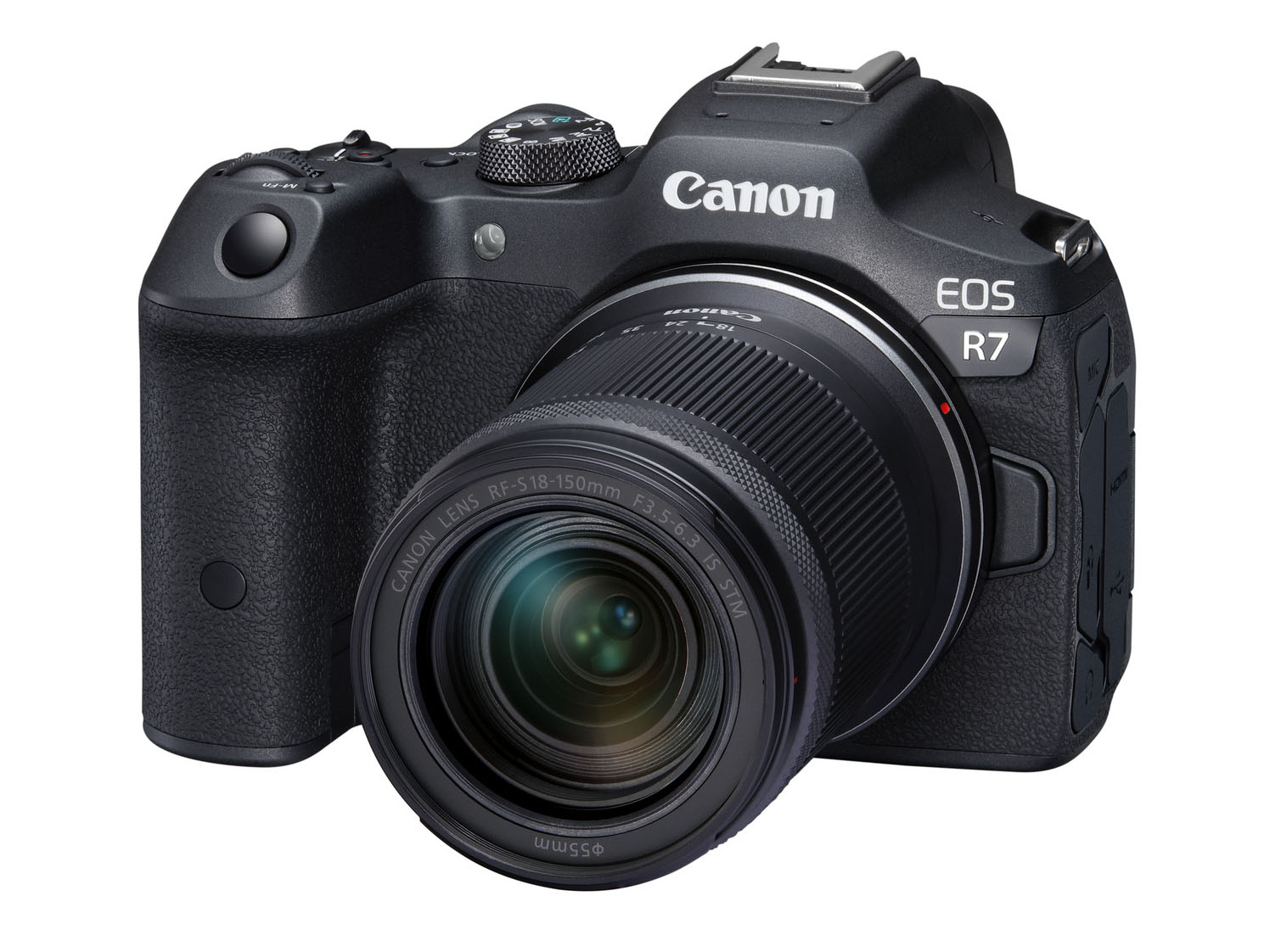
EOS-M is Dead. So where’s my RF Equivalents?

The simplest (thus generally smallest, lightest, and/or cheapest) pancake designs are those with focal lengths near or slightly longer than the flange distance. It’s not an absolute requirement but it minimizes compromises. The EF 40/2.8 is close to the 42mm EF flange distance.

From a design perspective, the RF 28/2.8 is the pancake successor to the EF 40/2.8, given the 20mm RF flange distance. The RF 28/2.8 is only 2mm longer than the EF 40/2.8.

oh derp, neuro answered it already. sorry.
Upvote 0

EOS-M is Dead. So where’s my RF Equivalents?

Speaking of pancake lenses, I have never understood why Canon haven't released a RF version of the EF40/2.8. A third of the weight and length of the RF42/1.2 and adapting the EF version cost so much more and doubled the length and weight.
you have it already. the RF28mm f/2.8 STM is it.

pancakes only really work around the registration distance aka the distance from the sensor to flange as the focal length - so for the RF case, that would be around 20mm (aka the 28mm). for the EF mount, since it was 44mm distance, we got a 40mm lens. which is why the EF-M got a 22mm.

most of the pancakes are modelled off the Zeiss Tessar design which had that design requirement.
  • Like
Reactions: 2 users
Upvote 0

A Canon RF 300-600mm f/4-5.6L IS USM on the Horizon

I've not tried the new 70-200/2.8 Z, but I am very familiar with the older EF 70-200/2.8 II counterpart. It was an astonishingly sharp lens even with a 1.4x tc. It af our resolves any of the current Canon sensors. The 2x less so, still sharp but want's great with close objects and generally needed stopping down 2/3 stop to remove the slight haze around highlights. The thing is, a pair of teleconverters is a lot lighter than lugging around another sized lens. Even the 2x TC works well if that's the only thing you have on you. I appreciate that this new RF Z version is a tad sharper again, but it's still in the same ball park with teleconverters.
The RF 70-200/2.8 is a miracle in packaging and light weight construction by comparison, but we all know of the lack of TC support for this sweet lens.
The RF 100-300mm f2.8 is a very different beast. With tele converters, it's pushing into wildlife and birding reaches. Even with a 2x TC (making a 600mm f5.6) it just about keeps up with the R5's resolution of it's mighty sensor. It's a very viable and versatile lens range (100-300/f2.8 > 140-420/f4>200-600/f5.6) and it only cost you the size and weight of a pair of teleconverters. It's never going to compete directly with a 70-200mm f2.8 even though it's got a fair amount of overlap in the focal range and aperture. The Rf 100-300/2.8 is kind of a bridge lens between the 70-200/2.8 and the longer wild life lenses.
I have a few friends who regaulrly use a EF300mm f2.8 II LIS with a pair of teleconverters as their long lens of choice. It's a back friendly size and weight with a nice price point with an excellent reach / brightness. One of them is considering swapping over to the RF 100-300/2.8 so they can ditch the need fro their EF 70-200/2.8 lens and just use the one lens. If Canon made a RF 400-600 f2.8 - F4 zoom lens that's a simular weight to my EF 400mm f2.8 II L and it's as sharp, then my ears might prick up and colour me curious.
I can't imagine the pricetag on a 400-600 f/2.8-4.0 being less than $15-20k, so about twice as much as I'm willing to put down lol :cry:. But certainly that would be a feat of engineering. Like I mentioned a bit earlier, if Canon can churn out longer zooms like the 70-200Z, then they will be very compelling at least for those who can afford any given offering.

Regarding the 100-300L, I'd take one any day if the stork came and dropped it off 😅. Certainly an outstanding lens. The 70-200Z definitely handles the 2x teleconverter better though: https://www.the-digital-picture.com...eraComp=1508&SampleComp=0&FLIComp=5&APIComp=0.

There's a reason The Digital Picture called the 70-200Z the sharpest interchangeable zoom they've ever tested! Its teleconverter performance is extremely good. Of course, 400mm is a somewhat limited reach, we can't have everything.

In the comparison with the EF 70-200 f/2.8 L II, it's really not even close though in the images available at 400mm, the old design and teleconverters don't keep up with newer glass: https://www.the-digital-picture.com...meraComp=979&SampleComp=0&FLIComp=5&APIComp=0. I have an old EF 200mm f/2.8 L (maybe an L II?) and 2x III teleconverter, and the 70-200Z at 400mm is far better than the old prime with an old 2x.

Got some fun shots of this Egret on Saturday with the 70-200Z + 2x (and R5II):
150k_E9A6578_DxO_R52.jpg
150k_E9A6639_DxO_R52.jpg
  • Like
Reactions: 3 users
Upvote 0

Sony Announces the Sony A7 V

In 2024 Canon was at about ¥580B and Sony was at ¥670B. I'm pretty sure I saw a break down of lens sales and Canon sells more first part lenses than Sony. So if Canon makes more money from lenses and we subtracted the sales of lenses then the revenue left over for camera body sales would be even wider. Canon sells a lot more camera bodies than Sony. The result is that the only way Sony is ahead in revenue is because even though they sell less cameras and less lenses is that the camera bodies they are selling are more expensive. They need to be 1.75x to 2.0x more on average.

My wild baseless assumption is that becuase Sony is selling LESS camera bodies that are on average almost double that they have a smaller amount of hobbyist buying these more expensive bodies. This assumption is validated with the Sony prices being accross the board higher for comparable models and the lack of models available on the lower end.
Mercedes has higher prices across the board for comparable models than Lexus (which are made by Toyota Motor Corporation), and Mercedes does not offer low end models like Toyota. By the (dubious) logic of your assumptions, professional drivers must be driving most of the Mercedes cars on the road.

Anecdotes ≠ data. Assumptions ≠ data. However, anecdotes and assumptions are often used by people trying to convince others that their opinions are facts.
  • Like
Reactions: 1 user
Upvote 0

Sony Announces the Sony A7 V

I‘ll summarize your “answer” for you: You have no data to backup your claims.

In 2024 Canon was at about ¥580B and Sony was at ¥670B. I'm pretty sure I saw a break down of lens sales and Canon sells more first part lenses than Sony. So if Canon makes more money from lenses and we subtracted the sales of lenses then the revenue left over for camera body sales would be even wider. Canon sells a lot more camera bodies than Sony. The result is that the only way Sony is ahead in revenue is because even though they sell less cameras and less lenses is that the camera bodies they are selling are more expensive. They need to be 1.75x to 2.0x more on average.

My wild baseless assumption is that becuase Sony is selling LESS camera bodies that are on average almost double that they have a smaller amount of hobbyist buying these more expensive bodies. This assumption is validated with the Sony prices being accross the board higher for comparable models and the lack of models available on the lower end.
  • Haha
  • Like
Reactions: 1 users
Upvote 0

EOS-M is Dead. So where’s my RF Equivalents?

The simplest (thus generally smallest, lightest, and/or cheapest) pancake designs are those with focal lengths near or slightly longer than the flange distance. It’s not an absolute requirement but it minimizes compromises. The EF 40/2.8 is close to the 42mm EF flange distance.

From a design perspective, the RF 28/2.8 is the pancake successor to the EF 40/2.8, given the 20mm RF flange distance. The RF 28/2.8 is only 2mm longer than the EF 40/2.8.
Thanks, I learn something every day!
Upvote 0

Sony Announces the Sony A7 V

For inflation they take a basket of goods (Food, Housing, Transportation, medical, electronics, etc.) and assign a weight to each item based on how much the average person purcfhase that item as a precentage of theri budget and then looks at the prices difference of all of those items along with the weight to generate a top line number.
On page 13 you see the price increase of photographic equipment which is 5.7% year over year from Sep 2024 to Sep 2025. So the BLS is saying the retail price of photographic equipment is up 5.7% The weighted average of photographic equpment was .020 as this is not a category people spend a decent percentage of their income on.
When you factor ALL the items to their approriate wight factor the BLS calcuated top line inflation at 3% Not only are camera prices increasing, they are increasing faster than the weighted average of what most people buy.
Meanwhile smartphones decreased almost 15%.
USA CPI is not relevant. OEM marketing departments set the recommended selling price.
Tariffs will easily account for price differences as cameras are included and smartphones aren't.
Exchange rates are also significant with rates changing from 1:100 to now 1:156 over the last 5 years.
Certain government members were smart enough that tariff increases to smartphones would be so obvious a price increase to consumers that the policy would not be sustainable. Camera owners are more likely to absorb price increases in the US.
Also, retail pricing in the US doesn't cover refurb or rebates etc.
The US market may distort global figures and be a significant market for cameras but it is not the only significant market for Canon/Sony/Nikon.
Upvote 0

Canon’s disdain for APS-C users.

I would like to see wide aperture RF-S zooms and primes from Canon.
I don’t get why they do think they wouldn‘t make enough money with them and so don’t offer them.
In the meantime I enjoy using the great Sigma 18-50/2.8 with my R50 together with the great (for APS-C) RF100-400.
Light, lovely travel combo. 👍
I'm guessing from analyzing past sales and current trends they determine which products to prioritize in development and production.
  • Like
Reactions: 1 user
Upvote 0

EOS-M is Dead. So where’s my RF Equivalents?

Where are the equivalents?....

Seems there are 2 likely answers.
1) They did not sell well enough to make RF-S equivalents.
2) They will make them, but are not high priority.

The fact that Canon Forum users cry out for them, does not in any way indicate that they would sell well. To repeat for the nth time on the forum, we are not the target market.
  • Like
Reactions: 1 user
Upvote 0

Canon’s disdain for APS-C users.

I agree.
That is also likely why OP labeled their statement a rant.

For what it is worth, I also agree with the oft repeated statements of Canon's business decisions.

I'm sure we all have desires for some type of gear that Canon has not produced. Just looking at the numerous posts of future camera features can be considered as rant premonitions once some do not come into fruition.
And several will be posted and read here. The forum universe is partially powered by this energy.

Canonlogical constant (Λ) ?
Upvote 0

Sony Announces the Sony A7 V

Have you ever heard of inflation?

The R5 was launched in August 2020 for 3900$. The R5 Mk II was launched in August 2024 for 4300$. When you adjust 3900$ for US inflation from 2020 to 2024, that 3900$ price would be 4740$, i.e. 21% price increase.

You can check the numbers for yourself:

You are making my point for me.

For inflation they take a basket of goods (Food, Housing, Transportation, medical, electronics, etc.) and assign a weight to each item based on how much the average person purcfhase that item as a precentage of theri budget and then looks at the prices difference of all of those items along with the weight to generate a top line number.

So the prices of individual goods going up is what causes inflation not the other way around. It's like me saying Housing is costing more and you say well actual no housing is just going up because inflation. No Housing IS going up and that IS what is being recorded as inflation.

Here is the recent BLS report breaking down all the compenents of inflation:
https://www.bls.gov/news.release/pdf/cpi.pdf

On page 13 you see the price increase of photographic equipment which is 5.7% year over year from Sep 2024 to Sep 2025. So the BLS is saying the retail price of photographic equipment is up 5.7% The weighted average of photographic equpment was .020 as this is not a category people spend a decent percentage of their income on.

When you factor ALL the items to their approriate wight factor the BLS calcuated top line inflation at 3% Not only are camera prices increasing, they are increasing faster than the weighted average of what most people buy.

Meanwhile smartphones decreased almost 15%.
Upvote 0

The Coming Canon ‘Retro’ Camera to Use Latest 32.5MP Sensor

Do you meant to say that the RF 45mm doesn't need software to correct its image? Otherwise I'm perplexed about what's special about lenses from the 1990s-2000s.
I think the implication is, while the average image quality (probably especially sharpness) of lenses is much better now, the RF 45 is has a number of flaws that were more common in the past (but I don't know how true that is).
  • Like
Reactions: 2 users
Upvote 0

EOS-M is Dead. So where’s my RF Equivalents?

Speaking of pancake lenses, I have never understood why Canon haven't released a RF version of the EF40/2.8. A third of the weight and length of the RF42/1.2 and adapting the EF version cost so much more and doubled the length and weight.
The simplest (thus generally smallest, lightest, and/or cheapest) pancake designs are those with focal lengths near or slightly longer than the flange distance. It’s not an absolute requirement but it minimizes compromises. The EF 40/2.8 is close to the 42mm EF flange distance.

From a design perspective, the RF 28/2.8 is the pancake successor to the EF 40/2.8, given the 20mm RF flange distance. The RF 28/2.8 is only 2mm longer than the EF 40/2.8.
  • Like
Reactions: 4 users
Upvote 0

EOS-M is Dead. So where’s my RF Equivalents?

Speaking of pancake lenses, I have never understood why Canon haven't released a RF version of the EF40/2.8. A third of the weight and length of the RF42/1.2 and adapting the EF version cost so much more and doubled the length and weight.

I realise that it was full frame and this discussion is for crop but the same applies to the EF-M 22/2.
I wonder if Canon could have used the combination to meet some of the resurgent demand for compact cameras or even as competition for Fuji's compact sized options.

The R100 is 2.5 years old and should be updated. If I recall, the lifeycle for Rebels etc was less than the 4 year cycle for full frame bodies.
Upvote 0

Sony Announces the Sony A7 V

Have you ever heard of inflation?

The R5 was launched in August 2020 for 3900$. The R5 Mk II was launched in August 2024 for 4300$. When you adjust 3900$ for US inflation from 2020 to 2024, that 3900$ price would be 4740$, i.e. 21% price increase.

You can check the numbers for yourself:
Aren't we poor European customers not the ones paying for the non-inflation-adjusted US pricing? :ROFLMAO:
In earnest now: I believe my 2013 5D III represented about the same percentage of my salary as the much better specced 2025 R5 II. Much more camera for a comparable (inflation-adjusted) price.
Upvote 0

Sony Announces the Sony A7 V

Have you ever heard of inflation?

The R5 was launched in August 2020 for 3900$. The R5 Mk II was launched in August 2024 for 4300$. When you adjust 3900$ for US inflation from 2020 to 2024, that 3900$ price would be 4740$, i.e. 21% price increase.

You can check the numbers for yourself:
American CPI could potentially be used as one factor for setting the retail price but that is a marketing decision by Canon USA for their profitabiliy targets. Average selling price per product would also be different with regular rebates and the unique US practice of no-cost returns and refurbished pricing.

The only costs within the US for Canon (and probably Sony/Nikon) would be running their service support department, their marketing labour costs and minimally their inventory costs. They probably don't use the US minimum labor rate for their staff but that rate hasn't changed in 16 years.
Tariffs would be separate and significant together with USD:JPY exchange rate changes.
Some OEMs are trying to have more global pricing to average out the US tariffs ie everyone has an increase so that the US isn't a massive outlier but that hasn't stopped Canon Europe being significantly more expensive with grey market taking some sales.

Similar for profitability. Canon's costs are in JPY and associated supply chain countries/currencies for their mid to high-end products. A lot of labour (management, R&D, factories, etc) within Canon Japan could be estimated from Japan's Labour Cost Index.
I would be surprised if Canon Japan have any costs for components coming from America.
Cost reduction is omnipresent. Labour reduction costs is hard but AI may provide a step reduction especially for coding efficiency in R&D. Component costs changes through their product lifecycle are normal. Commodities pricing eg metals are very hard to estimate.
On the other side, new features are always added which can increase the price. Co-processors, eye controlled AF are new for R1/R5ii.
  • Like
Reactions: 1 user
Upvote 0

Filter

Forum statistics

Threads
37,274
Messages
967,081
Members
24,634
Latest member
Mcsnows

Gallery statistics

Categories
1
Albums
29
Uploaded media
353
Embedded media
1
Comments
25
Disk usage
982.4 MB