Filter Holder for Tokina 16-28 f/2.8
- By BozillaNZ
- Canon Lenses
- 2 Replies
To be honest with that amount of money, I'd sell my 16-28 and buy a Canon 16-35 f4L so I can use ordinary filters on it.
Upvote
0

mackguyver said:Very impressive cargo capacity and AWD to boot!dshipley said:Fun car and great for hauling gear to shoots...
All of this...
• ThinkTank Airport International v2 (fully loaded)
• Profoto D1 Air 500/500/1000 Kit
• PCB 2x Einstein e640+VML Kit
• Large Tripod & 2x Light Stands in Softcase
• Laptop Bag
• 2x Scrim Jims (frames + panels)
• 5x C-Stands in Hardcase
• Sandbags (multiple)
• Dufflebag (full of lighting modifiers/reflectors/gaff tape/etc)
• RocknRoller Multi-Cart
Easily fits...


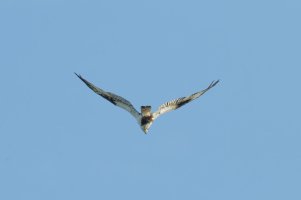
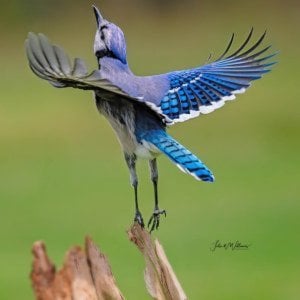
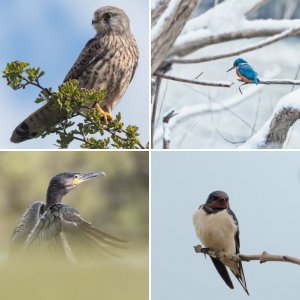
And I'll leave you with this (after many years of practice) - here are two shots of BIF I took recently while focusing my 600mm lens (300 + 2x) on an owl. I had to grab my camera off the tripod and in the first instance, I did pretty well...mackguyver said:First of all, a caveat: shooting birds in flight is tough. Even the best gear and technique won't guarantee a good shot, but there are ways to increase your success. The best way to do this is to set up in a stationary location and wait for birds to fly over. It also helps to pre-focus at the distance you expert to acquire the target (BIF). In terms of AF settings, the 7D works best with Zone AF, and the 5DIII and 1D X works best with the the 61-pt auto-select, but it often picks the sky (as you say) if you don't get the BIF with the right initial AF point. The most reliable thing you can do is set it to 61-pt, AI Servo and use the AF Point selection to pick the center AF point. Case 1 seems to work well for me most BIFs, but I'll use Case 2 when there are trees in the way and Case 5 when shooting small birds like swifts. The key is getting the initial AF point on target, holding it until you can verify that it locked, following the target for a moment, and then pressing the shutter. With small distant birds and/or with birds in a gray sky, that can be really tough, but the sooner you are able to lock onto the BIF and start tracking it, the better. If it doesn't lock on, release the AF button and push it again. Sometimes I'll do that 2-3x before it will lock if the BIF is small/distant.scyrene said:I've been meaning to ask for a while about birds in flight actually - as in, which AF scenario to use. I must admit, the 5D3's autofocus options have always rather baffled me - even though it gives examples, I've never known which is most appropriate for birds. I don't do much BIF work, as I'm mostly shooting small songbirds, and not the big owls/eagles that you guys have access to in North America (and other such places). But when I see, say, a duck, crow, or cormorant (i.e. a medium-sized bird) flying, and I try and focus on it, the camera almost never chooses the bird, choosing the sky instead (that being the much larger target). I'm hand holding, and so keeping the AF point on the bird is very hard, but using multiple points or a zone doesn't seem to help. Sorry if all this has been covered before, but I thought I'd ask here anyway
So to recap, set up in a place you expect to see BIFs, lock onto them as soon as you can, confirm focus lock/tracking, wait for key moment, then fire away.
The final key to BIF photos - practice, practice, practice.

AcutancePhotography said:What do you think this would add to either still photography or video photography?

CR Backup Admin said:I didn't view the link, but was wondering how they compare at 16mm, or at 50 or 85 or 105mm.
This seems like apples and oranges. The two lenses are not in competition.

LetTheRightLensIn said:Man, I didn't mean it to be an attack or complaint or even all that serious of a post.
I was just noticing that it seemed like no major rumors had been getting posted on Saturday or Sunday for a long time and that seemed, potentially odd, why should someone with good info never pass it along on a weekend and then I was wondering if maybe the good sources who used to leak way ahead of time were maybe all shut down and maybe it's mostly just bored trolls at work sending in random rumors from work during the weekdays or something.
I didn't do any careful study or anything, just a vague impression that could be invalid.
Anyway, definitely it was not meant as an attack or complaint or even anything to be taken all that seriously.

RustyTheGeek said:Great post jeffa4444! I think I learned something about my 6D I didn't know! The ground glass prism thing is weird. I'll watch for it.

360_6pack said:Has anyone tried the new Tamron 28-300 for FF cameras yet?
If so impressions and comparisons with the Canon 28-300 please?
Michael
l_d_allan said:It might only have the power of a Rebel. It might be the equivalent of having a D700 with it's built-in flash for Canon full-frame, that could be used as a Master.

winglet said:

That's the thing here, Pentax or anyone who can get the 50mp Sony sensor in a affordable body with LS lenses will shift MFD back into reach of the average professional. I certainly would have bought a 645z and a pair of LS lenses assuming that pentax can also manage to make the lenses affordable too. (Which shouldn't be too hard since you can find there older LS lenses really cheap w/ 1/500th syncs.)moreorless said:RLPhoto said:Exactly what pentax is doing and is a big shift for MFD. Inversely, I sold the majority of my 35mm kit and I'm loving MFD. I would probably drop my 5d3 to an aps-c camera if I was in a pinch but I wouldn't let my Blad go so easily.
The problem Pentax seems to have is that it really doesn't have the resources that Canon or Nikon would in terms of either offering improved features or building a modern lens line-up.
The 645z has more AF points that most MF cameras for example but there all clustered around the centre because its reusing an ASPC AF system, really not much better than your typical central AF point on other MF cameras. As you've said before it lacks LS lenses as well.
With the lens selection on offer today the 645z to me clearly seems to be aimed at the landscape/macro photographer. The problem I'd say is that whilst the body is much cheaper than alternative MF the lenses are not and these markets are very price dependant, there aren't many amateur or pro landscape shooters who can afford to spend $15,000+ on their setup.
Meanwhile, the latest rumor in Nikon-land is that Nikon will be announcing a new FF camera at Photokina:LetTheRightLensIn said:If they don't appear in another 3 weeks then maybe the 7D2 is the Yeti.
+1, For smooth video playback the shutter speed is typically selected as 2x faster than the fps so as to allow for enough blur in each frame for them to flow into the next. If you use an excessively high shutter speed then the individual frames would be sharper but the gap between exposures would be relatively long, so there could be a "big" difference from frame to frame resulting in a jerky/staccato feel to the playback.scyrene said:sanjosedave said:I'd like to see capture video, say, of a baseball game during the day, perhaps as the pitcher throws the ball and the batter gets ready to hit, and then pull a frame from the 4k video and present the still. Thx
Remember, whatever the resolution, video frames tend to be much longer exposures than stills for moving subjects. So at 30fps, you might have 1/50 for each frame. The ball would likely be a blur in every single frame, so not much use as an alternative to short exposure stills.
jrista said:I dunno...<snip> Would be great to just...chat (fearlessly).
Ian_of_glos said:A couple of questions:
1) are you using ETTL?
2) how are you calculating the correct aperture to use? Are you using a light meter?
I find that ETTL never works properly when I use speedlites with light modifiers and it often results in a shot that is under exposed. The camera's meter is easily fooled, for example if your model moves slightly or if you change the composition.
Using a light meter will allow you to set the exposure accurately and then, once set, you don't need to change it. Just leave the speedlites on manual and they will produce the same amount of light for every shot. You only need to meter again if you move the speedlites or if you increase or decrease the power.
It will also let you see the ratio of flash to ambient light and it will allow you to alter the balance between your speedlites, for example if you want the key light to be more powerful than the fill light.
The zoom setting really only changes the character of the light - so use a telephoto setting if you want to create a highlight on your subject, or a wide angle setting of you want a more even spread of light.
When using a softbox or umbrella I leave my speedlites set to 35mm and I find that works quite well.
With regard to the placement of your speedlites - you do need to put them quite close to your model, but this is because it will give the light a much softer, shadowless character. Placing the speedlites a long way from your model will create harsh shadows, which is usually not the effect you want to achieve. I put my speedlites as close as possible to the model, so they are only just out of shot.
Of course a speedlite is usually less powerful than a studio strobe, but that should not be an issue unless you are placing them a long way from your subject
I did the same, but they came in about 100 boxesRLPhoto said:I bought all my einsteins and all my modifiers at once from PCB. It was beautiful, all the stuff came on two pallets. XD
 . It was like Christmas opening all of those boxes!
haupt said:Mt Spokane Photography said:For a 70-300mmL at 300mm with a Kenko 1.4X TC, its possible that your 6D will be manual focus only.
I just went on a photo safari in Tanzania with Canon 6D, 70-300L and the Kenko 1.4X. No problems with auto-focus. (mostly stationary targets - elephants don't move that quickly)
Before going I had thought about the Tamron 150-600 but I bought the 70-300L instead. But in Serengeti I could have used the extra reach.
I also brought the SX50 HS and found it a nice little camera- https://www.flickr.com/photos/larshaupthansen/14632565988/
Busted Knuckles said:Is there not a flange distance issue w/ EF TS lenses?