ID help please RSPB Birdwatch

Hi,
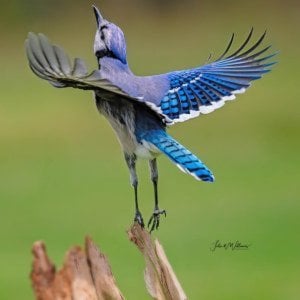
Just done the UK RSPB Birdwatch and I have a couple of birds I need help with, nothing exotic I just don't know birds!
Unfortunately the RSPB web site bird identifier seems a bit rubbish.

The pics were taken for ID purposes only and through glass at an angle so no image critiques please! ;D

I think they are a Bullfinch and some kind of Crow

Thanks in advance!

Attachments

  • IMG_9471(1).jpg
    IMG_9471(1).jpg
    810.7 KB · Views: 194
  • IMG_9468(1).jpg
    IMG_9468(1).jpg
    2.1 MB · Views: 188

Alaska Cruise - Activities and advice required

My wife and I are going on a cruise to Alaska in May this year. The itinerary includes Juneau, Skagway, Ketchikan & Glacier Bay.

I would love some advice on what to do and see from those of you who live there or have been there. We would live to see whales and bears.

Equipment wise, I want to travel light so here is the shortlist - 70D & 550D, Tokina 11-16 f/2.8, 24-105L f/4, 100-400L m1 + 1.4xIII, tripod, clamp, CPL & ND. Advise here would be greatly appreciated as well.

Worst lighting purchase you ever made? The best?

Some of us may have made a gear purchase we regretted at one time or another. It happens.

Lighting is probably a big one on the "wish I hadn't done that" list.

What is the worst lighting purchase you ever made, and what is the best?

In my case it was a matter of being ignorant. I was truck driving full time and decided I wanted to get into photography. I did a lot of review reading, watched a lot of how to videos on YouTube, and thought I knew how to delve into the hobby in a smart way. Was I ever wrong.

Sadly, nearly all my lighting purchases were the wrong purchases for me.

First I thought that continuous lighting was the way to go. While that works for some it turns out my spare room is too small for any kind of portrait work. I bought a bunch of Fotodiox LED lighting products I never use except to plug into a generator when I go camping. The biggest expensive mistake in continuous lighting was the purchase of a Rosco Litepad Axiom 12"x 12". It got used once or twice for some tabletop fun involving bottles of liquor.

My biggest mistake for flash? I had just read Syl Arena's "Speedliters Handbook". There was his work in all its glory and using up to 15 Canon 600EX-RT for his shots. He'd mount them on wooden boards in big gangs.. I thought, COOL! That has to be the way to go for outdoor shots! So I ended up with 7 of the 600EX-RT and the ST-E3-RT.

That's when I realized that although Mr. Arena's work is famous, his method is unwieldy at best. It is just too much work and too time consuming to gang the mob together for shooting outdoors and they really don't pack much of a punch.

Long story short I never use the LED lighting or the Canon Speedlites.

I use a single Flashpoint Streaklight (360ws) and have been happy as I can be with it. I wish I had just bought 2 or 3 of them instead of the rest. Could have had a 1DX for all that wasted money.

So, now that I've told my most embarrassing story in the hobby, what is yours? :D

Fast modern lens in a 35-50 range with FAST AF

Folks, need an advise please... Looking for a fast (f/2 or faster) glass in the 35-50 range with fast AF and decent quality modern optics. Emphasis on the fast and consistent AF. Should I look at the Canon 35 f/2 IS? 1.4 IS II? Tamron 35 or 45? Something else? Please help.
All reviews I found so far don't have any meaningful AF speed tests, wondering if there is a web site for that?
Thanks!

sounds on EF 100-400 L IS II USM

Today I received my brand new EF 100-400mm L IS II USM.
Naturally, I immediately put it on my camera to check it out.

But (almost) every time I focus on something different, I hear a quite loud clicking sound. It is one and sometimes two quite loud clicks.
If the focus adjustment is relatively small, it (often) does not click.

I tested another copy of this lens in the store a few weeks ago, and then I did not hear anything at all: focus was almost whisperless. And IS was also on, then.

Is this sound a known 'issue'?
Or worse: is it (a first sign of) a defect?

Also, zoooming is not very smooth. The lens I tried at the store zoomed very smooth.
But this copy seems to be a bit different. It is always hard to describe mechanical 'feel' of something, but it feels as if some lubrication film is less than it should be.

Again, is this a known 'issue'? Or worse: is it (a first sign of) a defect?

Thanks for sharing any experiences!
:)

Fast lenses and AI Servo

Is it just me, or does AI Servo just simply not work very well with fast lenses wide open? I was just taking photos of an outdoor event at night, so I used my Sigma 50mm at set at 1.4. Since I've recently gotten the 5D4, I decided I'd give AI servo a try since this involved people moving.

Man, did the camera ever blow it. Often with one shot focus at 1.4, sometimes shots will just be a little off because The subject moved in the instant between when it gets focus and when the photo is taken. But with AI servo, it's just awful. I mean, it's not even close. I've got so many photos that are just downright blurry. It's not just like front focusing or back focusing a little, it's like the camera was just completely off in the weeds, focus-wise, when it decided to take the photo. I have all the shutter release settings set to focus priority, but still it's awful. Is AI servo just not suited to the precise focus needed with a fast lens?

5D MkIV battery life vs 5DIII

The battery life in my twin battery gripped 5DIII was nothing short of incredible. I hardly chimp, and could get 2-3000 shots in a busy day. My new (two days ago) 5DIV with grip & two new genuine LP-E6n batteries is pathetic by comparison. I'll be needing an extra set of LP-E6n's.

Yes, GPS is off and WiFi is off. The battery was showing half full after just a few hundred shots. Just stills, no live view. I appreciate there is more going on with the 5DIV, not least the touch screen. Being new, I was chimping more than usual, and doing more menu dives than usual, but even so, this thing is eating up the power!

Is this typical for the 5DIV?

Thank you in advance.

-pw

Canon EF 70-200mm f/4L IS II in Development [CR2]

HTML:
We’re told that Canon is actively developing a new EF 70-200mm f/4L IS II and it will be incorporate new processes and technologies.</p>
<p>Some specifics were given, but we are unable to post them at this time. I can say that the source claimed the new lens would be the most advanced zoom lens in the Canon lineup.</p>
<p>This lens is slated to come before an update to its f/2.8 bigger brother. Though we have no release date and good sources are saying it’s likely in development, but there’s no evidence we’ll see the lens in 2017.</p>
<p>There are a few other rumoured lenses we’re trying to get more information on and will pass them on as we hear more.</p>
<p><em>More to come…</em></p>
<span id="pty_trigger"></span>

1DX batteries and travel

Hello,

I have a 1DX mark 2 and two LP-E19 batteries. Later this year I will be going on a trip to Europe for three weeks. I want to travel light as I'll be on lots of planes and trains. I've contemplated not bringing my battery charger, since it is about the size of the camera. I would probably buy a third battery for the trip. Do you think this idea would work out well? These batteries last a while, especially when I do minimal video.

Thanks for the advice.

(If I ran out of juice, maybe a fellow 1dx2 owner in Moscow/SPB can let me use their charger for a few hours ;))

A thought I had about dual pixel raw and the future of postprocessing

It seems like the general consensus about DP Raw on the 5D4 is that it doesn't offer you the range of adjustments in post that really justify setting the camera to record images that are a full two times the normal file size. And indeed, so far I've been ignoring DP Raw and just enjoying the great camera that it is, even without the feature.

But there's no questioning that shooting with DP Raw turned off is most definitely throwing away data that the camera could be capturing and saving, even if, at this point, the added data of saving images in the DP Raw format doesn't seem like it provides many additional opportunities in post processing.

But I got to thinking, and please understand these are just my own thoughts, I have no real basis for this... If you save an image in DP Raw format, which allows for at least very minor tweaks to the focus point after the fact, isn't it conceivable that at some point in the future, with more processing power and more advanced algorithms, that perhaps a program could read in a DP Raw file, and actually extrapolate out adjustments in focus that go beyond what is currently possible in Canon DPP?

I mean, right now you have two identical photos taken with slightly different focus points that DPP can blend together to allow small adjustments in focus. But is it really that far fetched to think that, in the future, a piece of software might be able to read in that same data, compare the differences in the two images, and actually allow for a wider range of correction in focus by approximating what the image would look like if you were able to adjust the focus beyond the range that is currently possible in DPP?

It's far fetched, I know, but with advances in machine learning and things like that, is it really that crazy to think that a computer may be able to look at the two images captured in a DP Raw file and extrapolate out a greater range of focus correction than what you can do with them now?

Just something to think about when considering whether to save images with DP Raw turned on or off. Ultimately, my guess is that the DP Raw technology will continue to advance, and no one will bother to put in the effort to develop a program to do anything like what I'm saying, because this DP Raw file format will be old news by the time anything like that is possible.

Canon 5D mk iv - Err02

Curious as to how many 5D mkiv owners have had the Err02 fault where the camera can't write to the second card slot - The SD card. The camera locks up and usually has to have the battery pulled in order to restart. Usually resulting in a few lost images . . . one wedding photographer I know lost his first kiss shot!

I'm a member of quite a few Facebook groups and I'm seeing this issue reported more and more on the mkiv. I've not had it on my camera yet but a few close friends have now seen this on a number of occasions. One guy I know has confirmed that he still gets it with the latest firmware 1.0.3 and whilst using the UHS-1 class 3 SanDisk Extreme SD cards (these are the same ones I use).

I'd be interested if you've had the fault if you could give as much detail as possible about when it occurred . . . i.e. lens type, memory card details, shooting mode, camera configuration. We've not spotted any pattern yet and are not sure what triggers it. We've reported this to Canon and they are referring the issue to a product specialist who is going to call back in a few days.

Ricoh Announces Pentax KP DSLR

HTML:
<em>Heir to K-3 legacy, Slim-Body Camera Incorporates New Features and Controls Optimized to Deliver Outstanding Images, Even in the Most Challenging Conditions</em></p>
<p><em>First PENTAX APS-C Camera to offer Shake Reduction II</em></p>
<p><strong>WEST CALDWELL, NJ, January 25, 2017</strong>—Ricoh Imaging Americas Corporation today announced the PENTAX KP, an ultra-compact and highly portable DSLR with features and controls that facilitate capturing outstanding images, even in the most demanding conditions. The PENTAX KP packs many of the advanced capabilities of the award-winning PENTAX K-3 series into a modern, slim-body design that lends itself to applications from casual snapshots to serious outdoor photography while mountain climbing or trekking. The PENTAX KP also adds a new generation of innovations including a new, highly sensitive APS-C CMOS sensor and is the first PENTAX APS-C camera to incorporate Shake Reduction II (SR II), which features a five-axis mechanism to compensate for camera shake up to 5 steps.</p>
<p>The new 24-megapixel CMOS sensor enables shooting in extremely low-light conditions, with sensitivity to ISO 819200, making the camera ideal for night photography. The PENTAX KP features an electronic shutter option in live-view to enable high-speed shooting up to 1/24,000-second, which greatly broadens shooting capabilities when using large aperture lenses to achieve a shallow depth of field on a bright sunny day.</p>
<p>The PENTAX KP’s compact body is the result of a complete internal re-design to produce an advanced DSLR camera with an extremely slim profile for optimal comfort and handling. The KP’s rugged exterior is dustproof and weather-sealed to enable use in the most challenging outdoor conditions. The camera will perform in temperatures as low as 14 degrees F (-10 degrees C).</p>
<p>The PENTAX KP incorporates additional advanced technologies and ease-of-use features that have long been the hallmark of PENTAX cameras and enable them to be used comfortably and reliably in a wide range of conditions. These include:</p>
<ul>
<li>5-Axis Shake Reduction System: The PENTAX KP is the first PENTAX APS-C DSLR to offer the new generation SR II system, which uses a five-axis mechanism to compensate for camera shake caused by horizontal and vertical shift (often generated in macro photography), roll (difficult to handle by lens-installed shake reduction mechanisms), as well as pitch and yaw. The SR II unit is controlled with great precision as soon as the camera’s power is turned on, providing a wide compensation range—as much as five shutter steps—to further expand the limits of handheld shooting. With the addition of an optional accessory GPS module (O-GPS1 GPS unit), the PENTAX KP, simplifies astro-photography, making it possible to record stars as points of light rather than star trails during extremely long exposures.</li>
<li>Pixel Shift Resolution: This acclaimed PENTAX technology enables producing color-accurate still-life subjects with the highest resolving power. The technology uses the KP’s in-body Shake Reduction System to move the image sensor in single-pixel increments, to capture four separate images that are subsequently combined into a single, high-definition image.</li>
<li>A vertical-tilt LCD monitor that facilitates high- and low-angle shooting.</li>
<li>A grip replacement system that lets photographers choose their preference of grip based on shooting style or lens choice. In addition to the standard grip that comes with the PENTAX KP, accessory grips include medium (M) and large (L) grips (these will come packaged with KP bodies sold in North America), as well as the optional D-BG7 Battery Grip.</li>
<li>Control panels, button settings and dial controls that can all be customized, based on a user’s preference.</li>
</ul>
<p>“We designed the PENTAX KP to appeal to the world’s most discerning outdoor photographers, who will appreciate its rich and powerful feature set and rugged, compact design, whether they are shooting a landscape on a trek in Patagonia or capturing an eclipse,” said Kaz Eguchi, president, Ricoh Imaging Americas. “From Pixel Shift Resolution to our new generation of Shake Reduction, PENTAX proudly continues to lead the way in photographer-friendly innovation.”</p>
<p><strong>| Pricing and Availability |</strong></p>
<p>The PENTAX KP camera will be available on February 25 for a suggested list price of $1,099.95 at <a href="http://www.us.ricoh-imaging.com/">www.us.ricoh-imaging.com</a> as well as at Ricoh Imaging-authorized retail outlets throughout North America.</p>
<h4>Main Features</h4>
<p>1.Super-high-resolution images assured by approximately 24.32 effective megapixels and super-high-sensitivity photography at a top sensitivity of ISO 819200</p>
<p>The PENTAX KP features a new-generation APS-C-sized CMOS image sensor with approximately 24.32 effective megapixels to produce super-high-resolution images. By coupling this sensor with an AA-filter-free optical design, it optimizes the image sensor’s imaging power to deliver well-defined images with true-to-life reproduction of gradation and texture. Thanks to the combination of the PRIME IV imaging engine and a state-of-the-art accelerator unit, it assures dependable, high-speed operation and highly effective noise reduction to optimize both image resolution and super-high-sensitivity performance. As the result, it allows the photographer to handhold it in snapshot photography of night scenes at the super-high sensitivity of ISO 819200.</p>
<p>2.Compact, portable body perfect for snapshots, with a weather-resistant structure for harsh outdoor shooting</p>
<p>After a thorough review of the camera’s internal structure, PENTAX designed a completely new body that was far more compact and slim than existing models to optimize the PENTAX KP’s performance, operability and portability. When combined with a compact, lightweight PENTAX-DA-series lens, it can be carried comfortably and effortlessly for a wide range of applications, from casual snapshots to serious outdoor photography while mountain climbing or trekking. Its front, back and bottom exterior panels are all made of durable, lightweight magnesium alloy. With 67 sealing parts applied across the body, it provides a dustproof, weather-resistant structure, with outstanding cold-proof performance at temperatures down to -10°C. Thanks to these features, the PENTAX KP performs superbly and dependably even in such demanding settings as in the rain or at locations prone to dust and freezing temperatures.</p>
<p>3.A range of customization features, including an exchangeable grip</p>
<p>The PENTAX KP provides a grip replacement system for easy, quick change of a grip to accommodate the photographer’s shooting style or a mounted lens. In addition to the standard Grip S, it offers a choice of two replacement grips (Grip M and Grip L). It also provides a variety of customization functions to simplify and enhance camera operation, including Smart Function for speedy selection and easy setting of desired camera functions using the Fx (Function) and setting dials; and control panel customization to change the panel’s layout to suit the photographer’s preference.</p>
<p>4.PENTAX-original SR II five-axis shake-reduction system featuring the Pixel Shift Resolution System</p>
<p>(1) In-body SR mechanism</p>
<p>Thanks to the built-in SR II shake-reduction mechanism, the PENTAX KP effectively minimizes camera shake and delivers sharp, blur-free images, even in camera-shake-prone conditions such as when using a telephoto lens, shooting low-light scenes without flash illumination, or photographing sunset scenes. In addition to more common camera shake caused by pitch and yaw, this five-axis mechanism also compensates for camera shake caused by horizontal and vertical shift (often generated in macro photography) and camera shake caused by roll. It assures a compensation effect of approximately five shutter steps (CIPA standard compliant, smc PENTAX-DA 18-135mmF3.5-5.6ED AL [IF] DC WR、f=135mm) — a level equivalent to that of PENTAX’s flagship model — to expand the limits of handheld photography. When taking a panning shot, this mechanism efficiently controls the SR unit to compensate for all affecting factors without requiring any switching action.</p>
<p>(2) Pixel Shift Resolution System</p>
<p>The PENTAX KP features Pixel Shift Resolution System,<span class="green">*</span> the latest super-resolution technology, which captures four images of the same scene by shifting the image sensor by a single pixel for each image, then synthesizes them into a single composite image. Compared to the conventional Bayer system, in which each pixel has only a single color-data unit, this innovative system obtains all color data in each pixel to deliver super-high-resolution images with far more truthful colors and much finer details than those produced by conventional APS-C-sized image sensors. To make this system more useful with a wider range of scenes and subjects, the PENTAX KP also provides ON/OFF switching of the motion correction function,<span class="green">**</span> which automatically detects a moving object during continuous shooting and minimizes negative effects during the synthesizing process.</p>
<p>(3) PENTAX-original AA filter simulator</p>
<p>By applying microscopic vibrations to the image sensor unit at the sub-pixel level during image exposure, the PENTAX KP’s AA (anti-aliasing) filter simulator<span class="green">***</span> provides the same level of moiré reduction as an optical AA filter. Unlike an optical AA filter, which always creates the identical result, this innovative simulator lets the user switch the AA filter effect on and off and adjust the level of the effect, making it possible to set the ideal effect for a particular scene or subject based on the prevailing photographic conditions.</p>
<p><span class="green"><em>* </em><em>When using this system, the user is advised to stabilize the camera firmly on a tripod. When a moving subject is captured in the camera’s image field, its image may not be reproduced clearly, either in part or as a whole.</em></span></p>
<p><span class="green"><em>** </em><em>The movement may not be sufficiently corrected when the object is moving in a certain direction and/or pattern. This function does not guarantee that the movement is properly corrected with all subjects.</em></span></p>
<p><span class="green"><em>*** </em><em>This function works more effectively with a shutter speed of 1/1000 second or slower. This function may not be compatible with some shooting modes, including the Pixel Shift Resolution System.</em></span></p>
<p>5.Electronically controlled shutter unit for super-high-speed shooting at 1/24000 second</p>
<p>The PENTAX KP’s shutter unit combines a reliable mechanical shutter mechanism (with a top speed of 1/6000 second) with an electronically controlled shutter mechanism.<span class="green">*</span> The electronic shutter mode provides a super-high shutter speed of 1/24000 second with reduced noise and vibration at shutter release, making it ideal for low-noise, low-vibration shooting in Live-view and mirror-up applications. The camera also provides a high-speed continuous shooting function with a top speed of seven images per second.</p>
<p><span class="green"><em>* In the electronic shutter mode, the camera’s SR II mechanism and AA filter simulator are inoperable. During high-speed continuous shooting, the subject may suffer some deformation.</em></span></p>
<p>6.Optical viewfinder with nearly 100% field of view</p>
<p>Within its compact body, the PENTAX KP incorporates a glass prism finder featuring the same optics and coatings as those used in higher-class models. With a nearly 100-percent field of view and magnification of approximately 0.95 times, it provides a wide, bright image field for easy focusing and framing.</p>
<p>7.High-speed, 27-point autofocus system with the SAFOX 11 module</p>
<p>The PENTAX KP features the high-speed SAFOX 11 phase-matching AF sensor module to deliver dependable, responsive autofocus operation. Of its 27 focus sensors, 25 are cross-type sensors positioned in the middle to assure pinpoint focus on the subject at a minimum brightness level as low as -3 EV. A completely new, much-improved algorithm assures better autofocusing accuracy and speed than models equipped with the conventional SAFOX 11 module. The camera also provides useful customization features to assist in autofocus operation, such as a choice of operation modes—focus-priority, release-priority or advance-speed-priority—and the Selected-area Expansion function to automatically refocus on a subject when it moves away from the initial point.</p>
<p>8.Full HD movie recording with a range of functional settings</p>
<p>The PENTAX KP captures flawless, high-resolution Full HD movie clips (1920 x 1080 pixels; 60i/30p frame rate) in the H-264 recording format. It also provides an external microphone terminal for manual setting of the audio recording level and monitoring of the sound pressure level for microphone input. In addition to various visual effect modes available during movie recording,<span class="green">*</span> it features a range of movie recording functions, including a 4K Interval Movie mode that connects a series of 4K-resolution still images (3840 x 2160 pixels) at a fixed interval to create a single movie file, and the Star Stream mode to record the traces of stars in the Interval Movie mode.</p>
<p><span class="green"><em>* When a special visual effect is applied, the frame rate may differ depending on the selected effect mode.</em></span></p>
<p>9.Vertical-tilt-type LCD monitor</p>
<p>The PENTAX KP’s 3.0-inch LCD monitor has approximately 921,000 dots, and provides a vertical tilt function to facilitate high- and low-angle shooting. In addition to its wide-view design, it features an air-gapless construction, in which the air space between LCD layers is eliminated to effectively reduce the reflection and dispersion of light for improved visibility during outdoor shooting. It also comes equipped with such convenient features as: the Outdoor View Setting mode, which instantly sets the optimum monitor brightness level for a given lighting condition; and a red-lighted monitor display function, which facilitates monitor viewing when the photographer’s eyes have become accustomed to a dark location during nighttime photography.</p>
<p>10.PENTAX Real-time Scene Analysis System</p>
<p>Supported by the combination of the approximately 86,000-pixel RGB light-metering sensor and the high-performance PRIME IV imaging engine, the PENTAX Real-time Scene Analysis System accurately and efficiently analyzes such factors as a brightness distribution in the image field and the subject’s primary color and motion. By adopting a breakthrough artificial intelligence technology called deep learning to its image detection algorithm,<span class="green">*</span> this system assesses each individual scene more accurately while selecting the most appropriate exposure level and finishing touch for a given scene.</p>
<p><span class="green"><em>* Deep learning technology is available when the exposure mode is set to Scene Analyze Auto, or when the Custom Image mode is set to Auto Select.</em> </span></p>
<p>11.Other features</p>
<ul>
<li>Switching lever to activate various settings during still-image and Live-view shooting and movie recording</li>
<li>New Motion Bracketing and Depth-of-field Bracketing functions to capture three images of same scene by automatically shifting aperture and/or shutter-speed settings in user-selected steps.</li>
<li>Wireless LAN connection to support operation with smartphones and tablet computers</li>
<li>DR II(Dust Removal II) mechanism to shake dust off from the image sensor surface using ultrasonic vibrations</li>
<li>Clarity control and Skin Tone correction functions, two of the latest image processing technologies developed by RICOH Central Laboratory</li>
<li>Compatibility with the optional O-GPS1 GPS Unit for the recording of shooting position data and simplified astronomical photography</li>
<li>A selection of imaging tools, such as Custom Images, Digital Filters</li>
<li>Compatibility with the optional PENTAX IMAGE Transmitter 2 tethering software</li>
</ul>
<p>Optional Accessories</p>
<p>Grip M (O-GP1671) and Grip L (O-GP1672)</p>
<p>Designed for exclusive use with the PENTAX KP camera body, these grips can be easily replaced with the standard Grip S (O-GP167) to accommodate the photographer’s shooting style or a mounted lens, or improve the camera’s operability and holding comfort. (Note: In North America, these accessory grips will come with the PENTAX KP.)</p>
<p>D-BG7 Battery Grip</p>
<p>Designed for exclusive use with the PENTAX KP, this battery grip features a dustproof, weather-resistant structure, and provides an extra set of control buttons (shutter release, AF/AE lock, exposure compensation/Fx3, and green), and a pair of electronic dials to facilitate vertical-position shooting. It comes with the Grip L for improved handling when a telephoto or large-aperture lens is mounted on the camera. In addition to the exclusive D-LI109 Lithium-ion Battery, it can also be powered by the large-capacity D-LI90 Lithium-ion Battery (a dedicated battery tray included), which is used to power the PENTAX K-1 and K-3II digital SLR cameras.</p>
<span id="pty_trigger"></span>

New Tamron SP 70-200mm f/2.8 Di VC USD G2 Lens Coming Soon

HTML:
<p>It looks like we’re going to see a new Tamron SP 70-200mm f/2.8 Di VC USD G2 lens announced next month ahead of CP+ in Yokohama, Japan.</p>
<p>It looks like February is going to be a busy announcement month with both Canon & Sigma also ready to announce new products for the show.</p>

		<style type='text/css'>
			#gallery-1 {
				margin: auto;
			}
			#gallery-1 .gallery-item {
				float: left;
				margin-top: 10px;
				text-align: center;
				width: 25%;
			}
			#gallery-1 img {
				border: 2px solid #cfcfcf;
			}
			#gallery-1 .gallery-caption {
				margin-left: 0;
			}
			/* see gallery_shortcode() in wp-includes/media.php */
		</style>
		<div id='gallery-1' class='gallery galleryid-28048 gallery-columns-4 gallery-size-thumbnail'><dl class='gallery-item'>
			<dt class='gallery-icon portrait'>
				<a href='http://www.canonrumors.com/wp-content/uploads/2017/01/Tamron-SP-70-200mm-f2.8-Di-VC-USD-G2-lens-4.jpg'><img width="168" height="168" src="http://www.canonrumors.com/wp-content/uploads/2017/01/Tamron-SP-70-200mm-f2.8-Di-VC-USD-G2-lens-4-168x168.jpg" class="attachment-thumbnail size-thumbnail" alt="" /></a>
			</dt></dl><dl class='gallery-item'>
			<dt class='gallery-icon landscape'>
				<a href='http://www.canonrumors.com/wp-content/uploads/2017/01/Tamron-SP-70-200mm-f2.8-Di-VC-USD-G2-lens-2.jpg'><img width="168" height="168" src="http://www.canonrumors.com/wp-content/uploads/2017/01/Tamron-SP-70-200mm-f2.8-Di-VC-USD-G2-lens-2-168x168.jpg" class="attachment-thumbnail size-thumbnail" alt="" /></a>
			</dt></dl><dl class='gallery-item'>
			<dt class='gallery-icon landscape'>
				<a href='http://www.canonrumors.com/wp-content/uploads/2017/01/Tamron-SP-70-200mm-f2.8-Di-VC-USD-G2-lens.jpg'><img width="168" height="168" src="http://www.canonrumors.com/wp-content/uploads/2017/01/Tamron-SP-70-200mm-f2.8-Di-VC-USD-G2-lens-168x168.jpg" class="attachment-thumbnail size-thumbnail" alt="" /></a>
			</dt></dl><dl class='gallery-item'>
			<dt class='gallery-icon portrait'>
				<a href='http://www.canonrumors.com/wp-content/uploads/2017/01/Tamron-SP-70-200mm-f2.8-Di-VC-USD-G2-lens-3.jpg'><img width="168" height="168" src="http://www.canonrumors.com/wp-content/uploads/2017/01/Tamron-SP-70-200mm-f2.8-Di-VC-USD-G2-lens-3-168x168.jpg" class="attachment-thumbnail size-thumbnail" alt="" /></a>
			</dt></dl><br style="clear: both" />
		</div>

<span id="pty_trigger"></span>

Venice Carnival - any experience?

I was lucky enough to go to the Venice Carnival in 2012, from the first Tuesday to Saturday. The costumes were fantastic, but it could be like a paparazzi scrum around each person who had dressed up, with both serious photographers and those saluting with their cameraphones - particularly in St Mark's Square.

On the Thursday, we walked in the morning to Dorsoduro, aiming I think for the Peggy Guggenheim collection. As we walked, we noticed a lot of costumes heading in the same direction - and so wandered along with them, ending up at Santa Maria della Salute, where a veritable photographers paradise awaited.

It turned out that, frustrated with the crowds, word had got round the costumes and the dslr photographers to gather outside the Salute that morning. The costumes were keen to pose, and the photographers had (relatively) plenty of time to work with them.

We're going to the Carnival again in about 3 weeks (Monday to Friday this time - the weekend crowds are too much), and obviously I would like to catch any such gathering of the costumes again. However, we only stumbled upon it by accident, and I was wondering if anyone else had experience of this gathering, perhaps on other years, and knows how it is organised?

Of course, it may just have been a spontaneous one-off, but I'm hoping not, and there's someone out there who knows how we find out when and where to go. Of course, it may also be an annual event for that Thursday, known only to the cogniscenti - again, does anyone know?

Auto focus micro adjust - could it be done automatically?

With Canon now making dual pixel sensors should it not now be feasible to have auto micro-adjust? I was thinking along the lines of having a 'AFMA' menu item. Then
(1) focus on the target in the usual way with OVF. Register the focusing details
(2) go into Live View and focus on the target. Register the focusing details
(3) the camera looks at the differences in register details and automatically assigns AFMA value

1DsIII vs 5DIII + 1DIV vs 7DII (all used)

In half a year I'm going to upgrade my old bodies to something more capable. 5DII is slow and AF is a nightmare, and 7D is too noisy even at ISO 1600, and the AF is not so great.

I found that both 5DIII used and 1Ds III used are selling for almost exactly same price, about 1500$. Same with 1D IV vs 7DII, costing like 1200-1300$ used.

Of course 5DIII and 7DII are newer, AF is better, maybe high ISO is better too, but 1D bodies are 1D bodies. I used to have 1D IV once, and it was a beast. Had to sell it for the need of money, unfortunatelly.

So, what do you think I should aim at?

Canon Inc. Ranks First Among Manufacturing Companies

HTML:
<p><strong>TOKYO, January 23, 2017</strong>—Canon Inc. announced today that the Company has ranked first for the third time among manufacturing companies in Nikkei Inc.’s 20th Environmental Management Survey, receiving high ratings for each criterion, including perfect scores for promotion of environmental management structure, resource recycling and measures against global warming.</p>
<p>Started in 1997 by Nikkei Inc., the Environmental Management Survey is an annual survey that assesses businesses’ endeavors to improve environmental measures and management efficiency. This year’s survey was based on a questionnaire sent to 1,733 companies that was answered by 396 companies.</p>
<p>In the manufacturing category, each company’s level of environmental management was assessed based on five criteria: promotion of environmental management structure, pollution and biodiversity-related measures, resource recycling, environmental product policy and measures against global warming, and ranked based on their total score.</p>
<p><!--more--></p>
<p>In this year’s survey, Canon achieved perfect scores for promotion of environmental management structure, resource recycling and measures against global warming for such highly rated activities as the Company’s carbon offset program that reduces CO<sub>2</sub> emissions equivalent to those produced by such products as office multifunction devices and some production printers to zero and the establishment of an automatic toner and ink cartridge recycling system. Additionally, the Company also scored highly for other criteria, achieving a total score of 496 (out of a possible 500), placing first in the manufacturing category.</p>
<p>Under its Action for Green environmental vision, introduced in 2008, Canon set a goal of annually reducing lifecycle CO<sub>2</sub> emissions for each product by 3%, and is proactively making efforts through such initiatives as energy-saving activities at manufacturing bases, a modal shift in distribution, reduced energy consumption during product use, product remanufacturing,¹ reusing parts and recycling consumable goods. As a result, in 2015, lifecycle CO<sub>2</sub> emissions per product were approximately 30% of those in 2008—successfully achieving an average reduction of approximately 5% a year.</p>
<p>Canon’s Action for Green environmental vision aims to realize a society that promotes both enriched lifestyles and the global environment through technological innovation and improved management efficiency. Throughout the entire product lifecycle—Produce, Use, Recycle—Canon continues to expand activities with its customers and business partners to reduce environmental burden in pursuit of this environmental vision.</p>
<ul class="notice noticeList1">
<li>¹A process of selecting parts that can be reused from used products, cleaning and repairing those parts and using them to manufacture new products. Remanufactured products are confirmed to have the same levels of quality as products manufactured entirely with new parts prior to shipment.</li>
</ul>
<span id="pty_trigger"></span>

Canon U.S.A. to Display Large Format Solutions for Fine Art Photography at West Coast Art & Frame Ex

HTML:
<strong>MELVILLE, N.Y., January 23, 2017</strong> – Demonstrating the high quality of its capture-to-print solution, Canon U.S.A., Inc., a leader in digital imaging solutions, has announced that it will be in attendance for the 18th Annual West Coast Art and Frame Expo and National Conference, held at the Paris Hotel & Casino in Las Vegas, Nevada from Monday, January 23<sup>rd</sup> to Wednesday, January 25<sup>th</sup>. Attendees visiting the Canon booth (#625) will have the opportunity to interact with the Company’s input-to-output solution, including the <a href="https://www.usa.canon.com/internet/portal/us/home/products/details/professional-large-format-printers/professional-photo-fine-art/imageprograf-pro-1000"><b>imagePROGRAF PRO-1000</b></a> and <a href="https://www.usa.canon.com/internet/portal/us/home/products/details/professional-large-format-printers/professional-photo-fine-art/imageprograf-pro-2000"><b>imagePROGRAF PRO-2000</b></a> printers, as well as an array of Canon cameras and lenses, with technical representatives available to provide a hands-on experience. In the booth, Canon representatives will be on-hand to educate photographers on how to get the most out of their camera and printer. Finished framed photography will be exhibited in the booth, demonstrating the quality of Canon’s capture-to-print solution.</p>
<p><!--more--></p>
<p>Guests are invited to attend the “Fine Art Success with Canon”<b> </b>class, at no additional charge, on Monday, January 23<sup>rd</sup> from 9:00 AM to 11:00 AM, hosted by Canon U.S.A. Attendees will be walked through the process of digitizing artwork and printing captured images to both help improve their own skills and possibly expand their business offerings. The class will review technical aspects integral to the workflow of camera set-up to image capture and then techniques for color correction. In addition to the class, Canon representatives will be on-site in the booth to help provide hands-on assistance to booth visitors on the process of capture-to-print.</p>
<p>To learn more about Canon’s large format offerings for fine art photography, visit <a href="http://www.cusa.canon.com/"><b>www.cusa.canon.com</b></a>.</p>
<span id="pty_trigger"></span>

New 1D series blew out my arm!

I picked up a used 1D mkIV, my first 1D series camera with built in grip. My main camera is 5D series (first mkII and now mkIII), so I am used to a fairly heavy body. I have never had an issue (though I often use a tripod).

I used the 1D mkIV with my 70-200 f2.8 handheld for a couple hours at a private photo shoot at a wild cat center. (I had my tripod but ended up not using it). Ever since that trip almost three weeks ago my right elbow has been hurting when I use it for anything (even brushing teeth). Went to urgent care today and I have tendonitis (aka tennis elbow), presumably as a result of the shoot with the heavy gear.

So if anyone is considering a 1D series, make sure you are careful and use a strap or tripod whenever possible. (I stupidly did not get a strap so I carried it by hand the entire time).

Canon EF-M 18-150mm IS STM Review

Hi everyone,

I've finished up my reviews of the new Canon EF-M 18-150mm STM kit lens. It's actually a pretty competent little lens:

Text Review: http://bit.ly/EFM18_150STM
Video Review: http://bit.ly/18_150STM
Image Gallery: http://bit.ly/2gYDCDx

It seems to optically keep up with the 18-55 and 55-200 lenses without much issue, so I see little reason to go for the two lens kit over it. It is definitely a better lens optically than any of the 18-135 variants I've used or reviewed.

Filter

Forum statistics

Threads
37,439
Messages
973,557
Members
24,803
Latest member
Robi Naitsirhc

Gallery statistics

Categories
1
Albums
29
Uploaded media
372
Embedded media
1
Comments
25
Disk usage
1 GB