
You are using an out of date browser. It may not display this or other websites correctly.
You should upgrade or use an alternative browser.
You should upgrade or use an alternative browser.
Threads
Filters
Show only:

Where is the Samyang 10mm F2.8?

- Lenses
- 0 Replies
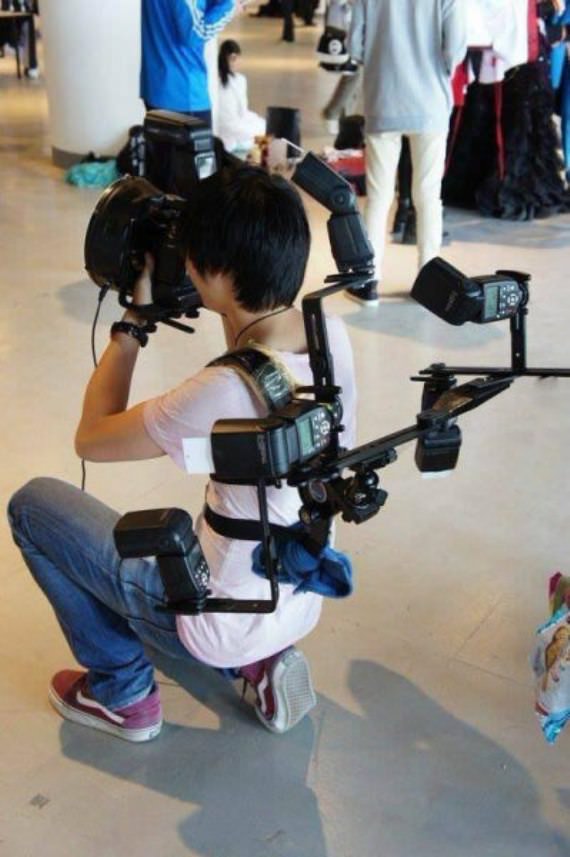
Where is the Samyang 10mm F2.8? A prototype was exhibited at Photokina 2012 and later reformulations of the lens hood, it was announced that it would be shipped to stores in March 2014. The BH site showed Samyang 10mm F2.8 as "new release" and price not available yet, and now it's gone from the site. :-[
First Nikon Experience

- By mackguyver
- Canon General
- 21 Replies
I was shooting an equestrian event last week when a woman climbed into one of the "media only" areas and she had a Nikon D4 and 70-200 f/2.8 VR. She asked me if I her camera settings were correct and said that she had no idea what she was doing and had been "roped" into shooting and handed the camera. Interestingly, it was in Manual mode and just needed some ISO and shutter speed adjustments to match the Manual exposure settings I was using (which were required by the horrible mid-day lighting). It took me a bit to figure out the odd way Nikon makes you hold buttons and turn dial to adjust, but I figured it out. She proceeded to smoke my pathetic 6 FPS frame rate (I think my 5DIII cried :'(), but her exposure was perfect  . I'm still scratching my head to figure out #1, who would "hand" someone that kind of gear and #2 how she ever got it in Manual mode (maybe she had another photog help her at another obstacle?)
Also, I now I understand why people complain about Nikon's ergonomics. I'm sure you get used to it, but it sure seems overly complicated to change such basic settings. And don't ask me what happened when I tried to help her zoom to the right focal length
. I'm still scratching my head to figure out #1, who would "hand" someone that kind of gear and #2 how she ever got it in Manual mode (maybe she had another photog help her at another obstacle?)Also, I now I understand why people complain about Nikon's ergonomics. I'm sure you get used to it, but it sure seems overly complicated to change such basic settings. And don't ask me what happened when I tried to help her zoom to the right focal length
DXOMark: Samyang 24mm f/1.4 for Canon

- By Canon Rumors
- Canon Lenses
- 14 Replies
HTML:
<div name="googleone_share_1" style="position:relative;z-index:5;float: right; /*margin: 70px 0 0 0;*/ top:70px; right:120px; width:0;"><g:plusone size="tall" count="1" href="http://www.canonrumors.com/2014/03/dxomark-samyang-24mm-f1-4-for-canon/"></g:plusone></div><div style="float: right; margin:0 0 70px 70px;"><a href="https://twitter.com/share" class="twitter-share-button" data-count="vertical" data-url="http://www.canonrumors.com/2014/03/dxomark-samyang-24mm-f1-4-for-canon/">Tweet</a></div>
<p>DXOMark has completed their review of the Samyang (Rokinon/Bowers) 24mm f/1.4 for Canon. The lens gets a pretty good review, especially when you consider the <a href="http://www.bhphotovideo.com/c/product/868732-REG/Samyang_SY24M_C_24mm_f_1_4_ED_AS.html/bi/2466/kbid/3296" target="_blank">very good price of $669</a>. When compared the Canon of the same focal length and aperture, you’re paying an <a href="http://www.bhphotovideo.com/c/product/590449-USA/Canon_2750B002_EF_24mm_f_1_4L_II.html/b/2466/kbid/3296" target="_blank">additional $1100 for AF and a better performance wide open</a>.</p>
<p><strong>From DXOMark

</strong><em>“Although the Samyang is a phenomenal performer, when stopped its sharpness wide open doesn’t match that of rival high-speed designs. Given the modest pricing it will no doubt continue to be a popular model but it would be all the more attractive with the addition of automatic aperture control and perhaps AF-assist (though it’s often unreliable without experience). There’s another, often overlooked benefit from the inclusion of data transmission – EXIF data stored in Raw files could be used by third-party software suppliers to apply lens corrections. Future updates such as these would seem likely but for now the Canon mount version is overshadowed by the better performing rivals.” <strong><a href="http://www.dxomark.com/Reviews/Samyang-24mm-F1.4-lens-review-Best-24mm-lens-for-Canon-full-frame-EOS-users" target="_blank">Read the full review</a></strong></em><strong>

</strong></p>
<p><strong><a href="http://www.bhphotovideo.com/c/product/868732-REG/Samyang_SY24M_C_24mm_f_1_4_ED_AS.html/bi/2466/kbid/3296" target="_blank">Samyang 24mm f/1.4 $669</a> | <a href="http://www.bhphotovideo.com/c/product/590449-USA/Canon_2750B002_EF_24mm_f_1_4L_II.html/b/2466/kbid/3296" target="_blank">Canon EF 24mm f/1.4L II $1749</a></strong></p>
<p><strong><span style="color: #ff0000;">c</span>r</strong></p>Patent: Canon EF 180mm f/3.5L IS
- By Canon Rumors
- EOS Bodies
- 13 Replies
HTML:
<div name="googleone_share_1" style="position:relative;z-index:5;float: right; /*margin: 70px 0 0 0;*/ top:70px; right:120px; width:0;"><g:plusone size="tall" count="1" href="http://www.canonrumors.com/2014/03/patent-canon-ef-180mm-f3-5l-is/"></g:plusone></div><div style="float: right; margin:0 0 70px 70px;"><a href="https://twitter.com/share" class="twitter-share-button" data-count="vertical" data-url="http://www.canonrumors.com/2014/03/patent-canon-ef-180mm-f3-5l-is/">Tweet</a></div>
More Canon lens patents have shown up. This time we get some macro patents that also include hybrid IS. We’ve been told that the <a href="http://www.bhphotovideo.com/c/product/112541-USA/Canon_2539A007_Telephoto_EF_180mm_f_3_5L.html/bi/2466/kbid/3296" target="_blank">180mm f/3.5L macro</a> is on its way out, and this could be the direction Canon takes it.</p>
<p>A few other focal lengths also appear in the patent as well such as 200mm & 300mm versions with hybrid IS.</p>
<p>The information below is a Google translation.</p>
<ul>
<li><strong>Patent Publication No. 2014-41224</strong>
<ul>
<li><span>Publication date 2014.3.6</span></li>
<li><span>Filing date 2012.8.22</span></li>
</ul>
</li>
<li><strong>Example 1</strong>
<ul>
<li><span>Zoom ratio 1.37</span></li>
<li><span>Focal length f = 180.03-167.06-131.08mm</span></li>
<li><span>Fno (3.6-4.8-5.8 actual aperture). 3.6-3.3-2.59</span></li>
<li><span>Half angle ω = 6.85-7.38-9.37 °</span></li>
<li><span>Image height 21.64mm</span></li>
<li><span>The overall length of the lens 228.39mm</span></li>
<li><span>BF 68.14mm</span></li>
</ul>
</li>
<li><strong>Example 2</strong>
<ul>
<li><span>Zoom ratio 1.58</span></li>
<li><span>Focal length f = 198.49-164.7-125.48mm</span></li>
<li><span>Fno (3.6-4.8-5.8 actual aperture). 3.6-2.99-2.28</span></li>
<li><span>Half angle ω = 6.22-7.48-9.78 °</span></li>
<li><span>Image height 21.64mm</span></li>
<li><span>The overall length of the lens 231.65mm</span></li>
<li><span>BF 71.4mm</span></li>
</ul>
</li>
<li><strong>Example 3</strong>
<ul>
<li><span>Zoom ratio 1.92</span></li>
<li><span>Focal length f = 289.97-213.39-151.33mm</span></li>
<li><span>Fno (3.6-4.8-5.8 actual aperture). 3.6-2.65-2.21</span></li>
<li><span>Half angle ω = 4.27-5.79-8.14 °</span></li>
<li><span>Image height 21.64mm</span></li>
<li><span>The overall length of the lens 294.36mm</span></li>
<li><span>BF 68.05mm</span></li>
</ul>
</li>
<li><strong>Canon patents</strong>
<ul>
<li><span>Inner focus</span></li>
<li><span>(Part of the fourth lens group) antivibration</span></li>
<li><span>Supports Shifutobure (???)</span></li>
<li><span>Floating</span></li>
</ul>
</li>
</ul>
<p>Source: [<a href="http://egami.blog.so-net.ne.jp/2014-03-12" target="_blank">EG</a>]</p>
<p><strong><span style="color: #ff0000;">c</span>r</strong></p>A7R Lust
- By gjones5252
- Third Party Lenses
- 6 Replies
BH has a promo going on to get a new a7r $300 off when you give them any camera. I have an old point and shoot sitting around, and they will give me the money for it. Also the 55/1.8 is dropped down to 798.
I could get a hi MP camera for a pretty darn good deal, for street and portrait photos. This is super tempting. I have been waiting for a 7d2 to switch from cr1 to cr2/3. Hoping it would be a high megapixel camera. I know some people hate the high megapixels but i would love it! I am super tempted by this a great all around carry camera. I would never leave my 5d's at home for any paid video/photo event. But for all that other stuff? travel? street? fun? it would be so nice to have this.
Any advice on waiting for a hiMP canon(even if it was large body i would still stick with canon)?
From what i understand this zeiss 55 is sharp as it gets and pairs beautifully with this body.
also side note i have thought about waiting for the 501.4 art to come out in ef mount.(but this is no means a small setup with a 5d.
by the way asked my wife for advice- she related it to the boots she just got, so i turn to CR.
I could get a hi MP camera for a pretty darn good deal, for street and portrait photos. This is super tempting. I have been waiting for a 7d2 to switch from cr1 to cr2/3. Hoping it would be a high megapixel camera. I know some people hate the high megapixels but i would love it! I am super tempted by this a great all around carry camera. I would never leave my 5d's at home for any paid video/photo event. But for all that other stuff? travel? street? fun? it would be so nice to have this.
Any advice on waiting for a hiMP canon(even if it was large body i would still stick with canon)?
From what i understand this zeiss 55 is sharp as it gets and pairs beautifully with this body.
also side note i have thought about waiting for the 501.4 art to come out in ef mount.(but this is no means a small setup with a 5d.
by the way asked my wife for advice- she related it to the boots she just got, so i turn to CR.
5D3 sharper images when using manual exposure (allegedly!)
Just a quick question on behalf of a work colleague. I should say I'm very sceptical, but anyway.....
He uses a 5D3 and 70-200mm f2.8 mk2 to shoot football matches. Normally he would keep things at f2.8 (thanks to the near-constant Scottish gloom) and let the camera do the rest. Whilst pretty happy with those results, for whatever reason decided to go fully manual and constantly juggle aperture and shutter speed to suit. Auto ISO is not used. He claims (RAW) exposures need next to no tweaking regarding over/under exposure. Now here's the thing, he says images appear sharper as a result of using manual exposure compared to Av priority.
I said I doubted things being sharper unless he's just using an "on average" faster shutter speed thus reducing any shake. He's been taking football pics for years and should know the minimum shutter speed he can get away with and seems quite convinced of the improvement.
So, sharper images when using manual exposure - is he just fooling himself? The obvious thing is for him to set up a test chart and do an Av priority shot compared to a manual exposure one. Personally, I ain't buying it.
Any thoughts?
He uses a 5D3 and 70-200mm f2.8 mk2 to shoot football matches. Normally he would keep things at f2.8 (thanks to the near-constant Scottish gloom) and let the camera do the rest. Whilst pretty happy with those results, for whatever reason decided to go fully manual and constantly juggle aperture and shutter speed to suit. Auto ISO is not used. He claims (RAW) exposures need next to no tweaking regarding over/under exposure. Now here's the thing, he says images appear sharper as a result of using manual exposure compared to Av priority.
I said I doubted things being sharper unless he's just using an "on average" faster shutter speed thus reducing any shake. He's been taking football pics for years and should know the minimum shutter speed he can get away with and seems quite convinced of the improvement.
So, sharper images when using manual exposure - is he just fooling himself? The obvious thing is for him to set up a test chart and do an Av priority shot compared to a manual exposure one. Personally, I ain't buying it.
Any thoughts?
B&H or Adorama
- By Glennard
- Third Party Lenses
- 97 Replies
need help guys, this will be my first purchase on expensive glass. B&H and Adorama both have deals on Tamron 24-70mm.
Adorama deal: Tamron SP 24-70mm f/2.8 Di VC USD Lens for Canon EOS - U.S.A. Warranty - Bundle - with New Leaf 3 Year (Drops & Spills) Warranty, Lowepro Lens Exchange 100AW Black, Hoya Alpha 82MM UV Filter = $1,224.00 (with $100 rebate)
B&H deal: Tamron SP 24-70mm f/2.8 DI VC USD Lens WITH 4% rewards = $1,299.00 (with $100 rebate).
thanks everyone, i might purchase the lens tomorrow or definitely sometime this week.
Adorama deal: Tamron SP 24-70mm f/2.8 Di VC USD Lens for Canon EOS - U.S.A. Warranty - Bundle - with New Leaf 3 Year (Drops & Spills) Warranty, Lowepro Lens Exchange 100AW Black, Hoya Alpha 82MM UV Filter = $1,224.00 (with $100 rebate)
B&H deal: Tamron SP 24-70mm f/2.8 DI VC USD Lens WITH 4% rewards = $1,299.00 (with $100 rebate).
thanks everyone, i might purchase the lens tomorrow or definitely sometime this week.
70D - 2 Weeks With Dual Pixel
- By JohnDizzo15
- EOS DSLR
- 0 Replies
I just received a 70D in the mail yesterday for my buddy who has asked me to put it through it's paces for the next two weeks and share my findings.
While I already knew that the dual pixel tech was going to be decently quick, I am still very surprised by how well it is performing so far. I find that it is much more consistently quick even in less than ideal lighting conditions than both my x100s and xe-2.
The lenses I have tested so far are the 24II, 35 IS, 50L, and 135. All have been consistently quick which is quite amazing (to me at least).
IQ is still less than desirable when bumping up ISO to 1600+ as expected so nothing to write home about there. But the real gem here is the dual pixel technology. Finally experiencing it for myself, I am now beyong excited to get an updated full frame body with the feature as it will be nothing short of stunning. Dual pixel, in conjunction with a hybrid vf + full frame sensor would make me soil myself.
While I already knew that the dual pixel tech was going to be decently quick, I am still very surprised by how well it is performing so far. I find that it is much more consistently quick even in less than ideal lighting conditions than both my x100s and xe-2.
The lenses I have tested so far are the 24II, 35 IS, 50L, and 135. All have been consistently quick which is quite amazing (to me at least).
IQ is still less than desirable when bumping up ISO to 1600+ as expected so nothing to write home about there. But the real gem here is the dual pixel technology. Finally experiencing it for myself, I am now beyong excited to get an updated full frame body with the feature as it will be nothing short of stunning. Dual pixel, in conjunction with a hybrid vf + full frame sensor would make me soil myself.
Speedlite transmitters ST-E3-RT and ST-E2 at the same time?
- By stonerobertc
- Lighting
- 3 Replies
Does anyone know if it is possible to use both the Speedlite radio transmitter and the Speedlite optical transmitter at the same time with one camera by using a PC terminal and an extra shoe or something like that? I have a 5DMkIII and an optical transmitter with several flashes. Considering purchasing the new radio Speedlites. Any idea if both transmitters could somehow be connected to a camera at the same time and if they would work together so that you could mix radio and optical slave flashes without having to use the 600EX-RT as optical?
Anyone using Honl flash gel filter
Anyone using the Honl flash gel filters? How do you rate the performance?
I'm thinking of ordering these from BH. It will be of great help if you could guide me with what accessories to buy with it (the speed strap is a given) - I'm going to be using these on 600 RTs.
Thanks in advance for your help.
Best regards ... J.R.
I'm thinking of ordering these from BH. It will be of great help if you could guide me with what accessories to buy with it (the speed strap is a given) - I'm going to be using these on 600 RTs.
Thanks in advance for your help.
Best regards ... J.R.
EOS 7D Replacement Mentioned Again [CR1]
- By Canon Rumors
- EOS Bodies
- 164 Replies
HTML:
<div name="googleone_share_1" style="position:relative;z-index:5;float: right; /*margin: 70px 0 0 0;*/ top:70px; right:120px; width:0;"><g:plusone size="tall" count="1" href="http://www.canonrumors.com/2014/03/eos-7d-replacement-mentioned-again-cr1/"></g:plusone></div><div style="float: right; margin:0 0 70px 70px;"><a href="https://twitter.com/share" class="twitter-share-button" data-count="vertical" data-url="http://www.canonrumors.com/2014/03/eos-7d-replacement-mentioned-again-cr1/">Tweet</a></div>
<p>A few bits of information about the possible replacement to the EOS 7D are trickling in, although there’s nothing I would call concrete.</p>
<p>We’re told again that the camera is being tested with some kind of a “hybrid viewfinder”, no details were given. Although, it’s possible the feature doesn’t make it into the production camera. A brand new image sensor will appear in the camera, with a resolution just under 25mp.</p>
<p>The camera will have dual memory card slots, CF and SD. Retaining CF is a big deal and will make a lot of people happy.</p>
<p>The camera is said to have the most features at the software level of any Canon DSLR ever, though there were no examples of what could possibly be new. I do agree this camera will have to be extremely feature rich to be successful.</p>
<p>It doesn’t feel like the hype machine has started yet, so I do not think the camera is “around the corner”.</p>
<p><strong><span style="color: #ff0000;">c</span>r</strong></p>Comparison: Canon EF 24-105 f/4L IS vs Sigma 24-105 f/4 DG OS
- By Canon Rumors
- Canon Lenses
- 4 Replies
HTML:
<div name="googleone_share_1" style="position:relative;z-index:5;float: right; /*margin: 70px 0 0 0;*/ top:70px; right:120px; width:0;"><g:plusone size="tall" count="1" href="http://www.canonrumors.com/?p=16017"></g:plusone></div><div style="float: right; margin:0 0 70px 70px;"><a href="https://twitter.com/share" class="twitter-share-button" data-count="vertical" data-url="http://www.canonrumors.com/?p=16017">Tweet</a></div>
<p>Roger at LensRentals.com has completed his comparison of the <a href="http://rover.ebay.com/rover/1/711-53200-19255-0/1?icep_ff3=2&pub=5574981434&toolid=10001&campid=5337238466&customid=&icep_item=141091727885&ipn=psmain&icep_vectorid=229466&kwid=902099&mtid=824&kw=lg" target="_blank">Canon EF 24-105 f/4L IS</a> and the <a href="http://www.bhphotovideo.com/c/product/1009621-REG/sigma_635_101_24_105mm_f4_dg_os.html/bi/2466/kbid/3296" target="_blank">Sigma 24-105 f/4 DG OS</a>.</p>
<p>Lots of people ask us which lens to buy and we usually say get the one for the best price, which for the last few months has been the Canon variant. While the Sigma is a very good lens, it’s not head and shoulders above the Canon by most accounts, if at all.</p>
<p><strong>Says Roger

</strong><em>“Sigma has made a very nice zoom here at a very good price. It’s obviously not going to create the stir that occurred with their 35mm f/1.4 or 18-35 f/1.8 lenses, but it’s a nice addition to their lineup.</em></p>
<p><em>Canon shooters who have a 24-105 f/4 IS have no reason to change based on optics as long as the promotional pricing remains in effect. The Sigma and Canon 24-105s are nearly identical. Similarly the Nikon 24-120 has been available on discount lately, so I don’t see a big motivation for Nikon shooters to change, either.</em></p>
<p><em>Of course, if the pricing changes I wouldn’t hesitate to buy the Sigma instead of the name brands. If nothing else, I think the presence of the Sigma will keep Canon and Nikon prices reasonable.</em></p>
<p><em>I expect as this lens is released in other mounts it will be quite popular. There’s a reason Canon has sold about 3 gazillion 24-105s. It’s a very good lens with a very useful range. The Sigma will be available for Sony shooters next month and may be the best option in that mount.” <strong><a href="http://www.lensrentals.com/blog/2014/03/a-24-105-comparison" target="_blank">Read the full review</a></strong></em></p>
<p><strong><a href="http://rover.ebay.com/rover/1/711-53200-19255-0/1?icep_ff3=2&pub=5574981434&toolid=10001&campid=5337238466&customid=&icep_item=141091727885&ipn=psmain&icep_vectorid=229466&kwid=902099&mtid=824&kw=lg" target="_blank">Canon EF 24-105 f/4L IS $682</a> | <a href="http://www.bhphotovideo.com/c/product/1009621-REG/sigma_635_101_24_105mm_f4_dg_os.html/bi/2466/kbid/3296" target="_blank">Sigma 24-105 f/4 DG OS $899</a></strong><em><strong>

</strong></em></p>
<p><strong><span style="color: #ff0000;">c</span>r</strong></p>A7 / A7R Reviewed by Thom Hogan
- By J.R.
- Third Party Lenses
- 9 Replies
Thom Hogan has completed his review of the A7 / A7R. This bit of his review stands out for me -
Full review here ... http://www.sansmirror.com/cameras/a-note-about-camera-reviews/sony-nex-camera-reviews/sony-a7-and-a7r-review.html
So basically ... no, I'm not considering the A7R any longer. 8)
Image Quality: Okay, we are now in one area where I know I’m going to get a lot of blowback: image quality. The number one thing I heard the fanboys all rejoicing about when the A7r was announced was this: “Yes! D800E quality in a smaller, lighter, less expensive body.” No, the A7r produces less than D800E quality in a less expensive body. If you want a free lunch, I suggest you try the local rescue mission.
The difference isn’t actually easy to describe because it involves what’s going on behind the covers. But let me lay out the basics: the D800E will shoot 14-bit raw files with no underlying artifacts and fully recoverable data. The A7r will shoot 11-bit raw files with potential posterization issues in the data. The same is true of the A7 versus a D610, too.
Let’s start with the 11-bit thing. Sony always uses compression in storing raw files. The way they do that is quite clever. They slice each pixel row into 32 pixel blocks. In a Bayer sensor, that means two colors, each with 16 data points). For each 16 pixels of a color, Sony looks at the minimum and maximum pixel values for each and stores that. For the other 14 pixels they store a 7-bit value that is offset from the minimum value. In essence, they get 32 pixel values stored in 16 bytes, when normally 11-bit storage for that data should take 44 bytes.
This is not lossless compression. It is highly lossy. Nor is it visually lossless. That’s because when you have an extreme set of values in the 32-pixel block (e.g. sun peaking out from behind tree edge), you get posterization of data. Don’t believe me? See this article, which describes it better than I can in the limited space of a review. Indeed, every A7/A7r owner should probably have a copy of RawDigger so that they can understand exactly where the issues in their raw files lay. Even Nikon’s optional visually lossless compression scheme does a better job at this, as it hides its posterization only in very bright values that our eyes just don’t resolve.
This factor alone means that the A7r is not equivalent to a D800E. Sorry fanboys, but those of us who want high performance cameras actually want real performance, not a simulation. (I should point out that this compression scheme is used in most Sony cameras now, including the RX1, which is where I first noticed it.)
Coupled with other issues (see Shutter Slap, below), the A7r simply doesn’t match my D800E in optimal collection of raw data. Remember, I used to write a column called Optimal Data, and that’s my mantra when shooting: collect optimal data.
Full review here ... http://www.sansmirror.com/cameras/a-note-about-camera-reviews/sony-nex-camera-reviews/sony-a7-and-a7r-review.html
So basically ... no, I'm not considering the A7R any longer. 8)
1.4 lenses kwestion
- By twdi
- Canon Lenses
- 12 Replies
I also wander, most 1.4 lenses are not very sharp at 1.4 and need to stop down to get sharp.
Why should I then consider such an expensive 1.4 lens, when a 2.8 variant (like the 24-70 2.8) has the same IQ at 2.8?
Why should I then consider such an expensive 1.4 lens, when a 2.8 variant (like the 24-70 2.8) has the same IQ at 2.8?
Canon 52mm Drop-in Filter Holder
- By AdamF
- Canon Lenses
- 2 Replies
I don't know if this topic has been discussed but I am curious for answers so I will start this discussion. I moved this topic, I had it in the wrong forum section.
I am buying the Canon 300mm F2.8 II lens and I saw the Drop-in filter holder at B&H.
http://www.bhphotovideo.com/c/product/763737-REG/Canon_4773B001_52mm_Drop_in_Gelatin_Filter.html
Does anyone use this that owns a large Canon prime ? If yes, what filters do you use in the filter holder ?
I would like to use a 52mm graduated neutral density filter with the 300mm lens and I was talking to a guy at B&H and he said by using a graduated neutral density filter in the filter holder, I wouldn't get the same results as if I were using it on a lens that has screw in threads on the front of the lens. Do you think this is true ?
Has anyone used a gradated neutral density filter in this Drop-in filter holder ? If yes, how were the results ?
Thanks.
I am buying the Canon 300mm F2.8 II lens and I saw the Drop-in filter holder at B&H.
http://www.bhphotovideo.com/c/product/763737-REG/Canon_4773B001_52mm_Drop_in_Gelatin_Filter.html
Does anyone use this that owns a large Canon prime ? If yes, what filters do you use in the filter holder ?
I would like to use a 52mm graduated neutral density filter with the 300mm lens and I was talking to a guy at B&H and he said by using a graduated neutral density filter in the filter holder, I wouldn't get the same results as if I were using it on a lens that has screw in threads on the front of the lens. Do you think this is true ?
Has anyone used a gradated neutral density filter in this Drop-in filter holder ? If yes, how were the results ?
Thanks.
just hit the purchase button
I had saved money for the Sigma 35f/1.4 A, but my tax return was higher than I expected, so I just ordered the Canon 24-70f/2.8 II instead!!! Wish me luck!
A.
A.
Nikon vs Sigma VR patent infringement case

- By Rienzphotoz
- Third Party Manufacturers
- 2 Replies
Over at Nikonrumors they posted this:
The Tokyo district court ordered Sigma to pay 1.5 billion JPY (around 14.5 million dollars) compensation to Nikon as a result of the patent infringement case for lenses with VR technology that was filed back in 2011. The lawsuit was based on six Sigma lenses with image stabilization technology. Initially Nikon was looking for a compensations of 12 billion yen (around 116 million dollars).
Here is the summary of the judgment:
"Nikon obtained the patent related to VR technology in 2002. The content of the patented invention relates to technology wherein a vibration detection device, which detects the amount of camera vibration at angles around photographic objects, prevents the influence of vibration of a motor for lens and thereby allows more accurate photo shots. Sigma affirms that the scope of the patented invention does not include any functions which reduce the influence of camera shake. However, Mr. Osuga, the Judge in Chief, states that the effects of the invention in Nikon’s specification is described as “it allows image blur to be reduced” and that the specification clears that it includes camera shake. Thus, Mr. Osuga stands for Nikon’s assertion. In addition, Mr. Osuga points out that image blur prevention system requires various control functions, and he states that this patented invention of Nikon’s should be rewarded based on the contribution of the patent to the defendant’s products, that is 15%. Therefore, the Tokyo District Court calculated profits earned by Sigma to be a maximum of 10.1 billion JPY, and found compensation of damages to be 15% of the profits of the accused products earned by Sigma."
The Tokyo district court ordered Sigma to pay 1.5 billion JPY (around 14.5 million dollars) compensation to Nikon as a result of the patent infringement case for lenses with VR technology that was filed back in 2011. The lawsuit was based on six Sigma lenses with image stabilization technology. Initially Nikon was looking for a compensations of 12 billion yen (around 116 million dollars).
Here is the summary of the judgment:
"Nikon obtained the patent related to VR technology in 2002. The content of the patented invention relates to technology wherein a vibration detection device, which detects the amount of camera vibration at angles around photographic objects, prevents the influence of vibration of a motor for lens and thereby allows more accurate photo shots. Sigma affirms that the scope of the patented invention does not include any functions which reduce the influence of camera shake. However, Mr. Osuga, the Judge in Chief, states that the effects of the invention in Nikon’s specification is described as “it allows image blur to be reduced” and that the specification clears that it includes camera shake. Thus, Mr. Osuga stands for Nikon’s assertion. In addition, Mr. Osuga points out that image blur prevention system requires various control functions, and he states that this patented invention of Nikon’s should be rewarded based on the contribution of the patent to the defendant’s products, that is 15%. Therefore, the Tokyo District Court calculated profits earned by Sigma to be a maximum of 10.1 billion JPY, and found compensation of damages to be 15% of the profits of the accused products earned by Sigma."
Tamron 150-600mm focusing issue with Canon 7D body
- By stegosaurus
- Third Party Lenses
- 2 Replies
I had purchased this lens from my local camera shop and was disappointed when I discovered that it would only focus on my 5D Mark III body. It would stall and quit trying to achieve focus on the 7D if I had focused on a near object, moved to focus on a far object and moved back to a nearer object. I took it back and tried 2 more copies of the lens but all had the same issue. That night after trying to solve it by carefully looking at the 7D setup, I realized that Custom Function III Option 4 was set to stop the lens drive if focus couldn't be achieved. I reset this to "1" and then went back to my camera dealer to try the Tamron again. Problem solved!
I've seen quite a few posts with similar problems on a couple different Canon bodies. I don't know if what I did would fix those issues, but it certainly took care of me problem. I am still just now trying the lens (I just got it today) but so far I am very happy with the focus and speed of focus.
Paul
I've seen quite a few posts with similar problems on a couple different Canon bodies. I don't know if what I did would fix those issues, but it certainly took care of me problem. I am still just now trying the lens (I just got it today) but so far I am very happy with the focus and speed of focus.
Paul
What to do with an old 17-85 f4-5.6 IS USM?
- By btaoka
- Canon Lenses
- 6 Replies
I have an old 17-85 f4-5.6 IS USM that hasn't been used in about 4 years but is still in excellent condition. I've searched around briefly and the most I can get for it seems to be about $100-$150 (originally paid about $600 in 2008). What do other people do with lenses like this that will probably never get used again?
-
Poll
Owning a 600mm f/4 II, 200-400mm, 300mm f/2.8 II, Tamron 150-600mm

- By AlanF
- Canon Lenses
- 86 Replies
We have an interesting thread of who would prefer a 600mm f/4 II versus 200-400mm f/4. Let's get down to the nitty gritty of who has actually bought or is in the process of buying one or more of the lenses discussed in the thread.
1D IV or 5D III or other - Wildlife photos

- By TrabimanUK
- EOS Bodies
- 9 Replies
Hi guys,
I appreciate that this is a bit early, and there is still a chance the mythical 7DII might appear, but I'm starting to draw up a list of camera gear for my safari in September.
Last time we took a 7D, 2x60D and a 40D, coupled to a 100-400, 70-200 2.8II and a 24-70 each, giving us wide and reach and no need to change lenses.
We have recently purchased a 5D2, which was at a bargain price, so that is on the cards for taking this time, thogh is a bit slow for wildlife. We are looking to upgade some the kit this time (at least the 40D), and within the budget limit of about £1800, the following cameras fall out with good fps and at least good(ish) IQ:
I know the 1DX is a killer, having played with one, but it is way unaffordable, and I have no intention to hire, as I can always sell the camera when get back to the UK (it's what we do with the Canon 100-400), so that it effectvely becomes a "free" hire.
So the question is, with a budget of £1800, what would be the best camera to go for, assumning tht the 7Dii doesn't appear, or should I go for e.g. 2 more 7D?
Huge thanks in advance,
Grant
I appreciate that this is a bit early, and there is still a chance the mythical 7DII might appear, but I'm starting to draw up a list of camera gear for my safari in September.
Last time we took a 7D, 2x60D and a 40D, coupled to a 100-400, 70-200 2.8II and a 24-70 each, giving us wide and reach and no need to change lenses.
We have recently purchased a 5D2, which was at a bargain price, so that is on the cards for taking this time, thogh is a bit slow for wildlife. We are looking to upgade some the kit this time (at least the 40D), and within the budget limit of about £1800, the following cameras fall out with good fps and at least good(ish) IQ:
- 1D IV
5D III
7D (mark 1)
70D
I know the 1DX is a killer, having played with one, but it is way unaffordable, and I have no intention to hire, as I can always sell the camera when get back to the UK (it's what we do with the Canon 100-400), so that it effectvely becomes a "free" hire.
So the question is, with a budget of £1800, what would be the best camera to go for, assumning tht the 7Dii doesn't appear, or should I go for e.g. 2 more 7D?
Huge thanks in advance,
Grant
Patent: EF 16-35 f/4L, 17-40 f/4L and Others
- By Canon Rumors
- EOS Bodies
- 45 Replies
HTML:
<div name="googleone_share_1" style="position:relative;z-index:5;float: right; /*margin: 70px 0 0 0;*/ top:70px; right:120px; width:0;"><g:plusone size="tall" count="1" href="http://www.canonrumors.com/2014/03/patent-ef-16-35-f4l-17-40-f4l-and-others/"></g:plusone></div><div style="float: right; margin:0 0 70px 70px;"><a href="https://twitter.com/share" class="twitter-share-button" data-count="vertical" data-url="http://www.canonrumors.com/2014/03/patent-ef-16-35-f4l-17-40-f4l-and-others/">Tweet</a></div>
A slew of patents showing various wide angle optical formulas has appeared. All of the lenses appear to be for full frame and could be hints of replacements for the <a href="http://www.bhphotovideo.com/c/product/279582-USA/Canon_8806A002_EF_17_40mm_f_4L_USM.html/bi/2466/kbid/3296" target="_blank">EF 17-40 f/4L</a> as well as the <a href="http://www.bhphotovideo.com/c/product/486708-USA/Canon_1910B002AA_EF_16_35mm_f_2_8L_II.html/bi/2466/kbid/3296" target="_blank">EF 16-35 f/2.8L II</a>.</p>
<ul>
<li><span>Patent Publication No. 2014-41245</span>
<ul>
<li><span>Publication date 2014.3.6</span></li>
<li><span>Filing date 2012.8.22</span></li>
</ul>
</li>
<li><span>Example 1</span>
<ul>
<li><span>Focal length f = 16.49-23.55-33.95mm</span></li>
<li><span>Fno. 4.10</span></li>
<li><span>Half angle ω = 52.68-42.57-32.51 °</span></li>
<li><span>14 pieces of 10-group lens configuration</span></li>
</ul>
</li>
<li><span>Example 2</span>
<ul>
<li><span>Focal length f = 17.50-25.45-38.90mm</span></li>
<li><span>Fno. 4.10</span></li>
<li><span>Half angle ω = 51.03-40.36-29.08 °</span></li>
<li><span>15 pieces of 11-group lens configuration</span></li>
</ul>
</li>
<li><span>Example 4</span>
<ul>
<li><span>Focal length f = 17.50-24.82-38.89mm</span></li>
<li><span>Fno. 2.88-3.25-4.10</span></li>
<li><span>Half angle ω = 51.02-41.08-29.09 °</span></li>
<li><span>15 pieces of 11-group lens configuration</span></li>
</ul>
</li>
<li><span>Example 5</span>
<ul>
<li><span>Focal length f = 16.50-25.34-34.00mm</span></li>
<li><span>Fno. 2.91</span></li>
<li><span>Half angle ω = 52.66-40.49-32.47 °</span></li>
<li><span>15 pieces of 11-group lens configuration</span></li>
</ul>
</li>
<li><span>Canon</span><span> patents</span>
<ul>
<li><span>4-group zoom of positive and negative positive negative</span></li>
<li><span>Inner focus</span></li>
</ul>
</li>
</ul>
<p>Source: [<a href="http://egami.blog.so-net.ne.jp/2014-03-10" target="_blank">EG</a>]</p>
<p><strong><a href="http://www.bhphotovideo.com/c/product/279582-USA/Canon_8806A002_EF_17_40mm_f_4L_USM.html/bi/2466/kbid/3296" target="_blank">Canon EF 17-40 f/4L</a> | <a href="http://www.bhphotovideo.com/c/product/486708-USA/Canon_1910B002AA_EF_16_35mm_f_2_8L_II.html/bi/2466/kbid/3296" target="_blank">Canon EF 16-35 f/2.8L II</a></strong></p>
<p><strong><span style="color: #ff0000;">c</span>r</strong></p>Lens Advise for Europe Vacation
- Canon Lenses
- 21 Replies
Hello all,
It's been awhile since I've posted here, but I have a fairly cliche question: What lenses do I take for a vacation? My wife and I are heading to Paris for a week in a few days, and I'm having a harder time than I would have thought picking the lenses I want to take with me. Here's what I've got:
Sigma 12-24mm
Canon TS-E 24mm f/3.5L II (*)
Canon 24-70mm f/2.8L II (*)
Sigma 35mm f/1.4
Sigma 50mm f/1.4
Canon 70-200mm f/2.8L II
Canon 85mm f/1.2L II
Canon 100mm f/2.8L (+)
Canon 135mm f/2L
(*) = Definitely taking, (+) = Not taking.
I'm fairly certain I'm going to take the 70-200mm for some people shots, as well as the 35mm for some evening photos after the sun has set. Otherwise, I'm pretty up in the air. I'm mostly interested in photographing the architecture and museums.
I'd like to keep it to six lenses, but I could conceivably take them all since my carryon will be a pelican case.
As a side question, I've already covered the red lines on all my lenses with gaffers tape. I realize I'm probably being a little paranoid, but does anyone have other suggestions for protecting my gear? I'm planning on using a messenger bag instead of a backpack and keeping it buckled.
Thanks, everyone!
** EDIT: I'll be shooting with my 5Dm3 **
It's been awhile since I've posted here, but I have a fairly cliche question: What lenses do I take for a vacation? My wife and I are heading to Paris for a week in a few days, and I'm having a harder time than I would have thought picking the lenses I want to take with me. Here's what I've got:
Sigma 12-24mm
Canon TS-E 24mm f/3.5L II (*)
Canon 24-70mm f/2.8L II (*)
Sigma 35mm f/1.4
Sigma 50mm f/1.4
Canon 70-200mm f/2.8L II
Canon 85mm f/1.2L II
Canon 100mm f/2.8L (+)
Canon 135mm f/2L
(*) = Definitely taking, (+) = Not taking.
I'm fairly certain I'm going to take the 70-200mm for some people shots, as well as the 35mm for some evening photos after the sun has set. Otherwise, I'm pretty up in the air. I'm mostly interested in photographing the architecture and museums.
I'd like to keep it to six lenses, but I could conceivably take them all since my carryon will be a pelican case.
As a side question, I've already covered the red lines on all my lenses with gaffers tape. I realize I'm probably being a little paranoid, but does anyone have other suggestions for protecting my gear? I'm planning on using a messenger bag instead of a backpack and keeping it buckled.
Thanks, everyone!
** EDIT: I'll be shooting with my 5Dm3 **
Group Buy: 70-200 F2.8L Non-IS for Amatuer
- By milkrocks
- Canon Lenses
- 2 Replies
Evening,
Thanks to everyone who provided advice about putting together a kit for a new baby. The gear I ended up with has been perfect thus far.
Current Kit:
6D & EOS 3
24-105L
Sigma 105 Macro (not as good as the canon but i picked up a used copy for $450 - well worth it)
50 F1.8, 40 2.8
EOS M, 18-55 & 22 f2
So I'm thinking I'll want a telephoto at some point for the 6D. In a perfect world I'd get a 70-200 F2.8L IS II and a 1.4X and 2X teleconverter kit. The $3000+ that this would cost however isn't possible now and won't be anytime soon.
The 70-200 F2.8L is part of the group buy on canonpricewatch for $1079. This seems like a great deal. The 70-200 F4L IS is also available at a great price, but I'm definitely less interested as I think if i was going to buy an F4+ tele zoom I'd either buy the 70-300 non-L to save cash or the 70-300L for its versatility and size.
Thoughts on the Non-IS 70-200 f2.8? Could it be a lens i have and use for a long time? I'm thinking I'd add at least the 1.4 at some point. This would primarily be for outdoor portrait situations, for when the kid starts running around a bit more and eventually for some youth sports action.
Thanks everyone,
Christian
Thanks to everyone who provided advice about putting together a kit for a new baby. The gear I ended up with has been perfect thus far.
Current Kit:
6D & EOS 3
24-105L
Sigma 105 Macro (not as good as the canon but i picked up a used copy for $450 - well worth it)
50 F1.8, 40 2.8
EOS M, 18-55 & 22 f2
So I'm thinking I'll want a telephoto at some point for the 6D. In a perfect world I'd get a 70-200 F2.8L IS II and a 1.4X and 2X teleconverter kit. The $3000+ that this would cost however isn't possible now and won't be anytime soon.
The 70-200 F2.8L is part of the group buy on canonpricewatch for $1079. This seems like a great deal. The 70-200 F4L IS is also available at a great price, but I'm definitely less interested as I think if i was going to buy an F4+ tele zoom I'd either buy the 70-300 non-L to save cash or the 70-300L for its versatility and size.
Thoughts on the Non-IS 70-200 f2.8? Could it be a lens i have and use for a long time? I'm thinking I'd add at least the 1.4 at some point. This would primarily be for outdoor portrait situations, for when the kid starts running around a bit more and eventually for some youth sports action.
Thanks everyone,
Christian
Attachments

Load more
Filter
Forum statistics






Gallery statistics
- Categories
- 1
- Albums
- 29
- Uploaded media
- 372
- Embedded media
- 1
- Comments
- 25
- Disk usage
- 1 GB