• The Canon Rumors Forum has officially been shut down as of July 10, 2026.

    All data will be deleted on September 16, 2026.

    the ad free experience will return by July 17, 2026.

Glass is the most important?

I am a geek. I have a PhD in biophysics, and built my first computer at 13 in the early 90's (yes yes i'm 'young' too). I love gear and i love the technical aspect of photography. i like charts, graphs and statistical significant repetitions. I am a gear junkie and i am going to go cold turkey!

There are many MANY lenses i want. There are many lenses I can mental justify that i need. There are maybe a couple of lenses i genuinely need (ok, i'm good at convincing myself)! But in 2014 I am aiming to have a kit free year. Baring disaster, I am not going to buy any new kit, lenses, bodies, anything (well maybe film if it should arise).

I have just up-graded my laptop and updated my LR catalogue to include all my old photos... I obviously perused my old shots, sauntering down memory lane and i realised that there are some really good ones. Granted not the ones i thought were good at the time, but still. These were taken with a basic DSLR kit.

I am a gear-head and i believe glass is more important than the body. But I also believe the picture is most important of all!

So, I am putting my efforts into creating new photographic importunities over new gear.

A pint to the person who can correctly guess what week of the year i fold!

Now where did i put my drink....

Thoughts on repurposing a guinea pig cage as an slr cage?

I coach softball and I'd like to be able to tape games & practice and then send clips to the girls and tell them to do better.

But I was concerned about leaving my body and lens exposed to foul balls.

Our guinea pig just died so I was thumping about using his 3'x2'x2' cave to house my camera.

I would get a bendy tripod and attach it to the base of the cage. Attach the camera, hit record, attach the top of the cage and done.

Am I missing anything here?

On the spot flexible recording settings

Hi,

I do b-roll and interviews for a videographer, and i'm fine shooting when i have time to set-up etc... but i find when i am doing some wildlife photography i sometimes want to film and in the spur of the moment i have missed a lot of what could have been great footage.

I am putting my C3 setting on my 5d iii to a dedicated 'emergency filimg' mode. Any advice would be welcome, but at the moment it is:
Manual mode
Auto ISO (100-12800)
1/50
f/8
1920 25p, ALL I
Neutral picture (everything on 0)

considering i will be shooting with telephoto, i can not expect the sound anyway.

does anyone else have a similar mode? thoughts, comments, improvements, suggestions?

thanks, i'm off shooting tigers again this weekend, and would like to actually get some footage as well as photos! :)

Eos 6D & GPS is just Great!

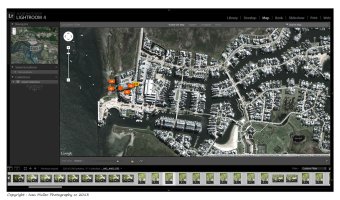
When I bought my 6D towards the end of last year I thought the build in GPS feature was just another gimmick. But after activating it and seeing all the info now just one click away in Lightroom4, I actually regard it as a 'must have' for any travel photographer. I recently traveled to Cape Town and also Plettenberg Bay on the Garden route. I can now go back and precisely see where each photograph was made and things like streets & towns and minor roads are now easy to identify. My wife is now also spared her tedious travelling duties of jotting down in my notebook each and every location, plus a description, of where I stopped and photographed!

Shown here an owl that we spotted in atree just outside our restaurant on Thesen Island in the Knysna Lagoon and the exact position where I stood, clearly shown on the map.

More of my Garden route photographs and a short review of the GPS function can be seen here at:

http://thelazytravelphotographer.blogspot.com/2014/03/eos-6d-review-part-2-gps-garden-route.html

Attachments

  • Ivan-M--4570--Denoise-Viveza-D.jpg
    Ivan-M--4570--Denoise-Viveza-D.jpg
    852.8 KB · Views: 375
  • Screenshot-2014-03-04-14.14.jpg
    Screenshot-2014-03-04-14.14.jpg
    447.1 KB · Views: 398

Tele-lens on a budget

Hi, trying to figure out how to get "max" tele-reach on a budget for shooting large BIF. Let's say my budget is maximum $2000. Obviously the "great whites" 500/600+ are out of my budget. I currently have a 7D with 70-200mm 2.8L IS II + 2X vIII converter, which I find I always use at the 400 mm setting. I am however not satisfied with the image quality of that combo at f5.6. At f7.1 it is better, but still leaves a bit to be desired. I have AFMA it using FoCal.

I have been looking at the following options:

- Canon 400mm f5.6L (old design, seems to have good image quality, no IS)
- Tamron 150-600mm (heavy, large, don't really need the zoom, sceptical about purchasing an expensive 3rd party lens)

Any other suggestions/advise? Thanks in advance. :)

Filters Question

Hello
I have a 5D II with EF 24-70 2.8 I.
I want to buy a variable ND filter and a circular polarizing filter. For both filters i think that is better to buy 82mm filters although my lens is 77mm, because in the future maybe I will buy some other lens..Am I right?
Have you any suggestion for these filters? For the ND i saw the Hoya variable ND, what is your opinion is it worth? For the Circular Polarizer I saw the B+W Kaesemann XS-Pro Circular Polarizer MRC Nano Filter.. Please tell me your thoughts.
Thank you in advance

Bryan from The Digital Picture made a full review of Tamron 150-600mm

Bryan already reviewed the new Tamron 150-600mm f/5-6.3 Di VC USD Lens. He says "This highly anticipated lens has been a very fun lens to evaluate. While autofocus performance and over-500mm image quality get my vote for this lens' weaknesses, the Tamron 150-600 still has a great deal going for it. The Tamron 150-600mm f/5-6.3 Di VC USD Lens is defined by attractive image quality over a great focal length range with a relatively compact, light, reasonably well-built design that includes Vibration Control and a very attractive price"

here is the link:
http://www.the-digital-picture.com/Reviews/Tamron-150-600mm-f-5-6.3-Di-VC-USD-Lens.aspx

Anything shot with an EOS-3 35mm

I felt a bit nostalgic and picked up an EOS-3 35mm film camera and was pleasantly surprised i could still find 35mm film being sold at CVS. Ive been shooting with a 5diii and 7d for so long i forgot what film images really look like. Im still on my first roll of film but wondering if anyone else still uses a 3 for photography. I used to shoot a lot of black and white in the day and barely recall the excellent dynamic range that film can capture. I am somewhat excited over this...maybe as much as when i first switched to digital in the 90s.

Post some of your digitized images here.

Flash help

I done a shoot at my local Go-Kart track two night’s back and found the failings of me and my Sigma flash unit, it (me?) blew some photos out and failed to fire on others, probably due to recycle time (7 sec’s), so I went to my local dealers to price what they had and I would like to pick everyone’s brains about a potential purchase.
I looked at three units, the Canon 430, the Nissin 866 and the Yongnuo 568 which are all similarly priced (in decreasing order), it’s probably worthwhile mentioning that I did not make any adjustments to the camera settings, I simply attached my Sigma flash unit and set it to E-TTL and hoped for the best, but which would you consider the best option from the list? I ultimately need fast recycling with consistent results; and yes, there’s a tonne of user error in my favour with how I used the Sigma, which brings me to my last item, a unit that’s user friendly.
I don’t mind buying something that’s way more capable than my experience as I can “grow into it”. My heart’s telling me the Canon, the stats are telling me the Nissin, but this forum is awash with threads on Yongnuo’s products, of which I don’t fully understand as I have very limited experience with using a flash unit. Please help!
And as always, thanks in advance for your help and support. :)
Stewart.

Moon and Saturn Convergence Captured with Magic Lantern

Just got this email with this article posted By planetMitch (on Planet 5D)
http://blog.planet5d.com/2014/03/after-10-years-moon-and-saturn-convergence-captured-with-magic-lantern/

Is Magic Lantern changing the world? Yes!

Here’s another example of a use for Magic Lantern RAW video that just astounded me.

While in itself, it isn’t “exciting” video for most people, for those who are into astronomy, an occulation of objects is indeed fascinating (I was very into astronomy as a kid and watched many of these events).

Note: Our comment section is back again! Make your thoughts known to the world directly at the bottom of planet5D posts again! Scroll down to see what everyone is saying

When I saw this video, I was so surprised by the dynamic range – the Moon is very bright and Saturn isn’t – so I had to ask Colin Legg how he did it! He graciously sent planet5D some background info.

It is especially significant if you understand the difficulty in making this video (again, I know it isn’t horribly exciting or cinematic), not only the relative rarity of it, but how difficult it is do shoot… so I want you to specifically see the ‘challenges’ section below.

From Colin Legg:

We have waited 10 years for a Saturn/Moon occultation event in Australia. The Moon orbits the Earth at an angle with respect to the Sun and planets and this slowly changes with time. 2014/2015 are good years for occultations as the angles converge. We are lucky to have 4 Saturn events in Western Australia this year.

The first, February 22nd, was a daylight occultation, with first contact occurring right on dawn in WA. I have wanted to video this event for years. The challenge is to capture sharp well exposed images of both the Moon and Saturn as they converge. Saturn is tiny compared to the Moon due to it’s much larger distance away. So you need a fairly good telescope to nicely capture both the planet and it’s rings.

Moon Saturn Occultation
Description
Captured from Perth, Western Australia, just on dawn.

Equipment: Celestron C8, f/10, prime focus. Canon 5D2, running Magic Lantern RAW video firmware in 3x crop mode @ 1880 x 1056 resolution. 1/60 sec exposure, ISO 200, 10 fps.

Thanks to Alex Cherney for the original heads up :)

More at facebook.com/ColinLeggPhotography


Challenges
1. Stability: At 2000 mm focal length you need a solid tripod, well balanced camera and no wind. Camera mirror slap and shutter shake are both sources of unwanted movement.

2. Dynamic Range: The limb of the Moon is quite a bit brighter than Saturn. A 14 bit, DSLR has adequate range, 8 bit is too narrow.

3. Resolution and Scale. Smaller pixels are preferred to capture the fine details. At least full HD (or close) to include as much of the Moon’s limb as possible.

The 1st requirement is best served by video capture. Electronic shutter eliminates camera shake. The 2nd and 3rd are best served by classic DSLR still capture. What to do?

1. Hire a 1Dc or Red. Both meet all requirements, but are quite expensive to hire and not readily available in WA. Cost can exceed $400 for one day hire.

2. Install Magic Lattern alpha video firmware on 5D2, and shoot in 3x crop mode video. Video solves (1), Raw solves (2), 3x crop solves (3). And it costs nothing (extra) !

Equipment: Celestron C8, 2000 mm, f/10, prime focus. Canon EOS 5D Mark II, running Magic Lantern RAW video firmware in 3x crop mode @ 1880 x 1056 resolution. 1/60 sec exposure, ISO 200, 10 fps.

5D MkIII buffer

I am still getting to grips with my 5DIII and I am, in general, very pleased with it. However, I started playing with bracketed shots at different exposures with my old 7D and found this feature very usefull. One of the features that led to my buying the 5DIII was the ability to take 7 bracketed shots. However, I find that I cannot do this, the camera will only rattle off 6 shots. I can get the 7 exposures if I reduce to mRAW which rather negates one of the benefits of the 5DIII. I shoot RAW to the CF card and JPEG to the SD card. Reducing the JPEG to minimum makes no difference.

My fastest CF card is 300x and my SD cards are newer Class 6 UHS-1. Will faster CF cards solve the problem?

Interview With Canon Executives

HTML:
<div name="googleone_share_1" style="position:relative;z-index:5;float: right; /*margin: 70px 0 0 0;*/ top:70px; right:120px; width:0;"><g:plusone size="tall" count="1" href="http://www.canonrumors.com/?p=15995"></g:plusone></div><div style="float: right; margin:0 0 70px 70px;"><a href="https://twitter.com/share" class="twitter-share-button" data-count="vertical" data-url="http://www.canonrumors.com/?p=15995">Tweet</a></div>
DPReview has posted an couple of interviews it has had with Canon executives. Once in late 2013 and another at CP+ last month. Most of the interview is about what you’d expect a Canon executive to say.</p>
<p><strong>On the topic of Smartphones</strong>

<em><span style="line-height: 1.5em;">“Realistically, thanks to the global prevalence of smartphones there are more photographs being taken. And as such I anticipate an organic growth of people who are using their smartphone and come to want to take better photographs. Regardless of what device they’re using, whether it’s a smartphone or a compact camera or DSLR, I’d like to encourage people to take more and more pictures.”</span></em></p>
<p><strong>On Canon being stagnant or boring

</strong><em>“They may perceive us in that way, but we are incorporating technological innovation into our products. The EOS 70D’s Dual Pixel AF technology is a good example of innovation that is unique to Canon.</em></p>
<p><em>Dual Pixel CMOS AF was born out of the concept of allowing the user to freely choose which kind of finder they wanted to use. The optical finder, the camera’s LCD or the screen of a mobile device via our EOS Remote app.”</em></p>
<p><strong>On 4K video taking over from true still images

</strong><em>“Yes, definitely. There will always be a need for still photographs, in my opinion. I believe that still images contain more information, and have more depth and meaning.”</em><strong>

</strong></p>
<p><strong>On the EOS M2 coming to North America or Europe

</strong><span style="line-height: 1.5em;"><em>“It’s a possibility but we haven’t made a final decision yet. We’re looking at the market.”</em>

</span></p>
<p><strong><a href="http://www.dpreview.com/articles/2097339172/cp-2014-canon-interview-we-dont-see-the-smartphone-as-an-enemy" target="_blank">Read the full interview</a></strong></p>
<p><strong><span style="color: #ff0000;">c</span>r</strong></p>

DxOmark's latest king of the hill, dethroning the D800 by some irrelevant points

DxOmark's new king of the DR hill is a crop video sensor. ouch!

Red's Epic Dragon - so video is not a handicap to excellent sensor performance. I guess I'd based that tenet on some other companys' products. ;)

www.dxomark.com/Reviews/RED-Epic-Dragon-review-First-camera-to-break-the-100-point-DxOMark-sensor-score-barrier

Altho not very flexible as a still camera, just goes to prove that well designed hardware can produce excellent performance metrics even at video framerates, ... with a crop sensor. I'm impressed, too bad we don't get to view the basic measurement data.

I wonder how that Arri would test.

Suggestions of a NAB 2014 DSLR Announcement [CR1]

HTML:
<div name="googleone_share_1" style="position:relative;z-index:5;float: right; /*margin: 70px 0 0 0;*/ top:70px; right:120px; width:0;"><g:plusone size="tall" count="1" href="http://www.canonrumors.com/?p=15993"></g:plusone></div><div style="float: right; margin:0 0 70px 70px;"><a href="https://twitter.com/share" class="twitter-share-button" data-count="vertical" data-url="http://www.canonrumors.com/?p=15993">Tweet</a></div>
Two separate folks have written in to say we should expect some kind of a DSLR announcement for NAB 2014 in April.</p>
<p>NAB is generally for Cinema EOS and other cameras that could be looked at as professional videography tools. For this reason, I have a hard time thinking the EOS 7D Mark II would be announced for this show, even if it is rumored to have cutting edge videography features. I think the camera will still fall into the prosumer still photographer segment with some bonus sales to videographers.</p>
<p>I think we’re going to be getting a lot of 7D Mark II information in the next little while, most of which being wishful thinking.  I’d bet on an announcement after NAB, with Cinema EOS products being announced for the show in late March or early April. We are told to expect 2 cinema lens announcements from a separate source.</p>
<p>We will see another round of PowerShot announcements, headlined by the SX50 IS replacement some time this spring, I think an EOS 7D Mark II announcement at that time is more likely.</p>
<p>This is also a Photokina year (we’ll be there), so I suspect we’ll see a big DSLR announcement in late August for that show.</p>
<p>More to come…</p>
<p><strong><span style="color: #ff0000;">c</span>r</strong></p>

Help: Yongnuo 622C and multi camera configuration

Hi,

My wife and I do a bit of wedding photography, and have been using remote flashes for a while for some great shots. She shoots 7D and I shoot a 5D II. We use the Yongnuo 622C wireless Tx/Rx boxes, one on the camera and one per remote flash. We use a mixture of Canon 430 EXII and Yongnuo YN-565 EX on each YN 622C.

Everything works fine. Well, it did until we tried to be clever. Initially only my wife had the 622C on her 7D and only she controlled the remote flashes. I just ran with a 580 EX II on my 5D II and had no remote flash control. I know that the 580 EXII can be used as a commander, but we bought it after the remote units and use it as an on-camera flash unit.

However, last week we tried to get clever. We both ran with a 622C on our cameras, so that both of us could use the remote lash units, and this is where problems arose. On taking a shot, one would trigger the other's on-camera flash as well. Not ideal.

I have tried to read the "chinglish" that the instructions are written in, and I thought I understood them, but I was wrong. I thought that I could set the flash remotes to work on 2 channels so that independent cameras could trigger them, but but I can't seem to get it to work. :(

Is there any way that we can set up a bank of remote flashes, each with a YN-622C unit attached so that they can be independently fired by two cameras, both with a YN-622C unit and a Canon 430-EX II on them?

Please help :)

Grant :)

Patent: Canon EF 600 f/4L IS III & EF 600 f/4 DO IS

HTML:
<div name="googleone_share_1" style="position:relative;z-index:5;float: right; /*margin: 70px 0 0 0;*/ top:70px; right:120px; width:0;"><g:plusone size="tall" count="1" href="http://www.canonrumors.com/2014/03/patent-canon-ef-600-f4l-is-ii-ef-600-f4-do-is/"></g:plusone></div><div style="float: right; margin:0 0 70px 70px;"><a href="https://twitter.com/share" class="twitter-share-button" data-count="vertical" data-url="http://www.canonrumors.com/2014/03/patent-canon-ef-600-f4l-is-ii-ef-600-f4-do-is/">Tweet</a></div>
<p>A new patent showing the 600mm f/4 optical formula. Is Canon already working on the replacements to the current super telephoto lenses? It’s quite possible! Although I suspect we’re talking 7-10 years from now. These sort of patents could also be for technology that will appear in  other lenses. Such as the upcoming replacement of the EF 800mm f/5.6L IS.</p>
<p>I do expect we’ll be seeing more DO lenses in the future. There seems to be an awful lot of patents for DO optical formulas. I suspect the cost of production is the hinderance to bringing these lenses to market at the present time. We already have <a href="http://www.bhphotovideo.com/c/product/973129-REG/canon_5176b002_ef_200_400mm_f_4l_is.html/bi/2466/kbid/3296" target="_blank">$11,000 200-400 f/4 lenses</a> and <a href="http://www.bhphotovideo.com/c/product/918849-REG/nikon_2205_af_s_nikkor_800mm_f_5_6e.html/bi/2466/kbid/3296" target="_blank">$18,000 800mm lenses</a>. I suspect we’re at the ceiling of what people will pay for a lens…. or not. :)</p>
<p><strong>Patent Publication No. 2014-26210</strong></p>
<ul>
<li>Publication date 2014.2.6</li>
<li>Filing date 2012.7.30</li>
</ul>
<p><strong>Example 1</strong></p>
<ul>
<li>Focal length f = 588mm</li>
<li>Fno. 4.12</li>
<li>Angle of view 2ω = 4.22 °</li>
<li>BF 56.0mm</li>
<li>Total lens length 374.7mm</li>
<li>Inner focus</li>
</ul>
<p><strong>Example 5</strong></p>
<ul>
<li>Focal length f = 588mm</li>
<li>Fno. 4.12</li>
<li>Angle of view 2ω = 4.22 °</li>
<li>BF 55.0mm</li>
<li>Total lens length 343.5mm</li>
<li>Inner focus</li>
<li>Diffraction optical element</li>
<li>Effect of the glass material</li>
<li>Fluorite (Fluorite)</li>
<li>In the long lens fluorite + total length, correction of chromatic aberration is easy</li>
<li>In short lens fluorite + total length, correction of chromatic aberration is difficult</li>
<li>Diffractive optical element (DOE)</li>
<li>Diffractive optical element can be corrected if the chromatic aberration</li>
<li>Flare caused by light diffraction</li>
</ul>
<p>Source: [<a href="http://egami.blog.so-net.ne.jp/2014-03-03" target="_blank">EG</a>]</p>
<p><strong><span style="color: #ff0000;">c</span>r</strong></p>


16-35 or 17-40?

If money is no object which lens would you choose. Obviously, the 16-35 is a full stop faster. But this isn't a lens that I would use that often. What are the pros and cons of each? Which one is better quality...I mean really better quality...not just, "well the 16-35 is the more expensive one, so it has to be better". Comments appreciated from those of you who have or have used both.

upgrading from a 7D to a 70D

Does anyone consider the 7D to 70D an actual upgrade. The 70D is newer, has better ISO performance, it has a flip out LCD as well as the whole live view AF thing. It has the exact same AF system and a very similar frame rate. Has anyone made the "jump" to the newer body?

I'm a 7D shooter here and I'm considering making the switch, basically, is the 70D 200$ better than the 7D?

Hood on C 300/2.8 L IS USM

Hi Guy,
I stored mentioned lens with hood attached as I rarely put it down. Today I decided to pack light but stayed surprise as I was not able to remove hood from lens. In the end I managed with applying some force, but another surprise came as I m not able to attach it back in regular or reverse way.
Did you faced any similar problem?
What could the solution be?

Thanks

What can I expect from CPS's standard "Canon Maintenance Service"

Hey Folks,

I recently became a Gold-Level member of "Canon Professional Services." Included with the membership is "Canon Maintenance Service (CMS)" for 5-pieces of DSLR cameras & EF Lenses. With springtime (hopefully) right around the corner, I was wondering if anybody knew exactly what "maintenance service" I should expect if I send them a camera &/or a lens? I assume that the camera CMS is fairly straight forward and would include a sensor cleaning at least, but what else should I expect? Might they reload the firmware or something that would cause all my AFMA settings & custom functions to revert to the factory defaults? And with a lens, what else would they do other than shaking-it to hear if anything is rattling around inside? Could I dare hope that they would actually disassemble the lens (for free) to clean the cobwebs out? And is there any real chance for a piece to come back in worse shape then when it was first sent?

Filter

Forum statistics

Threads
37,480
Messages
975,426
Members
24,816
Latest member
GLBDD

Gallery statistics

Categories
1
Albums
29
Uploaded media
372
Embedded media
1
Comments
25
Disk usage
1 GB