This news is exciting!

Well it would seem that the new much rumored, much anticipated new 7mk2 is 'only' going to be an incremental improvement over the old 7 '. It remains to be seen if its actually going to be so much better than the 70d ...much like the 5d3 vs the 6d...same sensor for all practical purposes, differentiated by other nice to haves, which we all know about. . .but essentially one can coach the same image quality out of both cameras. I think that's where the difference between the 7d2 and 70d will lie, same sensor on both (which for me would be rather disappointing to say the least!) and some differences elsewhere...problem is that the 70d seems to be quite competent as it is so the 7d2 wil have to be a huge improvement in a lot of areas to make it a worthwhile 'upgrade' from 7d2...especially if its the same or almost the same sensor?

But that's not really where my excitement lies...its in that rumored 1inch sensor camera. By all accounts the Sony rx100mk3 is a kick ass little camera, and although ultimate image quality would seem to lag slightly behind the G1xmk2 it is astonishingly close, and quite a feat, taking the size of the sensor, size of camera and price into account. Wouldnt it be grand if Canon can deliver something similar? I am sure it would have less pixels, ( Canon just cant seem to get this megapixel thing together ), which might be a blessing in disguise because perhaps the high iso quality would benefit...

Anyway I am looking forward to that camera if the rumors turn out to be true...and if it can compete with that little Sony wonder

Lastly if the 7d2's sensor is indeed the same as the 70d then what does that say about Canon's sensor R&D? Are they going to sit out this recession with their existing sensor technology and wait for the economies of the world to pick up before spending money on R&D? or do they just not have it? Or will they release it later...like we have been 'rumoring' for the last couple of years?

So in my view, it all hinges on this new 7d2 sensor, if its the same as the 70d it will be rather disappointing from what we can expect in the future.

BTW I am not in the market for either a 7d2 or 70d, but I have been keenly interested in the rumors of a new sensor.

Will this 7d2sensor point the way forward, or not?

Rent, adapt or tele-convert?

Hey guys quick question. I'm going to an event where I'll be sitting a bit far away from the main goings on. The longest lens I have is my 70-200 f/4L IS.

Was thinking I could probably do with a bit more reach. Here's my Q -

Rent - 300mm f/4L IS (f/4 because the performers aint movin much and I wanna keep a lowish profile) ~ $50

Adapt - I'd have to buy an adaptor for the EOS M but then I could use the 70-200 on it. ~$80

Tele-convert - again I'd have to buy a tele-convertor (thinking Kenko). ~$150

Option 4 - crop. $0

I kinda wanna try out the 300 just to see what's it's like. It would also be my first time renting a lens, could be fun.

I have a T2i lying around but carrying 3 bodies plus all the crap along with them is not my idea of a fun time. I wanted to go with the 5D / tele and EOS M / 11-22 for the occasional wide shot. Light and easy.

Thoughts?

(This is totally non urgent btw and I'll prob rent but just wanted to see some of your thought processes).

A light camera on a light glidecam/steadycam with high video quality?

Hello all,

Been playing with video captures on my 5D2 and falling in love with it.
However, the system would be too heavy for me, if I add a glidecam/steadycam.

Can someone recommend a light videocamera/SLR that works well with a mini/light glidecam?
Pls recommend the mini glidecam too.

Since most clips will be shot outdoor, I am hoping this light videocamera can match the 5D2
video quality when set at ISO at or below 400. (1080p 24 & 30fps is a must)

I love magic lantern for video and I hv my eyes on SL1. Any other recommendations for a light videocam/glidecam combo? I will mainly be shooting at 35mm (full frame) or wider.

Thanks a lot!

Fuel for the fire: Amazon DSLR Rankings...and no REAL 2012-2013 market data?

http://www.amazon.com/Best-Sellers-Electronics-DSLR-Cameras/zgbs/electronics/3017941/ref=zg_bs_nav_e_4_3109924011

I just found it interesting...this page used to be completely dominated by Canon DSLRs. Earlier in the year/late last year, there were only a couple Nikon cameras on the list, and all of them were below 10th place. Today, I just thought I'd take another gander:

Canon still holds the top spot, with the T3i...however (at the time of writing this...seems the report is updated hourly, so who knows what it will be by the time anyone reads this):

#2: D3300
#4: D5300 Kit Option
#7: D7100
#9: D810
#10: D3100
#15: D5300 Kit Option
#17: D5200

That is seven DSLRs on that list that are now Nikon. Plus a Pentax. Of the cameras on the list, all of the Nikon's except for one held their position or GAINED. ONE Nikon fell. Of the cameras on the list, it was split 50/50 between which FELL and which gained or held their position.

This has been a staple ranking for those who tout the market share argument. I think, in general, THIS page is one of the key pages that fuels the market share argument. In addition, so does this page:

http://www.amazon.com/Best-Sellers-Electronics-DSLR-Camera-Bundles/zgbs/electronics/2476680011/ref=zg_bs_nav_e_4_3017941

Where the top two spots are held by Nikon kits now. It should also be pointed out that Nikon and Sony cameras hold the top spot on all the Digital Camera best sellers listings. I don't think that a page that updates hourly is honestly a good gauge of which specific camera is best...however I do believe that the consistency of brands on these pages over time is an indication of market trends. These pages used to be dominated by Canon on a regular basis...today, they seem to be much more diverse. Regardless of who has what rankings, the greater diversity is very intriguing to me.

I started looking at these pages to see what the current state of "the market", in this case, let's just say the whole damn digital camera market, really was. In my additional searches...I have actually not found any recent market share data that's been aggregated into something easily comparable between brands. There are lots of reports, up supposedly through 2012, and some reports published in 2013, however from an actual real data standpoint, most seem to reference data up through 2010 and maybe 2011. I have not actually found any global sales reports, for the DSLR market specifically, but even the digital camera market in general, that was completely through 2012, and nothing at all for 2013. I found some reports that speak about just the Japanese or Asian markets, however the demographics there, and the cameras sold, don't seem to jive with the rest of the world (more mirrorless, for example).

So...the whole market share argument...I'm just curious, honestly curious, where it comes from. When I look around, I see that market share up through 2010 was indeed dominated by Canon. It was still controlled by Canon in 2011, however Sony and Nikon apparently closed the gap. Since then...the most critical years...2012, 2013, 2014...there doesn't actually seem to be any concrete data about the real state of the market. Only bits and pieces of disparate data that aren't directly comparable. Who is dominant, who is selling the most...and of what kind of cameras? How has market share shifted, if it's shifted at all? Which camera types are most popular, and what alternatives are REALLY cutting into what markets and where?

Based on the current Amazon Digital Camera best sellers rankings...Canon, which I do remember held the top spots in pretty much every category...only seems to hold the top spot in ONE category now, and Nikon and Sony cameras are much more prevalent in those categories as well. Overall, those pages contain a greater diversity of brands, and the very strong dominance Canon cameras once held seems to have wavered.

Trip to Easter Island & Machu Picchu. Need advice.

In November my wife and I are headed to the aforementioned destinations. What we can bring is rather limited in weight and bulk, so I need some first-hand advice as to how much camera equipment to bring. As a minimum I will take my 6D and 24-105mm f/4 lens. I would also like to take a 60D and 70-200mm f/4 zoom. I cannot see risking my 70-200mm f/2.8 II due to size, weight or risk of loss. I read that nothing over 200mm is allowed at Machu Picchu unless you pay $300 as a pro photographer, which I certainly am not. One body/lens set scares me should something break. From a security standpoint, some travelers recommend a "frontpack" as opposed to a "backpack". Our personal safety is more important than the contents of a backpack, since at least the camera equipment is fully insured. I want to take pictures, but I also don't want to be a slave to my camera. This is the first time we have ever been out of the US or Canada, so at 67 years old I need to make reasonable choices. Your input desperately desired!

Need help choosing a sharp wide angle lens

I have been shooting more landscapes lately and I find that I am in need of a new wide angle lens.

Ever since I sold my 600D and got a 6D I have been wanting a new wide angle lens. The EF 28mm f1.8 which a used as a 50mm eq. with my 600D just isn't very sharp on a full frame. I borrowed the 24-105mm f/4 for a while and thought the performance on the wide end was ok when stopped down a bit. However, I rarely need the zoom and I would prefer something more compact. What are your opinions on the following lenses:

EF 24mm f2.8
EF 28mm f2.8
EF 17-40mm f4
Sigma/Tamron other wide angle options?

First and foremost I would like a wide angle lens that gives sharp and crisp images. I can spend up to 500USD, but affordability is a plus.

Looking forward to hearing your opinions!

Emil

Anyone tried an extension tube with a big white to reduce min focus distance?

Taking shots at the weekend from a bird hide with my 5D3 plus 500mm mk2 and quite a few times found the minimum focus distance was maybe just a couple of feet too far (I wasn't able to move further back). Flipping through a book by David Noton (Google him if you're not familiar with his work), he mentions having used a 14mm extension tube with a 500mm lens for the same reason. He doesn't say anything regarding losing a stop of light or what the min/max focus distances get reduced to so I wondered if any of you know how to calculate the changes in min/max focus based on an extension tube of size "x" with a lens of length "y".

If any of you have used a tube to reduce the min focus distance of a big white, I'd be grateful for any info you can offer.

Thanks!

Zeiss Otus 1.4/85: The New World-Class Lens

HTML:
<p>With  the  Otus  1.4/85  ZEISS  is  expanding  its  high-end  lens  family.  The  Otus  1.4/55,  an  SLR  standard  lens,  already  set  new  global  standards  in  what  is  means  to  achieve  perfection.  The  expectations  for  the  85-mm  focal  length  are  just  as  high.  This  new  member  of  the  Otus  family  is  an  outstanding  and  fast  all-around  lens  that  accepts  no  compromises.  ZEISS  will  present  this  new  world-class  lens  for  the  first  time  to  the  public  at  photokina  in  Cologne  from  September  16  to  21.</p>
The  Otus  1.4/85  offers  peerless  image  quality,  even  with  an  open  aperture.  As  a  short  telephoto  lens  with  an  85-millimeter  focal  length,  this  new  member  of  the  Otus  family  shows  its  strengths  especially  when  people  are  center  stage.  Thanks  to  the  longer  focal  length  of  this  lens,  photographers  can  keep  a  decent  distance  from  the  subject.  At  the  same  time,  the  lens  is  highly  versatile:  it  excels  in  general  studio  work,  as  well  as  for  fashion,  advertising,  product  and  architectural  photography.  Even  photographers  who  are  looking  for  a  powerful  companion  for  nature  photography  will  find  it  in  the  Otus  1.4/85  –  the  edges  of  the  picture  can  be  used  for  compositional  purposes  at  all  f-stops.  Photographers  who  had  a  chance  to  test  exclusively  this  new  flagship  from  Germany’s  leading  optics  specialist  were  enthusiastic.  Using  the  Otus  1.4/85  in  combination  with  a  full-frame  SLR  lets  a  photographer  master  all  shooting  situations  and  achieve  effects  that  until  now  have  only  been  known  from  the  medium-format  range:  unusually  high  contrast,  unusually  high  depth  of  field,  impressive  three-dimensional  effects  and  sensational  quality.</p>
<p><!--more--></p>
<p>Is  there  little  ambient  light?  That  is  no  problem  for  the  Otus  1.4/85.  When  the  light  fades,  ZEISS’s  newest  high-end  lens  ‘sees’  just  as  well  as  the  owl  species  from  which  this  lens  family  gets  its  name.  There  is  no  trace  of  correction  deficits,  which  are  typical  in  such  situations.</p>
<p>Just  like  its  older  ‘brother’,  the  Otus  1.4/55,  the  new  Otus  has  been  designed  to  meet  professional  photographers’  most  rigorous  demands.  Internal  focusing,  the  dial  window,  and  the  dials‘  clearly  recognizable  yellow  labeling,  familiar  from  professional  cine  lenses  like  ARRI/ZEISS  Master  Prime,  are  just  a  few  of  the  characteristics  of  the  Otus  1.4/85.  The  smooth  manual  focus  operation  with  the  large  angle  of  rotation  of  261  degrees  combined  with  the  easy-to-grip  focus  ring  enables  the  finest  variations  in  focusing.  The  freedom  to  focus  —  one  of  the  most  important  creative  elements  in  photography  —  has  literally  been  put  into  the  hands  of  the  photographer  as  an  artistic  tool.  Both  the  extra-fine  haptics  and  the  precision  of  the  focusing  mechanism  can  only  be  achieved  with  the  metal  design  of  the  Otus  range.  The  robust  all-metal  barrel  is  also  well  equipped  to  deal  with  the  rough  daily  work  of  a  professional  photographer,  ensuring  a  long  product  life.  And  for  all  photographers  who  in  addition  to  the  actual  optics  also  rely  on  screw-on  filters  in  their  work,  matching  T*  UV  and  POL  filters  with  a  diameter  of  86  millimeters  will  be  available  from  ZEISS  for  the  Otus  1.4/85.</p>
<p>Optically,  the  Otus  1.4/85  stands  out  for  its  high  image  quality,  even  with  an  open  aperture  —  as  is  true  for  the  entire  Otus  range.  Specifically,  that  means  a  neutral  bokeh  in  the  background,  highly  detailed  images  without  any  bothersome  optical  artifacts,  consistently  high  resolution  power  across  the  entire  image  field,  no  color  fringing  or  distortion,  and  an  extremely  high  image  contrast  all  the  way  into  the  edges.  The  imaging  performance  remains  entirely  consistent  for  all  shooting  distances.  High  apertures  can  be  used  even  for  close-ups  right  down  to  a  working  distance  of  0.65  meters.  This  freedom  offers  the  photographer  new  opportunities  to  compose  his  or  her  subjects,  without  having  to  waste  time  thinking  about  a  possible  loss  of  quality  This  is  one  of  the  reasons  why  the  photographers  who  tested  the  new  Otus  1.4/85  lens  exclusively  beforehand  returned  it  only  reluctantly.</p>
<p>“After  we  launched  the  Otus  1.4/55,  our  customers  immediately  understood  the  enormous  benefits  they  can  get  from  such  a  lens.  Photographers  are  in  the  position  to  take  full  advantage  of  their  high-end  full-frame  cameras  and  shoot  pictures  with  a  quality  and  look  that  they  were  previously  only  used  to  getting  from  expensive  medium-format  systems.  With  the  Otus  1.4/85  we  are  now  bringing  out  the  second  lens  with  this  promise,”  explains  Christophe  Casenave,  Product  Manager  with  ZEISS  Camera  Lenses.</p>
<p>A  view  inside  reveals  how  such  optical  quality  was  achieved.  It  is  an  optical-technical  feat  as  you  would  expect  only  from  ZEISS:  The  Otus  1.4/85  consists  of  eleven  lens  elements  in  nine  groups.  One  of  the  lens  elements  has  an  aspheric  optical  surface  and  six  are  made  of  special  glass.  The  optical  design  is  based  on  the  Planar.  Because  the  Otus  1.4/85  is  an  apochromatic  lens,  chromatic  diagonal  aberrations  (longitudinal  chromatic  aberrations)  are  corrected  with  the  help  of  lens  elements  made  of  special  glass  with  anomalous  partial  dispersion.  As  a  result,  there  is  practically  no  perceptible  color  fringing  on  contrast-rich  edges  both  in  front  of  and  behind  the  focal  plane.  Bright-dark  transitions  in  the  image,  and  in  particular  highlights,  are  rendered  free  of  color  artifacts.  Also,  the  variable  air  spaces  between  certain  lens  groups  (“floating  elements  design”)  create  a  consistently  high  imaging  performance  across  the  entire  focusing  range  from  0.8  m  to  infinity.</p>
<p>“Otus  lenses  show  a  consistently  high  quality  across  the  entire  focusing  range.  That  is  something  that  scientific  test  institutes  do  not  acknowledge  because  the  test  photos  are  made  from  just  one  distance.  But  professional  photographers  appreciate  this  feature  in  a  lens,  because  it  gives  them  more  flexibility  in  their  work,”  continues  Casenave.  And  it  is  precisely  these  photographers  who  can  now  use  this  outstanding  lens  as  a  tool  to  give  full  rein  to  their  creativity  and  make  excellent  images.</p>
<p>D4,  Otus  1.4/85,  f/1.6,  1/200  sec,  ISO  800

Portrait  of  mountain  runner  Rickey  Gates.  ©  David  Clifford</p>
<p>More  application  photos  in  high  resolution  can  be  found  in  our  <a  href="https://www.flickr.com/photos/carlzeisslenses/sets/72157645669891382/"  target="_blank">Otus  1.4/85  Flickr  album</a>.</p>
<p>The  ZEISS  Otus  1.4/85  comes  with  lens  hood,  user  manual,  test  certificate  and  lens  caps.</p>
<p>The  Otus  1.4/85  will  be  available  worldwide  with  the  F-mount  (ZF.2)  or  EF-mount  (ZE)  from  mid-September.  The  expected  recommended  retail  price  is  €3,360.50*  or  US$  4,490*  (excl.  VAT).</p>
<p><strong><a  href="http://blogs.zeiss.com/photo/en/?p=5234#more-5234"  target="_blank">Read  more  at  Zeiss</a></strong></p>
<p><strong><span  style="color:  #ff00ff;">c</span>r</strong></p>
<p>  </p>

Odd Odin Behavior+Odin question+a flash meter question (Phew! Too much?):

Behavior: I finally did a firmware update 9/6/2014 -- issued by Phottix a year ago for TCU and receivers. My Odin kit was 1.0 and those sold now are 1.5, but Phottix implies that the firmware update makes them functionally identical (they use the word "compatible".)

I set up a little test shoot to see the results of the firmware -- and practice some use cases I have not yet done with the Odin -- for clients. I just want to learn more about the Odin kit. Here's the problem: Since the update yesterday there are times I shoot a frame in which no flash occurs and then the second shot will fire as expected -- as will further frames as long as I keep going. This wake-up frame seems to occur when there is perhaps a minute or two of inactivity.

I first noticed this yesterday so I cleared the TCU, took out the batteries and let it sit without power for a day. This had helped some photographers last year at the time of the firmware update, which didn’t go smoothly for everyone. My flashes in this test are one each 580EX and 550EX. They are set to stay on, not to go to sleep. It is not battery power. But tonight I had that blank frame reoccur.

I was shooting tethered to an Android tablet and thought something wonky in its shutter button but the same issue happened with out tether. A pause takes the camera into some form of standby. I will ask Phottix. Any thoughts here?

NEXT,
Nowhere can I find a detailed discussion about when it's best to leave the flash units as TTL using "TTL Compensation" on the TCU to affect a ratio. Non-TTL is called Manual but the flash is STILL set for "ETTL". I have been asking myself how TTL on controller *and* flash head (speedlight) can work when the shoot calls for the flash unit to be facing the inside of a umbrella of softbox. Using TTL in the test setup I did see some change in the flash output when I put a white card behind the mannequin head (my "model"). In TTL with changed aperture the whole rig was "OK" at producing similar histograms. But one of my strobes, the 580, was flashing into a silvery umbrella on every shot, The other light was a 550EX directly at the model.

Changing mode on the TCU to "manual" would seem to avoid confusion from TTL decisions, I guess, so I set full power from the umbrella and 1/8 power from the direct 550. Shoot. This strong ratio does show on the back-of-camera screen as soon as I hit the shutter. Changes in ratio show right away.

I have very little experience with TTL and trust manual (admittedly limiting). I expect to meter the flash as I own a Sekonic L558. Even though there appears to be no preflash in this Phottix version of "manual" my meter is confused. It reads f3.2 for a flash level that is f10 when I get the histogram right. (I know in-camera histograms aren't perfect…) (In preflash for TTL operation my meter successfully waited for and displayed pretty accurate results of a "second" flash stronger than the first.

Why is there a wake-up shot required?
Why doesn't the speedlight inside something or facing an umbrella mess up the Odin TTL system?

How to Extend Flash Performance (Life on Site)

Hello fellow CR folks!

I have been wondering if there is any way to extend the life of my flash while I'm at an event.

The main issue is during the reception. I am always very selective in the shots I take, but when I fire the flash, I expect it go. As the night goes on, the flash begins to hate me more and more. Primary flash heads are the 600EX-RT's if that makes any difference at all.

Thank you for any advice you have.

Cheers!
-Tabor

Input on building a prime lens kit

Greetings all,

Long time listener, first time caller...

I've been slowly evolving my equipment as well as my skills over the last few years. I find myself in a good place with camera bodies and zoom lenses having honed in on the smallest number of zoom lenses (4) that meet my needs, but I find myself wanting to have that same efficiency in prime lenses.

My current kit consists of a 6D and a 7D body. I shoot a lot of action (soccer, dancing, events, exercise studio, motorsports, etc) as well as landscape, walk around, travel, portraits and product/real estate. My current lens kit consists of the EF 17-40mm L, EF 24-105mm L, EF 70-200 L, EF 70-300mm L, EF 100mm L macro, EF 35mm IS, EF 50mm 1.4.

To be specific, I'm curious to hear opinions from others on the most versatile 3 lens prime kit. I'm thinking either a 24mm/50mm/85mm or 35mm/85mm/135mm arrangement, though other combinations might warrant consideration. I want enough diversity in focal length yet still have a reasonably flexible kit. I'm not so concerned about the primes on the crop body as I am the full frame. I predominately use the zooms on the 7D and the primes on the 6D, though I do use the 17-40mm L for real estate shots and the 24-105mm as a walk around and travel setup on the 6D and occasionally will through the 35mm IS on the 7D.

I want to sort of "force myself" into leaving the house with 2 or 3 primes and the 6D and making it work to see what happens.

Thanks in advance for the input!
Greg
Fort Worth, Texas

How do you cull your photo's?

Hi Folks.
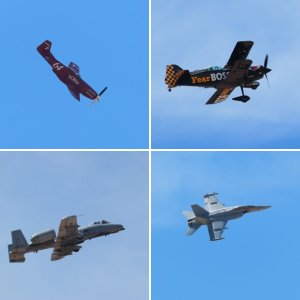
I went to the Bournemouth Air Festival last weekend, so many excellent planes, though the sad thing was that the Canadian Lancaster was not able to fly due to an engine failure, really wanted to see two Lancs together. :'(
The problem is I now have 3 thousand pictures over the two days, I was wondering if any of you have any tips on how to cull the shots?
Saturday was rather dull and overcast, I was going to ditch most of the pictures taken Saturday but I already found a couple that look like I was flying above the display plane looking down on it flying above the clouds!
I'm already going through and ditching any that are OOF or have bits cropped off accidentally, but how do you distinguish between 2 similar shots, so far I have used whether the prop blades are obscured or other similar things, any tips? Flicking back and forth between the raws in windows viewer is taking ages, and this is the first time I shot raw only!
I don't want to try to open thousands of images in DxO, I think it will crash may PC! :o ;D

Also how do you get the props or rotor blades to blur without blurring the whole thing, I dropped the shutter speed progressively until I had blade blur but got about 5 keepers from dozens of shots, speed was well below 1/focal length less four stops for the IS, I guess it is down to panning technique more than anything else?

Cheers, Graham.

Those D'oh moments!

Hi Folks.
Well I went to the Bournemouth Air Festival last weekend, what a great event! Thanks to those who guided me on camera body lens combinations to take.
Saturday I got the kit sorted and started walking away from the car, she says have you got spare batteries and cards, D'oh pick up spare cards, I was relying on gripped bodies to only need the batteries on board for the days shooting! They made it with loads in reserve.
Sunday I'm in a nice little spot part way up the cliff shooting merrily away and get the CF FULL message, reach to my pocket, D'oh no spares much muttering and cursing and another photographer with Nikon gear noticed my distress and offered to lend me a card, thanks Kim, but I decided that the best way was to punish myself with a forced march back to the car for my own cards.
I discovered after the first ten to fifteen minutes of both days that I had left the ISO cranked up from the night before, D'oh, not critical but it does hurt image quality a bit when you don't need the high ISO.
Seems about the only thing I got right was the carrying system, a Black Rapid Double fixed to the tripod feet, and OpTech 3/8 webbing on the body lugs with an OpTech utility loop on the belt loop of my trousers for security during the walk in and back.
On the forced march back to the car I had that heart in the mouth moment when the shoulder strap went light by about the weight of the body, and I heard things rattle on the ground! Phew the body was swinging on the strap in front of my leg, I know exactly what happened, the phone in my pocket knocked the lens release and the walking action twisted the body off the lens. The rattle on the ground was the hot shoe cover had fallen out!
I had read the posts about bodies dropping off lenses sometimes with catastrophic results and thought that it may have been a freak occurrence, I can tell you it happens easier than you might think, it fell off on the way back to the show too.

Let's just say I know why I will never be a professional! ;D

Cheers, Graham.

Looking for some advice

I know Photokina's just around the corner, and announcements to be made in the next couple of weeks from ALL maufacturers will probably affext my decision, but I need some help. In November, I'm going on a long haul trip for a week, and due to recent ill health I won't be able to take my normal gear with me (Canon 7D, four lenses (16mm - 400mm), flash, tripod etc.) I need to get hold of something small and MUCH lighter.

Much of the stuff I'll be shooting will be in low light, (think music concerts etc), but there'll also be some landscape / wildlife opportunities, and a fair amount of bright sunshine portrait/candid work too.

At the moment I'm leaning towards the G1X Mk 2 or the Sony RX100 III for the lowlight stuff (unless the rumoured Canon 1" sensor competitor is announced, is high spec and is available in time), but I'd then need something to cover any telephoto work, so perhaps the SX50 or its replacement as well.

Anyone care to comment or offer advice? Thanks in advance for all helpful info!

Zeiss 135 mm F/ 2.0 VS. Canon EF 135 mm. F/ 2.0 L ?

Dear Teachers and Friends.
Yes, I already have Canon EF 135 mm F/ 2.0 L USM = $ 1100 US Dollars for more than 1 years, and Use only 2-4 times. Now From B&H = Zeiss 135mm f/2 Apo Sonnar T* ZE Lens= $ 2072 US Dollars = make me have a G.A.S. Illness again.
Would you please tell me that This Zeiss Lens is 2 time better/ Sharper that my Canon 135 L. ?, Or Just tell me that I should take a Lens that I already have, Clean and use more often----Yes, Stupid Surapon, Ha, Ha, Ha.

Thanks you, Sir / Madam.
Have a great Sunday.
Surapon

Attachments

  • Zeiss_1999_675_135mm_f_2_0_Apo_Sonnar_ZE_909189.jpg
    Zeiss_1999_675_135mm_f_2_0_Apo_Sonnar_ZE_909189.jpg
    11.2 KB · Views: 1,169
  • Canon-EF-135mm-f-2.0-L-USM-Lens.jpg
    Canon-EF-135mm-f-2.0-L-USM-Lens.jpg
    29.9 KB · Views: 1,472

7D Mark II is going to be a full frame camera!!

http://www.dojoklo.com/Full_Stop/Canon_7D_Mark_II_Experience.htm
According to this well known website, it is going to be a Full Frame Camera ???. Douglas Kostermann has already written a guide which will be available for 14.99 :o. Since he is already a known author of similar "experience" books on other Canon-Nikon cameras and all the links on that websites are functioning, is it going to be true? :o. What do you guys think?

Fuji X100T

And this are the camera specs:

- 16 million pixel APS-C X-Trans CMOS II sensor
- 3 inches 1.04 million dot LCD monitor
- Electronic shutter of 1/32000 seconds without operating sound
- A manual setting possible Full HD video. Maximum bit rate is 36Mbps
- Highest sensitivity is ISO51200
- EXR Processor II
- Lens aperture ring of F2.1 / 3 step 23mm
- Hybrid viewfinder
- 4-way controller
- Function buttons can be customized 7
- The number of possible shots increased to 700 sheets by OVF power save function
- Interval timer mode and multiple exposure
- Digital split image focus and peaking
- ND filter built 3EV
- Wi-Fi Built-in. Allows remote control from the smartphone

  • Poll Poll
POLL: How many shutter cycles do you burn through?

I have used this many shutter cycles in the last 12 months (all your dslrs together):

  • 0-100 ("I just talk about photography")

    Votes: 1 0.9%
  • 100-1000

    Votes: 1 0.9%
  • 2.000-5.000

    Votes: 10 8.6%
  • 5.000-10.000

    Votes: 26 22.4%
  • 10.000-15.000

    Votes: 16 13.8%
  • 15.000-20.000

    Votes: 11 9.5%
  • 20.000-30.000

    Votes: 17 14.7%
  • 30.000-40.000

    Votes: 13 11.2%
  • 40.000-50.000

    Votes: 7 6.0%
  • 50.000-75.000

    Votes: 6 5.2%
  • 75.000-100.000

    Votes: 3 2.6%
  • 100.000+ ("I machinegun wildlife")

    Votes: 5 4.3%

Having worn through my 60D in four years and having reached 160k, I wonder how much other people use their camera(s). I'm in a bad spot doing wildlife (= a lot of missed shots or the subject moved) and focus stacking, doing other photography styles certainly preserves the camera for a longer time.

I know it's hard to explain to people who are still rooted in the film/analog world how many digital shots I sometimes take home. But I'm curious about the dslr folk here and if I should go see the doctor about pressing the shutter button too often :->.

Feel free to elaborate in the thread how you achieve the shutter count you voted for (which photography style, full-time pro or weekend amateur, ...). Enabling Live view also counts as a cycle here, if you want to get the stats use a computer app or Magic Lantern.

Filter

Forum statistics

Threads
37,439
Messages
973,601
Members
24,804
Latest member
chrisgphoto

Gallery statistics

Categories
1
Albums
29
Uploaded media
372
Embedded media
1
Comments
25
Disk usage
1 GB