Show your Bird Portraits

From July, a few of the birds we have in residence out in the local mountains.

Male CA Quail posing.
C186106-4K.jpg


A juvenile Lark Sparrow.
C186103-4K.jpg


A juvenile CA Quail.
C186085-4K.jpg


A juvenile CA Scrub-jay caught a moth but wasn't sure what to do next.
C186070-4K.jpg


A CA Thrasher juvenile begging mom for food.
C186075-4K.jpg


A juvenile Acorn Woodpecker being told it can't hang out with the cool kids.
C186057-4K.jpg


And a Northern Flicker adult considering if junior really needs more food.
C186058-4K.jpg
GREAT Action!!!! You are great at catching it!!
 
  • Like
Reactions: 1 user
Upvote 0
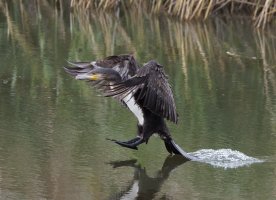
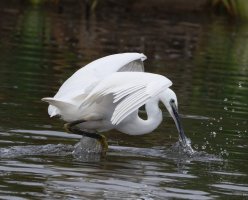
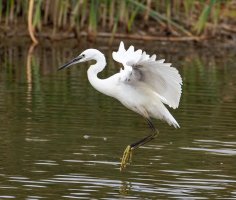
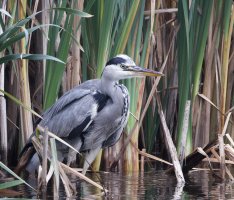
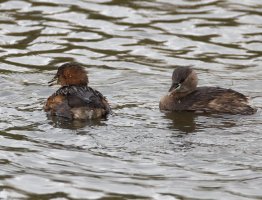
A small pond which I regularly cycle past had three unexpected visitors to join the resident Little Grebes: a Cormorant, Little Egret, and a Grey Heron.

6L8A7261-DxO_Cormorant_landing.jpg6L8A7379-DxO_little_egret_fishing.jpg6L8A7472-DxO_little_egret_landing.jpg6L8A7504-DxO_grey_heron.jpg6L8A7633-DxO_two_little_grebes.jpg
 
  • Like
Reactions: 10 users
Upvote 0
Upvote 0
Upvote 0
Canon EOS R5 Mark II
EF100-400mm f/4.5-5.6L IS II USM
Shot at 400mm with f/5.6, ISO 5000, 1/640
Manual
Distance: 13,6 meter

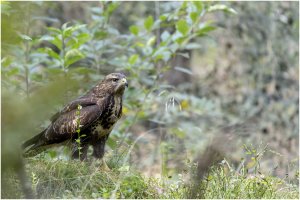
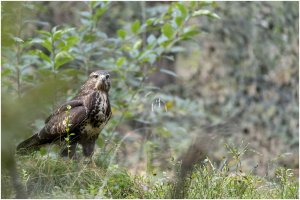
The Common Buzzard. I was sitting in a bird hide when suddenly this buzzard landed. Impressive. Did not come closer and flew away within a minute.
I have mixed feelings about using the R5 Mark II. Metering light is a challenge. Too often, high ISO values are locked in by metering in situations where, from experience, they should be between 800 and 1250. I use evaluative metering but have also tried partial metering. No difference. Shutter speeds slower than 1/320 resulted in blurred images. With the R6, I was able to remove the noise quite well. But with the R5, that comes at the expense of detail.

I am open to suggestions.

_MG_6448_bdr.jpg


_MG_6475_bdr.jpg
 
  • Like
Reactions: 7 users
Upvote 0
Canon EOS R5 Mark II
EF100-400mm f/4.5-5.6L IS II USM
Shot at 400mm with f/5.6, ISO 5000, 1/640
Manual
Distance: 13,6 meter

The Common Buzzard. I was sitting in a bird hide when suddenly this buzzard landed. Impressive. Did not come closer and flew away within a minute.
I have mixed feelings about using the R5 Mark II. Metering light is a challenge. Too often, high ISO values are locked in by metering in situations where, from experience, they should be between 800 and 1250. I use evaluative metering but have also tried partial metering. No difference. Shutter speeds slower than 1/320 resulted in blurred images. With the R6, I was able to remove the noise quite well. But with the R5, that comes at the expense of detail.

I am open to suggestions.

View attachment 226357


View attachment 226358
I have always gone for shutter speeds of faster than 1/400s for birds as they tend to quiver. I use spot metering and if necessary I use exposure compensation and adjust to what looks suitable exposure in the evf. Do you use DxO PL or PureRaw - they are great at removing noise and retaining detail? If you crop to the same number of pixels, the R6 should give better S/N. However, if it is to the same physical size, eg the whole frame from each, 25% of the frame etc, you should get the same S/N overall.
 
  • Like
Reactions: 1 user
Upvote 0
I use spot metering and if necessary I use exposure compensation and adjust to what looks suitable exposure in the evf.
Thanks Alan for this information. I'll try that. Spot metering might be a better choice if the environment has a lot of varying light and dark contrasts.

Do you use DxO PL or PureRaw - they are great at removing noise and retaining detail?
I sometimes use PureRAW. But I'm still figuring out the right combination in the settings.
So, which DeepPRIME (3, DX2s, XD3 x-Trans) with which 'luminance' value and 'Force details' value?
I tend to use noise reduction conservatively to avoid losing detail. But I definitely use it.
 
Upvote 0
I sometimes use PureRAW. But I'm still figuring out the right combination in the settings.
So, which DeepPRIME (3, DX2s, XD3 x-Trans) with which 'luminance' value and 'Force details' value?
I tend to use noise reduction conservatively to avoid losing detail. But I definitely use it.
I use PureRaw for 'difficult' images, i.e. where I'm not satisfied with the result from noise reduction in Lightroom, usually R5- R5 Mk II images with ISO 3200 in cloudy circumstances, where a birds head has a lot of shadow.
I frequently use negative values for 'Force details' because I do not like the oversharpend look of a bird (or other animal) that looks as if someone has combed it's feathers or hairs for the picture. The oversharpening also causes the subject to look as if it has been cut out of the picture and has been pasted on the background, caused by the 'sharp' edges of the subject in relation to the background.
 
  • Like
Reactions: 1 user
Upvote 0