Canon Looking At a Canon 18mm f/1.4 VCM?

It's nice to have primes that approximately double for noticable progressions:

14 -> 24 -> 50 -> 100 -> 200
18 -> 35 -> 85 -> er, 135 I suppose even though it breaks my "doubling" suggestion

Either of those selections would make for a solid portrait kit (subjects can be other than people: animals, things) with a little astro potential for kicks. For those who play with the 35 + 85 combo an 18 would be their version of the 24 in a 50 + 100 kit.
 
Last edited:
Upvote 0
And when will Canon start again to make proper lenses for photographers?
To be honest; I'm sick of these hyped VCM lenses for videographers - so called 'creators'. All I need are just excellent optical lenses without much 'digital correction' and also without this strict size and weight limits as for VCM lenses.
Canon already has an extended line of these light and good video lenses, so what about the very good lenses for photographers?
 
  • Haha
  • Like
Reactions: 1 users
Upvote 0
Why have 18mm when you have 20mm?

Why have 28mm when you have 24mm?

Like these are so close to eachother, just crop in a 24mm shot to be 28mm?

Move a few steps back for 18mm?

What is the use-case other than pure video and a slight difference in what they produce?
 
  • Like
Reactions: 1 user
Upvote 0
Canon already has an extended line of these light and good video lenses, so what about the very good lenses for photographers?
Should Canon also eliminate the video features from their cameras? The market reality is that ‘content creation’ is the fastest-growing segment.

Sounds like what you want are EF lenses. They remain widely available.
 
Upvote 0
I think it's a typo, it must be 28 F1.4
Is definitely is.

It must be.

I think it is.

I hope it is.

I wish it was.

******, no it's not.:cry:

Why have 28mm when you have 24mm?

Like these are so close to eachother, just crop in a 24mm shot to be 28mm?
Why make 35 at all? Like 28 and 35 are so close to each other, why not just crop in a 28mm shot to match 35mm?

See what I did there?


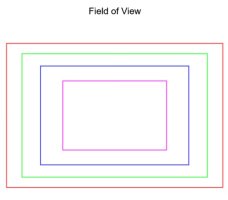
And before you say 28 and 35 are completely different, these are the fields of view for 24, 28, 35 and 50mm:
24-28-35-50.jpg

Yet Canon just gave us 45, recently, and we had 35 and 40 for EF mount.

I doubt a 18mm VCM will ever come though, that's even closer than 24 to 28.
 
Last edited:
Upvote 0
Should Canon also eliminate the video features from their cameras? The market reality is that ‘content creation’ is the fastest-growing segment.

Sounds like what you want are EF lenses. They remain widely available.
If you mean the wide selection of different lenses as in the 'EF-era' I agree. But I strongly disagree with any narrowing of the discussion to video OR photography. What we have is a video AND photography! What I see is that new lenses are a little bit heavy-sided for video at the moment.

Concerning the lens market: Canon knows that much better than us. I can only speak for myself.
 
Upvote 0
If you mean the wide selection of different lenses as in the 'EF-era' I agree. But I strongly disagree with any narrowing of the discussion to video OR photography. What we have is a video AND photography! What I see is that new lenses are a little bit heavy-sided for video at the moment.
I agree that the market is both. What makes you say the lenses are more video-sided recently?

The VCM prime lenses seem to fit squarely in the hybrid camp. There are also the two Z f/2.8 zooms that Canon classifies as 'hybrid' (those do not have VCM-driven AF). The voice coil motor is fast, quiet and able to move a heavier focusing group than a nano USM (neither are as powerful as ring USM, which is one reason many recent lenses have two separate focusing groups with dedicated motors, two nano USM, two VCM or one of each). The need for digital correction is a mirrorless lens 'feature', not unique to video.

I don't shoot video with my ILCs, personally I see a lot that I like for stills with the VCM primes and Z zooms.
 
Upvote 0
And when will Canon start again to make proper lenses for photographers?
To be honest; I'm sick of these hyped VCM lenses for videographers - so called 'creators'. All I need are just excellent optical lenses without much 'digital correction' and also without this strict size and weight limits as for VCM lenses.
Canon already has an extended line of these light and good video lenses, so what about the very good lenses for photographers?
You might be happier on Z mount. Nikon is still very firmly in the photography world when it comes to lens design. More so than any other mount.
 
Upvote 0
Why have 18mm when you have 20mm?

Why have 28mm when you have 24mm?

Like these are so close to eachother, just crop in a 24mm shot to be 28mm?

Move a few steps back for 18mm?

What is the use-case other than pure video and a slight difference in what they produce?
'Move a few steps back for 18mm?' Markedly ineffective when photographing the Milky Way Core.
 
Upvote 0
'Move a few steps back for 18mm?' Markedly ineffective when photographing the Milky Way Core.
Haha — I was just thinking that this morning in the shower.

Building on what you said...

While acknowledging that lenses can be used in many ways, let's look at this from the concept of matched perspective:

Let's say I have a 45mm or 50mm lens equivalent and I find my friend standing.

First, I decide to plant my tripod, mount my camera, and then take a 2/3rds body photo that nicely captures my friend, with a very minimal hint of where they are or what they are up to. I then swap my 50mm for a 100mm and, without moving the tripod, take a tight shot of their face: great eyes, nice hair, good looking person all-around. I then, again without moving my tripod, place my 24mm lens and take another photo — now we see they're at a park with trees and path. I repeat with my 20mm to emphasize the context a little more. I've now told a small story about my friend. Interestingly, because I didn't move at all, my lenses simply served to crop the scene to focus on one aspect or the other; the relative position of everything remains the same as they come into the picture. If I digitally crop my 20mm to be like the 24, or the 24 to be like the 50 then the placement of trees relative to the person and any other object remains generally the same but the amount of scene included does change. My perspective never changed from where my tripod was planted relative to the person — I simply showed more less of the world relative to that person.

Second, I instead decide to zoom with my feet and whether the 24mm or 50mm or 100mm I frame my friend to fill the sensor approximately the same: how the person looked and how objects around them appeared in relative position would change significantly. Trees would seem very close or very far away, as an example, regardless of how I might digitally crop the photos later.

So for people who shoot with primes the options matter if they are attempting to tell a story with the same perspective but different amounts of the world included in the scene. And approximately doubling the mm's from one prime to the next allows for meaningful jumps in scene crop factor to allow for different meaningful reflections on the subject without distorting the scene or subject from one photo to the next.

The Milky Way is a great extreme example because no matter where you walk to on your chosen continent your relative position to the galactic core is effectively the same: choose a 14mm, 20mm, 24mm, 35mm, etc. and you can digitally crop from wider to longer and achieve the same relative content with less scene.

You can reproduce this example with a zoom, such as 16-35 or 24-105: plant a tripod, choose a subject, take photos at different lengths, and then crop the widest to match something tighter and observe that the relative position of objects in the scene does not change.

 
Upvote 0
2 years ago I was complaining the lack of L primes.... Now there's more than I need&afford.....

Tbh it will be interesting to use a 18mm fast prime, I think I will like it more than 14mm as I found 14mm too wide for my use.
 
Upvote 0
And when will Canon start again to make proper lenses for photographers?
To be honest; I'm sick of these hyped VCM lenses for videographers - so called 'creators'. All I need are just excellent optical lenses without much 'digital correction' and also without this strict size and weight limits as for VCM lenses.
Canon already has an extended line of these light and good video lenses, so what about the very good lenses for photographers?
There’s way more to the VCM lenses than obnoxious creators. Having a set of similar size/weight lenses benefits gimbal balancing, as well as weight and size restricted travel. I’m honestly sick of hearing people complan about the 35mm f/1.4 vcm. Different strokes for different folks. I love the lens. It optically outperforms the Canon EF 35mm f/1.4 II in every possible way except “digital correction” - so does it really matter? You get less weight, less fringing, better contrast, better resolution, better autofocus, and it’s a few bucks cheaper.

The VCM autofocus is dead silent, if you shoot in quiet venues this matters a lot. It’s also the best autofocus of any lens I’ve ever used. Less weight and size - fantastic. Any birders here who have spent a 10 hour day slugging around the Sigma 150-600 or similar huge lenses will agree less weight is a good thing. I’d disagree that this lens is “only for creators”. I’d love to of course see Canon make more lenses - but I’m pretty damn happy with the ones they have been making. The 35mm f/1.4 vcm has never let me down for stills photography, ever.
 
Upvote 0
And when will Canon start again to make proper lenses for photographers?
To be honest; I'm sick of these hyped VCM lenses for videographers - so called 'creators'. All I need are just excellent optical lenses without much 'digital correction' and also without this strict size and weight limits as for VCM lenses.
Canon already has an extended line of these light and good video lenses, so what about the very good lenses for photographers?

VCM lenses are very good for photographers unless you want faster, heavier, more expensive lenses?
 
Upvote 0
VCM lenses are very good for photographers unless you want faster, heavier, more expensive lenses?
I'd go for mechanically linked focus with full time manual override and an external distance / depth of field gauge. Everything else can remain the same that would be compatible with those requirements.

Larger optics on the exit would also be nice. If you take the 24mm f/1.4 ii USM lens and compare it to, say, the EF 24-70 f/4 IS USM lens you'll notice something interesting at 24mm for each when digital corrections are applied: more scene is displayed in the final TIFF or JPEG with the prime than with the zoom. The pixel dimensions are the same, but more scene is presented. If you turn off corrections the scene is the same. The correction for zoom requires some crop, apparently, to gets things right — but the prime, with its huge exit optics, gets by with less adjustment. I suspect that for the VCMs either Canon has oversized the intake glass or made the real mm count a tag shorter (23 vs 24, 13 vs 14) to compensate for the small exit glass or there truly is less scene captured with the VCM for the stated length and with a lack of good comparisons no one is the wiser — and hey, "good enough" is "good enough."

Now I'm not saying people shouldn't buy the VCM lenses — I think they're a great idea and serve multiple audiences at once. I have no doubt that a collection of VCMs will make someone smile for years to come.

But mechanically linked focus (no power required) and external aids (no need to chimp in the EVF or back screen) with big exit optics covering the sensor are worth something. Apparently they cost less, too, given the price of a 24mm EF prime and a 24mm VCM prime:

EF 24mm f/1.4 II USM at BH Photo - $1,549 regular price

RF 24mm f/1.4 VCM - $1,649 regular price

So I don't think it's in the realm of crazy for Canon to do the best of both for many people at a reasonable price. Canon's made "big glass and fast" for years before RF with world winning results.

Not that I think Canon is under any pressure to do so at this time. The EF lens stock for the most recent generation of quality EF glass remains large, as is the installed base. Canon has the luxury at this time of pushing as hard in innovation as they can on the RF mount without insulting too many people in this regard, and later they can bring forward some classic elements or let a third party do so. Right now solutions like VCM make good sense, with small optics and digital corrections achieving size and weight reductions; as do sports lenses that can auto-AF track with superman like ability — even if at the cost of no-mechanical linking, power-on-only, etc.
 
Last edited:
Upvote 0