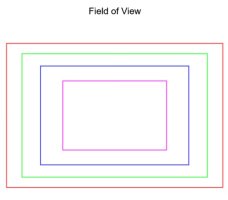
'Move a few steps back for 18mm?' Markedly ineffective when photographing the Milky Way Core.
Haha — I was just thinking that this morning in the shower.
Building on what you said...
While acknowledging that lenses can be used in many ways, let's look at this from the concept of matched perspective:
Let's say I have a 45mm or 50mm lens equivalent and I find my friend standing.
First, I decide to plant my tripod, mount my camera, and then take a 2/3rds body photo that nicely captures my friend, with a very minimal hint of where they are or what they are up to. I then swap my 50mm for a 100mm and, without moving the tripod, take a tight shot of their face: great eyes, nice hair, good looking person all-around. I then, again without moving my tripod, place my 24mm lens and take another photo — now we see they're at a park with trees and path. I repeat with my 20mm to emphasize the context a little more. I've now told a small story about my friend. Interestingly, because I didn't move at all, my lenses simply served to crop the scene to focus on one aspect or the other; the relative position of everything remains the same as they come into the picture. If I digitally crop my 20mm to be like the 24, or the 24 to be like the 50 then the placement of trees relative to the person and any other object remains generally the same but the amount of scene included does change. My perspective never changed from where my tripod was planted relative to the person — I simply showed more less of the world relative to that person.
Second, I instead decide to zoom with my feet and whether the 24mm or 50mm or 100mm I frame my friend to fill the sensor approximately the same: how the person looked and how objects around them appeared in relative position would change significantly. Trees would seem very close or very far away, as an example, regardless of how I might digitally crop the photos later.
So for people who shoot with primes the options matter if they are attempting to tell a story with the same perspective but different amounts of the world included in the scene. And approximately doubling the mm's from one prime to the next allows for meaningful jumps in scene crop factor to allow for different meaningful reflections on the subject without distorting the scene or subject from one photo to the next.
The Milky Way is a great extreme example because no matter where you walk to on your chosen continent your relative position to the galactic core is effectively the same: choose a 14mm, 20mm, 24mm, 35mm, etc. and you can digitally crop from wider to longer and achieve the same relative content with less scene.
You can reproduce this example with a zoom, such as 16-35 or 24-105: plant a tripod, choose a subject, take photos at different lengths, and then crop the widest to match something tighter and observe that the relative position of objects in the scene does not change.