
You are using an out of date browser. It may not display this or other websites correctly.
You should upgrade or use an alternative browser.
You should upgrade or use an alternative browser.
Canon RF 300-600mm Update…. Again
- Thread starter Canon Rumors
- Start date



The RF 600 f/4 would be the ideal lens for bird photography but it's super expensive and out of my price range (it's USD$14k here in Australia). I appreciate the EF 600 f/4 mkIII is essentially the same lense with built in adaptor but don't see any of the mkIII here in Oz, only mkII.Nice! Dream great white. The 500 f/4 was my dream Great White (I only buy lenses once I can justify with meaningful use, so waiting on a trip), but tbh the zooms have become effectively prime like aside from light gathering anyhow.
I don't see any issue with fogging but I live in Perth Australia and we very seldom have humidity here, unlike up North or over East. I've got an R1 so dim light doesn't affect me the same way with your R6I was considering that lens, but I read it fogs in persistent humidity (I'm in the Pacific Northwest) and on a personal trial at the local store I found the focus ring is too small for my taste (my thumb skids on the barrel). As awesome as Canon's AF capabilities are, dim light and moving grass still thwart on occasion for my R6. Otherwise seems like a great lens and I could probably get over the focus ring in real world use.
The RF 200-800mm is a fantastic lens for the price and I'd highly recommend it, as long as you appreciate it won't have the same pin sharpness or butter smooth Bokeh of the big white primes but you wouldn't expect that from a USD$2k lens. It's so easy to hand carry all day, and being able to go from 200mm to 800mm in a couple of turns is super useful.
Primes are fantastic for what they do, but the zooms are so versatile in giving more options within the one lens. It's getting to the stage that the new zooms are only just a fraction less in image quality and if not a professional and making money from your shots then are the way to go, in my opinion.I find that I like primes overall for their zen (just frame, tweak, and shoot) but zooms are more practical in many situations or travel. No doubt the 100-300 and 300-600 would make killer safari lenses (or any dustbin / spattering-wet situation).
If I had a choice of what the new lens could be I'd go for a 400-600mm (wouldn't miss the 300-400mm range) and either f/4 - f/5.6 or a straight f/5.6. The new cameras, especially the R1 handle higher ISO soooooooo much better nowadays and with the advances in software noise isn't the big issue it used to be years ago. I'd take missing out 300-400mm to reduce weight / size / cost, but appreciate it would make more sense 300-600mm as that would fit in pairing with the 100-300mm. Whatever size / weight the lens is, if it eventuates, would 99.9999% expect it to be an 'L' lens so weather sealing, etc. will be all taken care of.I miss the earlier EF ethos of the 300mm f/4 and 400mm f/5.6. I still have my 300mm f/4 IS, which is fantastic for what it is, especially on modern systems. Would love to see those or equivalents come to the RF line within a $4.5k CAD limit. Perhaps a VCM-inspired tele range, like a 300 f/4, 400 f/5.6, and 500 f/8 and TC compatibility (apertures allowing for cost control in the context of modern ISO capability). But in nice barrels, like the 300mm f/4 with solid focus rings and controls — mini Great Whites (dog sharks) for the fortunate hobbyists. I think that the 600 f/11 and 800 f/11 are innovative for what they are, but I think that the allowance for full aperture control and weather protected are killer features. The original EFs weren't full sealed, but it wouldn't have taken much to finish the job since the 300 is fully internally sealed (no fogging).
I hear what your saying that <$10K USD is unlikely but if they could get it down to $7K USD or thereabouts I think they'd actually sell more lenses at that price than making an extra 3K USD profit just on the lens. Not for me to say and that's for Canon but there's so many more amateurs spending money on good cameras that if they could get it into that lower price range then they'd be on to a winner.Regardless, the 300-600mm might or might not come. It might be f/5.6, it might be f/4-5.6. There was going to be a 200-500mm f/4, with prototypes in the wild and rumored announcement dates. But then...there wasn't, and instead it was going to be a 300-600mm. In 2025. But then there wasn't. And now...in 2026.
I hope there is a 300-600/5.6, and your statement that you want something 'that's a bit more affordable than the current RF 600 f/4' may be reasonable as such a lens will likely be priced in between the 100-300/2.8 at $10.5K (USD) and the 600/4 at $14.5K. So if 'a bit more affordable' to you means a couple of thousand dollars cheaper, well and good. If you're hoping for a 300-600/5.6 costing <$10K USD, I suspect you're headed for disappointment even if the lens does get launched.
Upvote
0

One thing that would set it apart is the ability to extend the focal length further with TCs. For the target audience, that may be sufficient.As others commented here, a 300-600, be it f/4.0-5.6 or constant f/5.6, would need a big feature that really sets it apart from the 100-300 f/2.8 + 2.0x TC.
As @scyrene states, DO designs are more compact, but not necessarily lighter (except insofar as a shorter lens needs less material for the barrel).For real life photography, that's weight. … [DO] allows for a very light, compact lens design…
Canon’s RF DO lenses are light because they’re f/11. Nikon’s PF lenses are much lighter than their F-mount predecessors, but much of that is due to a dedicated design intent to make them lighter. Consider the Canon 600/4L IS that went from 5.4 kg (MkI) to 3.9 kg (MkII) to 3.1 kg (MkIII, RF) without DO. The 600/4 DO prototype from 2015 (between II and III) was much shorter but reportedly just under 3 kg.
The supertele lenses all used to have a meniscus lens in front (essentially a flat piece of glass to protect the first refractive element, a permanent clear front filter). Dropping those from the design was a significant part of the weight saving for both Canon and Nikon lenses.
So, a 300-600/5.6 DO would probably weigh in somewhere close to the existing 100-300/2.8, but could be shorter. Personally, though a conventional 300-600/5.6 would not really interest me, a DO version that was shorter than my 100-300/2.8 (or even the same length) would tempt me.
Upvote
0
I had one for a while. Bought it used and sold it a couple of years later for the same price that I had paid, essentially a free long-term rental.By the way, Canon has produced a tele zoom with a DO optic, the EF 70-300mm f/4.5-5.6 DO IS USM in 2004.
I liked that it was the same size as my EF 24-105/4L IS. I was not a fan of the very busy bokeh, evident in the foreground here.
“Ribbit”

EOS 7D, EF 70-300mm f/4.5-5.6 DO IS USM @ 300mm, 1/500, f/6.3, ISO 640
Upvote
0

Our RF 100-400mm are so much better, compare it at 300mm with the DO on the-digital-picture https://www.the-digital-picture.com...meraComp=979&SampleComp=0&FLIComp=4&APIComp=1I had one for a while. Bought it used and sold it a couple of years later for the same price that I had paid, essentially a free long-term rental.
I liked that it was the same size as my EF 24-105/4L IS. I was not a fan of the very busy bokeh, evident in the foreground here.
“Ribbit”
View attachment 228688
EOS 7D, EF 70-300mm f/4.5-5.6 DO IS USM @ 300mm, 1/500, f/6.3, ISO 640
Upvote
0
Regardless, the 300-600mm might or might not come. It might be f/5.6, it might be f/4-5.6. There was going to be a 200-500mm f/4, with prototypes in the wild and rumored announcement dates. But then...there wasn't, and instead it was going to be a 300-600mm. In 2025. But then there wasn't. And now...in 2026.
I hope there is a 300-600/5.6, and your statement that you want something 'that's a bit more affordable than the current RF 600 f/4' may be reasonable as such a lens will likely be priced in between the 100-300/2.8 at $10.5K (USD) and the 600/4 at $14.5K. So if 'a bit more affordable' to you means a couple of thousand dollars cheaper, well and good. If you're hoping for a 300-600/5.6 costing <$10K USD, I suspect you're headed for disappointment even if the lens does get launched.
I'd say I'm definitely hoping for something more like $8k, and I'm fully prepared to be disappointed lol. The 100-300 f/2.8 L definitely doesn't have me optimistic on the price being below $10k, so I think you're justified in your estimate.
I don't know what the market sensitivity is to ~8k vs. ~11k for the price (in USD), but I'm definitely sensitive to that (and seemingly, others here are as well).
I hope they release some compelling long options this year. The 14mm VCM and fisheye lens were just not in my interests at all, and I have the RF 50mm f/1.2, so the 45mm wasn't for me. A longer/high-magnification macro lens capable of taking extenders would be of interest. I definitely have a bit of GAS, but need Canon to put out something compelling (and uhh... hopefully more affordable than $11k).
Upvote
0

justaCanonuser
Grab your camera, go out and shoot!
that's true, I agreeOne thing that would set it apart is the ability to extend the focal length further with TCs. For the target audience, that may be sufficient.
I know, Canon revolutionized the common tele lens design with the EF 600/4 III by moving main parts of the front lens elements (for corrections) back to the middle of the lens, what allowed for much smaller and lighter lens elements (and a much better balance). Sony and Nikon copied that idea with their latest 600/4 lenses, of course in a way they could work around Canon's patents. Nikon upped it by adding a built-in 1.4x TC, what made their Z 600/4 a bit heavier - but this is a smart move, no question, like Canon did it when they brought out their EF 200-400/4 zoom.Consider the Canon 600/4L IS that went from 5.4 kg (MkI) to 3.9 kg (MkII) to 3.1 kg (MkIII, RF) without DO. The 600/4 DO prototype from 2015 (between II and III) was much shorter but reportedly just under 3 kg.
Yepp, my old battered EF 500/4.5 still has one.The supertele lenses all used to have a meniscus lens in front (essentially a flat piece of glass to protect the first refractive element, a permanent clear front filter). Dropping those from the design was a significant part of the weight saving for both Canon and Nikon lenses.
Well, I guess we'll have to wait and see with what Canon comes up (if), but it is always fun to speculate with all of you here in these threads.So, a 300-600/5.6 DO would probably weigh in somewhere close to the existing 100-300/2.8, but could be shorter. Personally, though a conventional 300-600/5.6 would not really interest me, a DO version that was shorter than my 100-300/2.8 (or even the same length) would tempt me.
Last edited:
Upvote
0
justaCanonuser
Grab your camera, go out and shoot!
It is fast, no question, but as I said the difference isn't noticeably big when we shot w/o TC side by side. But with TC, the difference is massive. Well, the Z8 is an older model, and Nikon struggled with the AF system in their first Z cameras anyway.The R5ii has the reputation of having the fastest AF to lock on to a target of the A1ii/Z9/Z8 class. I saw this myself recently:
We'll doSo, maybe the difference in inherent camera AF is the answer, so you have more control experiments to do.

Ah, thanks, I missed that one.By the way, Canon has produced a tele zoom with a DO optic, the EF 70-300mm f/4.5-5.6 DO IS USM in 2004.
Upvote
0
justaCanonuser
Grab your camera, go out and shoot!
According to CIPA, the RF version has a tad better IS, but in real life it shouldn't make any noticeable difference. I have the EF 600mm f/4.0 III, and I love this lens, its IS is quite impressive. Btw the mk II lens, which still was based on the conventional tele lens design with many big lens elements on the lens' front, is said to be a bit sharper. But it is heavier and on top more front heavy than the mk III lens, so shooting it hand-held is harder.The RF 600 f/4 would be the ideal lens for bird photography but it's super expensive and out of my price range (it's USD$14k here in Australia). I appreciate the EF 600 f/4 mkIII is essentially the same lense with built in adaptor but don't see any of the mkIII here in Oz, only mkII.
I have an RF 200-800, too, for occasions when I want a lighter lens and the flexibility of such a zoom. It is a real fun lens and sharper @ 800mm than I expected, but of course my 600mm prime is much sharper, even with 1.4x TC my EF 600mm f/4.0 III delivers noticeably sharper images @ 840mm. That said, in real life photography, what is more important than lab tests, the 200-800 performs very well, much better than its specs promise. There is only one drawback: from comments I learned that obviously lenses with different quality are out in the wild - I was lucky to get a really good copy that is quite sharp @ 800mm.I don't see any issue with fogging but I live in Perth Australia and we very seldom have humidity here, unlike up North or over East. I've got an R1 so dim light doesn't affect me the same way with your R6
The RF 200-800mm is a fantastic lens for the price and I'd highly recommend it, as long as you appreciate it won't have the same pin sharpness or butter smooth Bokeh of the big white primes but you wouldn't expect that from a USD$2k lens. It's so easy to hand carry all day, and being able to go from 200mm to 800mm in a couple of turns is super useful.
One advantage of zooms is when you shoot birds in flight, you can catch it using a shorter focal length and then zoom to longer focal lenghts. With a about 800mm prime it is a real challenge to find the bird in the viewfinder.Primes are fantastic for what they do, but the zooms are so versatile in giving more options within the one lens. It's getting to the stage that the new zooms are only just a fraction less in image quality and if not a professional and making money from your shots then are the way to go, in my opinion.
Upvote
0
justaCanonuser
Grab your camera, go out and shoot!
nice frog in the green, but it looks like sharpness isn't exactly on the frog's eye, so the camera's AF struggled a bitI had one for a while. Bought it used and sold it a couple of years later for the same price that I had paid, essentially a free long-term rental.
I liked that it was the same size as my EF 24-105/4L IS. I was not a fan of the very busy bokeh, evident in the foreground here.
“Ribbit”
View attachment 228688
EOS 7D, EF 70-300mm f/4.5-5.6 DO IS USM @ 300mm, 1/500, f/6.3, ISO 640
Upvote
0
Yes, that was subsequently corrected with AFMA.nice frog in the green, but it looks like sharpness isn't exactly on the frog's eye, so the camera's AF struggled a bit
Upvote
0
My EF 800m f/5.6 gave great photos but due to the size I got rid of it (not helped with arthritis in my wrist). The big zooms are great for what they are but the majority of us can't afford them - I got a great deal on a 2nd hand 800mm, but have never seen the 600mm mkIII 2nd hand here in Oz so buying brand new is out of the window.According to CIPA, the RF version has a tad better IS, but in real life it shouldn't make any noticeable difference. I have the EF 600mm f/4.0 III, and I love this lens, its IS is quite impressive. Btw the mk II lens, which still was based on the conventional tele lens design with many big lens elements on the lens' front, is said to be a bit sharper. But it is heavier and on top more front heavy than the mk III lens, so shooting it hand-held is harder.
I'm going to give the RF 100-500mm a try with the 1.4 extender and see how that goes. I think the 200-800mm is a great lens if you're happy to live with it's limitations (fantastic value for most). Agree that it seems there's a variance with the quality of the 200-800mm's out there, but unfortunately for it's price point that's one of the issues have to live with (if you get a good one then bonus).I have an RF 200-800, too, for occasions when I want a lighter lens and the flexibility of such a zoom. It is a real fun lens and sharper @ 800mm than I expected, but of course my 600mm prime is much sharper, even with 1.4x TC my EF 600mm f/4.0 III delivers noticeably sharper images @ 840mm. That said, in real life photography, what is more important than lab tests, the 200-800 performs very well, much better than its specs promise. There is only one drawback: from comments I learned that obviously lenses with different quality are out in the wild - I was lucky to get a really good copy that is quite sharp @ 800mm.
Zooms have so much more flexibility that if the image quality is at an acceptable level then would always go for them (of course primes still have their place). Having had a 800mm totally agree that's it's bloody hard to catch a BIF, unless it's far away which then defeats the purpose of having a large prime.One advantage of zooms is when you shoot birds in flight, you can catch it using a shorter focal length and then zoom to longer focal lenghts. With a about 800mm prime it is a real challenge to find the bird in the viewfinder.
A couple of youtubers here in Oz took out the 200-800 for a spin when it first came out and did a great video on the benefits of the zoom. Yes, it needs a few turns to go from 200-800 but just the fact having the flexibility meant they could shot birds close up, but then catch BIF's at a greater distance.
Upvote
0
Yesterday, out with the R5ii/RF200-800mm, I was doing just that. A Mallard flew past the hide at its usual breakneck speed and I zoomed out to about 350mm, and I don't know how the camera was able to focus in the fraction of a second it was in view - I couldn't track it and I hardly saw it in the viewfinder. Then, I shot a Red Kite lazily soaring in the distance at 800mm. That lens is tack sharp at 600mm and below, and sharp enough at 800mm. I would be tempted by another Canon zoom, but it would have to be light enough for me to hike with and hand hold - I am most likely older than you.A couple of youtubers here in Oz took out the 200-800 for a spin when it first came out and did a great video on the benefits of the zoom. Yes, it needs a few turns to go from 200-800 but just the fact having the flexibility meant they could shot birds close up, but then catch BIF's at a greater distance.
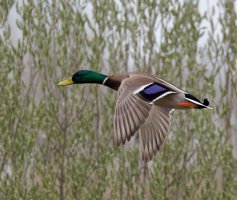
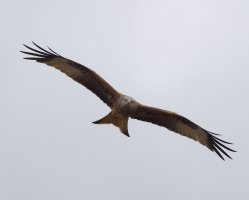
Upvote
0
justaCanonuser
Grab your camera, go out and shoot!
4.5 kg was always to heavy for me, because I prefer to shoot birds hand-held. I found out, that a 3 kg lens for me personally sets the limit for shooting BIF in useable time frames before I have to put the lens down, in particular because I often pair it with a 1.4x TC III. That's why I used an old EF 500mm f/4.5 L USM for many years, before I upgraded to an EF 600mm f/4.0 III past year, which has about the same weight but is less front heavy, a gorgeous fast lens for hand-held shooting. I bought that lens used from MPB.com, btw. I buy the big glass always used, also my EF 500/4.5 many years ago. Back then, this lens already looked quite battered but was optically and technically in perfect condition (I could test it), so I got it for a decent price. It then served me through literally many 100.000s, I guess far more than a Million, shots, w/o failing (crashes, very dusty environments, combined sand & salt water spray storms on shores etc.). Canon's rugged quality turned out to be much better than Nikon's in our experience. My wife uses Nikon, and and we had so many failures with that gear, DSLR mirror stuck, several AF drives broken, failed buttons on a rainy trip that this can't be just bad luck - my wife caresses her gear much more than me; only Nikon's D500 seems to be up to Canon's quality, it never failed.My EF 800m f/5.6 gave great photos but due to the size I got rid of it (not helped with arthritis in my wrist).
Some early videos of Duade Paton and his Buddy Jan Wegener convinced me to take a plunge with the RF 200-800, since their videos are about real life wildlife photography, and they know how to shoot good images.A couple of youtubers here in Oz took out the 200-800 for a spin when it first came out and did a great video on the benefits of the zoom. Yes, it needs a few turns to go from 200-800 but just the fact having the flexibility meant they could shot birds close up, but then catch BIF's at a greater distance.
Last edited:
Upvote
0
justaCanonuser
Grab your camera, go out and shoot!
Alan, I like the red kite in particular - and it looks like the cloudy overcast weather in which I catched one about a week ago, but not with the RF 200-800. So the zoom served you well...Yesterday, out with the R5ii/RF200-800mm, I was doing just that. A Mallard flew past the hide at its usual breakneck speed and I zoomed out to about 350mm, and I don't know how the camera was able to focus in the fraction of a second it was in view - I couldn't track it and I hardly saw it in the viewfinder. Then, I shot a Red Kite lazily soaring in the distance at 800mm. That lens is tack sharp at 600mm and below, and sharp enough at 800mm. I would be tempted by another Canon zoom, but it would have to be light enough for me to hike with and hand hold - I am most likely older than you.
View attachment 228707View attachment 228708
Upvote
0
Looooove that photo of the MallardYesterday, out with the R5ii/RF200-800mm, I was doing just that. A Mallard flew past the hide at its usual breakneck speed and I zoomed out to about 350mm, and I don't know how the camera was able to focus in the fraction of a second it was in view - I couldn't track it and I hardly saw it in the viewfinder. Then, I shot a Red Kite lazily soaring in the distance at 800mm. That lens is tack sharp at 600mm and below, and sharp enough at 800mm. I would be tempted by another Canon zoom, but it would have to be light enough for me to hike with and hand hold - I am most likely older than you.
View attachment 228707View attachment 228708

Was sitting on the beach one day and there was these gulls beside us. Suddenly a couple of them got in a fight and I quickly grabbed the camera and started shooting (I had the 100-500mm on at the time). I didn't have a clue what I was shooting but just pointed in the direction and amazingly some of the photos came ok.
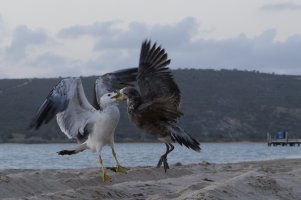
Last edited:
Upvote
0
Excellent shots! Honestly, I'll probably end up with a copy of the 200-800 when all is said and done lol. If the 300-600L is surprisingly affordable, I'll probably get it, but I don't really expect it to happen.Yesterday, out with the R5ii/RF200-800mm, I was doing just that. A Mallard flew past the hide at its usual breakneck speed and I zoomed out to about 350mm, and I don't know how the camera was able to focus in the fraction of a second it was in view - I couldn't track it and I hardly saw it in the viewfinder. Then, I shot a Red Kite lazily soaring in the distance at 800mm. That lens is tack sharp at 600mm and below, and sharp enough at 800mm. I would be tempted by another Canon zoom, but it would have to be light enough for me to hike with and hand hold - I am most likely older than you.
View attachment 228707View attachment 228708
Upvote
0
Unfortunately here in Oz we don't ever see for sale any 2nd hand EF 600mm f/4 mkIII or RF 600mm so the only choice is either buy new or look for an EF 600mm f/4 mkII.4.5 kg was always to heavy for me, because I prefer to shoot birds hand-held. I found out, that a 3 kg lens for me personally sets the limit for shooting BIF in useable time frames before I have to put the lens down, in particular because I often pair it with a 1.4x TC III. That's why I used an old EF 500mm f/4.5 L USM for many years, before I upgraded to an EF 600mm f/4.0 III past year, which has about the same weight but is less front heavy, a gorgeous fast lens for hand-held shooting. I bought that lens used from MPB.com, btw. I buy the big glass always used, also my EF 500/4.5 many years ago. Back then, this lens already looked quite battered but was optically and technically in perfect condition (I could test it), so I got it for a decent price. It then served me through literally many 100.000s, I guess far more than a Million, shots, w/o failing (crashes, very dusty environments, combined sand & salt water spray storms on shores etc.). Canon's rugged quality turned out to be much better than Nikon's in our experience. My wife uses Nikon, and and we had so many failures with that gear, DSLR mirror stuck, several AF drives broken, failed buttons on a rainy trip that this can't be just bad luck - my wife caresses her gear much more than me; only Nikon's D500 seems to be up to Canon's quality, it never failed.
I see there's rumours circulating not just about the 300-600mm, but also that the RF 400 f/2.8 and / or RF 600mm f/4 may be updated in time for the World Cup. Would prefer a zoom if I'm honest as it gives more options in the field, but can also understand why the big primes would be updated as they're both essentially the older EF versions with built in adaptor.
I suppose will have to wait until late May, early June to see if anything eventuates prior to the World Cup.
Upvote
0

I got fed up waiting, and ordered a new RF 100-300mm f2.8L IS USM. Withe a doubler I get a 200-600mm f5.6, which is better than a 300-600mm in terms of range. Sure I have to choose to double or not before I set out, or swap the field. Obviously, I’ve got the 1.4x option too. 140-420mm f4.
I got the RF 100-300 for £8600 from Wex Photo Video, new UK stock at the Photography show. 72.5% of RRP
I got the RF 100-300 for £8600 from Wex Photo Video, new UK stock at the Photography show. 72.5% of RRP
Last edited:
Upvote
0
That was an absolute steal. It would seem to be below the wholesale cost.I got fed up waiting, and ordered a new RF 100-300mm f2.8L IS USM. Withe a doubler I get a 200-600mm f5.6, which is better than a 300-600mm in terms of range. Sure I have to choose to double or not before I set out, or swap the field. Obviously, I’ve got the 1.4x option too. 140-420mm f4.
I got the RF 100-300 for £8600 from Wex Photo Video, new UK stock at the Photography show. 72.5% of RRP

Upvote
0
Similar threads

- Replies
- 137
- Views
- 27K
- Replies
- 174
- Views
- 40K
- Replies
- 123
- Views
- 27K

- Replies
- 79
- Views
- 19K
- Replies
- 96
- Views
- 21K