
This is likely Canon’s lens roadmap for 2020

F11 is fine for Macro and those rare occasions when light is good etc. but lets be honest an f11 lens is pretty much useless for any action stuff . Yes, we can all show f11 or even f22 shots but they are the exception and not the norm
How can it be useless, if there are circumstances where you can use it? :rolleyes:

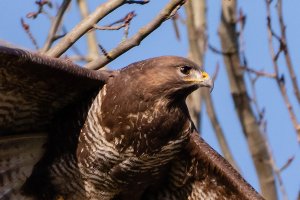
Here is a picture of an "action" scene, taken on my 80D with the Sigma 150-600mm C at 600mm f/7.1 1/1600s ISO 500. That is the full frame equivalent of 960mm f/11 ISO 500 in terms of FoV and noise. I use these settings all the time, so it's not "the exception" to me. If something is demonstrably usable, don't you fell like calling it useless is silly?
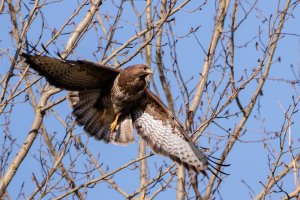
600mm_f7_1_ISO500.jpg
600mm_f7_1_ISO500_Crop.jpg

Obviously, these images are utter rubbish! :eek: If only I could have used a lower f-number...

Could the image quality have been better? Sure. It always can be. Am I happy with the shot? Hell yeah!
If the price is right, these lenses could add something interesting to the Canon lineup. Before we know all the details, I wouldn't trash a lens because it has some design compromises that are likely meant to make it more affordable.
 
Last edited:
  • Like
  • Love
Reactions: 5 users
Upvote 0
Relax, friend :) focal length isn’t relevant to my test, just the exposure triangle and image quality.
Sorry. I Reread my post and it defintely came across a bit more aggressive than intended. I apologize. I understand the exposure point you were making and it is correct. It can produce acceptable images. My.point was just that as soon as the lens is used in the way it would be 90% of the time the everything would fall apart. Sure. IF the little bird flew out into the open then yes. You COULD get a shot. But the situations in which you could would be very limited.
 
  • Like
Reactions: 1 user
Upvote 0
How can it be useless, if there are circumstances where you can use it? :rolleyes:

Here is a picture of an "action" scene, taken on my 80D with the Sigma 150-600mm C at 600mm f/7.1 1/1600s ISO 500. That is the full frame equivalent of 960mm f/11 ISO 500 in terms of FoV and noise. I use these settings all the time, so it's not "the exception" to me. If something is demonstrably usable, don't you fell like calling it useless is silly?

View attachment 190743
View attachment 190744

Obviously, these images are utter rubbish! :eek: If only I could have used a lower f-number...

Could the image quality have been better? Sure. It always can be. Am I happy with the shot? Hell yeah!
If the price is right, these lenses could add something interesting to the Canon lineup. Before we know all the details, I wouldn't trash a lens because it has some design compromises that are likely meant to make it more affordable.
Thats f7.1 , not F11 . I agree the image is rubbish :) I had the Sigma 150 600m , it was a good fairweather walk about option
 
Last edited:
Upvote 0
Thats f7.1 , not F11 . I agree the image is rubbish :)
You are free to have your subjective opinion of my image and voice it in a matter you see fit.

But f/7.1 on an APS-C sensor is equivalent to f/11 on FF in all aspects that people generally care for when talking about image quality. If you disagree with that, you are just wrong. Do you need a demonstration, or are you okay with researching it on your own?
 
Upvote 0
How can it be useless, if there are circumstances where you can use it? :rolleyes:

Here is a picture of an "action" scene, taken on my 80D with the Sigma 150-600mm C at 600mm f/7.1 1/1600s ISO 500. That is the full frame equivalent of 960mm f/11 ISO 500 in terms of FoV and noise. I use these settings all the time, so it's not "the exception" to me. If something is demonstrably usable, don't you fell like calling it useless is silly?

View attachment 190743
View attachment 190744

Obviously, these images are utter rubbish! :eek: If only I could have used a lower f-number...

Could the image quality have been better? Sure. It always can be. Am I happy with the shot? Hell yeah!
If the price is right, these lenses could add something interesting to the Canon lineup. Before we know all the details, I wouldn't trash a lens because it has some design compromises that are likely meant to make it more affordable.
No one is saying it cant be effective. But the big difference is that with your sigma you can adjust to less ideal conditions than you have with that relatively large bird in bright front lit conditions. If you have 600 f11 you are limited to those conditions and would therefore require lenses to cover other conditions. A 'budget' photographer would get the sigma and have a more versatile lens.
 
Upvote 0
No one is saying it cant be effective.
[...]
A 'budget' photographer would get the sigma and have a more versatile lens.
The post I was replying to literally said "an f11 lens is pretty much useless for any action stuff". My point is that different people have a different threshold for what they find acceptable. So calling something generally useless comes across as dismissing those people with different requirements to me.

These appear to be lenses for a specific market. People who value size and weight, even if it means compromising on flexibility and quality. And it might be aimed at budget limited people, as STM implies a pretty low price to me.

However, you are absolutely right that the there are already options out that that will perform better in a wider range of circumstances. If Canon doesn't factor that into the pricing, thede lenses are odd in my view. I personally would not have invested in any prime over the Sigma 150-600mm C unless it was priced similarly and had noticeably better IQ. We don't know the pricing yet, that will be an interesting bit of information to come out.

But I do use it mostly at 600mm and sometimes the size and weight mean it stays at home when I go for a walk with the camera. So I can see how somebody else would decide differently.
 
  • Like
Reactions: 2 users
Upvote 0
You are free to have your subjective opinion of my image and voice it in a matter you see fit.

But f/7.1 on an APS-C sensor is equivalent to f/11 on FF in all aspects that people generally care for when talking about image quality. If you disagree with that, you are just wrong. Do you need a demonstration, or are you okay with researching it on your own?
First, I believe he was joking about your picture. I personally believe it is VERY good (super sharp, open wings, nice lighting). I do not believe that someone could dislike this specific picture. Anyway this is also subjective.

But allow me to express some concern about your conversions. I am not 100% familiar I admit but I believe that you take into account that you would fill the frame the same in both cases (hence the different distance, the different total light - so different probably signal to noise ratio -on the sensor, the different DOF, etc).

In my case I can select between a crop (20mpixel) and a FF (50mpixel) Add to that the fact that in birding at 90% of the cases we are FL limited. So the distance from the bird would be the same crop or FF. At the same time both cameras I mentioned have approximately the same pixel density 20 * (1.6^2) = 20 * 2.56 ~ close to 50

In other words the same number of same size pixels would exist for the bird. We could either crop a lot in FF case or less at APS-C case. The final pixels would be the same.

Of course we are talking about using the exact same lens in both cases.

Taking all the above into account and assuming similar sensor technologies

1. How can you claim that f/7.1 on aps-c is the same as ff at f/11?
2. How about wanting to use these f/11 lenses on crop cameras (a mirrorless crop could happen just like z50). Assuming your conversions the equivalent ff stops would be a disaster!

P.S Aside all of the above, I believe that 800 f/11 will be a huge success!
 
Last edited:
Upvote 0
But f/7.1 on an APS-C sensor is equivalent to f/11 on FF in all aspects that people generally care for when talking about image quality. If you disagree with that, you are just wrong. Do you need a demonstration, or are you okay with researching it on your own?

This equivalence is quite conditional. What matters in the context of action photography is the shutter speed that depends on the aperture.
You shot at 600mm, 1/1600s f7.1 ISO 500. In order to get the same angle of view on a FF you'll have to get a 960mm lens, and you would have same 1/1600s shutter speed at f7.1, but because you'll be limited to f11, you'll have to go down to 1/640s.

So on a FF you'll have 960mm, 1/640, f11, ISO 500. Or, in order to keep the same 1/1600s, you'll have to go up to ISO 1600.
How is it equivalent to what was on your crop sensor camera?

taken on my 80D with the Sigma 150-600mm C at 600mm f/7.1 1/1600s ISO 500. That is the full frame equivalent of 960mm f/11 ISO 500 in terms of FoV and noise.

These calculations are flawed, see above. We're not concerned about the FoV, we're concerned about the shutter speed.
 
Last edited:
  • Like
Reactions: 1 user
Upvote 0
But allow me to express some concern about your conversions. I am not 100% familiar I admit but I believe that you take into account that you would fill the frame the same.

In my case I can select between a crop (20mpixel) and a FF (50mpixel) Add to that the fact that in birding at 90% of the cases we are FL limited. So the distance from the bird would be the same crop or FF. At the same time both cameras I mentioned have approximately the same pixel density 20 * (1.6^2) = 20 * 2.56 ~ close to 50

In other words the same number of same size pixels would exist for the bird.
Yeah, you are right. When talking about equivalency it really helps to be explicit and state the details. I should have written it in more detail, but didn't, as this was discussed a good amount in the past.

If in your example you have the same lens on both the 1.6 crop body and the FF body, uncropped the FF image will look wider. It will have a lower magnification. So if your settings are the same between the two images, the FF one will look just over one stop cleaner in terms of ISO. However, if you crop the FF image to the same FoV as the 1.6 Crop one, they will be virtually identical. Same FoV, DoF, noise, detail.

The notion of equivalency that I used is this:

You take a picture on FF with 800mm f/11 and one with 1.6 Crop 500mm f/7.1, both from the same spot with otherwise identical settings. So the subject distance is the same for both shots. The perspective is identical, because you're standing in the same spot. The FoV is also identical, because due to the 1.6 crop factor the 500mm lens delivers a FoV like a 1.6*500mm = 800mm lens.

Since the FF sensor is 1.6*1.6 = 2.56 times larger than the crop sensor one, it captures 2.56 times as much light, or log2(2.56) = 4/3 of a stop more. However, since it also uses an aperture that is 4/3 stops slower than the crop, they gather the same amount of light. So as long as you don't crop either one, they are equivalent in the FoV and the amount of light collected, with results in comparable noise. The DoF and actual detail in the image aren't necessarily identical. Hence, I used the term equivalent with regards to FoV and noise and not identical.
 
  • Like
Reactions: 1 user
Upvote 0
So on a FF you'll have 960mm, 1/640, f11, ISO 500. Or, in order to keep the same 1/1600s, you'll have to go up to ISO 1600.
How is it equivalent to what was on your crop sensor camera?
Yes, you'll have to go up in ISO or push in post to match the brightness. Absolutely right. Thanks for bringing it up, it certainly is worth keeping in mind when making these comparisons. But I never talked about brightness, I said noise. And since a FF sensor has over a stop advantage in terms of noise or ISO performance or what ever you want to call it, you come out with the same quality as the crop after raising the ISO or applying the push in post.

Do you see an issue in that? I think I can use pictures to illustrate my view if necessary.

I know you don't view ISO and noise quite the same way from the DR discussions a while back. I'm always talking about the entire image here. No cropping, no per-pixel values.
 
  • Like
Reactions: 1 user
Upvote 0
I know you don't view ISO and noise quite the same way from the DR discussions a while back. I'm always talking about the entire image here. No cropping, no per-pixel values.

It's all correct, only I see the flaw is that we're mainly concerned about the shutter speed, not the FoV. The noise between a FF and a crop at the same ISO may be wildly different because sensors are different. But if we consider the same sensor, just used in FF and cropped modes, then yes, FF mode will have less noise, but only when both crop and FF images are downscaled to the same size.
As above, in order to keep the same shutter speed at f11, we'll have pump the ISO up to 1600. Will ISO 1600 on a FF look the same as ISO 500 on a crop camera? I'm not sure.

f11 sounds very limiting to me, although I'm very far from buying RF lenses anyway.
 
  • Like
Reactions: 1 user
Upvote 0
Just as a test today, I went out this afternoon under totally overcast skies, in the Pacific Northwest, and captured a usable EOS RP photo at f/11, ss 1/1000, at ISO 6400. Original JPG here (shrunken, of course), no noise reduction applied, no IS (this is the Sigma 35/1.4).

Since these new teles will have IS, let's estimate 3 stops of improvement. That would mean that with either of them, I could have expected to shoot this same scene at f/11, ss 1/125, at ISO 800.

Of course, it doesn't help much with action, unless you're good at panning with moving persons/vehicles at slower shutter speeds, but it's still food for thought. If I were shooting action with either of the new teles, under these conditions, I'd opt for f/11, ss 1/2000, ISO 12800, and then plan to work with the RAWs to get grain and noise looking manageable.

Personally, I'm far more interested in the 100-500 4.5-7.1, but everyone can have it their own way.

View attachment 190742
This is a really nice garden!:love:
 
Upvote 0
Some here get it, but let me say it: these f11 teles are mostly for FUTURE cameras.

There is some market for slow and long now, but as with Moore’s law, camera sensors advance rapidly and inexorably. How many years has it typically taken per stop of low light performance. Do the math and see that these f11 lenses in several years will be performing like the f2.8 pro lenses of recent years.

Of course sensor improvements and lens sharpness mean that extreme lengths might not be needed with the ability to crop to zoom from, say a 400.
 
  • Haha
Reactions: 2 users
Upvote 0