None of that equivalencies are true.
APS-C F4 needs just the same exposure for the same image. Just the DOF change affirmation are something near reality, and just cause you are nearer to the subject on FF, not even 1/2 stop equivalent nearer, but you need M43 just that stop DOF lose, not APS-C.
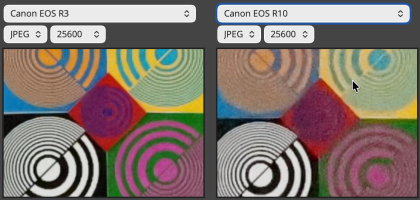
Yes, APS-C needs the same exposure as FF. But to get an equivalent image (same exposure, FOV, DOF, motion blur, and image quality (photon noise)), different apertures and ISOs are needed. This is the formula for equivalence:
1) FF focal length = APS-C focal length * 1.6 (same FOV)
2) FF f number = APS-C f number * 1.6 (same DOF)
3) FF shutter = APS-C shutter (same motion blur)
4) FF ISO = APS-C ISO * 1.6 (this compensates for higher FF f number to get the same exposure)
IQ is the same because it is determined by the total amount of light hitting the sensor, which is determined by the entrance pupil size and the shutter speed.. The entrance pupil is the same for FF and APS-C, because entrance pupil = focal length / f number. For the FF case, both focal length and f number are multiplied by 1.6 compared to the APS-C numbers. The factor of 1.6 is in both the numerator and denominator, so it cancels out, leaving the same entrance pupil as the APS-C lens. The shutter speed is the same for both, so the amount of light is the same for both.
Here is an article written by an expert, if you don't follow my explanation.
Equivalence in camera systems

www.sansmirror.com
The bottom line is that this 15-70mm f/4 lens will produce similar photos as a hypothetical 24-112mm f/6.4 full frame lens in most conditions, except where base ISO can be used in the FF camera, giving it ~ 1 stop better IQ. Therefore a FF camera will win for landscape photography most every time.