
You are using an out of date browser. It may not display this or other websites correctly.
You should upgrade or use an alternative browser.
You should upgrade or use an alternative browser.
Big Megapixel Development Announcement in the Fall? [CR2]
- Thread starter Canon Rumors
- Start date
- Status
- Not open for further replies.
sanj said:I checked, it says 1920x1080 resolution.
Just seen your correction - 2560 x 1440.
There SHOULD BE no difference between e.g. 10 or a 36 MPix camera if both give per pixel sharpness and are downscaled by a good algorithm including some sharpening after downscaling.
What about the idea to prepare 2 photosets with different cameras of a similar (same) object/scene, scale them down to
Upvote
0

dilbert said:bdunbar79 said:dilbert said:neuroanatomist said:AvTvM said:WOW, Canon still at least 2 years shy of the Nikon D800 sensor ...
Confirms what I thought all along.
Geriatric ward really missed the boat big time.
How many years did Canon have a 'prosumer' 21 MP FF camera while Nikon's offering in that space had 12 MP?
And after 4.5 years Canon has reduced the number of MP they had in that camera from 21 to 18, falling behind Nikon.
How many megapixels does the D4 have?
D4 is not the style of camera being referred to here, it is the 5D2/6D/D700/D600.
You you are referring to the likes of the 5D line, then Canon did NOT drop the MP from 21 to 18. They bumped it up from 21 to 22.3 in the 5D III, which is Canon's current high MP FF offering. The 1D X is the replacement for the 1D IV, and the amalgamation of a split 1D line into a single 1D line. The big MP camera will be something new, and will be the ultimate replacement for the 21mp 1Ds III.
Canon has not fallen behind Nikon by "reducing" to 18mp on anything. The direct competitor to the 1D X, the D4, still has fewer megapixels.
I'm beginning to think everything you say, Dilbert, is just trollish fabrications. Get your facts strait, and stop twisting the facts.
Upvote
0
dilbert said:bdunbar79 said:dilbert said:bdunbar79 said:dilbert said:neuroanatomist said:AvTvM said:WOW, Canon still at least 2 years shy of the Nikon D800 sensor ...
Confirms what I thought all along.
Geriatric ward really missed the boat big time.
How many years did Canon have a 'prosumer' 21 MP FF camera while Nikon's offering in that space had 12 MP?
And after 4.5 years Canon has reduced the number of MP they had in that camera from 21 to 18, falling behind Nikon.
How many megapixels does the D4 have?
D4 is not the style of camera being referred to here, it is the 5D2/6D/D700/D600.
Ok, so which of the 5D2 or 6D has 18 mp then?
My mistake, it should have been 20 and not 18 but the point remains that it was a reduction in MP from the 21 of the 5D2.
WRONG!! AGAIN!!
The 6D has a 20.2mp sensor, however that is a NEW entrant (NOT a fallback design from anything else), and is in direct competition from the D600, another NEW entrant from Nikon. In this case, Canon's 6D is lacking, but it is not like Canon reduced the specs of any previously existing line. Stop falsifying shizzle!
The 5D III has a 22.3mp sensor. It is officially the successor to the 5D II, which had a 21.1mp sensor. The 5D III IS an improvement over its predecessor. Hell, it is a MONSTER improvement, in every single way, INCLUDING sensor IQ! It is not a direct competitor to the D800, which has deep roots in studio and landscape photography. The 5D III is the top all-around FF camera, with explicit design changes and significant improvements to cater to FF wedding photograpers, street photographers, and any other general-purpose or specialty photography that needs a moderately high frame rate & excellent high ISO performance, which covers most wildlife and bird photographers. There is no apples to apples comparison between a D800 and 5D III, they are apples and oranges. Again, stop falsifying shizzle!
You are the biggest fact twister in this joint. I don't know what your goal is, but stop cherry picking and cross-comparing non-aligned products to make it sound like your point has merit. You dislike Canon, that is clear. You don't need to lie and obfuscate to make that point...EVERYONE KNOWS.
 :
:
Upvote
0
itsnotmeyouknow said:GMCPhotographics said:itsnotmeyouknow said:I have both the 5D mk III and the Nikon D800. The Canon is great at low light, and is a perfect camera for gigs with its real silent shutter. The Nikon has great DR. End of. I shoot mainly landscapes, so I want good low ISO performance. The mk III forces me to use noise reduction at ISO 100 - 400. This is a terminal disease for me, so I don't use the mmiii for very much at all now. The mk III is dead in the water as far as I am concerned because of the noise banding in shadows.
You must have a bad 5DIII, for my landscapes it's been quite amazing and the appalling Nikon Live view effort puts me off any Nikon DSLR for landscape work. The D800 might have less banding and slightly more DR, but bracketing and digital blending is still required for high contrast imagery. If you are using NR on your 5DIII, then I would suggest your camera is out of spec, are using poor metering technique or you are rushing your landscape work. If you are pulling so much out of the shadows, then there is obviously a meeting issue or you are cutting courners with your bracketing and blending.
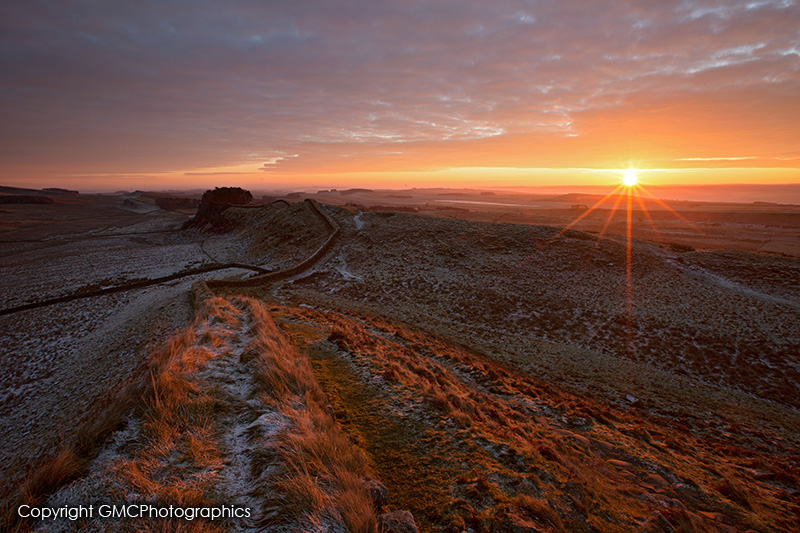
This image below, I combined the foreground and sky exposures into one image, I had to wait for the sun to kiss the foreground but the sun position was then wrong. So taking the two images created a better photo and one which looks balanced for exposure and has a stong visual feel. The difference between 30+ and 20+ mp is mute here and I get to utilise the camera's low 100 iso virtues because the 2 source images were taken using the camera's optimal performance.
I rarely have to use multiple shots with the D800 whereas I often had to with the mk III. In my experience I can also get more detail from the shadows without getting the noise banding. I agree that the Live View is far better on the Canon than on the D800, but then I very rarely use Live View in any case as I still prefer to use the viewfinder. I'll often shoot handheld which is something I do with my medium format 645D also.
My experience:
Canon 5D mkIII Nikon D800
Live view better worse
Silent shooting much better hardly much quieter than normal shooting
Dynamic Range worse Much better
Low ISO noise much worse Much better
Shadow recovery much worse Much better
I'm no fanboi. I judge from my images. The Mk III can take some great images, but the pattern noise killed it for me. That being said, I haven't yet sold all my L glass, so I am keeping my head in. I operate a two camera set up: D800 and the 40 mp Pentax 645D. The resolution isn't the be all and end all. BUt is good to have the ability to print to about the same size with both. The D800 is the best of all three for dynamic range in my experience, but the 645D gives a different feeling. It also doesn't give me the pattern noise that the Canon does. And I'm not the only one reporting that.
You realize your last three points, DR, Low ISO Noise, and Shadow Recovery....are really all the same thing, right? Dynamic Range IS effectively a measure of noise, and at low ISO, the D800 has spades of DR. Shadow recovery is simply a benefit of low ISO read noise. So, in your little table, there are really three points total: Live View, Silent Shooting, and Dynamic Range. The 5D III wins hands down on two points. The D800 wins hands down on one. If you throw in High ISO dynamic range (or High ISO SNR), then the 5D III wins on another point.
The sole area where Canon needs to improve is their read noise. If Canon can nip their read noise problems in the bud, Nikon won't stand a chance. Canon has better glass, better high ISO performance, better silent shooting (a huge factor, IMO, in countless situations), and a better AF system. A two-shot HDR blend will also take care of any DR problems you have quite nicely (if you push it to the extremes, a two-shot HDR blend could be separated by 10 stops (+5 and -5), allowing ~16-18 stops of DR in the final 32-bit HDR image...more than enough.) HDR blending is a simple ordeal these days as well. Is it less convenient? Sure, by a very small amount. Enough to warrant spending thousands, maybe tens of thousands, switching brands just to have the D800? Probably not. Canon will figure out their sensor stuff soon enough, and they'll be back in the game.
Upvote
0

jrista said:dilbert said:bdunbar79 said:dilbert said:bdunbar79 said:dilbert said:neuroanatomist said:AvTvM said:WOW, Canon still at least 2 years shy of the Nikon D800 sensor ...
Confirms what I thought all along.
Geriatric ward really missed the boat big time.
How many years did Canon have a 'prosumer' 21 MP FF camera while Nikon's offering in that space had 12 MP?
And after 4.5 years Canon has reduced the number of MP they had in that camera from 21 to 18, falling behind Nikon.
How many megapixels does the D4 have?
D4 is not the style of camera being referred to here, it is the 5D2/6D/D700/D600.
Ok, so which of the 5D2 or 6D has 18 mp then?
My mistake, it should have been 20 and not 18 but the point remains that it was a reduction in MP from the 21 of the 5D2.
WRONG!! AGAIN!!
The 6D has a 20.2mp sensor, however that is a NEW entrant (NOT a fallback design from anything else), and is in direct competition from the D600, another NEW entrant from Nikon. In this case, Canon's 6D is lacking, but it is not like Canon reduced the specs of any previously existing line. Stop falsifying S___!
The 5D III has a 22.3mp sensor. It is officially the successor to the 5D II, which had a 21.1mp sensor. The 5D III IS an improvement over its predecessor. Hell, it is a MONSTER improvement, in every single way, INCLUDING sensor IQ! It is not a direct competitor to the D800, which has deep roots in studio and landscape photography. The 5D III is the top all-around FF camera, with explicit design changes and significant improvements to cater to FF wedding photograpers, street photographers, and any other general-purpose or specialty photography that needs a moderately high frame rate & excellent high ISO performance, which covers most wildlife and bird photographers. There is no apples to apples comparison between a D800 and 5D III, they are apples and oranges. Again, stop falsifying S___!
You are the biggest fact twister in this joint. I don't know what your goal is, but stop cherry picking and cross-comparing non-aligned products to make it sound like your point has merit. You dislike Canon, that is clear. You don't need to lie and obfuscate to make that point...EVERYONE KNOWS.
5D3 sensor is an improvement not a MONSTER improvement over the 5D2 sensor, it has less very high iso banding which can be quite nice at times and a touch over 1/2 stop better SNR
Upvote
0
Why can't Canon make a lower end EOS-1 body, 36-MP, 12 FPS, sports camera for $4-5,000, and then make another 40-50MP EOS-1 Body with 4-5 FPS for the higher end crowd for $8-9,000?
Nikon clearly has shown they can do it and made two very well priced FF cameras. (D800 and -E models) The technology is there and both would sell well.
If they wanted to save on costs, leave the video out.
Nikon clearly has shown they can do it and made two very well priced FF cameras. (D800 and -E models) The technology is there and both would sell well.
If they wanted to save on costs, leave the video out.
Upvote
0
LetTheRightLensIn said:jrista said:dilbert said:bdunbar79 said:dilbert said:bdunbar79 said:dilbert said:neuroanatomist said:AvTvM said:WOW, Canon still at least 2 years shy of the Nikon D800 sensor ...
Confirms what I thought all along.
Geriatric ward really missed the boat big time.
How many years did Canon have a 'prosumer' 21 MP FF camera while Nikon's offering in that space had 12 MP?
And after 4.5 years Canon has reduced the number of MP they had in that camera from 21 to 18, falling behind Nikon.
How many megapixels does the D4 have?
D4 is not the style of camera being referred to here, it is the 5D2/6D/D700/D600.
Ok, so which of the 5D2 or 6D has 18 mp then?
My mistake, it should have been 20 and not 18 but the point remains that it was a reduction in MP from the 21 of the 5D2.
WRONG!! AGAIN!!
The 6D has a 20.2mp sensor, however that is a NEW entrant (NOT a fallback design from anything else), and is in direct competition from the D600, another NEW entrant from Nikon. In this case, Canon's 6D is lacking, but it is not like Canon reduced the specs of any previously existing line. Stop falsifying S___!
The 5D III has a 22.3mp sensor. It is officially the successor to the 5D II, which had a 21.1mp sensor. The 5D III IS an improvement over its predecessor. Hell, it is a MONSTER improvement, in every single way, INCLUDING sensor IQ! It is not a direct competitor to the D800, which has deep roots in studio and landscape photography. The 5D III is the top all-around FF camera, with explicit design changes and significant improvements to cater to FF wedding photograpers, street photographers, and any other general-purpose or specialty photography that needs a moderately high frame rate & excellent high ISO performance, which covers most wildlife and bird photographers. There is no apples to apples comparison between a D800 and 5D III, they are apples and oranges. Again, stop falsifying S___!
You are the biggest fact twister in this joint. I don't know what your goal is, but stop cherry picking and cross-comparing non-aligned products to make it sound like your point has merit. You dislike Canon, that is clear. You don't need to lie and obfuscate to make that point...EVERYONE KNOWS.
5D3 sensor is an improvement not a MONSTER improvement over the 5D2 sensor, it has less very high iso banding which can be quite nice at times and a touch over 1/2 stop better SNR
I did not say "5D III sensor", I said "5D III". Sensor is not the end-all-be-all of IQ, I think that has been thoroughly demonstrated more than enough times. The 5D III as a camera IS a MONSTER improvement over it's predecessor, and thanks to all of the improvements as a whole, it is capable of better IQ than the 5D II. The sensor itself is also a significant improvement over it's predecessor when high ISO is taken into account. It is not as good as the 1D X, but it is a couple stops better than the 5D II sensor when it comes to the quality of noise at high ISO settings, and that shouldn't be ignored. Canon has not made any backwards steps here. They simply have not made a quantum leap forward in one single area: read noise.
Upvote
0
gunship01 said:Why can't Canon make a lower end EOS-1 body, 36-MP, 12 FPS, sports camera for $4-5,000, and then make another 40-50MP EOS-1 Body with 4-5 FPS for the higher end crowd for $8-9,000?
Nikon clearly has shown they can do it and made two very well priced FF cameras. (D800 and -E models) The technology is there and both would sell well.
If they wanted to save on costs, leave the video out.
First off, Nikon most definitely has NOT produced a 36mp camera capable of 12fps readout!! The D800 is 4FPS, period, when reading the full FF sensor! It is only capable of 5fps in 1.2x crop mode, and only capable of 6fps in 1.2x crop mode when an additional battery grip is attached. FOUR FRAMES PER SECOND is all Nikon could do with a 36mp sensor. Not 12fps. You are off by a factor of three.
You want a 36mp sensor that can be read out at 12fps? You are effectively asking for DOUBLE the processing power of the 1D X. At 18mp (which is really over 19mp in actual pixel count, as Canon masks off the border of their sensors for calibration purposes, but those pixels ARE read for each frame), the 1D X dual DIGIC 5+ processors pump about 250mb/s each, or 500mb/s total. To process 36mp, you would need either four DIGIC 5+ chips, or something along the lines of a DIGIC 6+ capable of handling about 500mb/s per chip, for a total processing power around one gigabyte per second. That is a hell of a lot of data processing. There is also not a CF card on the planet that could keep up, either. You would either have to pack in an absolutely monstrous frame buffer capable of capturing 100 frames before pausing, or simply tell your customers to suck it up and deal with a frame buffer only 15 deep and excessive lag time when it gets full as your huge frames are slowly written out.
High MP and high frame rate don't really go well together. For one, big pixels actually benefit IQ for high speed action photography, either on a tripod or hand held. You don't experience as much softening due to camera shake as you do with small pixels. Pixels 1/4 the area of the 1D X would produce less viable pixel-level IQ, so the benefit of having all those extra pixels ends up not really being worth the $20,000 or more you would have to pay for a 36mp camera that was basically capable of all the things the 1D X does now, with twice the resolving power.
Upvote
0
jrista said:gunship01 said:Why can't Canon make a lower end EOS-1 body, 36-MP, 12 FPS, sports camera for $4-5,000, and then make another 40-50MP EOS-1 Body with 4-5 FPS for the higher end crowd for $8-9,000?
Nikon clearly has shown they can do it and made two very well priced FF cameras. (D800 and -E models) The technology is there and both would sell well.
If they wanted to save on costs, leave the video out.
First off, Nikon most definitely has NOT produced a 36mp camera capable of 12fps readout!! The D800 is 4FPS, period, when reading the full FF sensor! It is only capable of 5fps in 1.2x crop mode, and only capable of 6fps in 1.2x crop mode when an additional battery grip is attached. FOUR FRAMES PER SECOND is all Nikon could do with a 36mp sensor. Not 12fps. You are off by a factor of three.
You want a 36mp sensor that can be read out at 12fps? You are effectively asking for DOUBLE the processing power of the 1D X. At 18mp (which is really over 19mp in actual pixel count, as Canon masks off the border of their sensors for calibration purposes, but those pixels ARE read for each frame), the 1D X dual DIGIC 5+ processors pump about 250mb/s each, or 500mb/s total. To process 36mp, you would need either four DIGIC 5+ chips, or something along the lines of a DIGIC 6+ capable of handling about 500mb/s per chip, for a total processing power around one gigabyte per second. That is a hell of a lot of data processing. There is also not a CF card on the planet that could keep up, either. You would either have to pack in an absolutely monstrous frame buffer capable of capturing 100 frames before pausing, or simply tell your customers to suck it up and deal with a frame buffer only 15 deep and excessive lag time when it gets full as your huge frames are slowly written out.
High MP and high frame rate don't really go well together. For one, big pixels actually benefit IQ for high speed action photography, either on a tripod or hand held. You don't experience as much softening due to camera shake as you do with small pixels. Pixels 1/4 the area of the 1D X would produce less viable pixel-level IQ, so the benefit of having all those extra pixels ends up not really being worth the $20,000 or more you would have to pay for a 36mp camera that was basically capable of all the things the 1D X does now, with twice the resolving power.
True, Nikon does only have the 4FPS with the D800, but they do have the MP. Point made.
Conversely, is that truely "ALL Nikon could do"? I'm also inclined to think there are some designs that are incremental improvements - a "75% fix" so they can release another model in less time.
To simplify:
If they release a fantastic, "100% bells and whistles" capable camera, the market might not want the next version for 4-5 years. If they offered the 75% version, then the market might well desire the next version in 2-3 years.
I also posit that Canon CAN get close to a large MP and faster FPS camera by the time they get it to market in 2014.
1) The EOS-1 body style is established.
2) DIGIC 6 processors are going into cameras this year. By Mid-2014, they should be common place.
3) They should be able to have the power for 6-7 FPS and I am fine with a 15-shot buffer. Anything faster is almost video. (I shoot in bursts of three regardless. I try not to "spray and pray".)
4) Dual CF cards would be appreciated.
5) 5-6K on the price.
Upvote
0

I think a lot of people miss the important point. But first let me say, do I want a big MP camera from Canon? Heck yes I do. Will I buy it? Um, likely.
However, look at the 5D Mark III and the D800/E. The majority of the market didn't give a crap about the 36 vs 22 MP and a lot more 5D Mark III's were sold. A lot more. Point is that a select few of us want a big MP camera, but just because Canon doesn't have one, doesn't mean they are behind or "not in the game." Quite the opposite when you look at DSLR sales. In fact, Nikon needs to "get in the game." The D800/E did absolutely nothing for them on a large scale while the 5D Mark III did a ton for Canon on a large scale. You can use a 5D Mark III in a lot more situations than a D800/E and that is why it sold more units. 36 MP does absolutely nothing for me at a wedding or at a sports event, not to mention the fact that it can't go as high of ISO values cleanly. Family pictures? Family events? Keep the list going and the D800/E becomes increasingly useless vs. the 5D Mark III.
So really, Canon is in the game and is doing it right. But that aside, I would enjoy a large MP camera, preferrably a 3 or 1 series quality with lenses that will take full advantage of the resolution, which again, Nikon lacks for their D800/E. The general public is not asking for a giant MP camera. I just can't get over it when people say that Canon needs to get in the game or that they are behind the times because they don't have a large MP camera, which will in fact do very little for their overall bottom line.
However, look at the 5D Mark III and the D800/E. The majority of the market didn't give a crap about the 36 vs 22 MP and a lot more 5D Mark III's were sold. A lot more. Point is that a select few of us want a big MP camera, but just because Canon doesn't have one, doesn't mean they are behind or "not in the game." Quite the opposite when you look at DSLR sales. In fact, Nikon needs to "get in the game." The D800/E did absolutely nothing for them on a large scale while the 5D Mark III did a ton for Canon on a large scale. You can use a 5D Mark III in a lot more situations than a D800/E and that is why it sold more units. 36 MP does absolutely nothing for me at a wedding or at a sports event, not to mention the fact that it can't go as high of ISO values cleanly. Family pictures? Family events? Keep the list going and the D800/E becomes increasingly useless vs. the 5D Mark III.
So really, Canon is in the game and is doing it right. But that aside, I would enjoy a large MP camera, preferrably a 3 or 1 series quality with lenses that will take full advantage of the resolution, which again, Nikon lacks for their D800/E. The general public is not asking for a giant MP camera. I just can't get over it when people say that Canon needs to get in the game or that they are behind the times because they don't have a large MP camera, which will in fact do very little for their overall bottom line.
Upvote
0
gunship01 said:jrista said:gunship01 said:Why can't Canon make a lower end EOS-1 body, 36-MP, 12 FPS, sports camera for $4-5,000, and then make another 40-50MP EOS-1 Body with 4-5 FPS for the higher end crowd for $8-9,000?
Nikon clearly has shown they can do it and made two very well priced FF cameras. (D800 and -E models) The technology is there and both would sell well.
If they wanted to save on costs, leave the video out.
First off, Nikon most definitely has NOT produced a 36mp camera capable of 12fps readout!! The D800 is 4FPS, period, when reading the full FF sensor! It is only capable of 5fps in 1.2x crop mode, and only capable of 6fps in 1.2x crop mode when an additional battery grip is attached. FOUR FRAMES PER SECOND is all Nikon could do with a 36mp sensor. Not 12fps. You are off by a factor of three.
You want a 36mp sensor that can be read out at 12fps? You are effectively asking for DOUBLE the processing power of the 1D X. At 18mp (which is really over 19mp in actual pixel count, as Canon masks off the border of their sensors for calibration purposes, but those pixels ARE read for each frame), the 1D X dual DIGIC 5+ processors pump about 250mb/s each, or 500mb/s total. To process 36mp, you would need either four DIGIC 5+ chips, or something along the lines of a DIGIC 6+ capable of handling about 500mb/s per chip, for a total processing power around one gigabyte per second. That is a hell of a lot of data processing. There is also not a CF card on the planet that could keep up, either. You would either have to pack in an absolutely monstrous frame buffer capable of capturing 100 frames before pausing, or simply tell your customers to suck it up and deal with a frame buffer only 15 deep and excessive lag time when it gets full as your huge frames are slowly written out.
High MP and high frame rate don't really go well together. For one, big pixels actually benefit IQ for high speed action photography, either on a tripod or hand held. You don't experience as much softening due to camera shake as you do with small pixels. Pixels 1/4 the area of the 1D X would produce less viable pixel-level IQ, so the benefit of having all those extra pixels ends up not really being worth the $20,000 or more you would have to pay for a 36mp camera that was basically capable of all the things the 1D X does now, with twice the resolving power.
True, Nikon does only have the 4FPS with the D800, but they do have the MP. Point made.
Conversely, is that truely "ALL Nikon could do"? I'm also inclined to think there are some designs that are incremental improvements - a "75% fix" so they can release another model in less time.
To simplify:
If they release a fantastic, "100% bells and whistles" capable camera, the market might not want the next version for 4-5 years. If they offered the 75% version, then the market might well desire the next version in 2-3 years.
Actually, I believe Nikon's problem is their frame buffer and how they handle writeout. Canon systems don't "lock up" when the frame buffer is full. You can continue writing new images to it as space is freed up when older images complete writing to the CF card. Your frame rate drops to a few per second, rather than 10-12 per second, but you can pretty much keep shooting indefinitely (or until your CF card fills up). The D800/E locks up when the buffer is full, and it seems you have to wait for the buffer to clear before you can take more shots. That, more than anything, is a real FPS killer, regardless of how fast the base rate is.
I would actually offer that, even at 4fps, Canon could to a hell of a lot better with their approach to handling the frame buffer.
gunship01 said:I also posit that Canon CAN get close to a large MP and faster FPS camera by the time they get it to market in 2014.
1) The EOS-1 body style is established.
2) DIGIC 6 processors are going into cameras this year. By Mid-2014, they should be common place.
3) They should be able to have the power for 6-7 FPS and I am fine with a 15-shot buffer. Anything faster is almost video. (I shoot in bursts of three regardless. I try not to "spray and pray".)
4) Dual CF cards would be appreciated.
5) 5-6K on the price.
The 1D X currently has a 38 frame buffer and supports 12fps. (Actually, it supports 14fps, which is why I believe the DIGIC5+ supports an input rate of 250mb/s, and why the 1D X has two of them.)
If we run the numbers, today, with a pair of DIGIC 5+, Canon could make a 36mp camera with an 18 frame buffer and 6fps. Since the DICIG 5 is an established DSP, they wouldn't really need to invest additional research creating a faster one. Dual CF cards is a no brainer.
I figure Canon will probably go for ~40mp body at least. Even with a 40mp sensor, I think Canon could still get 6fps out of it with dual DIGIC 5+ (just barely.) If Canon releases a 50mp+ body, then I think the frame rate would have to drop to 4fps with a pair of DIGIC 5+. I don't foresee Canon making the same kinds of gains with DIGIC 6 over DIGIC 5 as they did with DIGIC 5 over DIGIC 4...they had over five years before to improve things. It's only been a year at this point. I think the gains would be marginal, although they might be able to eek out 5fps @ 50mp.
That said, if Canon really does go for the higher end of the range with a 50mp+ body, I think a slower frame rate would benefit I more. High frame rate dictates high frequency components, which introduces more read noise. I think it would be more likely to see 3-4fps in a 40-50mp body, as it would benefit IQ...potential lower read noise, probably better dynamic range, etc. I find high mp to be at odds with frame rate. While I can see and understand the desire of action shooters like bird and wildlife photographers wanting it, as smaller pixels means greater reach...at the same time this camera will be a powerhouse studio and landscape body. Both of those endeavors, particularly landscape photography, demand top notch IQ, of which lower ISO dynamic range is a critical factor.
Upvote
0
We do have to remember that Canon already had more market share, and thus more users invested into their system. And Canon is a much bigger company than Nikon, with more manufacturing and distribution capacity.bdunbar79 said:However, look at the 5D Mark III and the D800/E. The majority of the market didn't give a crap about the 36 vs 22 MP and a lot more 5D Mark III's were sold. A lot more.
But, I am curious, where are you getting sales figures from to say "a lot more" 5D3's were sold? I hear different things from different people but it's all pretty much anectdotal...no actual figures.
The way I heard it, for awhile Nikon couldn't manufacture enough D800s to keep up with demand, so I would hardly call that a failure. But again, where are you getting the numbers from to know what impacts these cameras had in terms of sales?Point is that a select few of us want a big MP camera, but just because Canon doesn't have one, doesn't mean they are behind or "not in the game." Quite the opposite when you look at DSLR sales. In fact, Nikon needs to "get in the game." The D800/E did absolutely nothing for them on a large scale while the 5D Mark III did a ton for Canon on a large scale.
How many more, and how did that relate to each manufacturer's existing market share?You can use a 5D Mark III in a lot more situations than a D800/E and that is why it sold more units.
Also, any situation in which you can use a 5DIII, you can use a D800. Neither camera is a limiting factor to the photographer.
Increasingly useless? Again, either camera can be used for any circumstance. It could be argued a D800 is overkill for family snapshots (and for that matter, so is a 5DIII!) but that is after all why Nikon came out with the D600 (and Canon the 6D).36 MP does absolutely nothing for me at a wedding or at a sports event, not to mention the fact that it can't go as high of ISO values cleanly. Family pictures? Family events? Keep the list going and the D800/E becomes increasingly useless vs. the 5D Mark III.
As far as high ISO...if you downsample a D800 file to the same size as a 5DIII file I think you would be hard pressed to find a difference in noise.
Most of this is quite true. Canon's big advantage is their lenses are generally better than what Nikon offers (with a few exceptions). No, the general public is not asking for a high MP camera. And neither did the general public ask for a 1DX. High end cameras are not meant to be mass market items. But that doesn't mean that there isn't a place for them. And it doesn't mean that Canon is missing from that place in the high megapixel arena right now.So really, Canon is in the game and is doing it right. But that aside, I would enjoy a large MP camera, preferrably a 3 or 1 series quality with lenses that will take full advantage of the resolution, which again, Nikon lacks for their D800/E. The general public is not asking for a giant MP camera. I just can't get over it when people say that Canon needs to get in the game or that they are behind the times because they don't have a large MP camera, which will in fact do very little for their overall bottom line.
What will it do for Canon's bottom line? I don't know. There is an argument to be made for being seen as a class leader, a technological leader, and what type of value that carries. But frankly, I don't run Canon, and I don't get paid to analyze their sales figures and marketing data. (I'm actually a bit baffled by why so many discussions on camera forums end up debating what business decsions are best for the manufactuer...not what's best for the customer!) What I really care about, as a purchaser, is what is going to make me want to buy another Canon camera. And I can tell you that another 20-ish megapixel sensor with pattern noise will not do it.
Upvote
0
art_d
I won't disagree with any of your points. They're all valid. For 5D3 sales figures, I used amazon.com. Now granted, it is not by any means EVERY vendor but I thought a good representative sampling. But, that logic could be flawed.
And you're also right in poor word choice of "useless" but rather, I should have used "more overkill" maybe, but again, that would be my opinion on the matter.
I didn't downsample either. I looked at RAW's shot at ISO 6400 from each, and the D800 files were noisier. If you must downsample to equal sizes, then my personal use needs didn't need the 36 MP anymore, since I was downsampling so much.
I won't disagree with any of your points. They're all valid. For 5D3 sales figures, I used amazon.com. Now granted, it is not by any means EVERY vendor but I thought a good representative sampling. But, that logic could be flawed.
And you're also right in poor word choice of "useless" but rather, I should have used "more overkill" maybe, but again, that would be my opinion on the matter.
I didn't downsample either. I looked at RAW's shot at ISO 6400 from each, and the D800 files were noisier. If you must downsample to equal sizes, then my personal use needs didn't need the 36 MP anymore, since I was downsampling so much.
Upvote
0

bdunbar79 said:In fact, Nikon needs to "get in the game." The D800/E did absolutely nothing for them on a large scale while the 5D Mark III did a ton for Canon on a large scale.
I'm constantly reading that Canon are beating Nikon but I don't see any evidence. I know I read that Nikon took 40% of the whole dSLR market in the UK last year, which is pretty good!
Also don't forget that those of us with money invested in Canon lenses are less likely to switch to Nikon and that no doubt includes those of us with higher end bodies.
No, its Canon that need to stir themselves, Sony and Nikon have made Canon look stupid. If not stupid then maybe just fast asleep?
Upvote
0
art_d said:We do have to remember that Canon already had more market share, and thus more users invested into their system. And Canon is a much bigger company than Nikon, with more manufacturing and distribution capacity.bdunbar79 said:However, look at the 5D Mark III and the D800/E. The majority of the market didn't give a crap about the 36 vs 22 MP and a lot more 5D Mark III's were sold. A lot more.
But, I am curious, where are you getting sales figures from to say "a lot more" 5D3's were sold? I hear different things from different people but it's all pretty much anectdotal...no actual figures.
Due to the volume of camera equipment they sell, and the diversity of markets they exist in across the world, Amazon's category rankings are usually used as an indication of the strength of any given product like the 5D III or D800. It is not a perfect example of every reseller or market, but it is a statistically significant measure. Historically, Canon cameras take and maintain the top spots, almost the entire first page in fact, of Amazon's DSLR rankings.
That is not necessarily a direct measure of the quality of a camera, for sure, but it is correlated, and is certainly a measure of popularity. One would think, by reading so many of the comments about Nikon here, that the simple existence of the D800 or D600 and the DR those two cameras are capable of achieving would make them orders of magnitude more popular than any of the competing cameras from Canon. In point of fact, that does not appear to be the case...at least based on Amazon's rankings.
art_d said:The way I heard it, for awhile Nikon couldn't manufacture enough D800s to keep up with demand, so I would hardly call that a failure. But again, where are you getting the numbers from to know what impacts these cameras had in terms of sales?Point is that a select few of us want a big MP camera, but just because Canon doesn't have one, doesn't mean they are behind or "not in the game." Quite the opposite when you look at DSLR sales. In fact, Nikon needs to "get in the game." The D800/E did absolutely nothing for them on a large scale while the 5D Mark III did a ton for Canon on a large scale.
An inability to keep up with demand is a problem Nikon has had for a very long time. I've owned a DSLR for about four years, and was researching them for a couple years before that (drooling and wondering if I should buy one...when I should have just gone out and purchased something). I remember way back in 2006 that Nikon had supply problems.
I don't think that is a measure of popularity...I think that is a measure of Nikon's ability to produce supply in general. They just seem to have supply chain problems. I use Canon gear myself, but I am not against other brands. I love the competitive force Nikon is in the market place. However they seem to be a less than organized company, and that shows in many ways. Just look at their chaotic naming scheme for their DSLRs...I can't imagine a better example of a company that can't get it's shizzle strait than Nikon DSLR names. There seems to be no order to when models are released, a severe lack of sequential numeric increase, little or no correlation between models (D700, D800, D600...released in that order, none of which seem to be directly related to each other), etc.
I think if Nikon could produce as many D800s as Canon produced 5D IIIs, I would still bet on the Canon 5D III to be the top seller.
art_d said:How many more, and how did that relate to each manufacturer's existing market share?You can use a 5D Mark III in a lot more situations than a D800/E and that is why it sold more units.
Also, any situation in which you can use a 5DIII, you can use a D800. Neither camera is a limiting factor to the photographer.
I would dispute that. Assuming one uses the D800 as a full-frame camera, and does not use the 1.2x or other crop modes...then you are limited to 4fps. Frame rate is a CRITICAL factor in a lot of photography. AF system is another key factor. The D800 has a good one from a specification standpoint, but it has also had more than its fair share of problems. In the spirit of Nikon (as indicated by their lack of ability to maintain a consistent product supply and their braindead naming scheme), photographers who have contacted support to resolve the issue have been given the runaround, and it took months to even get Nikon to recognize the issue, let alone fix it in any way.
I wouldn't use a camera with a 4fps max frame rate or AF problems for the kind of things I shoot...which is primarily wildlife and birds. I currently use a 7D. It doesn't have the best sensor in the world by ANY means...relative to current sensors of today, the 7D sensor would probably rank at the BOTTOM of the list. But that doesn't matter to me. For one, the IQ is still great, even if it does rank at the bottom of todays list of sensors. More importantly, though, is the fact that it does 8fps. I don't think I could live with less, and if I had to, I wouldn't go lower than 6fps...trying to get the right moment with cameras that max out at 5fps is difficult at best, even with skill. In this respect, the 5D III barely makes the mark, with 6fps. The D800? Nope...4fps just won't cut it. I missed too many shots of just the right moment when using a 4fps DSLR in the past, I'll never do it again.
You could probably swap your statement. "In any situation you could use the D800, you could use the 5D III as well." The D800 does offer one thing the 5D III cannot directly match mark for mark...dynamic range. I wouldn't say that precludes the use of the 5D III for landscape photography, though. People were getting some of the best landscape photos in the world wit the 5D II! You just can't push shadows around as much...assuming you even need to.
art_d said:What I really care about, as a purchaser, is what is going to make me want to buy another Canon camera. And I can tell you that another 20-ish megapixel sensor with pattern noise will not do it.
I can't argue with this one at all. I completely agree. Canon shouldn't be releasing any more cameras with 5 year old sensor technology. If the rumors about the 70D are true, I find that to be rather sad...repurposing the old 18mp APS-C sensor AGAIN...well, it is almost becoming insulting. I can sort of understand it...Canon doesn't want to release ground-breaking new technology in a mid-range consumer model. They want to reserve that shining moment for the 7D II. Still...I guess I would choose to release the 70D AFTER the 7D II, with ANOTHER new sensor...something different than the 7D II, maybe lower resolution or something (to help differentiate). However you slice it...Canon definitely needs to stop beating the dead horse...all that's left are a few splinters of bone and a drop of blood here and there...there isn't any more horse left to beat!!
Upvote
0
motorhead said:bdunbar79 said:In fact, Nikon needs to "get in the game." The D800/E did absolutely nothing for them on a large scale while the 5D Mark III did a ton for Canon on a large scale.
I'm constantly reading that Canon are beating Nikon but I don't see any evidence. I know I read that Nikon took 40% of the whole dSLR market in the UK last year, which is pretty good!
Also don't forget that those of us with money invested in Canon lenses are less likely to switch to Nikon and that no doubt includes those of us with higher end bodies.
No, its Canon that need to stir themselves, Sony and Nikon have made Canon look stupid. If not stupid then maybe just fast asleep?
Again, sales do not support your statements. Also, it is not my responsibility to produce proof of sales figures, since they are publicly viewed on amazon.com as an example, at least from their site. Canon does not look stupid, at least tell execs that at Canon who make a direct profit off sales. Quite the opposite. Again, everyone is missing the whole entire point of all of this. It doesn't matter what YOU want. Canon does not care what YOU want. They care what the MASSES want, and that's exactly why they are so successful. They are a business. A very small percentage of photogs are going to buy a high end high MP camera. A very small percentage give a rat's behind about 14 stops of DR vs 11. Who cares?
If I have a D800 and a 5D3, and I'm shooting weddings, sports, and family events, I'm using the 5D3 for all of that. And THAT's what MOST professionals with cameras shoot. It's the same thing with the 1Ds Mark III vs either the 5Dc or 5D2. The 1Ds3 sold fewer units, by higher-end users, and was not versatile at all. It went away while the 5D2 continued to smash the market.
Upvote
0
Ironically I recall several heated internet forum discussions a few months ago about how "the D800 is outselling the 5DIII" and those people were using Amazon as their source too. I think the only thing we can infer is that when compared during certain time periods on Amazon, for awhile the D800 sold more units, and for awhile the 5DIII sold more units. But we have no way to tally how many total units were sold of each. I do think it is safe to say that each camera has been successful for each manufacturerbdunbar79 said:art_d
I won't disagree with any of your points. They're all valid. For 5D3 sales figures, I used amazon.com. Now granted, it is not by any means EVERY vendor but I thought a good representative sampling. But, that logic could be flawed.
Right, but that's sort of missing the point. It is obvious the D800 has the advantage in resolution, but people tend to think because of that it has a disadvantage in noise. Which it does not. Because if you equalize the resolution by downsampling to the 5DIII's resolution, there is no practical difference. So, you can use the D800 either to produce high resolution 36mp images, or low noise 22mp images that are as good as you could get from a 5DIII. Conversely, the same is not true of the 5DIII. A 22mp 5DIII image will match a 22mp D800 image, but you cannot upscale a 5DIII image to 36mp and get the D800 resolution.I didn't downsample either. I looked at RAW's shot at ISO 6400 from each, and the D800 files were noisier. If you must downsample to equal sizes, then my personal use needs didn't need the 36 MP anymore, since I was downsampling so much.
To put it another way, using the D800 at high ISO will not prevent you from getting images as good as a 5DIII at high ISO while still giving you the high megapixel option if you want it.
Now, that is of course not taking into account the combination of cameras with lenses. As we've already discussed Canon lenses will often be better than Nikon counterparts. And there are other intangible factors too, like Nikon's terrible live view implementation. Those are the reasons I'm still shooting Canon (though still with a 5DII
 )
)
Upvote
0

Why does this turn into a discussion on sales? I just want some new news on the camera! LOL! ;D
Upvote
0
- Status
- Not open for further replies.
Similar threads

- Replies
- 183
- Views
- 35K

- Replies
- 36
- Views
- 19K
- Replies
- 19
- Views
- 12K
- Replies
- 21
- Views
- 10K
