Canon 5d Mark III Shadow recovery

Status
Not open for further replies.
TrumpetPower! said:
Art,

I think you might agree with me that the examples you posted in the other thread qualify as "extreme," which was the word I've been using to describe the situations where the 5DIII lacks sufficient dynamic range.

I'd also suggest that the set of such situations where the 5DIII lacks the dynamic range but it's still within the D800's dynamic range is very small. In most such cases, you're only going to get less-bad, not good, results from the D800 unless you do what you should be doing with the 5DIII -- fixing the light or blending multiple exposures. And even in those very few situations where the extra stop or two you can get from the D800 will make the shot, you'll still get a very respectable image from the 5DIII.

And that's my point. Does the D800 have better dynamic range than the 5DIII? Yes, of course. Does it matter? About as much as the difference between two family sedans, one with a top speed of 95 MPH and the other with a top speed of 110 MPH. Most people wouldn't even notice said specification, and would be much more impressed with the one with the more practical and comfortable interior and a smoother and quieter ride at legal freeway speeds.

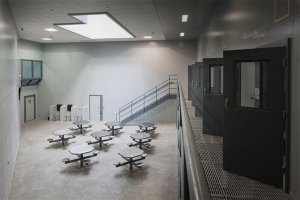
One last artistic point...in the prison, I think it would have made for a much more compelling (and true-to-life) story to have left the prison doors as dark as they appeared to the eye. Lifting the shadows like that makes the room seem bright, well-lit, and almost comfortable. That's not at all what you described it really being like....

Cheers,

b&

While you can find an infinite number of shots where it won't matter, you can also find an finite number where it will. I really hope the next round from Canon fixes this DR thing up because I reallllly don't wanna have to switch to Nikon. If the 7D2/3D/5D4-type cams don't get close to D800-level I think I finally will have to switch. REALLY do not want to though.
 
Upvote 0
art_d said:
TrumpetPower! said:
Art,

I think you might agree with me that the examples you posted in the other thread qualify as "extreme," which was the word I've been using to describe the situations where the 5DIII lacks sufficient dynamic range.
Your definition of extreme seemed to be (from your previous post) :
“Basically, you're either trying to salvage a severely underexposed image, or you're trying to turn deep shadows into midtones.
Neither was the case in the examples I presented.

[...]

To the eye, the prison doors do not appear darker than how I have presented them in that photo. The camera does not record things “true-to-life” (nor for that matter does your brain but that’s a different discussion.) The cell block was well lit. But the lighting was not uniform. The eye adjusts to the brightness levels as its looking around the room so it does look uniform. Standing there looking at those doors, they are that shade of gray. But to the camera, exposing for the highlights in the courtyard below where the majority of the light in the room is falling, it doesn’t come across that way. Without blending exposures and lifting the shadows, the doors come across as almost black, that entire side of the scene is way too murky. They do not look like that to the eye. If that catwalk was really as dark in the “true to life” scenario as the camera recorded it to be, it would be too dark to walk along that catwalk without a flashlight.

In addition to the emphasized portions, I'll observe that the doors themselves are all rendered as Zone IV, and the walls behind them are all rendered as Zone VII.

You have, indeed, by your own description, rendered an extreme scene in such a way as to turn deep shadows into midtones -- highlights, even -- and I'm not at all surprised that you discovered noise when doing so.

Cheers,

b&
 
Upvote 0
this is not shot with a 5Dmk3 but with the EOS-M and 8mm samyang

single exposure ETTR

pulled back by -2 exposure in LR4
and shadow recovery pulled up by about 80

a little sharpening, with mask

canon cameras have good dynamic range if you expose them properly
they are brutally unforgiving if you under expose too much

on a side note the way this little samyang handles flare is quite amazing :D
 

Attachments

  • 20130325-817.jpg
    20130325-817.jpg
    250 KB · Views: 1,656
Upvote 0
TrumpetPower! said:
You have, indeed, by your own description, rendered an extreme scene in such a way as to turn deep shadows into midtones -- highlights, even -- and I'm not at all surprised that you discovered noise when doing so.
If that's what you got from my explanation then I must not be explaining it very well.

I have rendered the doors as a dark gray. Which is the way they are supposed to appear. The doors do not, to the human eye, appear to be almost black "in real life." They appear so only to the camera when exposing to not blow out the highlights in the scene because of dynamic range limitations. To render the scene properly, it requires lifting the shadows on the doors so they go from almost black to dark gray. (And I most certainly have not rendered any shadows as highlights.)

Of course there was noise. That's the whole point. (Not just noise, I'll remind everyone, but pattern noise). Which is why I took multiple exposures because I knew I would have to resort to exposure blending. This example illustrates how there is a real world difference in the Canon sensor compared to an Exmor sensor, because that pattern noise would not be there with an Exmor, multiple exposures would not be required, and the workflow would be much simplified.
 
Upvote 0
verysimplejason said:
Question for the OP.... Are you using different pictures for your shadow recovery? Why not try to recover the shadows from the original so you can see really how good or bad is 5D3's shadow recovery?

if i got your question right - This was the original raw file.
 
Upvote 0
art_d said:
I have rendered the doors as a dark gray.

But that's just it.

The doors aren't a dark gray.

Using a 5x5 eyedropper midway between the handles and the first shadow, from leftmost door to rightmost door, I get:

L*=44, a*=-1, b*=-2
L*=49, a*=-3, b*=-2
L*=50, a*=-3, b*=-2
L*=36, a*=-3, b*=+2
L*=31, a*=-1, b*=3

The first three are all the very definition of middle gray, with the middle door being exactly a middle gray. The very darkest door is only one stop darker than today's standard 12% photographic gray card.

Maybe your monitor isn't properly calibrated, making you think that they're darker than they really are...?

Cheers,

b&
 
Upvote 0
art_d said:
The point is that if you encounter such a scenario with an Exmor sensor, you can lift the shadows with no pattern noise resulting.

As far as it being so rare that it is not a real problem....on architectural shoots I'd say I run across it at least one time on every shoot. Compared to the total number of photos I make across a bunch of shoots, yes, that's a very small number. But since it's not zero, on those occasions when it does happen, then it is a problem which requires extra work to deal with.

Is it a huge problem? No. But a real one? Yes.

Ok i see but i think Nikon high MP cameras are better for architecture and landscape anyway :) If uve used Canon before u should already have a workflow so its not an issue really.
 
Upvote 0
TrumpetPower! said:
art_d said:
I have rendered the doors as a dark gray.

But that's just it.

The doors aren't a dark gray.

Using a 5x5 eyedropper midway between the handles and the first shadow, from leftmost door to rightmost door, I get:

L*=44, a*=-1, b*=-2
L*=49, a*=-3, b*=-2
L*=50, a*=-3, b*=-2
L*=36, a*=-3, b*=+2
L*=31, a*=-1, b*=3

The first three are all the very definition of middle gray, with the middle door being exactly a middle gray. The very darkest door is only one stop darker than today's standard 12% photographic gray card.

Maybe your monitor isn't properly calibrated, making you think that they're darker than they really are...?

Cheers,

b&
The first two doors closet in the foreground are of primary concern to this discussion. The lighter doors in the background did not need to have their shadows lifted as much...they are directly across from the sklight and have more light reflecting off of them. The foreground doors were much more problematic, being so dark, and covering much more two-dimensional space in the photo. And that is where the big problem was with shadow noise.

Comparing the door to the wall behind it, yeah, I would in casual discussion say the wall is light gray and the door is dark gray. We can get pedantic and debate how far below photographic middle gray these doors are and if that still allows them to be classified as lighter shadows or darker midtones. But I fail to see how that advances the discussion.

The simple fact remains that due to dynamic range limitations these doors were not able to be rendered properly in a single exposure by a Canon sensor. This illustrates my point which is there are real world scenarios when a Canon sensor is limited where an Exmor sensor would not be. I don't understand the need to try and rationalize that difference away as inconsequential. Because this demonstrates how it can be consequential.

Do you really believe the image would still be "respectable" with the pattern noise? Or that the doors should just be allowed to stay a murky almost-black tone? I'm pretty sure my client would not have been happy with those results.
 
Upvote 0
sandymandy said:
Ok i see but i think Nikon high MP cameras are better for architecture and landscape anyway :) If uve used Canon before u should already have a workflow so its not an issue really.
Well, unfortunately it's not so simple. Because then we have to take into consideration the issues of lenses. And at least for what I tend to shoot, Canon's lenses are flat-out better. So while Nikon has the better sensor right now, that's not enough to compel me to actually use their system instead. That's why I'm very interested in hoping Canon improves their sensors.

Yes, I do have a workflow, but that is the issue...that there has to be an additional workflow to address situations where Canon's sensors run into their limits. It's not a big issue. But I would welcome a simpler workflow where I wouldn't have to do as much exposure bracketing and as much blending in post.
 
Upvote 0
art_d said:
Comparing the door to the wall behind it, yeah, I would in casual discussion say the wall is light gray and the door is dark gray. We can get pedantic and debate how far below photographic middle gray these doors are and if that still allows them to be classified as lighter shadows or darker midtones. But I fail to see how that advances the discussion.

It makes quite a difference to the discussion. There's a huge difference between pushing near-blacks to deep shadows with detail, and pushing near-blacks to midtones. Going from Zone II to Zone III or Zone IV is no big deal. Going from Zone II to Zone VI, which is basically what you've done, is quite extreme.

The simple fact remains that due to dynamic range limitations these doors were not able to be rendered properly in a single exposure by a Canon sensor. This illustrates my point which is there are real world scenarios when a Canon sensor is limited where an Exmor sensor would not be.

Maybe I'm worng, but I'm pretty sure I'd still take the two exposures with the Nikon -- if I was going for the rendering you went after. I'm pretty sure I'd only need the one exposure with either camera for the rendering I'd instinctively gravitate towards, though I generally always bracket just for the insurance.

Do you really believe the image would still be "respectable" with the pattern noise?

Of course not -- but how much noise is going to be visible is going to depend on how big the image will be used. I doubt any noise would show up in a 17" x 19" print, and I'm sure it wouldn't in an 8" x 10" print. And I have a hard time imagining anybody wanting this image bigger than that. Not for its artistic or technical reasons, of course...it's just that it's a prison cellblock....

Or that the doors should just be allowed to stay a murky almost-black tone? I'm pretty sure my client would not have been happy with those results.

Now we're talking about artistic interpretation, which depends a great deal on the particular client and the purpose.

If this was for a portfolio or marketing materials for the architect, your rendition is perfect.

But if it was for any form of reportage, I'd say you overdid the HDR by making the whole scene perfectly evenly lit. From your other descriptions, the attached image is closer to how I think the scene would have appeared to somebody standing at the camera position. I'm pretty sure that National Geographic, for example, would reject your rendition in favor of one closer to the one below.

(And, again, the architect would love yours and hate this one.)

Cheers,

b&
 

Attachments

  • cell-block-2nd-level-munged.jpg
    cell-block-2nd-level-munged.jpg
    49 KB · Views: 1,094
Upvote 0
TrumpetPower! said:
It makes quite a difference to the discussion. There's a huge difference between pushing near-blacks to deep shadows with detail, and pushing near-blacks to midtones. Going from Zone II to Zone III or Zone IV is no big deal. Going from Zone II to Zone VI, which is basically what you've done, is quite extreme.
Zone V is middle gray, and we have already established that the doors in the foreground are below middle gray, so I cannot see why you insist on making the argument I have lifted shadows from Zone II to VI.

Maybe I'm worng, but I'm pretty sure I'd still take the two exposures with the Nikon -- if I was going for the rendering you went after. I'm pretty sure I'd only need the one exposure with either camera for the rendering I'd instinctively gravitate towards, though I generally always bracket just for the insurance.
Having seen what the Exmor sensor can do, I think it would be able to do it in a single exposure. (I would probably bracket for insuance too, but more than likely I would not have to use the second shot).

Of course not -- but how much noise is going to be visible is going to depend on how big the image will be used. I doubt any noise would show up in a 17" x 19" print, and I'm sure it wouldn't in an 8" x 10" print. And I have a hard time imagining anybody wanting this image bigger than that. Not for its artistic or technical reasons, of course...it's just that it's a prison cellblock....
Yes, but don’t you think it would seem a little unprofessional to deliver a disc full of images to a client and then single out one image and tell them “Oh, by the way, image #XXXX might look a little crappy on your monitior but it will be fine as long as you don’t print it bigger than 8x10….”?


Now we're talking about artistic interpretation, which depends a great deal on the particular client and the purpose.

If this was for a portfolio or marketing materials for the architect, your rendition is perfect.

But if it was for any form of reportage, I'd say you overdid the HDR by making the whole scene perfectly evenly lit. From your other descriptions, the attached image is closer to how I think the scene would have appeared to somebody standing at the camera position. I'm pretty sure that National Geographic, for example, would reject your rendition in favor of one closer to the one below.

(And, again, the architect would love yours and hate this one.)
Ok, here is where I really think you’ve misunderstood the scenario.

The scene does appear evenly lit to the human eye when you are standing there. That’s because of how our brain interprets things for us when we are looking at something with wide variations in dynamic range. Having stood in that very spot, I will tell you that with 100% certainty no one standing there would see the scene in the way you have presented it (which incidentally is not that far off from the lower of the bracketed exposures).

Think of another example that probably every photographer has come across. You’re inside a house, and shooting something outside a window. If you properly expose for the scene outside the window, everything inside of your house will seem black. When you look outside a window with your eyes, does everything inside your bedroom suddenly go suddenly black? No, of course not. The camera’s sensor will see things that way, but the human eye (or more accurately, the human brain’s reconstruction of the information coming from the eye) will not.

This is the reason why architects hire professional photographers….to get the scene to look the same in the photo as it does to the human eye. And in a lot of circumstances (such as this one here) the camera cannot record the scene that way in a single exposure.

As far as National Geographic goes...are you saying you’ve never seen a Nat Geo photo in which the photographer used fill flash to even out the illumination in the scene? You've never heard about them using graduated neutral density filters to change the way the light is transmitted to the camera? Exposure blending may be a relatively new technique in the digital age, but the goal it’s used for--evening out illumination so a scene looks more natural to a camera--is a principle that’s been around a long time in photography.
 
Upvote 0
pdirestajr said:
3 words:

Black Card Technique

http://www.flickr.com/groups/blackcard/

You can get all the DR your little crazy hearts desire.

I'm curious why this is better than a GND. Effectively, by shaking a black card in front of the camera, covering the brighter regions of the scene, one is doing the same thing as a GND. We are probably talking a GND 1.2, maybe a 1.5, but still...same general effect, and its the tried and true method people have been using for decades.
 
Upvote 0
@art_d, @TrumpetPower:

One thing that should be pointed out regarding the shadow recovery of the D800. While it IS amazing, and there is no question it is extremely amazing...there are also limits to it. The photo you guys have been discussing is all gray, so one key factor about extreme shadow lifting is being lost: color fidelity. The D800 would probably be capable of capturing that prison shot in a single exposure, and some clever shadow recovery and curves work in post would create the scene as art_d (or his customer) want's it to look. But lacking any real color, you wouldn't run into the issue of color fidelity.

If you try to take such extreme photos when there IS color, especially richer colors, you will lose a lot of that fidelity in the shadows with the D800. An HDR shot, on the other hand, especially if you use more than 3 exposures and more carefully bracket your shot to gather as much color information as possible even in the deep shadows...you can get a much more color rich or color accurate result with HDR than with a single-shot from a D800. Obviously, you could bracket and blend an HDR with the D800 as well, and it will still do a better job than the D800 thanks to it's low noise.

The point, though, is that you have to chose the workflow that will meet your needs entirely. It may not always be the case that you are shooting a dull, flat, gray room with no color. The additional hassles required with an HDR workflow may still be necessary even with a D800 if you require better color fidelity in those lifted shadows. The D800 would still be a benefit...its shadows are near noiseless...but the benefit of a simpler workflow may not always be guaranteed.
 
Upvote 0
jrista said:
pdirestajr said:
3 words:

Black Card Technique

http://www.flickr.com/groups/blackcard/

You can get all the DR your little crazy hearts desire.

I'm curious why this is better than a GND. Effectively, by shaking a black card in front of the camera, covering the brighter regions of the scene, one is doing the same thing as a GND. We are probably talking a GND 1.2, maybe a 1.5, but still...same general effect, and its the tried and true method people have been using for decades.

I've never actually used this technique (don't really do landscapes photography). It is just interesting to me. I'm assuming it would be better than a GND when shooting unique landscapes that don't have clean horizon lines or gradual exposure differences. It looks like it is kinda like dodging & burning in the darkroom, but during a long exposure right on the sensor.
 
Upvote 0
I am intrigued by blackcard approach...but if I were to guess, a very long exposure of sweeping vistas and swaying foliage may not be all that sharp with blackcard approaches... it would appear to me that quick successive HDR with less total time might be just as good if not better. A disclaimer, I am not a landscape nor HDR maven, so no bias here. Just thinking out loud.
 
Upvote 0
art_d said:
Yes, but don’t you think it would seem a little unprofessional to deliver a disc full of images to a client and then single out one image and tell them “Oh, by the way, image #XXXX might look a little crappy on your monitior but it will be fine as long as you don’t print it bigger than 8x10….”?

Well, now you're talking not about delivering prints, but about delivering images the client expects to pixel peep. In effect, your client is asking you for 38" x 57" prints suitable for viewing at a distance of 12". That's something entirely different, and not generally something one expects to deliver from 135 format, regardless of the brand -- even if you can pull it off.

Honestly, I don't have a lot of sympathy. If your client is expecting shove-your-nose-in-it sharp and clean large gallery prints from every shot, you really should be shooting medium format -- and charging enough to pay for the gear and processing and time and what-not. That would also solve your dynamic range "problems," too.

More likely, you're not properly managing your clients's expectations properly and overselling what is reasonable to offer.

If you're successful at making Mercedes-quality products with Yugo-quality tooling, all the more power to you. But that's generally not how it's done, except perhaps when you're in the starving startup phase or if you're just an enthusiastic amateur. It's generally an unsustainable business model.

(I'll note: I'm right now in that world, myself. I'm doing some very demanding fine art reproduction, and with very good results. I'm pretty sure I'm getting better results than anybody else doing giclee work in the area, and that includes a major metropolitan area art museum. But the time and money it takes me to do what I do and with how long it's taken me to get where I am...well, if I didn't have a day job to pay for the bills along with this hobby, I'd long since have bankrupted myself.)

The scene does appear evenly lit to the human eye when you are standing there. That’s because of how our brain interprets things for us when we are looking at something with wide variations in dynamic range. Having stood in that very spot, I will tell you that with 100% certainty no one standing there would see the scene in the way you have presented it (which incidentally is not that far off from the lower of the bracketed exposures).

I do believe that your certainty is rather misplaced.

Every trained visual artist I've met would have seen the scene as it was, with comparatively deep shadows on the catwalk and the tables brightly lit by the skylight. And that's because they've learned to see the world around them as it is.

It's the same skill that permits them to paint (or draw, whatever), for example, a 3/4 portrait without painting both ears. Had an inmate been standing in one of the doorways in 3/4 profile to the camera, you would have "seen" both ears in exactly the same way that you "saw" her well-lit.

An artist can, of course, choose how to render the scene. He might paint the inmate exactly as he saw her, with only one ear visible. He might paint the inmate looking straight out of the frame, with both ears visible. He might emulate Picasso and paint a 3/4 profile but with both ears showing. Similarly, he might render the light as it was with the tables much brighter than the catwalk, or he might render it as you "saw" it, as if you allowed your eyes time to adapt from the one illumination to the other.

It's also my experience that photographers tend to see the light the same way, and draw from their own bags of tricks for how to deal with it. Fix the light? Blend exposures? Filters? Digital fill? Regardless, they see that the one area is light and the other dark, even if they can squint at both and make out all the details and imagine what the final blended and equally-lit scene would look like.

And that's probably the biggest thing I'm missing from your prison shot: a sense that the lighting isn't equal throughout the whole room. I'd suggest that it's reasonable to lift the shadows to make it easier to see the detail in them -- and, similarly, to tame the highlights. But what you've done is completely equalized the two, giving the sense that the whole room is as well-lit as an art gallery. Some difference in relative illumination would have been nice, but I'm not getting any.

Cheers,

b&

 
Upvote 0
Status
Not open for further replies.