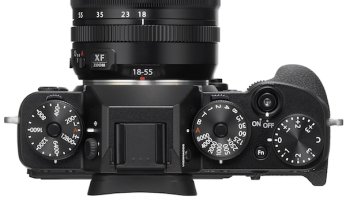
IMHO, talking about mirrorless reducing size in general does the feature decisions a disservice. Canon could make an A7-thin body with a chunky mount, or they could make a thicker full EF body with a dainty mount, or one that's just a hair bigger than a deck of cards from the rear view.
I see Canon as having to make careful decisions about three form factors in particular:
- Grip size and its spacing from the mount --> I think something fairly chunky is best because we are 100% going to mount heavier glass to this thing. As far as spacing goes, ask Sony users -- their grip is comically too close to the mount and fingers don't have enough room with large diameter barrel GM lenses attached. That A7/A9 grip is the photography equivalent of flying in coach. Also: chunkier grip = bigger battery and a greater likelihood we get the top display we love on our nicer SLR bodies.
- Body thickness front to back --> this is principally about the mount depth needed. But if Canon chose full EF, they still could put parts of the body on a diet as they don't need room for a pentaprism, mirror box, etc. See the odd but understandable Sigma mirrorless system which employs 'lens tube' sort of approach to space the lens appropriately far enough away from the sensor.
- Footprint of the back of the camera (i.e. the height and width when looking at the LCD side) --> Canon went amazingly small here with the first EOS M models, but as many have pointed out, these had P&S powershot ergononomics, not what you want in a proper camera. I hope Canon is not 'different for different sake' here and does with some touchscreen-heavy interface -- I hope we get a joystick and control wheel for seamlessness with our SLRs when we're shooting with two bodies.
My vote? Full sized grip + [whatever the mount decision needs, thin or EF, I don't care] + Full form factor in the back for proper 5D-like controls. So make it 5D-like or (if a thin mount) make it a 'thin 5D' and keep the rest about the same.
- A