

Re: Deep Sky Astrophotography
Well, first, they aren't separate images. They are just crops of the same image.
The scaling isn't the same kind of problem in astro as it is in regular photography. The general rule of thumb in astrophotography is that you SHOULD be OVERsampling. You don't want your stars to be pixel size...you want them to be several times pixel size. The rest of the softness is due to a number of things...tracking error, polar misalignment (in my case, at the time, it was about 2' misaligned, or 1/30th of a degree, so not all that bad, really), seeing. Seeing refers to atmospheric turbulence that causes stars to wobble and jump around.
So, the image is exposed and scaled properly...exactly as it should be, really. With a longer focal length, I'll only be oversampling that much more, but that's a good thing. The more pixels I can pack into any given object, the better.
I was at f/4 ISO 400 for this series, although my exposure times differed. I took three separate sets of exposures, because the dynamic range in Orion Nebula is massive. The 30 and 60 second exposure sets were used to dim the core, which was indeed overexposed in the 120 second exposures. Additionally, mixing and matching ISO settings makes removing noise very difficult. Read noise levels increase as ISO drops, fixed patterns change, etc. meaning you need to use different sets of dark frames. However the semi-random and random noise contributions are also different, and when stacking images from different ISO settings, you usually end up with the worst common denominator in noise...thus noise is usually higher.
The best approach is to use a single ISO setting, at the same aperture, and only vary shutter speed. That minimizes the variables, and allows the intelligent aspects of stacking software (such as dynamic dark scaling) to work it's magic and give you the best results.
Well, first, they aren't separate images. They are just crops of the same image.
The scaling isn't the same kind of problem in astro as it is in regular photography. The general rule of thumb in astrophotography is that you SHOULD be OVERsampling. You don't want your stars to be pixel size...you want them to be several times pixel size. The rest of the softness is due to a number of things...tracking error, polar misalignment (in my case, at the time, it was about 2' misaligned, or 1/30th of a degree, so not all that bad, really), seeing. Seeing refers to atmospheric turbulence that causes stars to wobble and jump around.
So, the image is exposed and scaled properly...exactly as it should be, really. With a longer focal length, I'll only be oversampling that much more, but that's a good thing. The more pixels I can pack into any given object, the better.
I was at f/4 ISO 400 for this series, although my exposure times differed. I took three separate sets of exposures, because the dynamic range in Orion Nebula is massive. The 30 and 60 second exposure sets were used to dim the core, which was indeed overexposed in the 120 second exposures. Additionally, mixing and matching ISO settings makes removing noise very difficult. Read noise levels increase as ISO drops, fixed patterns change, etc. meaning you need to use different sets of dark frames. However the semi-random and random noise contributions are also different, and when stacking images from different ISO settings, you usually end up with the worst common denominator in noise...thus noise is usually higher.
The best approach is to use a single ISO setting, at the same aperture, and only vary shutter speed. That minimizes the variables, and allows the intelligent aspects of stacking software (such as dynamic dark scaling) to work it's magic and give you the best results.
Upvote
0

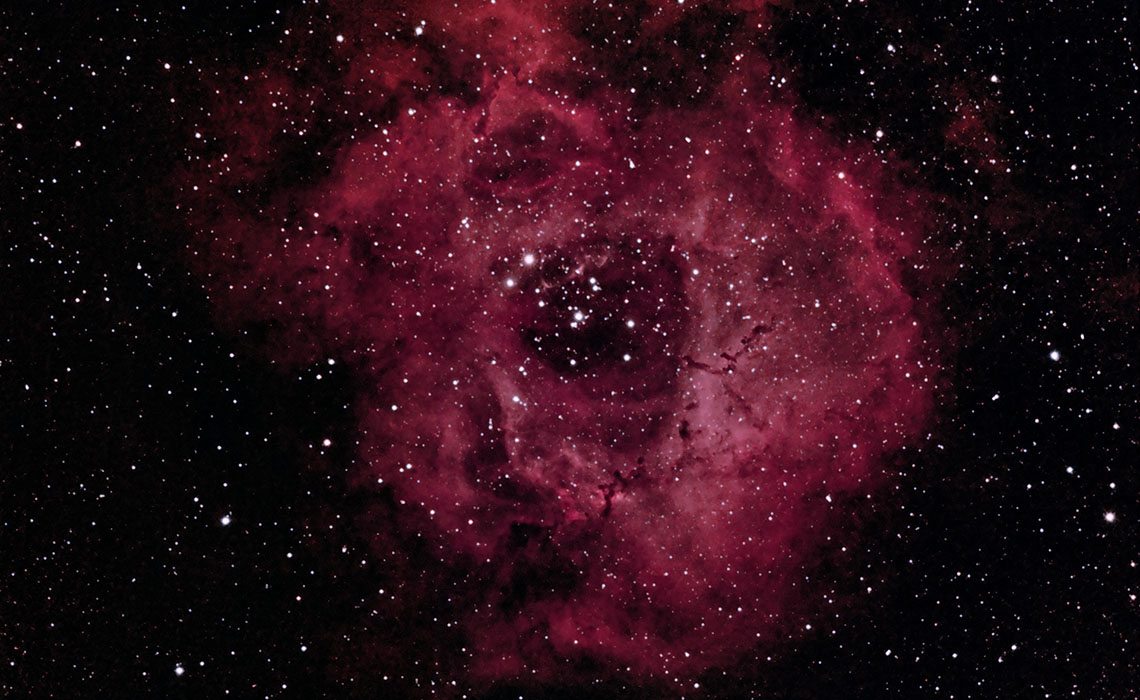


 My biggest problem, really the curse of astrophotographers everywhere, is clouds! I always have cloud cover. For example, tonight...clouds. Hence the reason I'm wasting my time here answering all your fine questions.
 When it comes to the cutting edge of "low light" imaging, most of the more recent technological innovations that you can find over on sites like ImageSensorsWorld, are rated on their ability to see "in starlight". Starlight is in the "Fraction of a Lux" range as far as total illumination goes...they are exceptionally dim, and pretty much anything, including a half moon, can blot them out of existence.
