EF 400mm f/4 DO ii in 2025?

An RF 400/2.8 is not on my horizon because of size (I wouldn't take it on opportunistic trips and when travelling) and price (wildlife is just one genre I shoot). I definitely wouldn't get EF i and ii versions because of weight. I often shoot with a friend with a Sony 400/2.8 so am well aware of the bulk.
Here are some photos from a week ago, all shot wide open at ISO 12800. So I am definitely light limited - the last one was on the forest floor and very dark. Two friends with Z 100-400 f/4.5-5.6 lenses really struggled in these conditions. An extra stop makes a huge difference between 1/250 and 1/125 sec. The friend with the Sony 400/2.8 didn't get any small bird shots like these, possibly because being more difficult to handhold.

View attachment 225433View attachment 225434View attachment 225435.

The first one is magnificent. Well done, Sir! You should post this in the thread: Show your Bird Portraits.
 
  • Like
Reactions: 1 user
Upvote 0
"which information you appear to have ignored".
Earlier I wrote in response to you: "Very useful information!" This has given something to think about and I hope to provide an objective comparison later this week between the 400 DO and an RF 400/2.8.
It was in reference to your subsequent reply to my post where I had compared the Bell Bird shots, where you totally ignored the substance of the post that gave direct evidence and instead wrote a gratuitous comment about something not being to my credit, which I found somewhat offensive. I put quite some effort into getting information and searching through files for making constructive comments that may be of use.
 
Upvote 0
Hi Alan, I found your contributions to this and other threads to be detailed and carefully analysed. As such, I they were very hrlpful. However, I didn't find your bellbird photos answered the question at hand. I have owned both cameras and know the performance of both (very different) sensors and have often photographed in those conditions. You noted how the exposures had to be heavily processed. This contrasted with very careful analysis in your other posts, and I, respectfully, didn't agree with your conclusions. You may well be right about low transmission by the 400 DO lens, but I felt your bellbird analysis did not support it. I did appreciate you digging up the old files and I should have thanked you for that and for your analysis. Sorry.
I hope to conduct some controlled comparisons in the next couple of days.
 
Last edited:
Upvote 0
Just took some photos with my R5 of a test target at two different distances with my 400 DOii compared to an RF 400/2.8. I will report in more detail once I am back home and have access to my computer.
In short the exposures with my 400DO were identical to the 400/2.8 at f/4, and the shutter speed was twice as long with the 2.8 lens at f/2.8. I will look more closely at histograms when back home, but I conclude that any loss in light transmission is insignificant in practice.
 
Upvote 0
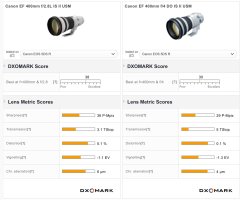
I have found the comparison of the EF 400mm DO ii f/4 vs EF 400mm f/2.8 ii measured carefully under controlled laboratory conditions and lighting. The real aperture of the 2.8 lens in the patent is f/2.9, and measured to be that by photonstophotos. The observed transmission of 3.1 is therefore a loss of 0.19 stops. At f/4 this will give a transmission of T = 4.27, compared with the measured T = 5 for the DO lens. The DO is accordingly 0.46 stops darker than the 2.8 lens when both set to f/4.

Transmission_400_2.8vsDO.jpg
 
Upvote 0
Thanks Alan, I was aware of that site. It made me worried and encouraged me to make a comparison in controlled but real world conditions. I will look more closely at the files when back home.
 
  • Like
Reactions: 1 user
Upvote 0
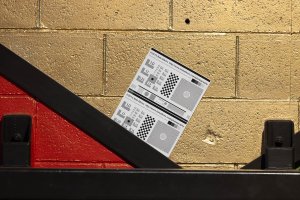
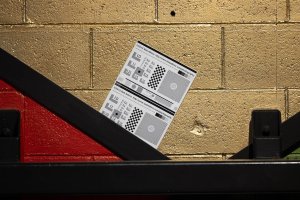
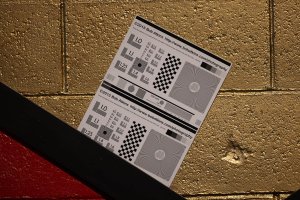
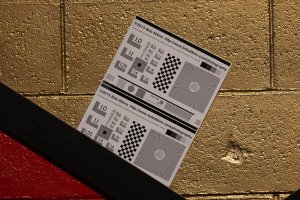
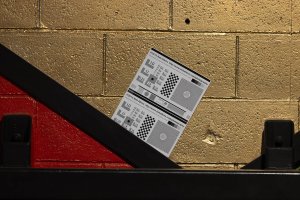
Back home from an inspiring photography conference. Here are the comparison photos I took of my 400 DO ii and an RF 400/2.8L from the Canon stand.
Test conditions
- Constant lighting conditions.
- A gimbal on a sturdy tripod, shot at two distances. The photos discussed here were at the longer distance, back calculated to be about 10m.
- Auto focused using one shot focus on a double Bob Atkins chart.
- IS set at mode 3.
- 2 second self-timer
- ISO 100 and 400 - I used 400 as there seemed to be a little motion blur at ISO 100. Exposures were 400 DO: 1/60 @ f/4, 400/2.8: 1/125 @ f/2.8
- Aperture priority set at wide open - I also shot the 400/2.8 at f/4.
- CRaw files imported into Lightroom Classic with no corrections.
- The sharpest of three files for each test selected for comparison.
- Copies were made of these images and the Atkins chart cropped out. Auto white balance set on the chart. Auto exposure on the Atkins chart. White balance and exposure pasted into the original files (3 and 4).

My conclusions:
- There is little difference in the colour of the lenses in terms of auto-white balance.
- The recorded shutter speed should give a first order indication of relative transmissivity. DO shutter speeds were twice as long as the f/2.8 lens as might be expected.
- There appears to be little difference in the brightness of the base exposures - the first two photos (the first is the DO, the second the f/2.8 lens).
- Auto exposure (of the Atkins chart) gave the 400/2.8 lens +0.5 and the DO lens +0.75. (photos 3-6).
- This might suggest that the DO lens has 0.25 stop less transmissivity, but the full frame 400/2.8 image (4) appears darker than the 400 DO image (3), possibly due to vignetting.
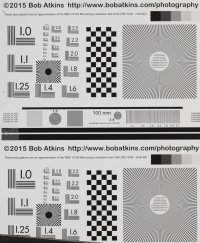
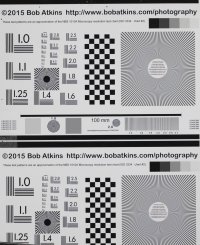
- In terms of sharpness, both lenses have similar resolution, resolving between 5.6 and 6.3 on the test chart - this could be limited by the sensor. However, the 400/2.8 is noticeably crisper. (5 and 6).

My conclusions;
- the difference in transmissivity of the two lenses (allowing that one is f/2.8 and the other f/4) is not great, if anything. It is certainly not the difference suggested by the DXOMark analysis shared by Alan. I cannot explain the difference and would welcome any critique on my approach.
- The resolution of both lenses appears to be sensor limited, but the f/2.8 lens has better contrast.

I am very happy to share the raw files, perhaps via a WeTransfer link in this forum.

1: Full frame DO image out of camera (@f/4)
2: Full frame f/2.8 image out of camera (@ f/2.8)
3: DO image, with exposure and WB balance corrected (see above).
4: f/2.8 image, with exposure and WB corrected.
5 and 6: Crops of images 3 and 4.
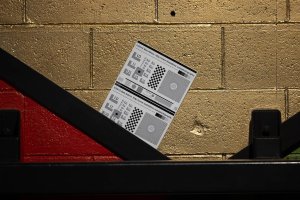
BZ5_8407-1.jpgBZ5_8414-1.jpgBZ5_8407-2 - Copy.jpgBZ5_8414-2 - Copy.jpgBZ5_8407-3.jpgBZ5_8414-3.jpg
 
Last edited:
  • Like
Reactions: 1 user
Upvote 0
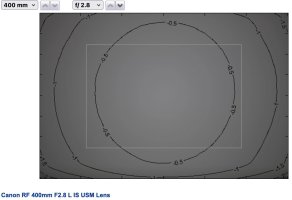
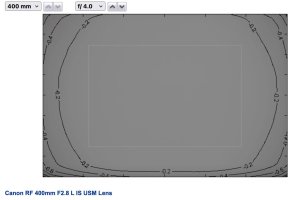
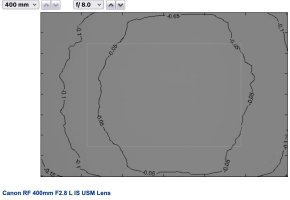
Thanks for doing all this work - much appreciated. However, you do have vignetting problems as well as other factors. The RF 400/2.8 does have much more vignetting at f/2.8 than f/4, which disappears by f/8. And this would have been compounded by another factor. As mentioned in my last post, the 400mm /2.8 is in fact f/3.19, and 0.38 stops of brightness would have been added at f/4 as well as less light loss from vignetting. So, if you compared both lenses at f/4 you surely would have seen the RF 400 to have been brighter. If I was comparing the two for transmission, I would have done it at f/8 where there is very low vignetting for both and both have same real aperture.

rf400f2.8.jpgRF400f4.jpgRF400f8.jpg
 
  • Like
Reactions: 1 user
Upvote 0
Hi Alan, thanks for sharing that information on vignetting. Vignetting was apparent in the photo taken with the 400/2.8 wide open and would have been more so on both lenses had a photographed a blank wall. I also took some photos with the 400/2.8 @ f/4 so will look at them more closely when back at my computer tomorrow.
You are completely correct that transmissivity should be assessed at f/8 where vignetting is reduced. I was primarily interested in how much light my 400 DO gathered wide open, especially given the critical T-value posted by DXOMark. So I did a comparison with the RF 400/2.8 wide open, a lens very highly regarded. If the 400 DO would provide me with a shutter speed close to twice as long at f/4 as the 400/2.8 @ f/2.8, I would be satisfied. And so it appears to be. The biggest downside from the comparison was not unexpected, that of the lower contrast.
 
Upvote 0
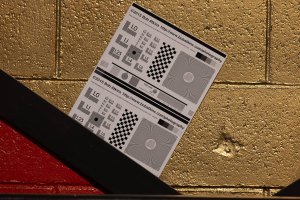
Here are some photos shot at the same time from the same gimbal/tripod, but at 4.7m (back calculated). These are at ISO 100 so not directly comparable to my previous images - I didn't shoot the f/2.8 lens at f/4 at ISO 400. All are using aperture priority. They are straight out of camera with no edits or corrections in LR.
1: 400/2.8: 1/30 @ f/2.8
2: 400/2.8: 1/15 @ f/4
3: 400 DO: 1/15 @ f/4

It appears that:
- The biggest difference is the reduction in vignetting when the f/2.8 lens is stopped down to f/4.
- There is little difference in brightness between the DO @ f/4 and the f/2.8 at f/4 - exposures recorded by the camera were the same.
- Lightroom autoexposure (not autotone) across the entire frame gives the following values: +0.53, +0.34 and +0.13. The highest value is to correct vignetting with the f/2.8 les @ f/2.8. The DO autoexposure needs less of an increase than the f/2.8 lens @ f/4 - however, the white of the target seems a little darker, and needs +0.3 to equal the f/2.8 lens at f/4. (I haven't attached these files, but can do if requested).
- The 400/2.8 @f/2.8 was the most crisp, but this could be due to the 1/30 shutter speed compared to 1/15th for the others.

These results surprised me, especially given Alan's recent information - I expected the f/2.8 lens to be brighter @ f/4 than the DO lens at f/4.

Again, critique of my approach is appreciated and I can share the raw files.

BZ5_8388.jpgBZ5_8389.jpgBZ5_8394.jpg
 
Last edited:
Upvote 0
Something has to be wrong: it isn't possible to go from f/4 to f/3.19 (especially where there is high vignetting a 3.19) and gain a full stop of light. Something may be happening in the camera like it is adjusting the iso and not reporting it.
 
Upvote 0
Something has to be wrong: it isn't possible to go from f/4 to f/3.19 (especially where there is high vignetting a 3.19) and gain a full stop of light. Something may be happening in the camera like it is adjusting the iso and not reporting it.
Hi Alan, yes I've tried figuring this out. ISO was fixed at 100, aperture was set at f/2.8 or f/4, so the variable was the shutter speed. The nominal f/2.8 exposure was 1/30, compared to nominal f/4 @ 1/15 on both lenses. These exposures have the same EV value so there was no gain of a full stop of light. No changes in Lightroom on import. The light was constant and I took 3 exposures at each setting at two distances (so about 20 photos) and the results were consistent.
Edit: I took 47 photos and all exposures were consistent (same EV value).
 
Last edited:
Upvote 0
Hi Alan, yes I've tried figuring this out. ISO was fixed at 100, aperture was set at f/2.8 or f/4, so the variable was the shutter speed. The nominal f/2.8 exposure was 1/30, compared to nominal f/4 @ 1/15 on both lenses. These exposures have the same EV value so there was no gain of a full stop of light. No changes in Lightroom on import. The light was constant and I took 3 exposures at each setting at two distances (so about 20 photos) and the results were consistent.
I appreciate your careful studies.
 
Upvote 0
Hi Alan, yes I've tried figuring this out. ISO was fixed at 100, aperture was set at f/2.8 or f/4, so the variable was the shutter speed. The nominal f/2.8 exposure was 1/30, compared to nominal f/4 @ 1/15 on both lenses. These exposures have the same EV value so there was no gain of a full stop of light. No changes in Lightroom on import. The light was constant and I took 3 exposures at each setting at two distances (so about 20 photos) and the results were consistent.
Edit: I took 47 photos and all exposures were consistent (same EV value).
Thanks for sending me the RAW files. I agree with you that there seems very little difference between the two in brightness to the eyeball, and the RF 400 is crisper and with a little more resolution. Either the DxOmark measurements on transmission were wrong or Canon is massaging the files in the camera. Or serious copy variation. Mind you, there is quite a difference in brightness when I use my left eye, which has had its cataract removed, and my left, which hasn't.
 
  • Like
Reactions: 1 user
Upvote 0
Yes Alan, copy variation can be an issue - I experienced this with two RF 24-105/4L lenses. Others have noted that Brian (Digital Picture) appears to have had a soft 400 DO. I am happy with mine.
 
  • Like
Reactions: 1 user
Upvote 0
John, the RF 300-600 looks like a fabulous lens and if it is USD 6k it would be an option for me, but not if its USD 10k (like the 100-300). Weight and size are also important factors (like for the Sigma 300-600/4). Frankly, I'd be very happy with an RF 400/4 in current lighter construction and nice if it focused closer.
 
Upvote 0
John, the RF 300-600 looks like a fabulous lens and if it is USD 6k it would be an option for me, but not if its USD 10k (like the 100-300). Weight and size are also important factors (like for the Sigma 300-600/4). Frankly, I'd be very happy with an RF 400/4 in current lighter construction and nice if it focused closer.
Or even a 300/2.8. The Sony one is very light and very sharp with a 2x TC. I was very happy both the EF 400/4 ii and 300/2.8 ii. My ancient arms can no longer take the strain of a 2.5-3kg+ long lens without resting my elbows on something, and, plus a tripod/monopod, too much for carrying around.
 
  • Like
Reactions: 1 user
Upvote 0
My thoughts after 3 1/2 months.
- Plenty sharp and no need to stop down.
- Takes a 1.4x iii very well. Slightly sharper stopped down half an f-stop, but usually I don't.
- Files processed in DXO PureRaw4 are definitely crisper than in Lightroom., e.g. for feather detail I am often converting in PR4 even when noise is not an issue..
- Nice and small in size, but would be great to have in the latest engineering plastics like the RF 400/2.8L to reduce weight.
- AF is plenty fast - my R5 is probably the limiting factor.
- Would be nice for it to focus closer, but its okay.

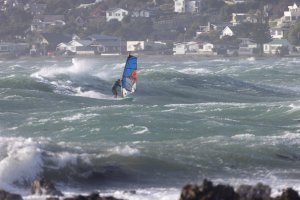
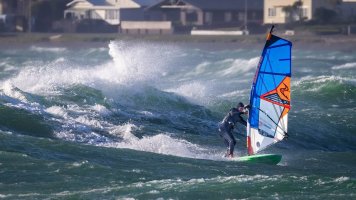
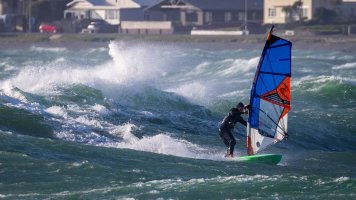
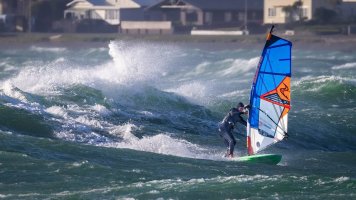
My biggest gripe, although not completely unexpected is bokeh, producing parallel lines and circular highlights. For bird photography, this is not a major issue, but I also shoot water sports, especially windsurfing (when I'm not on the water myself!). And here bokeh can be a problem, but there are work arounds as I will show here. These photos are probably worst case, as shooting at distance through reasonably intense saltspray.

BZ5_1638.jpg
Raw, unprocessed image
BZ5_1638_PR4-4.jpg
"Final" Lightroom image (comparable to the final image processed in PR4.
BZ5_1638-3.jpg
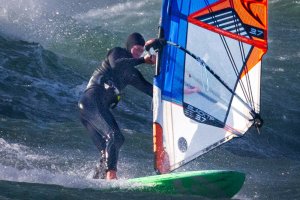
Crop showing detail of windsurfer. I had to increase contrast, which added noise.
BZ5_1638-4.jpg
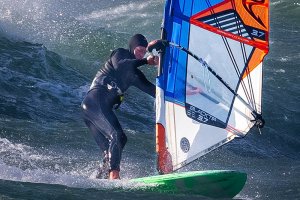
Processed with AI noise reduction in LR

PR4 files to follow.
 
Upvote 0
Images processed in PR4.
BZ5_1638_PR4.jpg
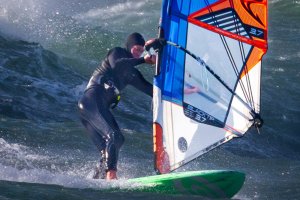
Same crop, but processed in PR4, showing better detail than in LR.
BZ5_1638_PR4-2.jpg
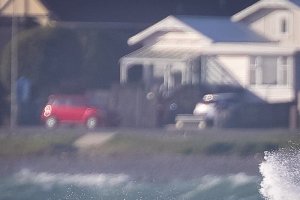
Final crop, without local adjustments. Notice the disturbing circular highlights in the cars in top left, plus some double lining in the houses,
BZ5_1638_PR4-3.jpg
Crop showing detail of the cars. While this may not be visible in social media posts, it will be with any enlargements.
BZ5_1638_PR4-4.jpg
Final image:
- Masked and increased exposure of windsurfer
- Range mask of extreme highlights and add a little texture to improve crispness of spray and whitecaps.
- Background mask of the top 1/4 with the houses and applied -80 texture to reduce double lining. I also reduced exposure a little to reduce prominence of houses.
- AI remove of cars in the top left.
Oh, the details: R5, EF 400 DO ii with 1.4x iii. 1/3000 @ f/6.7, ISO 1000.
Wind strength 30-40 knots, gusting over 50 knots.
I'm very happy with this image, especially given the conditions, but certainly not "straight-out-of-camera"!
 
  • Like
Reactions: 1 user
Upvote 0