Focus problems with the Canon 7DII?

GraFax said:
Ryan85 said:
I'm a little confused about this. So do lenses like the 70-200 2.8 or 3002.8 not focus aswell or as fast on the outside focus points compared to the center point ? Ive never researched the 2.8 and .6 focus point thing.

Hey Ryan85

Yes, lenses with a maximum aperture of f2.8 or higher will focus best using high precision f2.8 AF points. The IDx and 5D3 have a column of five of these in the center. On the 7D2, there is only one, the center point. Which has two cross points, an f 2.8 and one that is sensitive up to f8.

Idealy, you should only use the 7D2's center point for critical focus on f2.8 lenses. In fact, any lens with a max aperture greater than f5.6.

The 1DX and the 5D3 both also have (10/20 respectively) f4 sensitive AF points. these can also be used for lenses with a max aperture of f4 for best results. The slow zooms and the rest of the big whites. The 7D2 has none of those. With those lenses you're still somewhat limited to the center point for critical focus although the inaccuracy of using the f5.6 points will be lessened I would suppose.

On a 5D3, and presumably a 1DX, you are able to selectively turn off slower AF points to prevent poor focusing accuracy.

All of the points on 7D2, with the exception of the center point, are f5.6 cross-type points. (64 of the 65 pts)

Ideally, these points should be used with lenses with a maximum aperture of f5.6. I know of no other camera that has been designed and marketed with this configuration of AF points.

It would seem to be obvious that a camera with 64 out of 65 AF points dedicated to lenses with a maximum aperture of f5.6 was probably intended to be used preferentially with lenses with a maximum aperture of f5.6.

So in short, yes, it definitely makes a difference. Try to stick to the AF points that are tuned to your lenses max aperture. This doesn't mean you can't use the 7D2 with faster lenses. But, it does mean that the 7D2 has clearly been optimized for using lenses f5.6 and above. The expected apertures for reach-limited applications.

Thank you for the explanation. That makes since to me. I'm going to play with that a little and see what results I get.
 
Upvote 0
GraFax said:
Ryan85 said:
Thank you for the explanation. That makes since to me. I'm going to play with that a little and see what results I get.
Sure thing bud. Not a huge deal, just another one of those small things that can bite you when you aren't paying attention to it.

I mainly bring it up because I see a lot of folks struggling to get good focus with the 7D2 in multi point zone AF modes with fast lenses. Not a great approach IMO for getting good critical focus wide open.

I don't think I'll bother mentioning it again. Not worth the agro of dealing with the folks that just like to argue.

I understand that. Everyone is entitled to there options but I don't get argument part though. So stoping down on a 2.8 lens to 5.6 or slower would still be accurate on the outside points?
 
Upvote 0
GraFax said:
I mainly bring it up because I see a lot of folks struggling to get good focus with the 7D2 in multi point zone AF modes with fast lenses. Not a great approach IMO for getting good critical focus wide open.

Prove it.

I've used f/5.6 points with f/1.4 lenses and done quite well for years. I used them like that at my last wedding (in horribly dark conditions - f/1.4, ISO 1600, 1/30th or so) and got tons of in-focus shots.

If what you're saying is true, the f/2.8 points on the 1DX and 5DIII are just short of useless on f/1.4 and f/1.2 primes. In reality, they work just fine, and the f/5.6 points of the 7DII should work just fine with f/2.8 lenses and faster as well.
 
Upvote 0
Lee Jay said:
GraFax said:
I mainly bring it up because I see a lot of folks struggling to get good focus with the 7D2 in multi point zone AF modes with fast lenses. Not a great approach IMO for getting good critical focus wide open.

Prove it.

I've used f/5.6 points with f/1.4 lenses and done quite well for years. I used them like that at my last wedding (in horribly dark conditions - f/1.4, ISO 1600, 1/30th or so) and got tons of in-focus shots.

If what you're saying is true, the f/2.8 points on the 1DX and 5DIII are just short of useless on f/1.4 and f/1.2 primes. In reality, they work just fine, and the f/5.6 points of the 7DII should work just fine with f/2.8 lenses and faster as well.

I think he's saying the 2.8 point is more precise than the 5.6 points not that they won't work. And I believe reading the manual on my 5d3 the center point is more precise for 2.8 and faster lenses. I'm not a expert at this topic but that's how I understand it. Not that it won't work but that it's more precise. How much more precise IDK
 
Upvote 0
GraFax said:
Lee Jay said:
GraFax said:
I mainly bring it up because I see a lot of folks struggling to get good focus with the 7D2 in multi point zone AF modes with fast lenses. Not a great approach IMO for getting good critical focus wide open.

Prove it.

I've used f/5.6 points with f/1.4 lenses and done quite well for years. I used them like that at my last wedding (in horribly dark conditions - f/1.4, ISO 1600, 1/30th or so) and got tons of in-focus shots.

If what you're saying is true, the f/2.8 points on the 1DX and 5DIII are just short of useless on f/1.4 and f/1.2 primes. In reality, they work just fine, and the f/5.6 points of the 7DII should work just fine with f/2.8 lenses and faster as well.
I don't take orders or direction from you. If you don't accept there are differences in AF point sensitivity that is you prerogative. Don't expect any further response from me to your posts.

No evidence = no reason to believe you are right.
 
Upvote 0
Ryan85 said:
I think he's saying the 2.8 point is more precise than the 5.6 points not that they won't work. And I believe reading the manual on my 5d3 the center point is more precise for 2.8 and faster lenses. I'm not a expert at this topic but that's how I understand it. Not that it won't work but that it's more precise. How much more precise IDK

There's a spec on the accuracy of a focus point. It used to be 1/3 of the DOF. So, if a point is good to 1/3 of the DOF at f/5.6, it should be good to 1 DOF at f/1.8.

Now, we don't know if that's 1 standard deviation or more, and we don't know if the spec on the 7D2's focus points are 1/3 of the DOF or something else. That's why I wanted evidence. I suspect that the spec is tighter now than it was when 1/3 of the DOF was the standard but I don't know that either.

With 1/3 DOF f/5.6 points I get around 80% in-focus images at f/1.4. If the 7D2 can do that well, I'll be happy. Since that spec is 10 years old, I suspect it will do better and that the reason it only has one f/2.8 point is that it doesn't really need the high precision points to get a good percentage of in-focus images with f/2.8 lenses like the 300/2.8 and 400/2.8. It's also probable that having multiple focus points all working on one subject will further tighten the performance since errors will tend to average out. And with all of the 7D2's focus points being cross points, you have at least two on every subject.

This is why I want to see some testing on faster lenses using other than the center point.
 
Upvote 0
Lee Jay said:
Ryan85 said:
I think he's saying the 2.8 point is more precise than the 5.6 points not that they won't work. And I believe reading the manual on my 5d3 the center point is more precise for 2.8 and faster lenses. I'm not a expert at this topic but that's how I understand it. Not that it won't work but that it's more precise. How much more precise IDK

There's a spec on the accuracy of a focus point. It used to be 1/3 of the DOF. So, if a point is good to 1/3 of the DOF at f/5.6, it should be good to 1 DOF at f/1.8.

Now, we don't know if that's 1 standard deviation or more, and we don't know if the spec on the 7D2's focus points are 1/3 of the DOF or something else. That's why I wanted evidence. I suspect that the spec is tighter now than it was when 1/3 of the DOF was the standard but I don't know that either.

With 1/3 DOF f/5.6 points I get around 80% in-focus images at f/1.4. If the 7D2 can do that well, I'll be happy. Since that spec is 10 years old, I suspect it will do better and that the reason it only has one f/2.8 point is that it doesn't really need the high precision points to get a good percentage of in-focus images with f/2.8 lenses like the 300/2.8 and 400/2.8. It's also probable that having multiple focus points all working on one subject will further tighten the performance since errors will tend to average out. And with all of the 7D2's focus points being cross points, you have at least two on every subject.

This is why I want to see some testing on faster lenses using other than the center point.

What your saying makes since. I've never heard that and I really don't know. I'm going to try some different lenses and see my results. You may very well be right. I do know GraFax has posted quite a few images and commented on the 7d2 post. He seems to be using the 7d2 quite a bit with the 400 5.6. His comments also make sense to me and I respect his opion too. Thanks for explaining your point of view.
 
Upvote 0
GraFax said:
Ryan85 said:
I'm a little confused about this. So do lenses like the 70-200 2.8 or 3002.8 not focus aswell or as fast on the outside focus points compared to the center point ? Ive never researched the 2.8 and .6 focus point thing.

Hey Ryan85

Yes, lenses with a maximum aperture of f2.8 or higher will focus best using high precision f2.8 AF points. The IDx and 5D3 have a column of five of these in the center. On the 7D2, there is only one, the center point. Which has two cross points, an f 2.8 and one that is sensitive up to f8.

Idealy, you should only use the 7D2's center point for critical focus on f2.8 lenses. In fact, any lens with a max aperture greater than f5.6.

The 1DX and the 5D3 both also have (10/20 respectively) f4 sensitive AF points. these can also be used for lenses with a max aperture of f4 for best results. The slow zooms and the rest of the big whites. The 7D2 has none of those. With those lenses you're still somewhat limited to the center point for critical focus although the inaccuracy of using the f5.6 points will be lessened I would suppose.

On a 5D3, and presumably a 1DX, you are able to selectively turn off slower AF points to prevent poor focusing accuracy.

All of the points on 7D2, with the exception of the center point, are f5.6 cross-type points. (64 of the 65 pts)

Ideally, these points should be used with lenses with a maximum aperture of f5.6. I know of no other camera that has been designed and marketed with this configuration of AF points.

It would seem to be obvious that a camera with 64 out of 65 AF points dedicated to lenses with a maximum aperture of f5.6 was probably intended to be used preferentially with lenses with a maximum aperture of f5.6.

So in short, yes, it definitely makes a difference. Try to stick to the AF points that are tuned to your lenses max aperture. This doesn't mean you can't use the 7D2 with faster lenses. But, it does mean that the 7D2 has clearly been optimized for using lenses f5.6 and above. The expected apertures for reach-limited applications.

I am by no means an expert but my interpretation of the AF manual is somewhat different than yours.

The centre point is double cross for lenses with a maximum of f2.8 or faster otherwise it is single cross. The rest are cross type for lenses f5.6 or faster otherwise they are single dimension: horizontal or vertical sensitive. Not both at the same time.

I would expect the end result to be much as you stated. The double cross is more accurate than a single cross and the single cross is more accurate than a single dimension point. Net result a faster lens can, in theory, give more accurate focus than a slower lens.

Rod
 
Upvote 0
Lee Jay said:
There's a spec on the accuracy of a focus point. It used to be 1/3 of the DOF. So, if a point is good to 1/3 of the DOF at f/5.6, it should be good to 1 DOF at f/1.8.

Sorry, but that's two wrongs for the price of one.

In fact, the spec is that the high-precision AF points (generally the f/2.8 ones) are precise within 1/3 the DoF at the lens' max aperture (whatever lens is attached), whereas the standard precision AF points (generally the f/5.6 ones) are precise within 1 DoF of the attached lens at max aperture.

It's also important to distinguish precision from accuracy. Canon specifies the former (as described above), but apparently not the latter (I've had an email exchange with Chuck Westfall on this). Accuracy is determined by the 'baseline' of the AF point, and the wider baseline of an f/2.8 line (easy to see on an image of an actual AF sensor) makes it more accurate than an f/5.6 line.
 
Upvote 0
RodS57 said:
The centre point is double cross for lenses with a maximum of f2.8 or faster otherwise it is single cross. The rest are cross type for lenses f5.6 or faster otherwise they are single dimension: horizontal or vertical sensitive. Not both at the same time.

I think only the four immediately adjacent to the center point work at all at f/8 - the two side ones are vertical, the top and bottom are horizontal. All the others are unavailable for slower than f/5.6 lenses.

Some of the points farther from the center are not usable for certain lenses. I assume this is a field flatness or perhaps aberration (spherical or CA) limit for those lenses, but it doesn't say.
 
Upvote 0
neuroanatomist said:
Lee Jay said:
There's a spec on the accuracy of a focus point. It used to be 1/3 of the DOF. So, if a point is good to 1/3 of the DOF at f/5.6, it should be good to 1 DOF at f/1.8.

Sorry, but that's two wrongs for the price of one.

In fact, the spec is that the high-precision AF points (generally the f/2.8 ones) are precise within 1/3 the DoF at the lens' max aperture (whatever lens is attached), whereas the standard precision AF points (generally the f/5.6 ones) are precise within 1 DoF of the attached lens at max aperture.

It's also important to distinguish precision from accuracy. Canon specifies the former (as described above), but apparently not the latter (I've had an email exchange with Chuck Westfall on this). Accuracy is determined by the 'baseline' of the AF point, and the wider baseline of an f/2.8 line (easy to see on an image of an actual AF sensor) makes it more accurate than an f/5.6 line.

So what does precise within the 1/3 or 1 off the DoF at the lens max aperture? I'm a little confused with this?
 
Upvote 0
neuroanatomist said:
Lee Jay said:
There's a spec on the accuracy of a focus point. It used to be 1/3 of the DOF. So, if a point is good to 1/3 of the DOF at f/5.6, it should be good to 1 DOF at f/1.8.

Sorry, but that's two wrongs for the price of one.

In fact, the spec is that the high-precision AF points (generally the f/2.8 ones) are precise within 1/3 the DoF at the lens' max aperture (whatever lens is attached), whereas the standard precision AF points (generally the f/5.6 ones) are precise within 1 DoF of the attached lens at max aperture.

It's also important to distinguish precision from accuracy. Canon specifies the former (as described above), but apparently not the latter (I've had an email exchange with Chuck Westfall on this). Accuracy is determined by the 'baseline' of the AF point, and the wider baseline of an f/2.8 line (easy to see on an image of an actual AF sensor) makes it more accurate than an f/5.6 line.

I'd be wary of anything Chuck Westfall says technically, since he once claimed that purple fringing was caused by birefringence of the stuff in front of the sensor (I forget if it was the microlenses, the AA filter or the IR filter). Regardless, that isn't the cause of purple fringing, axial CA in the lens is.

Since neither the baseline nor the pixel density of the sensor changes with lens wide open f-stop, I don't understand how a single line sensor could be more accurate on a lens that's faster than its baseline than on one that is equal to its baseline, but that's what it would have to be if what you wrote above is correct. It's seeing f/2.8 even on an f/1.4 lens but the DOF is half on the later so to retain 1/3 DOF performance, it would have to be twice as good on an f/1.4 lens as it is on an f/2.8 lens.
 
Upvote 0
Ryan85 said:
So what does precise within the 1/3 or 1 off the DoF at the lens max aperture? I'm a little confused with this?

First, let me correct my earlier abbreviation - I should not have said DoF, I should have spelled out depth of focus. The spec is in terms of depth of focus, not depth of field. The former is the sensor-side equivalent of the latter, proportional but measured in µm and much less dependent on subject distance than depth of field.

It basically means that the distribution of focusing around the 'true focal plane' will tighter with the high-precision AF points (e.g., if you take many, many shots focusing on the same subject, most of them will not be off by more than 1/3 of the depth of focus with a high precision AF point, and most of them will not be off by more than 1 full depth of focus with a standard precision AF point. The AF system will produce normal (Gaussian) distribution of focusing around the mean value, precision specifies how 'steep' the hill of that distribution looks.
 
Upvote 0
neuroanatomist said:
Ryan85 said:
So what does precise within the 1/3 or 1 off the DoF at the lens max aperture? I'm a little confused with this?

First, let me correct my earlier abbreviation - I should not have said DoF, I should have spelled out depth of focus. The spec is in terms of depth of focus, not depth of field. The former is the sensor-side equivalent of the latter, proportional but measured in µm and much less dependent on subject distance than depth of field.

It basically means that the distribution of focusing around the 'true focal plane' will tighter with the high-precision AF points (e.g., if you take many, many shots focusing on the same subject, most of them will not be off by more than 1/3 of the depth of focus with a high precision AF point, and most of them will not be off by more than 1 full depth of focus with a standard precision AF point. The AF system will produce normal (Gaussian) distribution of focusing around the mean value, precision specifies how 'steep' the hill of that distribution looks.

Thanks for the reply
 
Upvote 0
Lee Jay said:
neuroanatomist said:
Lee Jay said:
There's a spec on the accuracy of a focus point. It used to be 1/3 of the DOF. So, if a point is good to 1/3 of the DOF at f/5.6, it should be good to 1 DOF at f/1.8.

Sorry, but that's two wrongs for the price of one.

In fact, the spec is that the high-precision AF points (generally the f/2.8 ones) are precise within 1/3 the DoF at the lens' max aperture (whatever lens is attached), whereas the standard precision AF points (generally the f/5.6 ones) are precise within 1 DoF of the attached lens at max aperture.

It's also important to distinguish precision from accuracy. Canon specifies the former (as described above), but apparently not the latter (I've had an email exchange with Chuck Westfall on this). Accuracy is determined by the 'baseline' of the AF point, and the wider baseline of an f/2.8 line (easy to see on an image of an actual AF sensor) makes it more accurate than an f/5.6 line.

I'd be wary of anything Chuck Westfall says technically, since he once claimed that purple fringing was caused by birefringence of the stuff in front of the sensor (I forget if it was the microlenses, the AA filter or the IR filter). Regardless, that isn't the cause of purple fringing, axial CA in the lens is.

Since neither the baseline nor the pixel density of the sensor changes with lens wide open f-stop, I don't understand how a single line sensor could be more accurate on a lens that's faster than its baseline than on one that is equal to its baseline, but that's what it would have to be if what you wrote above is correct. It's seeing f/2.8 even on an f/1.4 lens but the DOF is half on the later so to retain 1/3 DOF performance, it would have to be twice as good on an f/1.4 lens as it is on an f/2.8 lens.

The point regarding Westfall was that I asked him if Canon specified AF accuracy in addition to AF precision, and he was not aware of such a specification (which presumably, he could find if there was one).

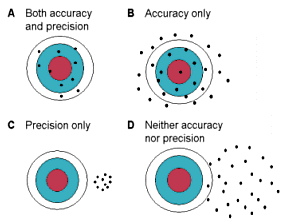
In our exchange, Westfall confused precision and accuracy, and it appears you are doing the same. Precision is not the same as accuracy. Precision is repeatability, how tightly a series of repeated measurements cluster together. Accuracy is how close the average of a repeated series of measurements, or even a single measurement for that matter, is to the true value.

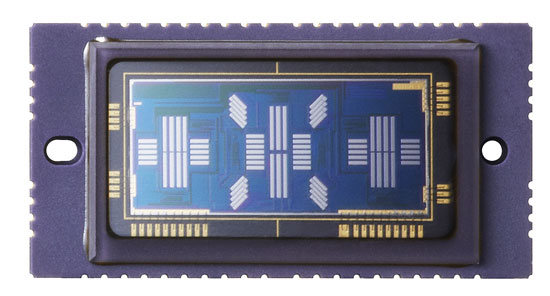
AFMA_Image3.gif


An f/2.8 AF point has a physically wider separation between the halves of the AF line, easy to see (the sets of five diagonal lines are the f/2.8 crosses):

5d3_10.jpg


That wider separation requires a faster lens to deliver a wide enough light cone, and that wider baseline makes the line more accurate than the narrower baseline of an f/5.6 point. So, an f/2.8 AF point used with an f/2.8 or faster lens will be more accurate than an f/5.6 AF point used with the same lens. That was the point that I believe GraFax was making. In general, those f/2.8 points are also high-precision points, meaning a steeper distribution curve (but while Canon specifies 1/3 of the depth of focus, they don't provide a full description of the precision, e.g. xx% of shots will fall within that depth of focus, because I'm sure it's not 100%).

Because the precision of the system is specified in terms of depth of focus, whether or not you notice any differences depends a lot on your typical subject distance. As subject distance increases, DoF increases but depth of focus doesn't change significantly. So, you gain apparent precision as your subject distance increases.
 
Upvote 0
I trying to understand this and starting to. Thank you for your examples. Now what if your using a 2.8 or faster lens stoped down to 5.6 or f8 or whatever. Using it on a 2.8 focus point will it still be high accuracy or Percision or do you do you have to be at 2.8 or faster?
 
Upvote 0
Ryan85 said:
I trying to understand this and starting to. Thank you for your examples. Now what if your using a 2.8 or faster lens stoped down to 5.6 or f8 or whatever. Using it on a 2.8 focus point will it still be high accuracy or Percision or do you do you have to be at 2.8 or faster?

AF is always done by the camera with the lens wide open, then the lens is stopped down to the selected aperture just before the shutter opens. So, for AF performance only the max aperture of the lens matters, your selected aperture is irrelevant.
 
Upvote 0
neuroanatomist said:
Ryan85 said:
I trying to understand this and starting to. Thank you for your examples. Now what if your using a 2.8 or faster lens stoped down to 5.6 or f8 or whatever. Using it on a 2.8 focus point will it still be high accuracy or Percision or do you do you have to be at 2.8 or faster?

AF is always done by the camera with the lens wide open, then the lens is stopped down to the selected aperture just before the shutter opens. So, for AF performance only the max aperture of the lens matters, your selected aperture is irrelevant.

Thank you. That part makes sense to me.
 
Upvote 0
Lee Jay said:
RodS57 said:
The centre point is double cross for lenses with a maximum of f2.8 or faster otherwise it is single cross. The rest are cross type for lenses f5.6 or faster otherwise they are single dimension: horizontal or vertical sensitive. Not both at the same time.

I think only the four immediately adjacent to the center point work at all at f/8 - the two side ones are vertical, the top and bottom are horizontal. All the others are unavailable for slower than f/5.6 lenses.

Some of the points farther from the center are not usable for certain lenses. I assume this is a field flatness or perhaps aberration (spherical or CA) limit for those lenses, but it doesn't say.

I'm pretty sure that any cross type af point is sensitive to both horizontal and vertical. That's why it's called cross type. The f2.8 point in the centre is dual cross type which is horizontal and vertical as well as diagonal in both a left and right angle.
 
Upvote 0