Focus problems with the Canon 7DII?

wyldeguy said:
I'm pretty sure that any cross type af point is sensitive to both horizontal and vertical. That's why it's called cross type.

Not with the 5d2 or 6d it ain't :-\ ... on these mediocre af systems, the (only) "cross-point" is hybrid, meaning it's cross af f5.6 and non-cross at f2.8 sensitivity. If the f2.8 fails with fast lenses, it falls back to the actual cross sensor, resulting in a micro-miss I'm often experiencing with my f2.8 lens and low-contrast surfaces.

neuroanatomist said:
AFMA_Image3.gif

Thanks for digging this pic out, great explanation, I'll be sure to keep that around for re-posting :-)
 
Upvote 0
neuroanatomist said:
Lee Jay said:
neuroanatomist said:
Lee Jay said:
There's a spec on the accuracy of a focus point. It used to be 1/3 of the DOF. So, if a point is good to 1/3 of the DOF at f/5.6, it should be good to 1 DOF at f/1.8.

Sorry, but that's two wrongs for the price of one.

In fact, the spec is that the high-precision AF points (generally the f/2.8 ones) are precise within 1/3 the DoF at the lens' max aperture (whatever lens is attached), whereas the standard precision AF points (generally the f/5.6 ones) are precise within 1 DoF of the attached lens at max aperture.

It's also important to distinguish precision from accuracy. Canon specifies the former (as described above), but apparently not the latter (I've had an email exchange with Chuck Westfall on this). Accuracy is determined by the 'baseline' of the AF point, and the wider baseline of an f/2.8 line (easy to see on an image of an actual AF sensor) makes it more accurate than an f/5.6 line.

I'd be wary of anything Chuck Westfall says technically, since he once claimed that purple fringing was caused by birefringence of the stuff in front of the sensor (I forget if it was the microlenses, the AA filter or the IR filter). Regardless, that isn't the cause of purple fringing, axial CA in the lens is.

Since neither the baseline nor the pixel density of the sensor changes with lens wide open f-stop, I don't understand how a single line sensor could be more accurate on a lens that's faster than its baseline than on one that is equal to its baseline, but that's what it would have to be if what you wrote above is correct. It's seeing f/2.8 even on an f/1.4 lens but the DOF is half on the later so to retain 1/3 DOF performance, it would have to be twice as good on an f/1.4 lens as it is on an f/2.8 lens.

The point regarding Westfall was that I asked him if Canon specified AF accuracy in addition to AF precision, and he was not aware of such a specification (which presumably, he could find if there was one).

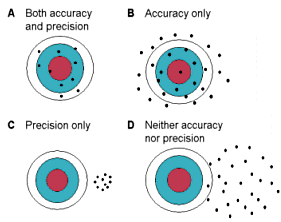
In our exchange, Westfall confused precision and accuracy, and it appears you are doing the same. Precision is not the same as accuracy. Precision is repeatability, how tightly a series of repeated measurements cluster together. Accuracy is how close the average of a repeated series of measurements, or even a single measurement for that matter, is to the true value.

AFMA_Image3.gif


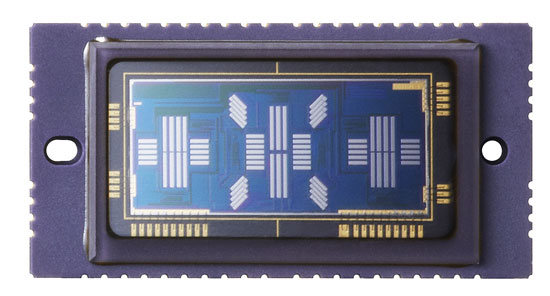
An f/2.8 AF point has a physically wider separation between the halves of the AF line, easy to see (the sets of five diagonal lines are the f/2.8 crosses):

5d3_10.jpg


That wider separation requires a faster lens to deliver a wide enough light cone, and that wider baseline makes the line more accurate than the narrower baseline of an f/5.6 point. So, an f/2.8 AF point used with an f/2.8 or faster lens will be more accurate than an f/5.6 AF point used with the same lens. That was the point that I believe GraFax was making. In general, those f/2.8 points are also high-precision points, meaning a steeper distribution curve (but while Canon specifies 1/3 of the depth of focus, they don't provide a full description of the precision, e.g. xx% of shots will fall within that depth of focus, because I'm sure it's not 100%).

Because the precision of the system is specified in terms of depth of focus, whether or not you notice any differences depends a lot on your typical subject distance. As subject distance increases, DoF increases but depth of focus doesn't change significantly. So, you gain apparent precision as your subject distance increases.

I know the difference between precision and accuracy. I'm a data acquision engineer. I'm less confident that Canon marketing knows the difference so I don't know what they are actually specifying.

I know the f/2.8 points will be better on f/2.8 or faster lenses. What I'm less clear about is by how much when newer focus points are used and when more focus points are used. Do the f/5.6 points use smaller pixels than the center point? They aren't as sensitive in low light. If they have smaller pixels, are they, say 1/6 DOF points? How many standard deviations? Is that for each point or for both of a cross point? What happens when multiple points have the subject? Do errors average out in the usual way (square root of the number of points) or in some other way?

Since we don't know the answers I'd like to see some actual testing on this camera with fast lenses before I accept the claim that it isn't designed to focus well with fast primes. The AF guide says all 65 points are usable in cross mode with, say, a 35/1.4L. Presumably Canon wouldn't spec that if they didn't work with that lens with an acceptable level of keepers.
 
Upvote 0
I think that Roger C over at LensRentals has some answers/explanation to the numbers and a quantification of sorts.
In this article from August 2012 (http://www.lensrentals.com/blog/2012/08/autofocus-reality-part-3b-canon-cameras) he shows...
I'll list the SDs of the various cameras with the 28mm f/2.8 IS lens in the table below.

CameraSD
1Ds III29
5D II38.5
50D34
7D41
1D IV22
60D34
T3i41
1Dx17
5D III17
T4i29

These standard deviation numbers would be the "precision" numbers, and the accuracy should correspond to the average offset from the correct focus. It would also be the number we can tweak by doing AFMA. I have no numbers for the accuracy.
Neither do I know how they add or subtract the two signal halves in a comparison from the AF sensor to calculate how much the AF motor in the lens should be driven to minimize the error at a non focused point in time.
 
Upvote 0
DominoDude said:
These standard deviation numbers would be the "precision" numbers, and the accuracy should correspond to the average offset from the correct focus.

Before someone flames you to as crisp, I'll mention it nicely because I've posted these numbers before: Canon enthusiasts and 7d1 owners argue that lensrentals' measurements aren't valid as their sample size is too small (it is 1):

We then tested it in our Imatest lab using one copy of each Canon camera we carry.
 
Upvote 0
Marsu42 said:
DominoDude said:
These standard deviation numbers would be the "precision" numbers, and the accuracy should correspond to the average offset from the correct focus.

Before someone flames you to as crisp, I'll mention it nicely because I've posted these numbers before: Canon enthusiasts and 7d1 owners argue that lensrentals' measurements aren't valid as their sample size is too small (it is 1):

We then tested it in our Imatest lab using one copy of each Canon camera we carry.

*sigh* I wasn't out to try to become misunderstood, and yet it happens. If I get flamed because the purpose is not recognised there is not much I can do about it.
I often attempt to be reasonably concise and keeping the posts short enough to have them read. If possible I add links to source information.
Here I introduced an explanation to what the terms "precision" and "accuracy" would be in another way compared to earlier posts. Also added the information from the table to give a hint about how different models stood in relation to each other, and it was also the best way (in my opinion) of showing the SD measurement, which I believe to be the same as what is referred to as "precision".

I set out assuming that people are smart enough to comprehend my posts without me needing to include a lawyer-ish "fine print".
It's also perfectly possible that I have missed reading an earlier post, giving these numbers or explanations, in this thread because I haven't reread the entire thread from start again. I'm flawed that way.
 
Upvote 0
DominoDude said:
Marsu42 said:
DominoDude said:
These standard deviation numbers would be the "precision" numbers, and the accuracy should correspond to the average offset from the correct focus.

Before someone flames you to as crisp, I'll mention it nicely because I've posted these numbers before: Canon enthusiasts and 7d1 owners argue that lensrentals' measurements aren't valid as their sample size is too small (it is 1):

We then tested it in our Imatest lab using one copy of each Canon camera we carry.

*sigh* I wasn't out to try to become misunderstood, and yet it happens. If I get flamed because the purpose is not recognised there is not much I can do about it.
I often attempt to be reasonably concise and keeping the posts short enough to have them read. If possible I add links to source information.
Here I introduced an explanation to what the terms "precision" and "accuracy" would be in another way compared to earlier posts. Also added the information from the table to give a hint about how different models stood in relation to each other, and it was also the best way (in my opinion) of showing the SD measurement, which I believe to be the same as what is referred to as "precision".

I set out assuming that people are smart enough to comprehend my posts without me needing to include a lawyer-ish "fine print".
It's also perfectly possible that I have missed reading an earlier post, giving these numbers or explanations, in this thread because I haven't reread the entire thread from start again. I'm flawed that way.

So..what's the difference between accuracy and precision? ;)
 
Upvote 0
Lee Jay said:
I know the difference between precision and accuracy. I'm a data acquision engineer. I'm less confident that Canon marketing knows the difference so I don't know what they are actually specifying.

I know the f/2.8 points will be better on f/2.8 or faster lenses. What I'm less clear about is by how much when newer focus points are used and when more focus points are used. Do the f/5.6 points use smaller pixels than the center point? They aren't as sensitive in low light. If they have smaller pixels, are they, say 1/6 DOF points? How many standard deviations? Is that for each point or for both of a cross point? What happens when multiple points have the subject? Do errors average out in the usual way (square root of the number of points) or in some other way?

Since we don't know the answers I'd like to see some actual testing on this camera with fast lenses before I accept the claim that it isn't designed to focus well with fast primes. The AF guide says all 65 points are usable in cross mode with, say, a 35/1.4L. Presumably Canon wouldn't spec that if they didn't work with that lens with an acceptable level of keepers.

Apologies – reading back, I jumped into the middle of the discussion instead of beginning at the beginning.

I'd say that if Westfall is confused about accuracy vs. precision, it's a good bet marketing is more so, and that's not allowing for translation from Japanese technical documentation.

Looking back at the main point, I'd have to say that while I do notice a very slightly higher hit rate with Group A/B/D lenses using the f/2.8 point(s), the hit rate with f/2.8 and faster lenses using f/5.6 points is really quite good. The difference is pretty subtle, and I haven't tried to quantify it, just anecdotal based on thousands of shots. I think the inter-lens difference (e.g. 40/2.8 vs 24-70/2.8 II) is as great or greater than the intra-lens difference with f/2.8 vs. f/5.6 crosses.
 
Upvote 0
neuroanatomist said:
Lee Jay said:
I know the difference between precision and accuracy. I'm a data acquision engineer. I'm less confident that Canon marketing knows the difference so I don't know what they are actually specifying.

I know the f/2.8 points will be better on f/2.8 or faster lenses. What I'm less clear about is by how much when newer focus points are used and when more focus points are used. Do the f/5.6 points use smaller pixels than the center point? They aren't as sensitive in low light. If they have smaller pixels, are they, say 1/6 DOF points? How many standard deviations? Is that for each point or for both of a cross point? What happens when multiple points have the subject? Do errors average out in the usual way (square root of the number of points) or in some other way?

Since we don't know the answers I'd like to see some actual testing on this camera with fast lenses before I accept the claim that it isn't designed to focus well with fast primes. The AF guide says all 65 points are usable in cross mode with, say, a 35/1.4L. Presumably Canon wouldn't spec that if they didn't work with that lens with an acceptable level of keepers.

Apologies – reading back, I jumped into the middle of the discussion instead of beginning at the beginning.

I'd say that if Westfall is confused about accuracy vs. precision, it's a good bet marketing is more so, and that's not allowing for translation from Japanese technical documentation.

Looking back at the main point, I'd have to say that while I do notice a very slightly higher hit rate with Group A/B/D lenses using the f/2.8 point(s), the hit rate with f/2.8 and faster lenses using f/5.6 points is really quite good. The difference is pretty subtle, and I haven't tried to quantify it, just anecdotal based on thousands of shots. I think the inter-lens difference (e.g. 40/2.8 vs 24-70/2.8 II) is as great or greater than the intra-lens difference with f/2.8 vs. f/5.6 crosses.

This has been my experience too, but that's on my cameras, which are a 20D and a 5D. I'm pretty interested in how a modern focusing sensor like that in the 7DII does in the same sort of testing.
 
Upvote 0
Lee Jay said:
neuroanatomist said:
Looking back at the main point, I'd have to say that while I do notice a very slightly higher hit rate with Group A/B/D lenses using the f/2.8 point(s), the hit rate with f/2.8 and faster lenses using f/5.6 points is really quite good. The difference is pretty subtle, and I haven't tried to quantify it, just anecdotal based on thousands of shots. I think the inter-lens difference (e.g. 40/2.8 vs 24-70/2.8 II) is as great or greater than the intra-lens difference with f/2.8 vs. f/5.6 crosses.

This has been my experience too, but that's on my cameras, which are a 20D and a 5D. I'm pretty interested in how a modern focusing sensor like that in the 7DII does in the same sort of testing.

That's what I'm seeing on the 1D X. Similar on the 7D, although the overall hit rate was lower (the 7D didn't have many near-misses...it usually nailed focus, but when it didn't it was off by the proverbial country mile).
 
Upvote 0
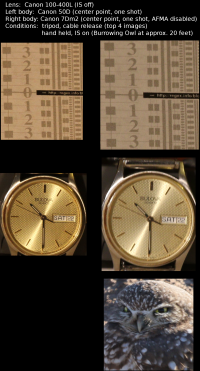
Just thought I'd share my experience with this. Picked up a 7DII for the holiday. Main focus is wildlife, so thrilled to upgrade from my 50D and exploit the 10fps and focus tracking of this body. A field outing where nearly everything was off focus-wise caused me to conduct some controlled condition tests. I can only conclude the focus is off/soft. Exchanged for 2nd body a few weeks later with the same results. One body was missing the receiving threads for the cable protector, so no question there as to manufacturing quality control issue. I don't see clear/dramatic front or back focusing, just off/soft focusing. Microadjustments didn't help. I wouldn't mind having Canon "fix" a brand new $2k body, but couldn't risk losing the 30 return window from B&H, so returned and just sitting on my hands for now. Unfortunately, I didn't have another long lens to test with, but as you can see, the lens is perfect with my 50D. Another accomplished photographer friend of mine who has most of the Canon line returned his 7DII as well, with focus issues, although his were with birds in flight. Images attached for those who are curious.
 

Attachments

  • comparison.png
    comparison.png
    3.5 MB · Views: 234
Upvote 0
aee said:
Just thought I'd share my experience with this.

My condolences :-\. Of course 2 bodies is not such a large sample size and it *could* be the lens or IS, and the 50d has less metapixies so it appears "sharper" (esp. the afma scale doesn't look *that* much different to me). The watch looks outright horrible, *if* every shot is like this and *if* you are 100% sure you had good testing conditions (IS off, body on a tripod against camera shake). I can understand that you are too annoyed to go on trying with further bodies atm.
 
Upvote 0
Hi There,

i don't have any Problems with the OneShot AF with my new 100-400 IS II...but the AI-Servo mode doesn't work.
I could not get any really sharp (in the 100% view) pictures...with the 5DIII in the same situation an the same lens everything is ok.

Has anyone used this combination without problems at AI-Servo? What's with the maximum aperture if 5,6..colud this be a problem?
 
Upvote 0
If you insist on using a mirrored system you should expect problems of this sort, since the light path to the sensor is different from the light path to the focusing elements. Calibration problems will always be a potential issue.
 
Upvote 0
magura said:
Hi There,

i don't have any Problems with the OneShot AF with my new 100-400 IS II...but the AI-Servo mode doesn't work.
I could not get any really sharp (in the 100% view) pictures...with the 5DIII in the same situation an the same lens everything is ok.

Has anyone used this combination without problems at AI-Servo? What's with the maximum aperture if 5,6..colud this be a problem?

I had a similar issue. One shot was working more or less but servo was always off. Afma adjustment also would not hold. I sent the camera back to canon for evaluation and they determined the mirror box and AF sensor was bad and was replaced and recalibrated. The unit now works like it should. They even paid for my shipping to Canon.

If you are not happy with it. Either return to the dealer if you can or get it back to canon. There is a solution to the problem.
 
Upvote 0
Hi All,

First of all I would like to thanks everyone in this forum for sharing so much of useful information which was looking over web. I am new to forum and have got my Canon 7D mark ii as an upgrade from my Canon 600D less than two month back and have been noticing this missed Auto Focusing with "7D Mark II".

Initially I thought it was me with some settings in the camera, Later as check everything by taking some test pictures with "One shot" with "Spot metering" using camera default setting and so on at closest focus range and full zoom range at f/2.8 and mid range above. None of the picture was in proper focus. I have also tried just focusing and not reframing to see the difference, not a difference. Since I am primarily using Tamron 24-70 Di VC USD lens. Then I tried taking some canon lens on rent and checked still the same issues.

Finally I have visited the dealer from where I get both Tamron lens and 7D mark II. Share my concern and tested with some canon prime lenses on my 7D mark ii body they also notice the same focus issues. At the same time they also tested my Tamron lens using their Canon 70D and it was ok but slightly soft and suggested even the lens required some calibration.

Now on 16th Mar day before yesterday I had sent across 7D mark ii to Canon ( they acknowledge there was something wrong with the focusing as the testing by one of the engineer with canon 24-70f/2.8 L II was also having same issues and prompted will contact back in 5 days - Awaiting update) & I have sent my Lens to TAMRON, ( suggested they will run and check for needful and revert in one week). I am just waiting for any update form both Canon and Tamron.

Hope they will come clean this time!

Thnx
Jamo
 
Upvote 0
Yeah, it's frustrating. I went through 4 bodies (2 sets of 2). I want that camera and know several folks who are thrilled with it, but do not want to have to send a brand new $2K camera (or 2) in for repair right after getting it. Especially since they would likely be mail order, and then I risk exceeding the return window. Obviously Canon doesn't want to make any official acknowledgement about this issue, but my confidence is shaken and I'm tired of hoping I get a good one (or 2) and having to deal with returns, etc.
 
Upvote 0
aee said:
Yeah, it's frustrating. I went through 4 bodies (2 sets of 2). I want that camera and know several folks who are thrilled with it, but do not want to have to send a brand new $2K camera (or 2) in for repair right after getting it. Especially since they would likely be mail order, and then I risk exceeding the return window. Obviously Canon doesn't want to make any official acknowledgement about this issue, but my confidence is shaken and I'm tired of hoping I get a good one (or 2) and having to deal with returns, etc.

I feel your pain. However while you are wanting, I got mine repaired and I am pretty excited now with the quality coming out of it. I know a number of professionals who have bought the high end L lenses and immediately shipped them off to Canon for checkup and calibration. There was nothing noticeably wrong, just that they wanted to make sure they were collimated and functioning at or better than factory spec.

You should not hold out just because you could not get one of the early batches that didn't meet to your expectations. If you search for my posts here since the 7D2 release, you will see that I was very critical and very disappointed with performance. Once I was sure it was the camera and not my lens or my bad technique, I sent it in and the mirror box and AF sensor was replaced and they did a full factory calibration and check out. Now the AF performs almost exactly as my 5D3 and I can now to start to make the claim that it is my mini-1dx.

Firmware bugs still exist but they are not stopping me from now using it as my primary sports and wildlife camera.

My recommendation is to buy one, take several days to check out the performance and function, and then send it to Canon (I used Newport News facility, very good customer service and the work there is exceptional) if it's not meeting your expectations. Cameras these days are complex devices that can suffer from any of a million different issues.

I like to think about it in the frame of buying a piano. You can by the worlds most expensive grand piano but before you play, you need to have it checked out and tuned.

For my 7D2, it was fixed and now I could care less that it had an issue out of the box because I know it's now working EXACTLY like Canon originally intended.
 
Upvote 0