Help needed: 24-105 f4 L softness and very stiff lens hood mount

Status
Not open for further replies.
Mar 29, 2013
14
0
4,731
Hi,

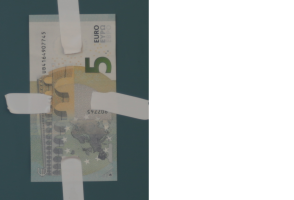
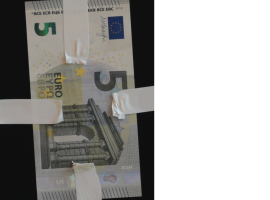
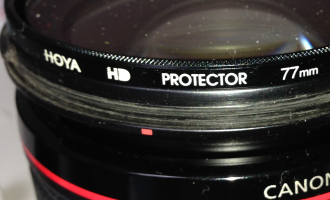
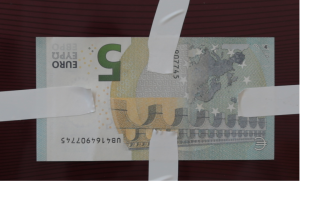
I recently bought a 6D+24-105 Kit as an replacement for my ancient 400d. While generally being very pleased with this gear I'm a bit concerned about the softness of the lens (compared to my 70-300L) and about the rather stiff lens hood mount wich already produced some scratches in the plastic. What are your experiences with this lens (compared to the photos attached)? Do you think I should have a little chat with Canon about this?

p.s. the attached photos were made after afma:

(1) 24-105: 24mm, f4
(2) 24-105: 105mm, f4
(3) 70-300: 70mm f4

br,

roedi
 

Attachments

  • EF24-105_24mm_f4_cropped.png
    EF24-105_24mm_f4_cropped.png
    883.2 KB · Views: 1,250
  • EF24-105_105mm_f4_cropped.png
    EF24-105_105mm_f4_cropped.png
    484.6 KB · Views: 1,187
  • EF100-300L_100mm_f35_cropped.png
    EF100-300L_100mm_f35_cropped.png
    793.4 KB · Views: 1,225
  • lenshood.png
    lenshood.png
    1.8 MB · Views: 1,221
Don't expect the 24-105 L to be as sharp as the 70-300 L. But your tests are flawed. Also you refer to the 100-300 f3.5 - there isn't one, and then state the picture was taken at f35.

First off your lighting looks very flat, low contrast, which results in less sharpness. It also tends to equal lenses perceived sharpness, or lack of.

Secondly you are shooting very close assuming these aren't cropped too much. Shoot something suitable at a more normal distance, positioned vertically with the camera tripod mounted in exactly the same plane. Use live view for focus. Ensure good bright light ( daylight ) with same modelling across the target. Remember to switch IS off.

And yes the 24-105 lens hood is stiff - I'd call it positive. Been like that on all the copies I have used.
 
Upvote 0
Thanks, Sporgon, for your reply.

You're right, I totally messed up the specs of the 70-300L photo :o, the picture was taken at 70mm f4.

But regarding contrast and distance the pictures were all taken under very similar circumstances:

- the distance was roughly 20-30 times the focal length
- for lighting i used a directed 1000W light (classical bulb no pulsed light-source)
- camera mounted on a tripod on the same height above the ground directed perpendicular to the target
- fairly small target to reduce remaining angular misalignments
- liveview+phase af
- eos util and 200% magnification to optimize the focus

The pictures are indeed heavily cropped, the attached photos are 100% crops of the original image. However there is one thing that I'm pretty unsure afterwards: if I really did switch IS off. Maybe I'll repeat the test.

Regarding the lens hood, it's good to know that this is quite normal for that lens. The last lens I owned that had a similar stiff (and scratchy mount) was my ancient EF 28-80 USM MkI.

Thanks a lot!

Sporgon said:
Don't expect the 24-105 L to be as sharp as the 70-300 L. But your tests are flawed. [..]

First off your lighting looks very flat, low contrast, which results in less sharpness. It also tends to equal lenses perceived sharpness, or lack of.

[..]Remember to switch IS off.

And yes the 24-105 lens hood is stiff - I'd call it positive. Been like that on all the copies I have used.
 
Upvote 0
The centre resolution of the 24-105 @ 105 wide open isn't outstanding - one of it's weakest areas, but your image looks over exposed compared with the others.

The 24-105 is a very good general purpose lens, always better stopped down to f5.6 or a little more, but as I said before the 70-300 L really is stellar for it's range. It also has a floating element to keep MFD images high.

If you want to match that lens you would have to go to the 24-70 L IS or Tamron 24-70 VC f2.8. Problem is the 24-105 is such good value compared with the others.
 
Upvote 0
I totally agree, as a general purpose lens, I like the 24-105 very much. In shops, I handled a few other lenses that are rated higher than the 24-105 but these were generally more expensive and/or a lot bulkier and/or not that versatile.

The reason for my concerns is just that I think I'd should check my new gear (its not that cheap after all) for any unnormal flaws as long as its inside the warranty and the two things I came across were the scratches on the hood-mount and the softness at the long end. If both is pretty much normal, I'm happy - else I'd have a short trip to Canon and have it checked.

Thanks again :)


Sporgon said:
The centre resolution of the 24-105 @ 105 wide open isn't outstanding - one of it's weakest areas, but your image looks over exposed compared with the others.

The 24-105 is a very good general purpose lens [..] Problem is the 24-105 is such good value compared with the others.
 
Upvote 0
Agree with Sporgon on the 24-105L sharpness (that's one reason I sold mine after getting the 24-70L II).

Regarding the lens hood, you can try using a little skin oil (rub your finger along your forehead) around the inside if the bayonet mount in the hood. Not kidding!
 
Upvote 0
I'd never use autofocus to check the sharpness of the lens, AFMA adjustments should be made to equal the best manual focus.

I tether my camera and adjust focus manually on a 27 inch monitor with an additional 5X magnification. That allows me to see what the lens can really do. After that, if a AFMA does not match the manual focus method, then the AFMA adjustment failed, or the user did something wrong (I do sometimes goof).
While the 24-105L isn't the sharpest lens around, its still very good. But, I seem to not have used mine since getting my 24-70MK II, I have a choice coming up today, and I'm taking both lenses, but will only use the 24-105 if I turn out to need the focal length range, 24-105mm is a great range to have..
 
Upvote 0
neuroanatomist said:
Regarding the lens hood, you can try using a little skin oil (rub your finger along your forehead) around the inside if the bayonet mount in the hood. Not kidding!

I have found that even a little dust makes the mount less cooperative. Don't be afraid to wipe it with a slightly damp wipe, both on the lens mount and the hood grooves (be careful because water and lenses don't mix).
 
Upvote 0
Mt Spokane Photography said:
I'd never use autofocus to check the sharpness of the lens, AFMA adjustments should be made to equal the best manual focus.

I think I don't entirely understand your process and if it really differs so much from mine, please explain again (I'm not a native-speaker). Here's what I do:

I use Phase-AF to get an idea how good the AF actually is and to have a starting-point for afma. Then I use the Live-View in the EOS-Utility (maximum magnification) to try correct the focus in the smallest possible steps from there. After that I set the focus infinity (so the target is out of focus) and repeat the process.

If I get consistent correction-values I feed them back into the camera (afma) and verify that I do not have systematic focus deviations by performing (focus to infinity, phase-af, micro adjust a few steps +/-) a few times.

Operating the focus manually on the lens produces so much vibration that especially optimizing the longer focal lengths is very hard compared to controlling the focus manually via EosUtility. Are you optimizing with IS activated?
 
Upvote 0
JPAZ said:
I have found that even a little dust makes the mount less cooperative. Don't be afraid to wipe it with a slightly damp wipe, both on the lens mount and the hood grooves (be careful because water and lenses don't mix).

Thanks for the advice, I'll surely find out this soon, since my gear will undergo a serious cleaning next weekend or so ;). If the mount is really reacts that sensitive to dust, my recent trip to the national parks in the western US might be the reason. The mount of my 70-300L however still runs completely smooth.

I sure hope that cleaning combined with some skin oil will do the trick.
 
Upvote 0
roedi said:
Mt Spokane Photography said:
I'd never use autofocus to check the sharpness of the lens, AFMA adjustments should be made to equal the best manual focus.

I think I don't entirely understand your process and if it really differs so much from mine, please explain again (I'm not a native-speaker). Here's what I do:

I use Phase-AF to get an idea how good the AF actually is and to have a starting-point for afma. Then I use the Live-View in the EOS-Utility (maximum magnification) to try correct the focus in the smallest possible steps from there. After that I set the focus infinity (so the target is out of focus) and repeat the process.

If I get consistent correction-values I feed them back into the camera (afma) and verify that I do not have systematic focus deviations by performing (focus to infinity, phase-af, micro adjust a few steps +/-) a few times.

Operating the focus manually on the lens produces so much vibration that especially optimizing the longer focal lengths is very hard compared to controlling the focus manually via EosUtility. Are you optimizing with IS activated?

What I'm saying is that if you want to check a lens for sharpness, DO NOT use autofocus. You can adjust autofocus later, but first determine if your lens is sharp.
Do this by manually focusing using 10X on the live view screen and a sturdy tripod. IS should be off. Then take a shot at that setting. If you find the image to be sharp, your lens is optically fine, but might need AFMA. If its still a poor image, your lens has a problem.


Reikan Focal is very good at adjusting your AFMA, but it is not free. The software can detect focus errors and pick the right setting when the eye can't.

As to the AFMA process, you are never going to succeed with your method unless its a stroke of luck.
 
Upvote 0
Haven't shot pictures of money with my 24-105 f/4L, but I find it very sharp for my college mugshots I do.

OB5C4837.jpg

Canon EOS 5D Mark III
ISO 320, 1/160, f/9 at 105 mm
 
Upvote 0
Mt Spokane Photography said:
roedi said:
Mt Spokane Photography said:
I'd never use autofocus to check the sharpness of the lens, AFMA adjustments should be made to equal the best manual focus.

I think I don't entirely understand your process and if it really differs so much from mine, please explain again (I'm not a native-speaker). Here's what I do:

I use Phase-AF to get an idea how good the AF actually is and to have a starting-point for afma. Then I use the Live-View in the EOS-Utility (maximum magnification) to try correct the focus in the smallest possible steps from there. After that I set the focus infinity (so the target is out of focus) and repeat the process.

If I get consistent correction-values I feed them back into the camera (afma) and verify that I do not have systematic focus deviations by performing (focus to infinity, phase-af, micro adjust a few steps +/-) a few times.

Operating the focus manually on the lens produces so much vibration that especially optimizing the longer focal lengths is very hard compared to controlling the focus manually via EosUtility. Are you optimizing with IS activated?

What I'm saying is that if you want to check a lens for sharpness, DO NOT use autofocus. You can adjust autofocus later, but first determine if your lens is sharp.
Do this by manually focusing using 10X on the live view screen and a sturdy tripod. IS should be off. Then take a shot at that setting. If you find the image to be sharp, your lens is optically fine, but might need AFMA. If its still a poor image, your lens has a problem.


Reikan Focal is very good at adjusting your AFMA, but it is not free. The software can detect focus errors and pick the right setting when the eye can't.

As to the AFMA process, you are never going to succeed with your method unless its a stroke of luck.
Just to add to what Mt man was saying about testing your lenses.... Be sure to take any filters off your lens, make sure the elements are clean, lock up your mirror and trigger your camera remotely with IR/tether/cable/or at the least use the self timer.... You might want to even hang some weight from your tripod to help stabilize against any potential vibrations coming through the floor.
 
Upvote 0
Recently I have been gaining new respect for my 24-105mm lens. I've been finding it sharp pretty much down to pixel level at both ends of its zoom range, and wide-open.


I was out with it today (well, yesterday now), and I shot a big public clock face at f/4 and exactly the same at f/8. I could not tell the difference on the LCD at maximum playback magnification, and I couldn't tell between them back home, either.


Also, interestingly (I thought), on a previous trip when I had that lens as my walkabout, I shot an information notice board by the side of a canal. This featured in one area a map with tiny, tiny street names on it; black text on a white background. Conventional wisdom says that SOOC JPGs aren't the best for sharpness, so I took the RAW into DPP and played around with the sharpness sliders. I was unable to improve the legibility of that tiny, tiny text compared to how it was on the SOOC JPG.


Sure, I could make it *look* sharper, i.e. have more edge contrast, by playing with the sliders, but always at the cost of actual legibility. And at any rate, I think the lens, given that it is considered "good, but not super-sharp", did very well indeed.


Maybe I'm blessed with a good copy, or maybe my expectations are not "high enough", but I'd say my copy is sharp to damn-near pixel level (on my 5D3), wide-open, and at both zoom extremes.


It certainly does exhibit CA at the edges of the field, but DPP does a very good job of removing that.


I'm curious about the 24-70 f/2.8 L II though, because of the extra aperture, so I may yet buy one. But the 135 f/2 L is probably next. Oh, and the next EOS M when/if they ever get around to releasing it!!
 
Upvote 0
Thanks again to all of you!

Despite I agree that my tests are flawed I wonder how one would get better results wide open from the 24-105L than from the 70-300L. At least this isn't what I experienced the last few weeks.

Nevertheless: I'll repeat my tests under optimal conditions (natural light, no filters, everything cleaned, no IS, manual AF etc.) asap and post my results again. I'm quite curious if my concerns regarding this lens really were just based on my flawed first tests or not.
 
Upvote 0
Pi said:
The 24-105 is actually sharper than the 70-300 at 100-105mm in the center, according to TDP, 2 copies of the 70-300 tested.

Your test is not good. Compare them in natural light.

You keep quoting TDP. Lets hear from anyone who has both the 24-105 and the 70-300 L and thinks the former is sharper.

Whether the 24-105 manages close in the very centre is largely irrelevant in practical use. Swampler's picture shows the 24-105 at its strongest - with the detail of the subject large within the frame and using a moderate aperture.
 
Upvote 0
Sporgon said:
Lets hear from anyone who has both the 24-105 and the 70-300 L and thinks the former is sharper.

You won't hear that from me. I had two copies of the 24-105L, and I have the 70-300L. The 70-300L is definitely the sharper of the two when comparing them wide open (and the 24-70/2.8L II and 70-200/2.8L IS II are sharper than both).
 
Upvote 0
Just thinking about a stiff hood makes me uncomfortable.

Being used to the hood on the 24-105mm, I almost broke the one on my new 24-70mm this weekend--forgot about the button!
 
Upvote 0
Status
Not open for further replies.