

Upvote
0
You are using an out of date browser. It may not display this or other websites correctly.
You should upgrade or use an alternative browser.
You should upgrade or use an alternative browser.
How much weight can the EF lens mount handle?
- Thread starter jrista
- Start date
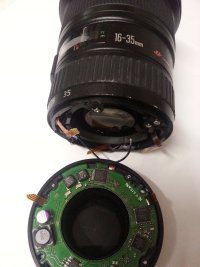
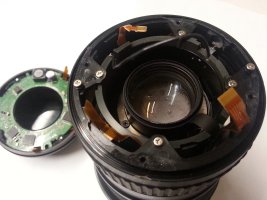
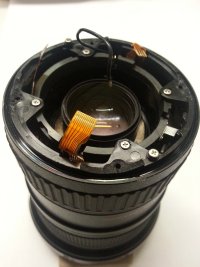
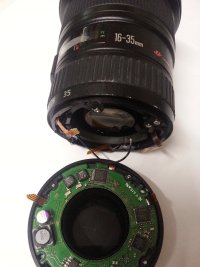
One thing is sure: the EF mount is stronger than the 16-36/2,8 II body :'( ; I fell backwards with my 5D III attached 16-35, and the mount part of lens remained in the camera body.
Attachments
Upvote
0
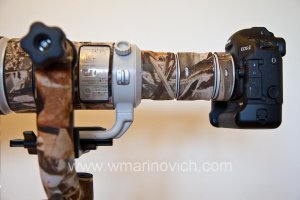
jrista said:I am about to purchase a CCD camera for my astrophotography. My hope is to still use the Canon EF 600mm f/4 L II lens, however the CCD camera is going to be a good deal heavier than a standard DSLR. My 5D III is about 2lb, the 1D X II is about 3.4lb.
Now the CCD camera itself is 3.5lb, however some additional accessories will be attached to it, including a filter wheel (with a bunch of filters) and an off-axis guider port. With those additional accessories, the weight could top 7lb.
Does anyone know how much weight the EF mount is rated to handle? Lens side? The 600mm lens is a very solidly built lens...however I need to make sure I don't rip the mount off the lens with this camera.
I very very seriously doubt you'll break anything. every time I've seen a breakage the story of the fall comes out.. that'll probably be a 10g+ impact. at 3x normal body weight you won't break anything.
What you may do however is pull the setup out of collimation as it flexes, not much but enough for stars on one corner to be fuzzy. I've experienced a similar problem with my 12" windowed newt and my 383L+& EFW & OAG & guidecamera & coma-corrector & cables, which is why I've reinforced the focusser attachment despite having a JMI crayford, that's been solid as a very large lump of granite, it's the tube that's flexed. (remember a DSLRs CofG is also much closer to the mount than a CCD setup.. so more torque as well)
It's partly why imaging scopes are often carbon fibre, that and the fact that CF has a very low coefficient of thermal expansion (interestingly so does wood, don't underestimate retro scopes)
Upvote
0
As far as breaking off, no a 7lb camera will not break off the mount just by itself.
i would worry how much force on the camera you're applying to it and it only. Say if you're moving the setup and grab by the camera but not the lens and camera together.
I would also worry about long term barrel distortion or bend on the lens itself. Either though it may not break off the pressure of the heavy camera is being placed on the barrel itself and over time that may cause problems.
As other have said if you can have a mount with camera and lens then that would be best, like a long plate they both mount to. This will even out the weight across the entire rig if not take the pressure completely off it and not focus it on the lens barrel closer to the mount itself.
i would worry how much force on the camera you're applying to it and it only. Say if you're moving the setup and grab by the camera but not the lens and camera together.
I would also worry about long term barrel distortion or bend on the lens itself. Either though it may not break off the pressure of the heavy camera is being placed on the barrel itself and over time that may cause problems.
As other have said if you can have a mount with camera and lens then that would be best, like a long plate they both mount to. This will even out the weight across the entire rig if not take the pressure completely off it and not focus it on the lens barrel closer to the mount itself.
Upvote
0
I will preface this by saying I have never done this type of photography, nor am I an engineer. Just an interested onlooker who enjoys geeking out over gear set-ups.
Looking at your photos of your current set-up, I had an idea. You use the scope rings to provide support to the lens from all angles as the equatorial mount moves it along over time, right? So, I would think you could do the same thing for the new camera body. Either replace the bottom plate with a longer one that extends back far enough or, if you want to be able to swap between the new camera and your dSLR, get another identical bottom plate and attach it to the lens plate via the four holes on the ends (via bolts, washers, and nuts). Then add a linkage between the bottom plate and the bottom of your new camera, and perhaps some arms to cradle it on either side. That should at least reduce the stress or flex to the lens mount. The two plate set-up might be less sturdy, but I think you could fasten them together tightly enough to get it fairly rigid.
Looking at your photos of your current set-up, I had an idea. You use the scope rings to provide support to the lens from all angles as the equatorial mount moves it along over time, right? So, I would think you could do the same thing for the new camera body. Either replace the bottom plate with a longer one that extends back far enough or, if you want to be able to swap between the new camera and your dSLR, get another identical bottom plate and attach it to the lens plate via the four holes on the ends (via bolts, washers, and nuts). Then add a linkage between the bottom plate and the bottom of your new camera, and perhaps some arms to cradle it on either side. That should at least reduce the stress or flex to the lens mount. The two plate set-up might be less sturdy, but I think you could fasten them together tightly enough to get it fairly rigid.
Upvote
0

RickWagoner said:As far as breaking off, no a 7lb camera will not break off the mount just by itself.
i would worry how much force on the camera you're applying to it and it only. Say if you're moving the setup and grab by the camera but not the lens and camera together.
I would also worry about long term barrel distortion or bend on the lens itself. Either though it may not break off the pressure of the heavy camera is being placed on the barrel itself and over time that may cause problems.
As other have said if you can have a mount with camera and lens then that would be best, like a long plate they both mount to. This will even out the weight across the entire rig if not take the pressure completely off it and not focus it on the lens barrel closer to the mount itself.
I'll never grab the camera. Just doesn't happen. The way I move the equipment about, I first remove the camera from the lens, and cap both. I move the camera first. Then I will remove the whole entire lens+guidescope+dovetail plate&scope ring assembly from the mount as-is. I'll move that around, holding by the very large Losmandy D-type plate which is very sturdily attached to a couple of scope rings that rigidly hold the lens in place. I usually keep this assembly together, and that's how I move things around. If I decide to bird photography, I remove the lens from the assembly, and will use the DSLR on it. But when I return it, the camera comes off first (because I have to hook up power adapters and such, just easier to do with the camera NOT attached to the lens.)
I'll never run the risk of picking up the whole assembly or even just the lens by the camera. Won't ever happen.
I run a much higher risk of a pier crash than that. That might actually be a more significant concern...however the Atlas mount is stepper motor driven, which unlike a servo, will not continually drive the camera/lens/scope into the mount if a crash does occur. If I ever upgraded to a servo-driven, properly encoded mount...the I might be a little more concerned (although still, the rate of impact is still only going to be sidereal.) I can set custom mount limits that will stop tracking when I've tracked beyond a certain number of degrees past the meridian, or to either horizon. I can just set safe limits to ensure I never have a pier crash.
I would like to have a long plate to mount the camera to . However, given this is a CCD camera, they do not have standard mounting holes like a DSLR does for mounting to a tripod. More than that...the filter wheel hangs down below the bottom of the camera, and it will block any solid strait plate from extending backwards from the back of the lens. I've also got one of the longest Losmandy D-type plates available...I would need another 6" at least for it to reach back to the camera. I was originally looking for a longer plate than I ended up getting, and got what I did because it was the longest I could find. Higher end mounts often support longer plates, but they are usually custom designed and would not fit my saddle in my mount.
Upvote
0
mrzero said:I will preface this by saying I have never done this type of photography, nor am I an engineer. Just an interested onlooker who enjoys geeking out over gear set-ups.
Looking at your photos of your current set-up, I had an idea. You use the scope rings to provide support to the lens from all angles as the equatorial mount moves it along over time, right? So, I would think you could do the same thing for the new camera body. Either replace the bottom plate with a longer one that extends back far enough or, if you want to be able to swap between the new camera and your dSLR, get another identical bottom plate and attach it to the lens plate via the four holes on the ends (via bolts, washers, and nuts). Then add a linkage between the bottom plate and the bottom of your new camera, and perhaps some arms to cradle it on either side. That should at least reduce the stress or flex to the lens mount. The two plate set-up might be less sturdy, but I think you could fasten them together tightly enough to get it fairly rigid.
I would prefer to do that. However, this is what the camera looks like with the filter wheel attached (the one to the right):
That large circular thing in front is the filter wheel. The size of the camera itself, the boxy thing to the right of the filter wheel, is about the size of a DSLR. So the filter wheel is quite large, and hangs down. It wouldn't allow a longer dovetail.
The inevitable secondary recommendation is to rotate the filter wheel. However I need to be able to rotate the camera regardless to achieve different framing orientations so I can frame various subjects as I prefer and fit everything into the field, so I cannot just assume that I can always point the filter wheel up. :\
It's a bit of a conundrum. I think the only means of supporting the camera would be to custom-design a support frame that attaches both above and below the back scope ring, and have a notch in that support frame for the filter wheel to fit.
Upvote
0
jrista said:I run a much higher risk of a pier crash than that. That might actually be a more significant concern...however the Atlas mount is stepper motor driven, which unlike a servo, will not continually drive the camera/lens/scope into the mount if a crash does occur. If I ever upgraded to a servo-driven, properly encoded mount...the I might be a little more concerned (although still, the rate of impact is still only going to be sidereal.)
actually your biggest worry regarding pier crashes is when slewing between targets. Get it wrong and it will crash at slew speed.. which is still only mayby a few degrees per second, but undesirable never the less.
I had this problem when I built my own stepper system for my mount... one reason to leave the clutches a little slack.. it's safer all round.
Upvote
0

jrista said:It's a bit of a conundrum. I think the only means of supporting the camera would be to custom-design a support frame that attaches both above and below the back scope ring, and have a notch in that support frame for the filter wheel to fit.
It looks like any support would be a custom job. But could be done either by bending or bolting. My suggestion would be to come off the top plate at an angle, down the right side of the camera and then to the bottom of the camera.
It could be done with some 3/8” x 1.5” aluminum bar stock, and screwed together at the joints. It’s only lightly load bearing, so no need to overbuild.
Upvote
0
rfdesigner said:jrista said:I run a much higher risk of a pier crash than that. That might actually be a more significant concern...however the Atlas mount is stepper motor driven, which unlike a servo, will not continually drive the camera/lens/scope into the mount if a crash does occur. If I ever upgraded to a servo-driven, properly encoded mount...the I might be a little more concerned (although still, the rate of impact is still only going to be sidereal.)
actually your biggest worry regarding pier crashes is when slewing between targets. Get it wrong and it will crash at slew speed.. which is still only mayby a few degrees per second, but undesirable never the less.
I had this problem when I built my own stepper system for my mount... one reason to leave the clutches a little slack.. it's safer all round.
I use EQMOD, and the custom limit settings apply to slews. I have only had one pier crash in the last 26 months, and that was because I turned the limits off and forgot to re-enable them before I went to bed.

Upvote
0
Zoltan Ajtay said:One thing is sure: the EF mount is stronger than the 16-36/2,8 II body :'( ; I fell backwards with my 5D III attached 16-35, and the mount part of lens remained in the camera body.
Ouch! That's just painful to see… Hope repairs were possible!
Upvote
0
Someone received one of these cameras recently (one of the first to get one it seems). They weighed it, with the external FW and some filters. It came out to 6lb 3oz.
There do seem to be some flexure issues, so people are already talking about building a support rig to hold the thing properly. I am not sure it will be a simple thing, but it sounds like I'll need to figure something out. Even if I use it on my regular telescope setup.
There do seem to be some flexure issues, so people are already talking about building a support rig to hold the thing properly. I am not sure it will be a simple thing, but it sounds like I'll need to figure something out. Even if I use it on my regular telescope setup.
Upvote
0
jrista said:Someone received one of these cameras recently (one of the first to get one it seems). They weighed it, with the external FW and some filters. It came out to 6lb 3oz.
There do seem to be some flexure issues, so people are already talking about building a support rig to hold the thing properly. I am not sure it will be a simple thing, but it sounds like I'll need to figure something out. Even if I use it on my regular telescope setup.
I would take a look a using aluminium angle (relatively easy to work), bolted directly to the scope/lens mounting bracket. I had to make a bracket to fix my stepper motors to the worm brackets and a pair took me about week of evenings to sort out with no more than an electric drill and hacksaws.
I would guess you'd need two or three pieces which can then bolt together giving you the necessary adjustment.
I assume you have access to a vice?
Upvote
0

Hi Jon, soldrinero.
If this is available in small quantities this looks like it would be ideal, easy enough to make a U to clear the filter wheel and you could incorporate 1 or more Arca Swiss quick release plates to allow quick set up and break down and micro adjustment to prevent strain.
Looking forwards to seeing some of the results on the other thread.
Cheers, Graham.
If this is available in small quantities this looks like it would be ideal, easy enough to make a U to clear the filter wheel and you could incorporate 1 or more Arca Swiss quick release plates to allow quick set up and break down and micro adjustment to prevent strain.
Looking forwards to seeing some of the results on the other thread.
Cheers, Graham.
soldrinero said:If you're building your own support, an easy way might be to use 80/20: https://www.8020.net .
Upvote
0
Similar threads


- Replies
- 30
- Views
- 3K

