Please explain the need for f2.8 zooms

Status
Not open for further replies.
bdunbar79 said:
Marsu42 said:
The standard lens requirement for shooting events/weddings seem to be a combination of 24-70/28 and 70-200/2.8, I read both are nailed to a pro's camera 90% of the time (though I have problems doing the maths :-))

A lens with a larger aperture afaik has three advantages: better af on some bodies, better subject isolation/creativity (just one eye in focus) and last not least a "fast" lens is required for "low light" shots.

My question rose when I read the great book "Captured by the Light" by David Ziser who - believe it or not - writes that f4 to f5.6 (for convenience or added safety) is his bread and butter setting for posed candid wedding flash shots, and he used the 5d2 at that time.

Question: So according to this f2.8 is more important for available light and movement shots, but if that was case with the 5d2, I'm confused why still seems to be still valid with the 6d even though it's about 1 stop better ... either f2.8 was borderline in the past, or f2.8 - 1stop = f4 would be sufficient now - or am I missing something here?

Disclaimer: Please forgive slight traces of irony, this ia a real question because I don't entirely understand the issue, it's great people get whatever gear they like for any purpose they want.

There are those who argue for primes in indoor sports, but you get less shots and less angles and interesting ones. I have way more keepers and action with the zoom vs. the prime.

Sometimes you have such low light that a faster prime like the 200 f/2 or the 135 f/2 is the only way to capture it at acceptable ISO levels. Also the 200 f/2 focuses faster in low light but this doesn't apply to the original argument about having a constant aperture since it isn't a zoom. :)

200 f/2 in very low light.

with a 1DX
zm_1e92C5D0_20121027S1930-0204.JPG


with a 1D4
Mercury Vapor lights uncorrected:
zm_a3E2Ea46_20120421S1930-486.JPG
 
Upvote 0
RLPhoto said:
I love it when users say "it's only one stop" when comparing lenses. One stop is a lot! That's twice as good! Some users complain they couldn't tell the difference in rendering from faster glass and then complain that everyone one else can't see the difference.

You keep harping on this "one stop is twice as much," without seeming to realize that, though technically true, there's a very good reason why we use a logarithmic scale for exposure.

In this context, a linear scale is useless. One stop is not, in fact, "twice as good." One stop is basically one zone on the Adams scale. And, while, yes, it's important to place midtones in zone V instead of zone IV or zone VI, it's not exactly a huge deal to move exposures around by a single stop.

By the time you get to two stops, things change. The difference between zone III and zone V or zone V and zone VII is the difference between midtones and shadows or highlights with good detail. But just a single stop? That's your wiggle room, what you have to work with for interpretation, your margin for error.

Cheers,

b&
 
Upvote 0
TrumpetPower! said:
RLPhoto said:
I love it when users say "it's only one stop" when comparing lenses. One stop is a lot! That's twice as good! Some users complain they couldn't tell the difference in rendering from faster glass and then complain that everyone one else can't see the difference.

You keep harping on this "one stop is twice as much," without seeming to realize that, though technically true, there's a very good reason why we use a logarithmic scale for exposure.

In this context, a linear scale is useless. One stop is not, in fact, "twice as good." One stop is basically one zone on the Adams scale. And, while, yes, it's important to place midtones in zone V instead of zone IV or zone VI, it's not exactly a huge deal to move exposures around by a single stop.

By the time you get to two stops, things change. The difference between zone III and zone V or zone V and zone VII is the difference between midtones and shadows or highlights with good detail. But just a single stop? That's your wiggle room, what you have to work with for interpretation, your margin for error.

Cheers,

b&

Ah, but what if you have to under expose to get the shutter speed fast enough for indoor sports. If one stop is the adjustment curve, and I have to under expose by one stop to get the shot, then there's my wiggle room. I need a 2.8 to get within one stop of my final exposure for indoor basketball. I also use primes, but to get the right moment when someone is driving down the court toward me, I need the zoom.
 
Upvote 0
bdunbar79 said:
Studio,

I don't disagree with you at all. I'm shooting in a gym tonight that I can't use f/2.8, I have to use f/2 or f/2.2 to keep it at 1/500, ISO 5000. So I have to use the 135L. Better to have legs cut off vs. no photo at all :).

Yep, I thought you would since I have seen what you shoot and know you often need faster glass that a zoom can't provide. :) I thought I would mention it so others would see that there are times that you just need a faster prime (even though we have diverged from the main point a bit).

As to the poster above (TrumpetPower!) about the 1 stop and the zone info.. 1 stop is 1 stop. You aren't going to shoot an image that has all of its info in just one zone so someplace in your image is probably going to be all of the zones which mean you are going to see the difference from zone 3 to zone 4. Maybe you personally don't see the difference in 1 stop, but I would argue that most people can take an average image and click one more stop of exposure and see the difference quite well.

Here is one stop of exposure difference...
zm_1e92C5D0_20121027S1930-0204.JPG

zm_1e92C5D0_20121027S1930-0204a.JPG
 
Upvote 0
I see where you are coming from with the irony. There is a lot of issues and opinions with aperture. Your views are correct. This is how i see it and my experience of togging....generally the sweet-spot area for most lens are when they are stopped down a couple or three stops. Please note my comments are general and this will depend on all sorts of variables, light, composition, distance etc etc. If you have a lens that has variable f say 4.5-6.3 then you will be stopping it down to say f8-f11. Ok alls well and good in good light or stability like on a bean bag or tripod. Obviously stopped down to f16 etc for landscape and on a tripod. However when shooting on the move or moving subjects then f2.8 or less is a must. I use a 70-200II IS F2.8 and from a fast moving vehicle for stills or video are perfect. I could go on but will not become too boring. Hope this helps.
 
Upvote 0
Studio1930 said:
As to the poster above (TrumpetPower!) about the 1 stop and the zone info.. 1 stop is 1 stop. You aren't going to shoot an image that has all of its info in just one zone so someplace in your image is probably going to be all of the zones which mean you are going to see the difference from zone 3 to zone 4. Maybe you personally don't see the difference in 1 stop, but I would argue that most people can take an average image and click one more stop of exposure and see the difference quite well.

Look, I'm not trying to claim that there's no difference at all between two images shot one stop apart. Of course there is. I'm just pointing out that the difference is minor, and well within the normal range of typical exposure adjustments. Indeed, all modern camera meters are configured to underexpose by at least a stop (if not two) and a corresponding stop (or two) of digital push is by default applied to the raw development. This is a good thing, generally, as there's so little headroom that highlights would regularly get blown otherwise.

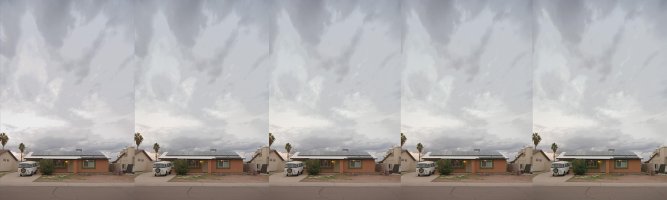
I'm attaching five side-by-side shots from a bracket, each shot one stop apart. I've normalized them all to the same exposure. This is with a 5DIII and a TS-E 24 II, ISO 100 and f/5.6; shutter ranges from 1/4 on the left to 1/60 on the right. The one on the left has some reconstructed highlights; the shadows on the right are a bit ugly. Oh -- and the one on the left has a proper exposure as far as the sensor is concerned and the one next to it is exposed according to the camera's meter.

Now, if I hadn't told you the details, would you be able to tell the difference?

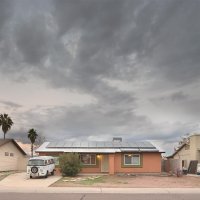
I'm also attaching the final edit, which I did by not normalizing the exposures and masking some of them on top of each other.

Cheers,

b&
 

Attachments

  • side-by-side.jpg
    side-by-side.jpg
    183.1 KB · Views: 1,304
  • Portrait of an Home.jpg
    Portrait of an Home.jpg
    91.8 KB · Views: 1,346
Upvote 0
TrumpetPower! said:
Studio1930 said:
As to the poster above (TrumpetPower!) about the 1 stop and the zone info.. 1 stop is 1 stop. You aren't going to shoot an image that has all of its info in just one zone so someplace in your image is probably going to be all of the zones which mean you are going to see the difference from zone 3 to zone 4. Maybe you personally don't see the difference in 1 stop, but I would argue that most people can take an average image and click one more stop of exposure and see the difference quite well.

Look, I'm not trying to claim that there's no difference at all between two images shot one stop apart. Of course there is. I'm just pointing out that the difference is minor, and well within the normal range of typical exposure adjustments. Indeed, all modern camera meters are configured to underexpose by at least a stop (if not two) and a corresponding stop (or two) of digital push is by default applied to the raw development. This is a good thing, generally, as there's so little headroom that highlights would regularly get blown otherwise.

Huh? I have never heard that the in camera meters underexpose, and then do a digital push. I know that different camera makers have different amount of eV's per 'bin' of bits in each channel. Anyone who knows more care to chime in to confirm or deny? Neuro?
 
Upvote 0
Drizzt321 said:
Huh? I have never heard that the in camera meters underexpose, and then do a digital push. I know that different camera makers have different amount of eV's per 'bin' of bits in each channel. Anyone who knows more care to chime in to confirm or deny? Neuro?

I suspected somebody would ask about that...I just didn't expect it so quickly.

It'll take me a bit to put together some example images..."please hold...."

b&
 
Upvote 0
TrumpetPower! said:
Drizzt321 said:
Huh? I have never heard that the in camera meters underexpose, and then do a digital push. I know that different camera makers have different amount of eV's per 'bin' of bits in each channel. Anyone who knows more care to chime in to confirm or deny? Neuro?

I suspected somebody would ask about that...I just didn't expect it so quickly.

It'll take me a bit to put together some example images..."please hold...."

b&

Not looking for example images, I'm looking for the more technical reasoning and explicit knowledge of the HOW the metering systems work, not images you've taken.
 
Upvote 0
Drizzt321 said:
Not looking for example images, I'm looking for the more technical reasoning and explicit knowledge of the HOW the metering systems work, not images you've taken.

The images help with the explanation.

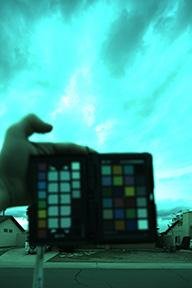
I'm attaching three of them.

The first is a linear UNIWB development of a half-a-second exposure of a ColorChecker Passport. That is, this is what the sensor actually recorded dumped to a TIFF and scaled down for the Web. Because of the 1.0 gamma (you're used to seeing 2.2 gamma), it's very contrasty. And, of course, it's rather green, thanks to there being as many green pixels on the sensor as red and blue combined. But, aside from those two caveats, you can see that it's properly exposed. You can also guess that the sky is quite blown.

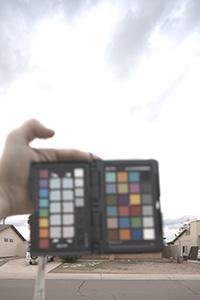
The second is the same file but white balanced and with a 2.2 gamma. But no digital gain or tone curve is applied. You can see that the colors are a bit muted, which is because there's no ICC profile associated with the image and the camera has a wider gamut than your monitor. But the exposure is clearly correct.

Last is the 1/8 second exposure similarly developed. That's what the meter read, if I recall right. It's clearly underexposed, but the sky's no longer blown.

In other words, the half-second exposure caused the sensor to record the scene such that an 18% gray object was rendered as 18% gray (that'd be 45.9 on a 0 - 255 scale, again remembering the 1.0 gamma; with 2.2 gamma, that works out to the much more familiar 118) in the digital file. The 1/8 second exposure caused that same object to be rendered instead as 4.5% gray, or 11.5 on a 0 - 255 scale with 1.0 gamma. In other words, it's two stops underexposed.

And now you should also have an idea of why shadow noise has always been such a problem for digital cameras....

Cheers,

b&
 

Attachments

  • 0.5s UNIWB.jpg
    0.5s UNIWB.jpg
    7.8 KB · Views: 1,265
  • 0.5s.jpg
    0.5s.jpg
    7.1 KB · Views: 1,248
  • 18s.jpg
    18s.jpg
    6.6 KB · Views: 1,269
Upvote 0
Drizzt321 said:
The thing to know about the 6D, is it's not really considered a 'professional' camera as such. Sure, it's a fine camera, but features and build quality is generally not up to 'pro'. Heck, Canon only calls the 1D-series as 'pro' cameras, everything else isn't.

When you say 1 stop better, are you just talking about sensor noise performance or AF sensor performance? Even though the center point AF sensor works fine with f/4 lenses, I believe it also has a double cross-point sensors there which are likely only available on an f/2.8 lens. Thus, you still get the point where your AF will likely be improved by having an f/2.8 lens, even if you take the shot at f/4 or f/5.6, even in available light.

That may be true, but I will note - for whatever it's worth - that my 70-300L, at 300mm (where it's quite far from 2.8!), focuses flawlessly on my 6D (center point AF) in *very* low light (including in a situation where a Nikon D600 I was trying simply wouldn't focus at all even with a f/1.8 lens attached). Whether less well-designed/made slow(ish) lenses could do as well I can't say....
 
Upvote 0
sdsr said:
Drizzt321 said:
The thing to know about the 6D, is it's not really considered a 'professional' camera as such. Sure, it's a fine camera, but features and build quality is generally not up to 'pro'. Heck, Canon only calls the 1D-series as 'pro' cameras, everything else isn't.

When you say 1 stop better, are you just talking about sensor noise performance or AF sensor performance? Even though the center point AF sensor works fine with f/4 lenses, I believe it also has a double cross-point sensors there which are likely only available on an f/2.8 lens. Thus, you still get the point where your AF will likely be improved by having an f/2.8 lens, even if you take the shot at f/4 or f/5.6, even in available light.

That may be true, but I will note - for whatever it's worth - that my 70-300L, at 300mm (where it's quite far from 2.8!), focuses flawlessly on my 6D (center point AF) in *very* low light (including in a situation where a Nikon D600 I was trying simply wouldn't focus at all even with a f/1.8 lens attached). Whether less well-designed/made slow(ish) lenses could do as well I can't say....

True. I won't argue the focus speed on f/4 lenses is just as good in most situations. But for low light action, with an f/4 lens, you're in a world of trouble with ISO values. A whole stop of light could mean ISO 10,000 or ISO 5000, which is a huge, huge difference in IQ. If you can slow your shutter, great, it'll work fine. But not at 1/500.
 
Upvote 0
Marsu42 said:
wickidwombat said:
x-sync is irrelevent when dragging the shutter since you are shooting at 1/10th second or so

Wow, I really have to try that - but 1/10s does result in shots with a large motion trail that are rather "artistic", doesn't it? Or you could even pull a sample shot out of your stack :-) ?

I thought more of a 1/60s as the lower limit (and conveniently settable in the camera fw), and the upper x-sync limit with 2nd curtain was meant if for fast motion 1/500s+ would be more appropriate, but a lower shutter speed captures more ambient/background light at acceptable iso.

Sorry for the delay to answer your request been quite busy
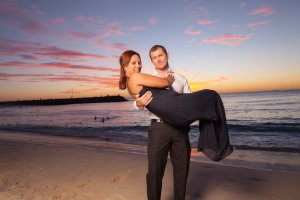
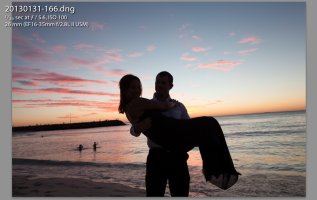
here is one from a pre wedding shoot on thursday
the trick is to make sure your subject would normally be a silhouette when not flashed
that way the pixel wells are empty when the flash fires at the back of the exposure to fill them up
i've attached 100% screen shot and LR shot with no flash firing
these were 1/20th
 

Attachments

  • 20130131-169.jpg
    20130131-169.jpg
    222.9 KB · Views: 974
  • Screen shot 2013-02-03 at 4.33.50 PM.jpg
    Screen shot 2013-02-03 at 4.33.50 PM.jpg
    179.3 KB · Views: 1,223
  • Screen shot 2013-02-03 at 4.35.06 PM.jpg
    Screen shot 2013-02-03 at 4.35.06 PM.jpg
    156.5 KB · Views: 1,194
Upvote 0
wickidwombat said:
Sorry for the delay to answer your request been quite busy

Which probably makes your advice a good one :-)

wickidwombat said:
the trick is to make sure your subject would normally be a silhouette when not flashed
that way the pixel wells are empty when the flash fires at the back of the exposure to fill them up

Great advice, thanks again - as most things, it seems obvious if you know the technique, but I didn't think of it or read it anywhere else. I'll certainly use that when I want to integrate a low light background.

EDIT: Um, another probably dumb question: Why did you shoot that @iso100 - for demonstration purposes, because of the added dynamic range, because of highest possible iq or because you are on full manual? Afaik iso400 whouldn't have made such a difference, but the background would have been captured with a faster shutter time?
 
Upvote 0
Marsu42 said:
EDIT: Um, another probably dumb question: Why did you shoot that @iso100 - for demonstration purposes, because of the added dynamic range, because of highest possible iq or because you are on full manual? Afaik iso400 whouldn't have made such a difference, but the background would have been captured with a faster shutter time?
For dynamic range, and highest possible IQ
as it was at iso 100 the sky can blow out really easily
I could have used Iso 400 and a faster shutter

another thing not noticable on this shot but if shooting on a beach with bigger waves the slow shutter speed gives really nice motion blur of the waves in the background too

2nd curtain sync is a very under used function IMO

also funnily enough back on topic, when going through the images of this shoot I didnt take a single shot wide open. I was using the 85 f1.4 on the 5Dmk3 and the 16-35 on the 5Dmk2 (my favourite combo) most shots i was at between f5.6 to f8
 
Upvote 0
wickidwombat said:
For dynamic range, and highest possible IQ
as it was at iso 100 the sky can blow out really easily
I could have used Iso 400 and a faster shutter

Indeed, I recently noticed that dr @iso100 is not much different from iso400, or iso800 for that matter. Not because Canon has great high iso dr, but low iso dr is so crappy vs. Nikon: http://www.sensorgen.info/

wickidwombat said:
also funnily enough back on topic, when going through the images of this shoot I didnt take a single shot wide open. I was using the 85 f1.4 on the 5Dmk3 and the 16-35 on the 5Dmk2 (my favourite combo) most shots i was at between f5.6 to f8

Exactly, I noticed that, too (and it's in line with the book I mentioned in the op) - but I didn't write it because I'd fear to be flamed to a crisp :-p
 
Upvote 0
Status
Not open for further replies.