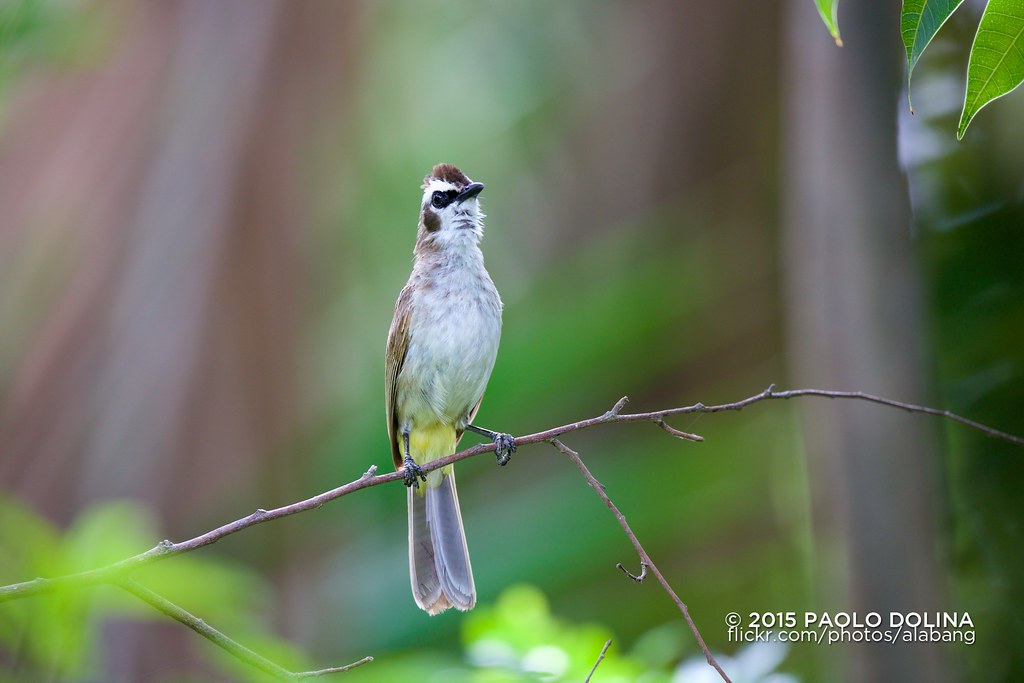
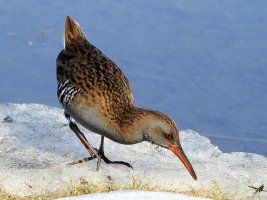
Very nice series Omni. Not easy to get this close to the birds where I live, so I suppose you're good at hide and sneakOmni Images said:A few images of the past few weeks.
Canon 1D4 100-400II + 1.4III 580EXII flash

Upvote
0
Very nice series Omni. Not easy to get this close to the birds where I live, so I suppose you're good at hide and sneakOmni Images said:A few images of the past few weeks.
Canon 1D4 100-400II + 1.4III 580EXII flash

Omni Images said:A few images of the past few weeks.
Canon 1D4 100-400II + 1.4III 580EXII flash

Omni Images said:Hi FEBS, no I don't ... I've found the 580 can give me enough .. a lot of the time it just fills the shadows and gives a highlight in the eye.
I think if I need one of those, I'm too far away ... I try and get close. Most of those shots were only cropped at most about 1/2 the frame size or less, if any more then it's not a really a keeper I recon.
Omni Images said:FEBS, I would be taking it then. I don't think you'll be able to get as close as I was with those birds, and a flash in the face of an elephant or lion might get them a little upset ... just need to watch that cat eye thing with the flash ... But I think it does bring out the colour much better ... I'd prefer to use one flash and have the bird fly away, than take 20 dull and muddy unusable shots ... but they don't seem to mind the flash.. sometimes the just flinch and look at you again ...
So yeah at those distances with the larger animals over there a beamer might help a lot. Those birds in my shots are tiny and you have to get as close as you can.
).
Vern said:I almost always use the better beamer and a little fill flash for birds for the reasons you note. Typically working with 1DX + 600II +1.4XIII. My only issue is that I've broken 2 of the canon remote flash attachments in the last 6 months. I am super careful w gear, but these just seem to snap off with the slightest bump if the flash gets caught on a bit of brush etc. Carry an extra one on safari (or perhaps just spazz less than me


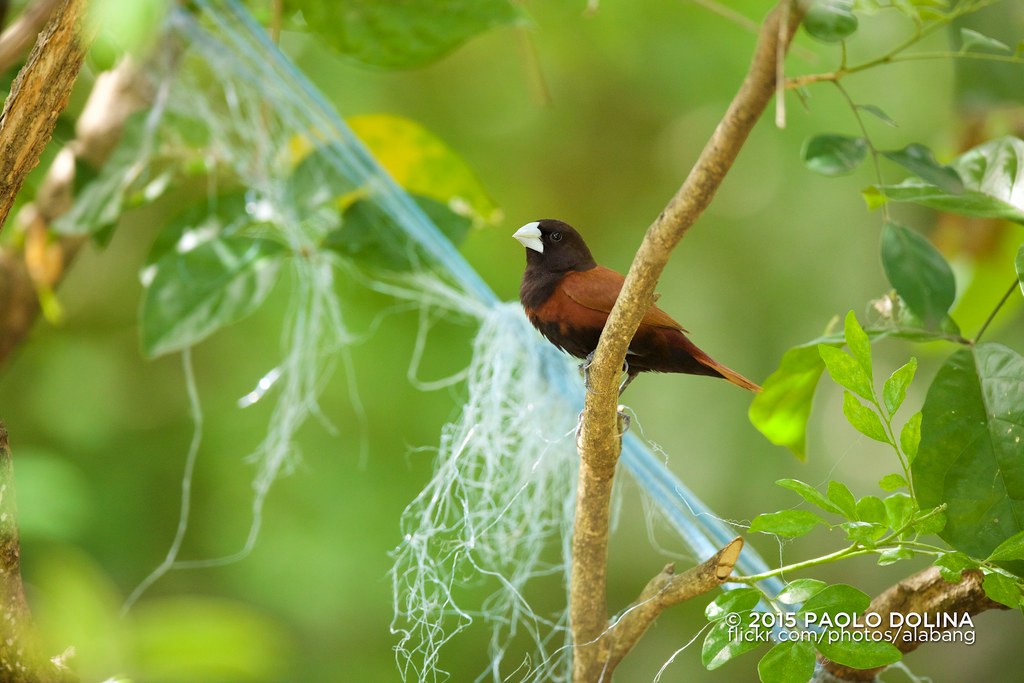

dolina said:Just testing the high ISO of the 5DS R on subjects that it was not marketed to handle.
Chestnut Munia (Lonchura atricapilla) by alabang, on Flickr
The Chestnut Munia (Lonchura atricapilla) (formerly considered as a subspecies of the tricoloured munia Lonchura malacca atricapilla), also known as black-headed munia, is a small passerine bird. This estrildid finch is a resident breeding bird in Bangladesh, Brunei, Cambodia, China, India, Indonesia, Laos, Malaysia, Burma, Nepal, Philippines, Singapore, Taiwan, Thailand, Vietnam and Hawaii.
Before 1995, it was the national bird of the Philippines,[2] where it is known as mayang pula ("red maya") because of its brick red patch on the lower back which is visible only when it flies. (This distinguishes it from other birds locally called maya, notably the predominantly brownish "mayang simbahan" (tree sparrow)[3] which is more common in urban areas.)
Source: https://en.wikipedia.org/wiki/Chestnut_munia
Location: https://en.wikipedia.org/wiki/Muntinlupa
Camera
Canon EOS 5DS R
Lens
Canon EF 800mm f/5.6L IS USM
Focal Length
800mm
Shutter Speed
1/320 s
Aperture
f/5.6
ISO/Film
2500
60-75MB each?ERHP said:That is pretty cool! How bad were the file sizes?

Omni Images said:A few images of the past few weeks.
Canon 1D4 100-400II + 1.4III 580EXII flash
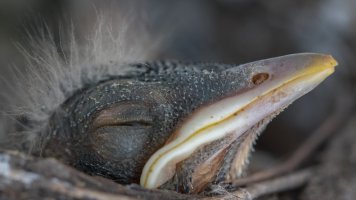
Don Haines said:Baby robin, second day after hatching.
dolina said:Just testing the high ISO of the 5DS R on subjects that it was not marketed to handle.
Chestnut Munia (Lonchura atricapilla) by alabang, on Flickr
The Chestnut Munia (Lonchura atricapilla) (formerly considered as a subspecies of the tricoloured munia Lonchura malacca atricapilla), also known as black-headed munia, is a small passerine bird. This estrildid finch is a resident breeding bird in Bangladesh, Brunei, Cambodia, China, India, Indonesia, Laos, Malaysia, Burma, Nepal, Philippines, Singapore, Taiwan, Thailand, Vietnam and Hawaii.
Before 1995, it was the national bird of the Philippines,[2] where it is known as mayang pula ("red maya") because of its brick red patch on the lower back which is visible only when it flies. (This distinguishes it from other birds locally called maya, notably the predominantly brownish "mayang simbahan" (tree sparrow)[3] which is more common in urban areas.)
Source: https://en.wikipedia.org/wiki/Chestnut_munia
Location: https://en.wikipedia.org/wiki/Muntinlupa
Camera
Canon EOS 5DS R
Lens
Canon EF 800mm f/5.6L IS USM
Focal Length
800mm
Shutter Speed
1/320 s
Aperture
f/5.6
ISO/Film
2500

shot with 7D2 and 100L macro lens. The nest is in the entranceway to one of our satellite ground stations at work... and the pole outside has an osprey nest.dpc said:Don Haines said:Baby robin, second day after hatching.
Great shot! What lens and focal length did you use?