Show your Bird Portraits

Use a long focal length zoom telephoto lens with a range of 70-200mm is ideal.
Switch to Aperture Priority mode and choose a medium aperture with an f-stop of f/7.1.
Switch to an ISO setting that yields a shutter speed that is the reciprocal of the 35mm equivalent of the focal length you’re using to photograph the bird.
Enable image stabilization if your camera or lens has this feature.
Switch to Continuous Auto-Focus mode.
Switch to Continuous Drive mode.
Switch to a single auto-focus point and achieve focus on the eye that is closest to the camera.
If possible, photograph birds on an overcast day, or when the bird is in the shade.
If you’re photographing birds in broad daylight, capture your images in the early morning or late afternoon.
If you do photograph the bird straight on in broad daylight, make sure the front of the bird is illuminated.
If you’re photographing the side of the bird’s head in broad daylight, make sure the side of its head is completely illuminated.


nightvision binoculars

 
Upvote 0
nightvisionsuk said:
Use a long focal length zoom telephoto lens with a range of 70-200mm is ideal.
Switch to Aperture Priority mode and choose a medium aperture with an f-stop of f/7.1.
Switch to an ISO setting that yields a shutter speed that is the reciprocal of the 35mm equivalent of the focal length you’re using to photograph the bird.
Enable image stabilization if your camera or lens has this feature.
Switch to Continuous Auto-Focus mode.
Switch to Continuous Drive mode.
Switch to a single auto-focus point and achieve focus on the eye that is closest to the camera.
If possible, photograph birds on an overcast day, or when the bird is in the shade.
If you’re photographing birds in broad daylight, capture your images in the early morning or late afternoon.
If you do photograph the bird straight on in broad daylight, make sure the front of the bird is illuminated.
If you’re photographing the side of the bird’s head in broad daylight, make sure the side of its head is completely illuminated.

Although f5, 1/160 @ 200mm but is it ok? :)
 

Attachments

  • IMG_9903b.JPG
    IMG_9903b.JPG
    882.5 KB · Views: 1,161
Upvote 0
Please excuse the composition, but I didn't have a lot to work with. I was heading out this morning and noticed this hawk perched on my neighbors bird bath. Unfortunately it flew away when I tried getting closer.

IMG_0089_1024.jpg
 
Upvote 0
Some amazing shots here.
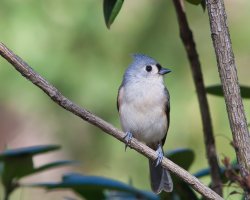
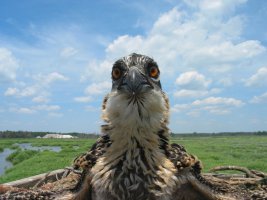
Here is one from an old FD 800 attached to my old 20D and an osprey from my even older Canon G2 (still using both cheapskate that I am)
 

Attachments

  • Titmouse-FD 800_.jpg
    Titmouse-FD 800_.jpg
    698.8 KB · Views: 1,542
  • Osprey around 5-6 wks old.jpg
    Osprey around 5-6 wks old.jpg
    2.1 MB · Views: 1,623
Upvote 0
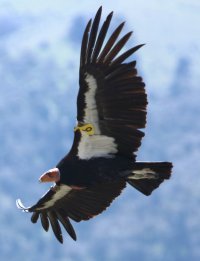
California Condor, Bitter Creek National Wildlife Refuge, California, Canon 5D3, 300L f2.8 IS + 2X II @ f8, 1/1600, ISO 1000. The California Condor is an endangered species with only about 250 birds in the wild.
 

Attachments

  • Condor 06.JPG
    Condor 06.JPG
    1.8 MB · Views: 4,890
Upvote 0
HeavenHell said:
Please excuse the composition, but I didn't have a lot to work with. I was heading out this morning and noticed this hawk perched on my neighbors bird bath. Unfortunately it flew away when I tried getting closer.

IMG_0089_1024.jpg

So what's wrong with the composition, apart from it being obviously not straight? (I spotted that one....).
And the bird could be brightened up a little maybe.
After all its not that you were a professional laying waiting for the shot. I'd like to hear what could be done
better here, in these circumstances.
Cheers Brian
 
Upvote 0