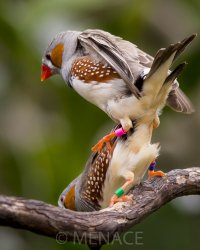
Skatol said:A few more from my favorite fall birding spot. Enjoy, critiques welcome.
Wow...great work. The first and last images are my favorites.

Upvote
0
Skatol said:A few more from my favorite fall birding spot. Enjoy, critiques welcome.


serendipidy said:I was out shooting in my yard a couple of days ago and shot these (and a bunch more you can see on my Flickr site http://www.flickr.com/photos/eric-johnson/ ).
Japanese White-eye (Zosterops japonicus) by EricJ777, on Flickr
Black-crowned Night Heron (Nycticorax nycticorax) by EricJ777, on Flickr
Red-vented Bulbul (Pycnonotus cafer) by EricJ777, on Flickr
Red-vented Bulbul (Pycnonotus cafer) by EricJ777, on Flickr
Common Waxbill (Estrilda astrild) by EricJ777, on Flickr
It does not matter if it is a captive eagle or not.... that is a great picture!Don Haines said:[quote author=Viper28=topic=1280.msg348405#msg348405 date=1387320914]
Thanks guys: Afraid to say its a captive Eagle. I have a bird of prey center near me that offers some excellent photo ops both like this and in flight / hunting. I have some more if you want to see them?


Viper28 said:Sorry slight change of userid, I was on a old server lastnight and it picked up my previous uid that I can't reset the password on! Anyway a couple more from the same location but this time in flight, again 7D + 300/2.8L
Wow, very nice. Beaut detail.serendipidy said:I was out shooting in my yard a couple of days ago and shot these (and a bunch more you can see on my Flickr site http://www.flickr.com/photos/eric-johnson/ ).

I am repeating myself, but again; Nicly done Dolina! Composition, colors, pose, DOF, very nice indeed.dolina said:
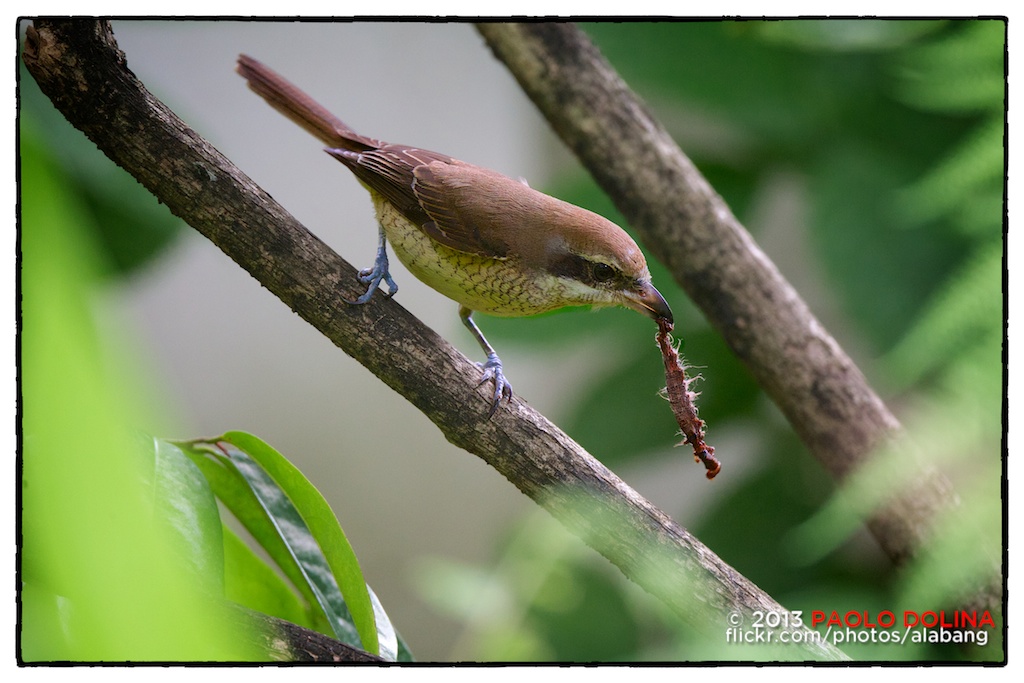
Brown Shrike (Lanius cristatus) by alabang, on Flickr
The Brown Shrike is a migratory species and ringing studies show that they have a high fidelity to their wintering sites, often returning to the same locations each winter.[20][21][22] They begin establishing wintering territories shortly on arrival and their loud chattering or rattling calls are distinctive. Birds that arrive early and establish territories appear to have an advantage over those that arrive later in the winter areas.[23][24] The timing of their migration is very regular with their arrival in winter to India in August to September and departure in April.[25] During their winter period, they go through a premigratory moult.[20] Their song in the winter quarters is faint and somewhat resembles the call of the Rosy Starling and often includes mimicry of other birds. The beak remains closed when singing and only throat pulsations are visible although the bird moves its tail up and down while singing.[5][26]
The breeding season is late May or June and the breeding habitat includes the taiga, forest to semi-desert where they build a nest in a tree or bush, laying 2-6 eggs.[27]
They feed mainly on insects, especially lepidoptera.[28] Like other shrikes, they impale prey on thorns. Small birds and lizards are also sometimes preyed on.[29] A white-eye (Zosterops) has been recorded in its larder.[5] They typically look out for prey from a perch and fly down towards the ground to capture them.[30]
Source: http://en.wikipedia.org/wiki/Brown_Shrike
Location: http://en.wikipedia.org/wiki/Muntinlupa
Settings: 1/400 ƒ/5.6 ISO 2500 800mm
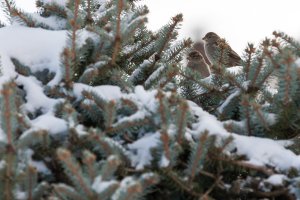
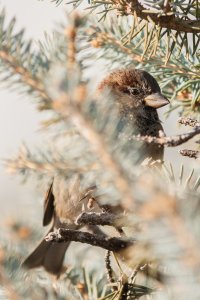
I like the colors and I like what (I believe) you are trying to do. But to give you some feedback, I believe there is a bit too much pine in the left and bottom part of the image. I would crop it enough to have the chest of the bird in focus in the upper right rule-of-thirds cross point. Then you would get attention to the birds, but you would still get the depth and the proper surroundings for the two birds. If you had managed to get the focus point just a little further away from you, you would have had the other bird in focus as well.atosk930 said:Rebel xTi and EF 70-200 2.8 IS II
Constructive comments and critique always appreciated so I can continue to improve
Eldar said:I like the colors and I like what (I believe) you are trying to do. But to give you some feedback, I believe there is a bit too much pine in the left and bottom part of the image. I would crop it enough to have the chest of the bird in focus in upper right rule-of-thirds cross point. The you would get attention to the birds, but you would still get the depth and the proper surroundings for the two birds. If you had managed to get the focus point just a little further away from you, you would have had the other bird in focus as well.atosk930 said:Rebel xTi and EF 70-200 2.8 IS II
Constructive comments and critique always appreciated so I can continue to improve

dolina said:
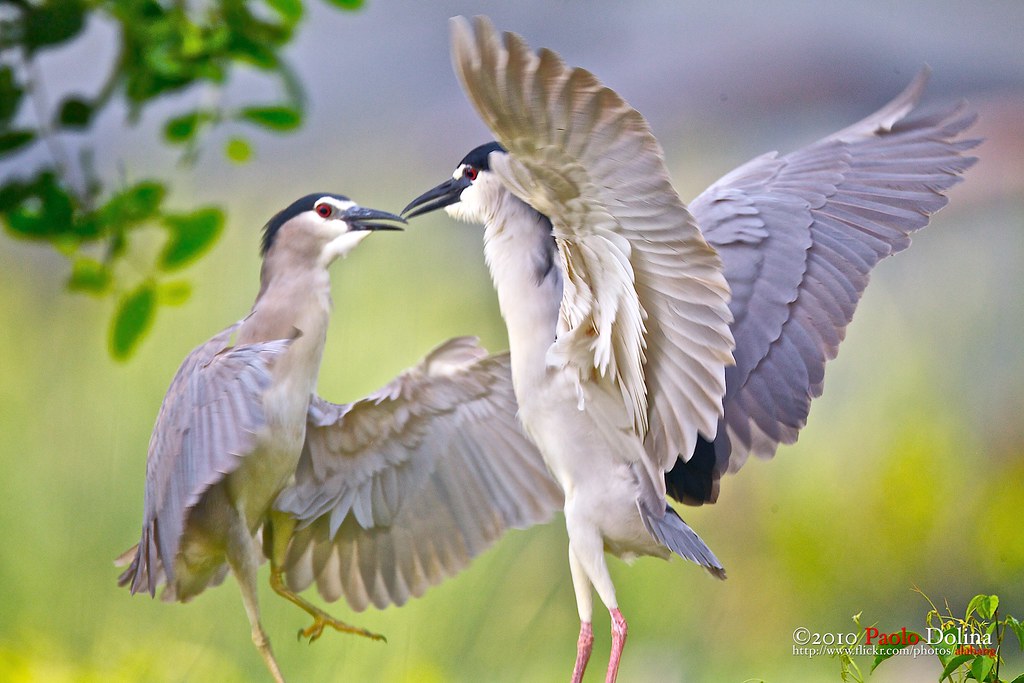
Black-crowned Night Heron (Nycticorax nycticorax) by alabang, on Flickr
The Black-crowned Night Heron (Nycticorax nycticorax), commonly abbreviated to just Night Heron in Eurasia, is a medium-sized heron found throughout a large part of the world, except in the coldest regions and Australasia (where it is replaced by the closely related Rufous Night Heron, with which it has hybridized in the area of contact).
Source: http://en.wikipedia.org/wiki/Black-crowned_Night_Heron
Location: http://en.wikipedia.org/wiki/Valenzuela,_Philippines
Settings: 1/640 ƒ/5.6 ISO 640 800mm