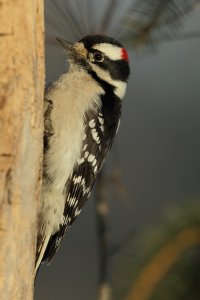
Jack Douglas said:
Thanks again jrista and I think you're right. I'm trying things but not the best judge of the final result.
Certainly! Don't stop trying. That's how you learn.
You might want to pick up Michael Freeman's books on photography...they will give you an EXCELLENT core basis for the general photographic stables: Exposure, Composition, Tone & Color.
You should also pick up Art Morris' book The Art of Bird Photography (the older book, not the newer CD ebook). ABP is an excellent book, especially the chapter on exposure. You'll learn more from Art than I could ever possibly teach you. I strive to be as good as him some day, but I figure I'll be about his age before I am, and I could never compare to the teacher he is.
Jack Douglas said:
A while back I was debating a friend who generally knows more than me, having gotten into DSLRs fairly seriously some years back. He tends to be very particular about things.
Here's what we didn't agree on, as he tried to push me towards producing a photo of wildlife that reproduces as closely as possible what the eye had seen. This was in the context of shooting a bison that was almost black to the eye with snow everywhere. I said that if I was shooting a brown bear in the bush and it was dull, I'd wan't a picture of a "brown" bear if possible, not a dark blob. This seemed to register with him a little but I think both of us are a little unsure about how to view such things. Any comments jrista or anyone else?
Photography is an art. Art is a matter of personal style. Your in the experimental phase, so right now, the best advice is to keep experimenting, play with exposure, try silhouettes, try exposing so you see the brown bear as a brown bear, etc.
Some people aim to produce "clinical" photographic results...they only care about the technical perfection. To be perfectly honest, I've always found such photography to be bland and artless. There is rarely any feeling in photos created clinically...to perfectly and exactly reproduce just what the physical eye saw, ignoring what the minds eye saw. I think involving aspects of both is important...its the ratio of the mix that really boils down to personal style. You sound much more like a minds eye kind of guy to me...you want to share what you feel you saw as much as what you actually saw (maybe more.) I wouldn't ignore that!
Find your personal style. It won't happen overnight. It'll require time and dedicated effort, trialing various approaches and figuring out which ones best represent what you saw AND felt to your viewers. I may have a lot of advice to give (and I honestly thank you for listening, even if you don't take my advice!), but I am still exploring and discovering my own personal style. I've been photographing birds for two years now. I have a better sense of what my own personal style is, but I haven't really perfected the technique that will allow me to achieve that style every time I point the lens and press the shutter button.
Also, don't forget that post-processing is just as much a
critical part of the process as what you do in camera. The camera is a clinical device...it will expose the world according to the technical specifications of its design, and the mechanical and electronic settings you give it. You have some control over those personal style aspects in-camera from the standpoint of composition and scene layout...but I think the bulk of personal style is brought out in the way you process. (I think it's always been this way as well...even in the days of film, critical photographers spent untold hours in their darkrooms playing with chemical baths, dodging, burning, perfecting transfer processes, etc.) Color, tone, contrast, crop, vignetting, etc. are all elements of style. Use them to your advantage.



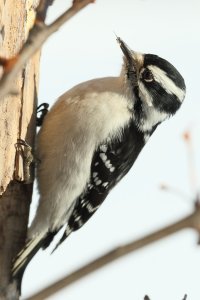

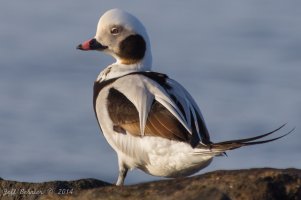
 I can't get that close to birds here in colorado, far too jittery...hence my purchase of the 600mm f/4 II.