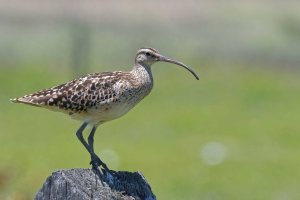
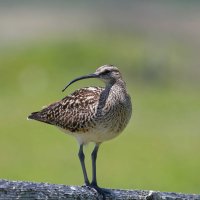
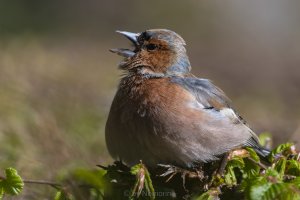
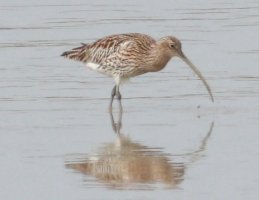
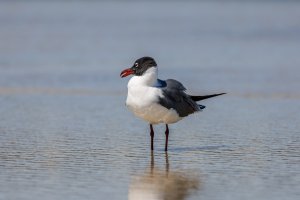
Here is a Laughing Gull taken at Dauphin Island, AL. I did not adjust the Red Slider! lol
Upvote
0


Congrats and chapeau.I've been trying for 10 years to get a decent shot of a Goldcrest, Europe,s smallest bird, only 9 cm long and weighing 6 g. And today it happened.
 Wonderful results. Wonderful little bird.
What app do you use? Does it recognise calls and songs or just play them and you have to compare?Congrats and chapeau.
Until today I only managed to get my birdcalls app to tell me that a realtive of the goldcrest, the firecrest was singing nearby. I couldn't even spot it
The second one is some ways more interesting because it shows the crest properly, which you don't get in the more "artistic poses".I really like the first one. Well done, Alan.
I use the app "BirdNet" from the TU Chemnitz in cooperation with the Cornell University in Ithaca, New York. It's a crowd science project.What app do you use? Does it recognise calls and songs or just play them and you have to compare?
This is another picture I took several days later nearby that tree where I first spotted a treecreeper.A series of a treecreeper. Great camo this bird has.
It went several times underneath that bark, either looking for insects or as a nesting place.
I was told that they sometimes do so...
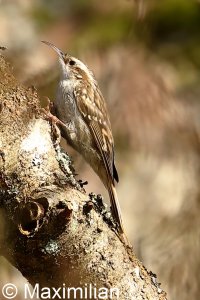
A great shot!This is another picture I took several days later nearby that tree where I first spotted a treecreeper.
View attachment 203064
Thanks, I've downloaded itI use the app "BirdNet" from the TU Chemnitz in cooperation with the Cornell University in Ithaca, New York. It's a crowd science project.
(see press report)
You can record calls and then the recording can be directly analyzed. Results depend from background noise but I am pleased.
It is free for android and iOS. They only ask you to share your location anonymously and birds you have detected, gathering data which birds have been localized where.
Edit: Latest press report is from March 2021.
Thank you very much, Alan! Hearing that from you is almost like being knightedA great shot!


Please let me know how it works for you.Thanks, I've downloaded it
I've checked it out - it worked on the birds in my back garden.Thank you very much, Alan! Hearing that from you is almost like being knighted
I think with this perspective an ornithologist could tell me if this is a certhia familiaris (common t.) or c. brachydactyla (short-toed t.).
I couldn't find any picture telling me the difference if this has shorter or longer toes. I think they're pretty long, aren't they ?
Please let me know how it works for you.
Congrats! This one of birds that puts your reflexes to a serious test: by the time you frame it, AF does its job, you click... the birdie is gone, hopped on the next branch, against the light, half hidden, its tail towards you or directly above. And it starts of the branch so quickly I had it on 7D2 fast frame rate (12/s) visible in one shot and completely gone on next, with at least half meter visible across the frame empty. Sigh... Put a goldcrest on your family crest!I've been trying for 10 years to get a decent shot of a Goldcrest, Europe,s smallest bird, only 9 cm long and weighing 6 g. And today it happened.
View attachment 203059View attachment 203060

These are difficult to shoot - exposed on good light is rare case and they move fast. So, I like both shots by this reason but the first one is obviously better!I really like the first one. Well done, Alan.
Yes, I took that photo early morning and it's of a first (year) non-breeding bird. In your case it's mixed - some birds are in transition to breeding plumage. Very nice collection: I have never seen that numbers at once here!My guess is it could possibly be just the type of light. Another possibility is simply minor differences in the birds dna based on locations. The images were taken in Dauphin Island, Alabama just a couple weeks ago (end of March). This is spring time here in the US. So possibly breeding season. Looking at your image it appears either early/late day and/or overcast skies. I was shooting in midday light as we were just traveling thru on a road trip. I've added another image of a group of them along the beach (mid day, full sun, no clouds). I did click (auto) in Lightroom. Otherwise no edits.
View attachment 203061
"...by the time you frame it, AF does its job, you click... the birdie is gone" - by my experience you have a serious chance to get at least very out of focus tail (or something hard to recognize!)Congrats! This one of birds that puts your reflexes to a serious test: by the time you frame it, AF does its job, you click... the birdie is gone, hopped on the next branch, against the light, half hidden, its tail towards you or directly above. And it starts of the branch so quickly I had it on 7D2 fast frame rate (12/s) visible in one shot and completely gone on next, with at least half meter visible across the frame empty. Sigh... Put a goldcrest on your family crest!

 !
!