
You are using an out of date browser. It may not display this or other websites correctly.
You should upgrade or use an alternative browser.
You should upgrade or use an alternative browser.
The Light Leak Issue
- Thread starter Canon Rumors
- Start date
- Status
- Not open for further replies.
J
javier
Guest
prestonpalmer said:I am glad you recognized that light leaks through thumbs! Good catch. Since my 5D2 acts the same way, im gonna say NO ISSUE here!
Now, back to wedding photography.
What about the 2/3 stop off in normal use of the camera.
Upvote
0
javier said:prestonpalmer said:I am glad you recognized that light leaks through thumbs! Good catch. Since my 5D2 acts the same way, im gonna say NO ISSUE here!
Now, back to wedding photography.
What about the 2/3 stop off in normal use of the camera.
Javier, If you think it is the camera, return it.
My friend and I do NOT have 2/3 stop off in normal use.
Upvote
0

Hmmm only affects my 5D3 without a lens and thumb instead of cover too. No issue with lens on or rubber cover on eyepiece .... LOL"
Upvote
0
Rob Wiebe said:Hmmm only affects my 5D3 without a lens and thumb instead of cover too. No issue with lens on or rubber cover on eyepiece .... LOL"
It sounds like this effect is only observed when there is so little light that the sensor is blindly guessing at the exposure. What is the "correct" exposure that the camera should be reporting when the camera has the lens cap on and viewfinder closed?
So it just could be the exposure readings with cap on and VF covered are NOT correct at all.
So how do we know what the impact is when the LCD light is on ?
Anyway NO issue without the lenscap at all
Upvote
0

neuroanatomist said:Mt Spokane Photography said:The metering sensor is under the mirror and is used to set aperture and shutter speed. This means light is getting to the metering sensor. Obviously, if it gets to the metering sensor, then it probably gets to the main sensor as well, its just not very much light.
The metering sensor was under the mirror in old designs, but these days it's actually up in the pentaprism housing (labeled in the upper right of this diagram taken from a Canon tech report):

So, light that reaches the metering sensor should be blocked from hitting the image sensor by the mirror when it's flipped up during the exposure.
+1
OOPS, its the AF sensor down there. I knew that, just getting too old.

Upvote
0

Mt Spokane Photography said:neuroanatomist said:Mt Spokane Photography said:The metering sensor is under the mirror and is used to set aperture and shutter speed. This means light is getting to the metering sensor. Obviously, if it gets to the metering sensor, then it probably gets to the main sensor as well, its just not very much light.
The metering sensor was under the mirror in old designs, but these days it's actually up in the pentaprism housing (labeled in the upper right of this diagram taken from a Canon tech report):
So, light that reaches the metering sensor should be blocked from hitting the image sensor by the mirror when it's flipped up during the exposure.
+1
OOPS, its the AF sensor down there. I knew that, just getting too old.
Had a couple of noggins tonight guys so maybe not thinking to straight but what then does that piece of rubber crap that goes over the eye piece do for things thats attached to the camera strap?
Upvote
0
It is meant to prevent light from entering through the viewfinder when you're shooting on a tripod. And using it is a must if you don't have time or want to tweak the exposure manually.
Upvote
0
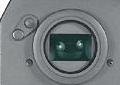
zim said:So why did they remove this especially from 'pro' cameras?
You see that little lever? It activates the internal shutter blind, so we don't need to carry around that little rubber piece of junk.
On the other hand, that eyepiece blind is a frequent point of failure in Nikons.
Upvote
0

Stephen Melvin said:zim said:So why did they remove this especially from 'pro' cameras?
You see that little lever? It activates the internal shutter blind, so we don't need to carry around that little rubber piece of junk.
On the other hand, that eyepiece blind is a frequent point of failure in Nikons.
Really? I've always wondered why Canon didn't include that feature. Always thought it was nifty.
Upvote
0

100% confirmed - for my 5D3. I have done these crazy tests and most importantly - every frame I exposed (using manual focus) came out completely black. Therefore, no stray light from the “metering leakage” is getting to the sensor. I even did a 120 second bulb exposure with direct sunlight onto the LCD panel at ISO800 and only the slightest stray light was witnessed and that was found to come through the VF cover – so it isn’t perfect either. When I removed this tiny VF leak, a 256 second bulb exposure got absolutely nothing. To put in context, a proper exposure was 1/1000 second at f/8.neuroanatomist said:Mt Spokane Photography said:The metering sensor is under the mirror and is used to set aperture and shutter speed. This means light is getting to the metering sensor. Obviously, if it gets to the metering sensor, then it probably gets to the main sensor as well, its just not very much light.
The metering sensor was under the mirror in old designs, but these days it's actually up in the pentaprism housing (labeled in the upper right of this diagram taken from a Canon tech report):
So, light that reaches the metering sensor should be blocked from hitting the image sensor by the mirror when it's flipped up during the exposure.
Upvote
0
Oh no..
i think we have a bigger design flaw here than just the 5D3 light leak..
After all the tests done, i think the biggest flaw is….OUR thumbs leak light!!!
So all those years of covering someone's eyes with our hands proved to be useless!! They can still see with light leaking through!!! Oh no…wonder if we will be recalled.
i think we have a bigger design flaw here than just the 5D3 light leak..
After all the tests done, i think the biggest flaw is….OUR thumbs leak light!!!
So all those years of covering someone's eyes with our hands proved to be useless!! They can still see with light leaking through!!! Oh no…wonder if we will be recalled.
Upvote
0
D
D.Sim
Guest
HughHowey said:Stephen Melvin said:zim said:So why did they remove this especially from 'pro' cameras?
You see that little lever? It activates the internal shutter blind, so we don't need to carry around that little rubber piece of junk.
On the other hand, that eyepiece blind is a frequent point of failure in Nikons.
Really? I've always wondered why Canon didn't include that feature. Always thought it was nifty.
I await the day that Canon releases an eyepiece extender with a little lever for us to close a shutter within the extender for the same effect....
Upvote
0
spinworkxroy said:Oh no..
i think we have a bigger design flaw here than just the 5D3 light leak..
After all the tests done, i think the biggest flaw is….OUR thumbs leak light!!!
Dang good thing they do! Otherwise those thingies they put on your thumb or finger at the hospital to check your O2 level wouldn't work so hot.

Moral to the story: thumb - good for O2 testing, not so much for keeping light out of the viewfinder! ;D
Upvote
0
N
nickzh
Guest
I just did a similar test, taking two outdoor pictures with my new 5D MK iii. The one without the lcd light on is metered for 10" exposure duration and turns out fine. When I use the lcd backlight the meter shows 6" exposure duration and the shot gets underexposed by almost one 1 stop.
I acknowledge these tripod mounted night shots with long exposure duration are not the ones I do regularly, but to me the light leak problem seems very real.
So, should I send the camera back?
I acknowledge these tripod mounted night shots with long exposure duration are not the ones I do regularly, but to me the light leak problem seems very real.
So, should I send the camera back?
Upvote
0

Is it normal practice (for you or anyone else for that matter) to have the LCD backlight on when metering? If your answer is no, then just use it as you normally would and don't waste your time and potentially money returning it. If yes, then may be you need to review your practices and/or make manual adjustments.nickzh said:I just did a similar test, taking two outdoor pictures with my new 5D MK iii. The one without the lcd light on is metered for 10" exposure duration and turns out fine. When I use the lcd backlight the meter shows 6" exposure duration and the shot gets underexposed by almost one 1 stop.
I acknowledge these tripod mounted night shots with long exposure duration are not the ones I do regularly, but to me the light leak problem seems very real.
So, should I send the camera back?
Upvote
0
If anything is used outside of its intended function, it will probably result in some unintended or unusual outcome. For example, if the reverse gear is used to try stop a car, this will result in a less than desirable driving experience. In one of the tests done by a user, a long exposure was taken at night on a tripod and when the LCD light was turned on, the exposure time decreased. Perhaps, the LCD display needed to be lighted up to check the settings, but after it turns off automatically in a few seconds, then an exposure can be taken. There is no need for the LCD to be lighted up when an exposure is taken. For long exposures, it is common practise to cover the camera body with a light-proof black cloth to prevent stray light from entering the VF and causing flaring effects in the exposure. I doubt Canon will do anything about this "issue" and at the most Canon will just send out an application note?
Upvote
0
L
Loswr
Guest
mrmarks said:Perhaps, the LCD display needed to be lighted up to check the settings, but after it turns off automatically in a few seconds, then an exposure can be taken. There is no need for the LCD to be lighted up when an exposure is taken.
But what if you wanted to repeatedly verify your settings during the exposure by viewing the LCD during the exposure?!? Don't go saying that's not realistic because you can't change the settings at that point or that pressing a button on the camera would result in a blurry image. It's more realisitc than taking pictures with no lens...

Upvote
0
- Status
- Not open for further replies.
Similar threads

- Replies
- 108
- Views
- 36K

- Replies
- 36
- Views
- 18K
- Replies
- 42
- Views
- 22K
- Replies
- 15
- Views
- 8K
