Three Canon Lens Masters Pick Their Favourite Lenses

neuroanatomist said:
StudentOfLight said:
I do not use the term "projection distortion". Instead I use the word keystone.
https://en.wikipedia.org/wiki/Keystone_effect
In layman's terms keystone can be summarized as follows ... what's closer looks bigger.

Keystoning is a type of projection distortion. With keystoning, the plane of the subject is at a different angle than the plane of the sensor, and that angled projection is what causes the effect.
Do you mind getting into some philosophy?

Would you agree that distortion is a misrepresentation of the true form of an object? If we can agree on that, then the question is what defines the true form of an object?
 
Upvote 0
sanj said:
I do not understand this topic. I have no favourite lens. It all depends upon the photo. I would rarely use a superb lens like 35mm 2 for wildlife and the 500 for landscape.

Favourite for particular type of shot, and that would make sense. Favourite landscape, portrait, street etc. I hope I am making sense.

Makes sense. People can love more than one lens and of course it depends on the situation but if you had to ask yourself "which lens consistently put a smile on my face when I use it?" what would it be?
 
Upvote 0
OK. Been reading this thread and there's something I don't quite get. As a person who loves wide angle lenses I am all too familiar with the perspective distortion phenomenon, I mean that ones kinda obvious right? So my question is this - if you don't like this effect... why would you buy a lens which takes it to the extreme?

How can you expect 11mm to look any kind of normal??

Maybe I'm way off here and there is something I'm missing with regards to such a wide angle lens and how it's used but isn't the whacky perspective part of the allure?

It's like buying a fisheye lens and complaining about the distortion.
 
Upvote 0
Zv said:
OK. Been reading this thread and there's something I don't quite get. As a person who loves wide angle lenses I am all too familiar with the perspective distortion phenomenon, I mean that ones kinda obvious right? So my question is this - if you don't like this effect... why would you buy a lens which takes it to the extreme?

How can you expect 11mm to look any kind of normal??

Maybe I'm way off here and there is something I'm missing with regards to such a wide angle lens and how it's used but isn't the whacky perspective part of the allure?

It's like buying a fisheye lens and complaining about the distortion.

Exactly. If you don't like wide field of view projection don't get a wide field of view lens, any one focal length from any manufacturer on any camera is going to be the same. But if you need that field of view then lenses with fewer aberrations are much more difficult and expensive to make.

Projection distortion, keystoning (which is a completely different thing) etc are not aberrations. Barrel, pincushion and mustache distortion are aberrations, as are chromatic and spherical aberrations, and many would argue that vignetteing is one too, something the 11-24 does in volumes. But it was obvious that the lens master was talking, very proudly, about specific optical aberrations of which the 11-24 has remarkably little.
 
Upvote 0
StudentOfLight said:
neuroanatomist said:
StudentOfLight said:
I do not use the term "projection distortion". Instead I use the word keystone.
https://en.wikipedia.org/wiki/Keystone_effect
In layman's terms keystone can be summarized as follows ... what's closer looks bigger.

Keystoning is a type of projection distortion. With keystoning, the plane of the subject is at a different angle than the plane of the sensor, and that angled projection is what causes the effect.
Do you mind getting into some philosophy?

Would you agree that distortion is a misrepresentation of the true form of an object? If we can agree on that, then the question is what defines the true form of an object?

Not sure where you're going with this, but yes, I'd agree that distortion is a misrepresentation of the true form of an object. I don't think there's any question of how the true form is defined...it's defined objectively, literally by the object itself. The front of a 'typical' building is rectangular; if it looks trapezoidal, or 'bent', that's distortion. Or, to use an example that I've seen frequently over the past few months, while we were looking for a new house – recessed lighting is circular, so when it looks like an oval…that's distortion.

Your lay summary, "What's closer looks bigger," is rather vague. It best applies to perspective distortion, it can also apply to keystoning (pointing a camera up at a tall building, the base is closer and thus looks larger). It doesn't really apply to projection distortion, though, since that is more about the position of an object in the FoV.

 
Upvote 0
I'll pick the 55-250/4-5.6 IS STM. When it comes to value for money, this lens can't be beat.

For about 300 CAD you get a lens with a UD element, very effective IS, and a very nice AF motor. It's compact and light, perfect for hiking and traveling. It's tack sharp. Bokeh at 55 mm and 250 mm actually isn't too bad (although the same can't be said for intermediate focal lengths).

Every decade I used to purchase a consumer telephoto lens. They were all rubbish. Until the 55-250 mk1. I thought they wouldn't be able to improve on it (within its price class) but they did. Bravo Canon.
 
Upvote 0
neuroanatomist said:
Or, to use an example that I've seen frequently over the past few months, while we were looking for a new house – recessed lighting is circular, so when it looks like an oval…that's distortion.

I would disagree with that premise. It only looks circular when view straight on, from any other angle it, accurately, appears oval. I don't believe this to be distortion as I understand the way we are using the word in this thread.
 
Upvote 0
privatebydesign said:
neuroanatomist said:
Or, to use an example that I've seen frequently over the past few months, while we were looking for a new house – recessed lighting is circular, so when it looks like an oval…that's distortion.

I would disagree with that premise. It only looks circular when view straight on, from any other angle it, accurately, appears oval. I don't believe this to be distortion as I understand the way we are using the word in this thread.

Sorry, but no. It is circular, that can be verified empirically with a ruler. If it looks like something it isn't, that's distortion...by definition. If you take a picture of a 14x14' room, and it looks deeper than it is wide, that's distortion, too.

Not all distortions are aberrations.
 
Upvote 0
romanr74 said:
neuroanatomist said:
Or, to use an example that I've seen frequently over the past few months, while we were looking for a new house – recessed lighting is circular, so when it looks like an oval…that's distortion.

If the recessed lighting is circular...

Obviously. And when I referred to buildings earlier, that applied only if the vertical edges of the building are straight and parallel. In the vast majority of cases, both are true. But thanks for the picayune pedantry.
 
Upvote 0
neuroanatomist said:
romanr74 said:
neuroanatomist said:
Or, to use an example that I've seen frequently over the past few months, while we were looking for a new house – recessed lighting is circular, so when it looks like an oval…that's distortion.

If the recessed lighting is circular...

Obviously. And when I referred to buildings earlier, that applied only if the vertical edges of the building are straight and parallel. In the vast majority of cases, both are true. But thanks for the picayune pedantry.

You're welcome! ;D
 
Upvote 0
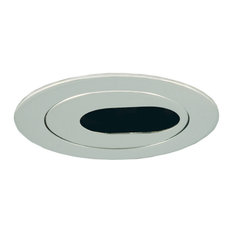
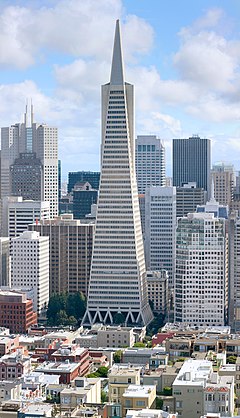
...and here are some counter-examples:

5391af7d07bde56d_2889-w233-h233-b1-p10--modern-recessed-trims.jpg


240px-SF_Transamerica_full_CA.jpg


:D
 
Upvote 0
Canon Rumors said:
<p>What’s your favourite Canon lens?</p>

I like all my lenses, or I wouldn't own them. But, I'd have to say my 300mm f/2.8 II is my favorite. Razor sharp, even with extenders and it produces wonderful bokeh. Until I get a longer lens (I'm planning to add a 500mm f/4 II this summer or fall), I use it with extenders for all my wildlife and bird shots, it takes terrific portraits and I use it with extension tubes for flower and intimate nature shots as well.
 
Upvote 0
neuroanatomist said:
privatebydesign said:
neuroanatomist said:
Or, to use an example that I've seen frequently over the past few months, while we were looking for a new house – recessed lighting is circular, so when it looks like an oval…that's distortion.

I would disagree with that premise. It only looks circular when view straight on, from any other angle it, accurately, appears oval. I don't believe this to be distortion as I understand the way we are using the word in this thread.

Sorry, but no. It is circular, that can be verified empirically with a ruler. If it looks like something it isn't, that's distortion...by definition. If you take a picture of a 14x14' room, and it looks deeper than it is wide, that's distortion, too.

Not all distortions are aberrations.

Yes but it is circular, not spherical, it is not appearing distorted if not viewed from straight on. Perspective is not necessarily distorting.

I suppose the crux of it is if you consider a natural perspective 'distortion' or not. I agree that ultra wide angle lenses make spherical objects appear oval and that is 'distorted'. I can't agree that a natural perspective that is giving truthful three dimensional information is distorted, a circle from anything but directly on is accurately represented as oval.
 
Upvote 0
privatebydesign said:
neuroanatomist said:
privatebydesign said:
neuroanatomist said:
Or, to use an example that I've seen frequently over the past few months, while we were looking for a new house – recessed lighting is circular, so when it looks like an oval…that's distortion.

I would disagree with that premise. It only looks circular when view straight on, from any other angle it, accurately, appears oval. I don't believe this to be distortion as I understand the way we are using the word in this thread.

Sorry, but no. It is circular, that can be verified empirically with a ruler. If it looks like something it isn't, that's distortion...by definition. If you take a picture of a 14x14' room, and it looks deeper than it is wide, that's distortion, too.

Not all distortions are aberrations.

Yes but it is circular, not spherical, it is not appearing distorted if not viewed from straight on. Perspective is not necessarily distorting.

I suppose the crux of it is if you consider a natural perspective 'distortion' or not. I agree that ultra wide angle lenses make spherical objects appear oval and that is 'distorted'. I can't agree that a natural perspective that is giving truthful three dimensional information is distorted, a circle from anything but directly on is accurately represented as oval.

If you stand on train tracks and view them going straight off into the distance, natural perspective means the tracks converge to a vanishing point. If that natural perspective is, in fact, 'truthful three dimensional information', train travel would be impossible as every train would derail. The way your eye (or a camera) perceives the world does not change the fundamental spatial relationships of the objects in the world.

The playroom in our basement has recessed lighting. If you stand at one end of the rectangular room, the recessed lighting at the other end will look like an oval, as will the hula hoop on the floor. My 'natural perspective' doesn't alter the fact that those objects are circular. If I turn off the lights, it naturally appears that the hula hoop no longer exists...but trust me, I can still trip over it in the dark.

Perspective – natural or not – is merely a representation of reality. To the extent that it fails to truthfully represent that reality, it is a distortion.
 
Upvote 0
neuroanatomist said:
StudentOfLight said:
neuroanatomist said:
StudentOfLight said:
I do not use the term "projection distortion". Instead I use the word keystone.
https://en.wikipedia.org/wiki/Keystone_effect
In layman's terms keystone can be summarized as follows ... what's closer looks bigger.

Keystoning is a type of projection distortion. With keystoning, the plane of the subject is at a different angle than the plane of the sensor, and that angled projection is what causes the effect.
Do you mind getting into some philosophy?

Would you agree that distortion is a misrepresentation of the true form of an object? If we can agree on that, then the question is what defines the true form of an object?

Not sure where you're going with this, but yes, I'd agree that distortion is a misrepresentation of the true form of an object. I don't think there's any question of how the true form is defined...it's defined objectively, literally by the object itself. The front of a 'typical' building is rectangular; if it looks trapezoidal, or 'bent', that's distortion. Or, to use an example that I've seen frequently over the past few months, while we were looking for a new house – recessed lighting is circular, so when it looks like an oval…that's distortion.

Your lay summary, "What's closer looks bigger," is rather vague. It best applies to perspective distortion, it can also apply to keystoning (pointing a camera up at a tall building, the base is closer and thus looks larger). It doesn't really apply to projection distortion, though, since that is more about the position of an object in the FoV.
Apologies I mistook "projection" for "perspective" distortion. It's clearly past my bedtime. :-[
 
Upvote 0