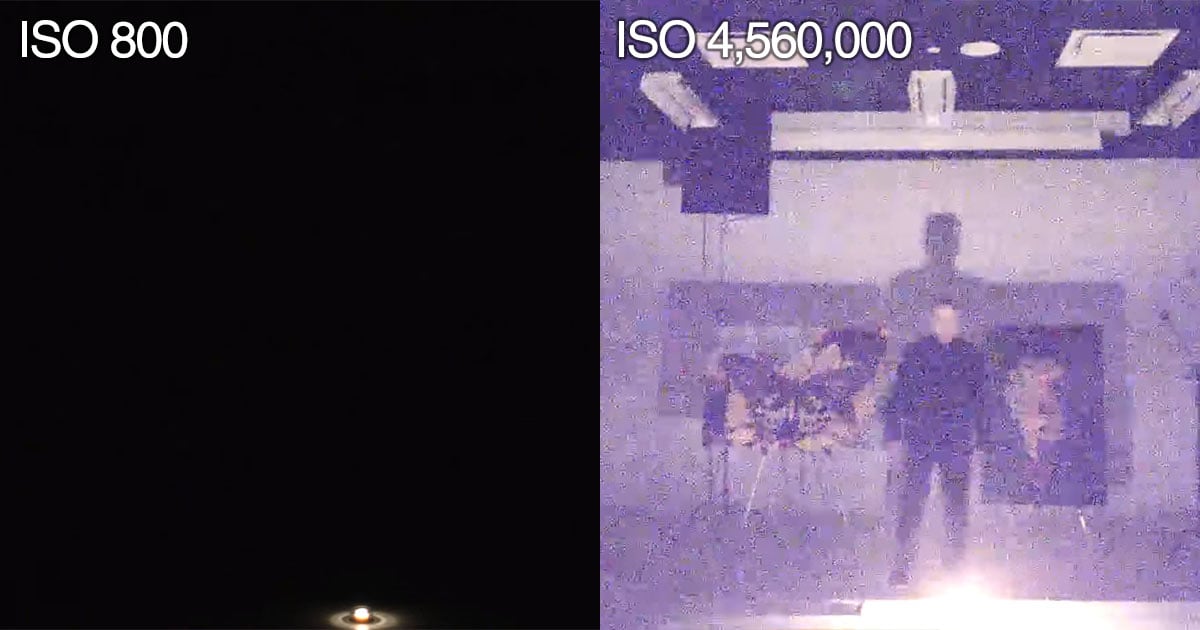
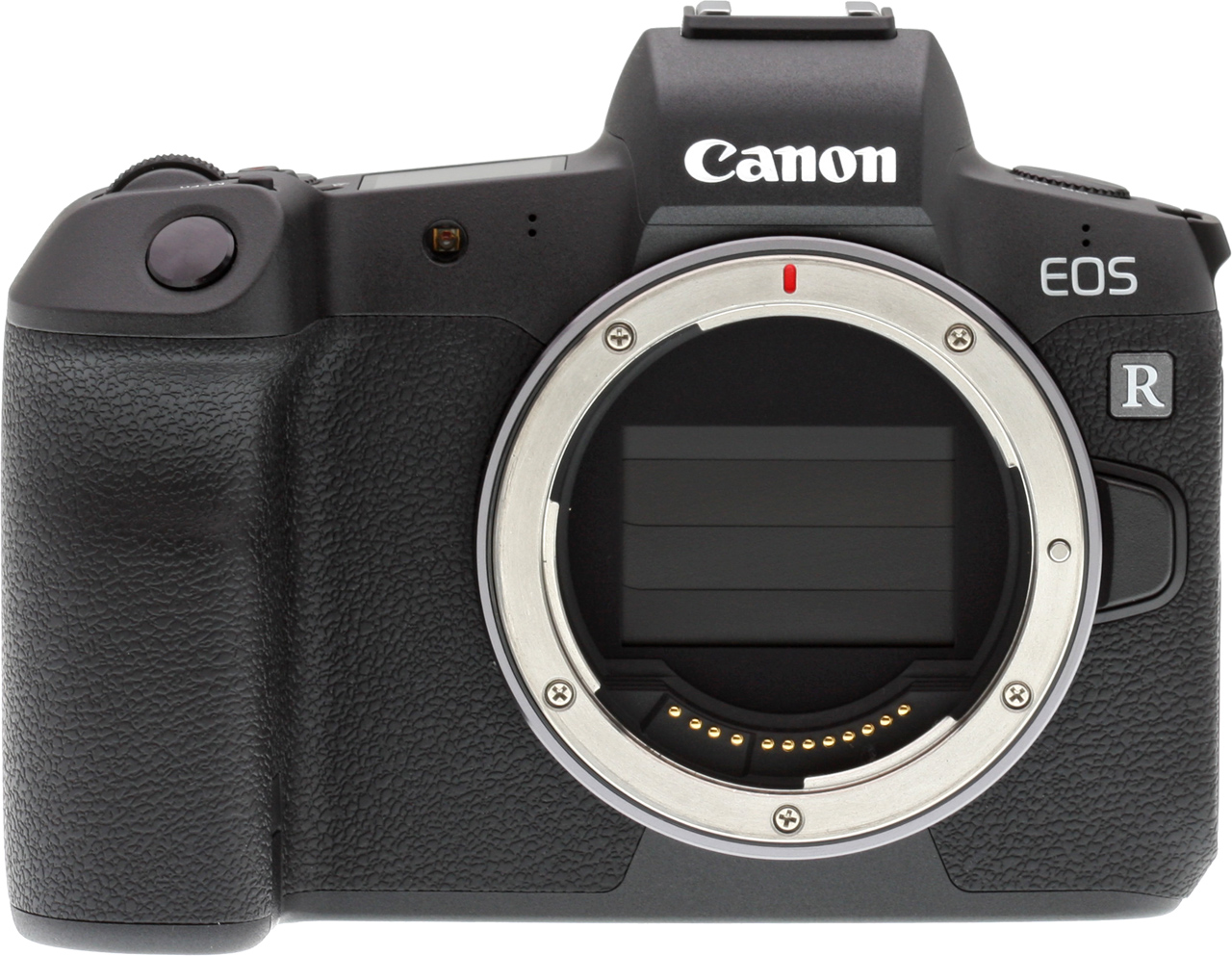
R5 Tracking of Body face and eyes of cats dogs and birds

Based on reports from the field by those using the 1D X Mark III, turning "Human face detection" on when using the OVF already gets better results tracking birds eyes than turning it off. If Canon does issue a firmware update, it may just be adding another label in the menu for doing the same thing it's already doing without the label.
  • Like
Reactions: 1 user
Upvote 0

Meike announces a 50mm f/1.2 lens for the RF mount

Considering this lens is soft wide open (of course it’s no Canon 50mm f1.2 L RF) for the size and weight (plus the lack of EXIF data, lens hood and likely de-clicked aperture) I’d much rather have a smaller and lighter lens. Bigger, heavier lenses should have better optics or what’s the point.
Fair enough but $359?
I would also withhold judgement of the IQ until we can actually judge from something other than a web video.
  • Like
Reactions: 1 users
Upvote 0

Gerald Undone says R5 4K video is line skipping and not binned

The next innovation is the”Autopoint Function” that automatically points the camera at great compositions, sets exposure, and fires off a few frames. Now that will make us talented photographers. R5 MkII
Brilliant! That and the built-in hand-warmer - it sounds like my perfect camera..!
  • Like
Reactions: 1 user
Upvote 0

Firmware: Canon EOS RP v1.5.0 and Canon EOS R v1.7.0

I agree. I used a Vello, after a Neweer, grip on my 6D, which was better by leaps than the Neweer, but, the BG-E22 is LEAPS above the Vello! You also get the in grip/body battery charger with it. I think Canon gets about a $100 for that separately. Has to be LP-E6N batteries to charge in the grip. I guess now with the new update, it would also charge the LP-E6NH as well.


Isn't it strange/amazing how different it feels?

Up until the point I got my first Canon grip I looked at the Vellos and thought 'this is fine - there is no way the other one is worth that much extra money.... People who buy the Canons are wasting their money'

Then I got the Canon grip and after about a second I thought 'THIS is how a grip is supposed to feel.'

It made enough of an impact on me that I ordered a Canon grip for my 5D4 to replace the Vello.

Not to mention that it doesn't make much sense to put a non-weather sealed grip on a weather sealed camera. lol.
  • Like
Reactions: 1 user
Upvote 0

Preorder: Canon EOS R5, Canon EOS R6 and new lenses

Compare these pricings for Canon and Nikon in the USA, B&H; and UK, Wex. These give the lie to that Japanese companies have to charge more in the EU and UK for warranty etc . Nikon has a similar price or even less here, bearing in mind that the UK prices have 20% VAT.

Canon New RF 2xTC
B&H $599
Wex £699
Canon New RF 1.4xTC
B&H $499
Wex £559

Nikon New 2xTC
B&H $596.95
Wex £599
Nikon New 1.4xTC
B&H $566.95
Wex £549

Nikon Z5 Digital Camera with 24-50mm
B&H $1,696.95
Wex £1,719.00

The UK prices on the RF TCs are pure rip off.

Same. The RF TC is A$1340 in Australia.

  • Wow
  • Like
Reactions: 1 users
Upvote 0

Anyone have experience with EF lenses on R series with the adapter?

From my experience with the EOS R, EF glass works absolutely perfectly and is honestly better than on EF mount cameras, like others have said. Super snappy as ever, never a problem with speed or any other issue.

On smaller lenses like the 24-70 and 35mm f/1.4, I'm not bothered by the "additional" length of the adapter(adapter takes up the same space as a DSLR would anyway, but just makes the lenses look "longer" since that space isn't built into the body). I can't anticipate myself picking up the RF 24-70 anytime soon for this reason, I'm more than happy to adapt the 24-70, plus you still get IBIS image stabilization.

That said, I just picked up the RF 70-200 though because I'm not a huge fan of how the EF 70-200 2.8 physically looks/feels on an adapter. Just looks very long and is a little front heavy, versus the absolutely tiny, well-balanced RF 70-200. I think the 70-200 2.8 is the only lens where that really is a consideration, though, because any bigger of a lens, and the adapter is totally insignificant to the lens.
  • Like
Reactions: 1 user
Upvote 0

Sony strikes deal with Associated Press

You'd have to persuade me that this was the main reason for people not buying Sony, before I'd buy the idea that Sony + AP will make any meaningful difference to Sony sales.

There will be people who think about this, but I'll bet it's not a significant number of potential buyers. Most will buy whatever YouTube or the guy in the shop tells them to (if they're new to photography); otherwise the support question (which is valid, no dispute about that) will just be one part of a bigger puzzle.

And - I completely believe - hardly anyone is influenced by what camera brand a news agency uses anyway: in fact it's impossible to tell, because they always strip the Exif out of their images.

Here's something else: AP's own blog page about "why Sony?"


Completely objectively, many of those images (from the "young flamenco dancers" onwards) are properly bloody horrible.

The dancers' colours are disgusting, for example - Sony's broken colour science to the rescue again - and some of them (the fisherman and the climbers, for example) are really noisy for only 1250 and 3200 ISO.

Indeed, the long jumper is hellish noisy at 400 ISO!

The 5000 ISO hurdlers image (among others) looks hammered by NR.

And where's the much-vaunted low ISO DR advantage? Blocked shadows everywhere...

(Maybe being able to lift shadows by 5 stops to make up for a bad exposure isn't so important after all, eh? ;) )

If I was looking to buy a body, one look at that lot and I wouldn't go anywhere near a Sony. They're deeply unimpressive images.

But then - PJ isn't really about ultimate image quality, is it? Based on this collection, Sony seems to fit right in.

Fake cameras for fake news!!
  • Like
Reactions: 1 user
Upvote 0

Firmware for the RF lenses on Canon UK page

Also on the USA page too... however to get to the existing lens firmware you have to go thru the product page and use the support button from there. If you try to go directly to support the lenses won't be listed (they use to be, but dropped when they added the new ones)... so can't find them that way. They are probably in the middle of fixing so this may not pertain after time.
Not on the Uk page , if you click on the link and then you click on the RF lenses in the blue line , go on the relevant lens , and follow it to firmware , you can download the Firmware straight from the page , I just did it .
Upvote 0

Industry News: Nikon announces the entry-level full-frame Nikon Z 5, a new lens and teleconverters

Nikon seems to live very difficult times..! From my perspective they don't have the funds to make a good competitive camera just like they did last time with D850. If they don't shake the waters a little bit at least they won't make it for very long time.

They could always drop bodies and build them S lenses for the RF mount :)
Upvote 0

Who else is excited for the R5/R6 just to use as a stills camera?

I'll hang onto the 2 great white primes, but all of the other Ls will be sold for updated RF formulas. My first adapter (basic model) should be arriving with the RF 50, hopefully customs does not keep it for too long.

I anticipate buying the 16-35mm f/4 (though I might splurge and get the RF zoom of that range). That plus my 100-400mm will be where my two adapters will live.
Upvote 0

RF 24-105 f4 on full frame v EF-S 17-55 2.8 on crop?

Hi guys. I shoot a lot of video with a 90D (80D before that and 70D before that) with a 17-55 f2.8.

I’m excited by the R6 and wondered how using it with an RF 24-105 f4 compares to what I’m used to, specifically with presenter talking to camera type stuff. I‘ve never used a full frame before and know the range matches but was wondering how the depth of field would compare?

Will being closer to the subject and the larger sensor offset losing a stop of light? It’s surprisingly hard to find mid shot portraits taken at 24m to get an idea. Lol.

First downloadable RAW R5 and R6 files

That light behaves in a discrete way, like a particle, when coming in contact with surfaces is something that was briefly covered in school physics. If you want to call that professional study. I don't think that matters though, if you want to read up on the physics of light there is a ton of material out there. What we're talking about here is the noise inherent to the light itself, a property that is completly unaffacted by how good your sensor. Wikipedia has a small explanation for it: Shot noise.

As understanding and dealing with noise is a key aspect of astro photography, that's a good place to get information about it in the context of photography. Jon Rista has very detailed articles with example images and lots of math on his page (along some amazing deep sky images): Astrophotography Basics: Signal, Noise and Histograms & Astrophotography Basics: SNR. I believe he was also active on this forum under the account jrista, but haven't seen him post anything under the deep sky thread for a long while.

As for your second point, I though we were particularly concerned with the physical aspects of low light performance. That's why the focus was on RAW, not JPEG, or was it? Of course post processing techniques are continuing to improve. Slapping AI on something is no magical cure to any problem, but it can deliver impressive results for sure. Though, I personally think there's a pretty fine line between actually restoring details you would have gotten in an image by gathering more light, or just making the noise less apparent by smoothing it or replacing it with artificial detail.

As for animal eyes, not sure where you are going with this. As I said, the noise is in the light itself.


You are right, that would be cool. I'll see if I can put something together.

Just to clarify though, I am not saying that we have hit a plateau. I am saying that there is a physical limit for how noisy a low light image can look without further processing or techniques to improve it. That's what I consider to be meant when we talk about RAW file low light performance. And as progress is made, we approach that limit. As is generally the case when approaching these limits, it get's harder to make improvements as you get closer. I do think we are seeing that in recent releases, so hoping for really big steps forward appears to be futile to me. But for this last point, I don't have a proper source to point out at the moment. I'll get back to you if I can present the chart you mentioned, which I would also find very interesting myself.

That light behaves in a discrete way, like a particle, when coming in contact with surfaces is something that was briefly covered in school physics. If you want to call that professional study. I don't think that matters though, if you want to read up on the physics of light there is a ton of material out there. What we're talking about here is the noise inherent to the light itself, a property that is completly unaffacted by how good your sensor. Wikipedia has a small explanation for it: Shot noise.

As understanding and dealing with noise is a key aspect of astro photography, that's a good place to get information about it in the context of photography. Jon Rista has very detailed articles with example images and lots of math on his page (along some amazing deep sky images): Astrophotography Basics: Signal, Noise and Histograms & Astrophotography Basics: SNR. I believe he was also active on this forum under the account jrista, but haven't seen him post anything under the deep sky thread for a long while.

As for your second point, I though we were particularly concerned with the physical aspects of low light performance. That's why the focus was on RAW, not JPEG, or was it? Of course post processing techniques are continuing to improve. Slapping AI on something is no magical cure to any problem, but it can deliver impressive results for sure. Though, I personally think there's a pretty fine line between actually restoring details you would have gotten in an image by gathering more light, or just making the noise less apparent by smoothing it or replacing it with artificial detail.

As for animal eyes, not sure where you are going with this. As I said, the noise is in the light itself.


You are right, that would be cool. I'll see if I can put something together.

Just to clarify though, I am not saying that we have hit a plateau. I am saying that there is a physical limit for how noisy a low light image can look without further processing or techniques to improve it. That's what I consider to be meant when we talk about RAW file low light performance. And as progress is made, we approach that limit. As is generally the case when approaching these limits, it get's harder to make improvements as you get closer. I do think we are seeing that in recent releases, so hoping for really big steps forward appears to be futile to me. But for this last point, I don't have a proper source to point out at the moment. I'll get back to you if I can present the chart you mentioned, which I would also find very interesting myself.

Appreciate the thoughtful replies. Always nice when the harsh conversation turns more friendly.

If the R5 is one stop better than the R, can we not say I was half right and half wrong? :ROFLMAO:

One example of the kind of tech I was thinking Canon would bring to the R5 stills is illustrated by the 4K oversampled video that downsamples from 8K. From what I've read, it supposedly allows for full (I forget what the right word is) saturation(?) of each color channel, much like a still image from a Foveon sensor, plus producing higher dynamic range and sharpness. Not sure how I expected something like that to work for stills – perhaps processed the same way as the 4K oversampled video and delivered as S/MRAW.
Upvote 0

ZY Optics releases the Mitakon Speedmaster 50mm f/0.95, specially designed for Canon EF cameras.

Owned a couple of the 0.95 50mm speedmasters - one on Sony, one on RF.

I sold both.

That said: they're a little soft wide open when focusing close (but acceptable sharpness at medium to far focus), with noticeable CA. Bokeh is usually good, but due to CA, if you have a background with alternating dark and light (like tree branches against bright sky), it can look pretty 'busy' and unpleasant. They might be 0.95 from the bokeh perspective, but let a little less light in than you'd expect with comparatively poor transmission and wide incidence angle on the sensor.

Build quality felt sturdy and solid in both cases, with all metal construction. they were also surprisingly heavy for the size because of this.

The manual focus at .95 made focusing pretty hard, but that's a lot better on cameras like the r/rp, which pretty good manual focus aids.
I found them useful on wider scenes to isolate the subject from the background in busy environments; creating a few unique shots. Still, even then, focus was tough, but those shots where I got it right I really liked. The problem was there were a lot more shots that I missed where I got it wrong :)

In the end, the last one I owned on RF I traded in to get the RF 50mm 1.2 instead. Half a stop less bokeh, but an autofocus that nailed it every time. Of course, 3 times as expensive, soooo.....

I'm not sure how different the optics are on this one though, since it's for EF mount, rather than mirrorless.

Short version: If you like manual focus lenses, then this is actually a pretty decent option, though a little tricky. Otherwise if you're more like me, stick to something with autofocus where you'll end up with a LOT more keepers rather than mostly 'man, this shot would have been SO good if I hadn't missed the focus by half an inch'
exactly what i intend to do with my rf version, it is great but to use for work is tough, i love it but the 1.2 is more sensible and its only economics that stop me moving up, but for casual ust its great, the ef version is a no no seems they messed up the fitting
  • Like
Reactions: 1 user
Upvote 0

The Laowa 100mm f/2.8 2X Ultra Macro for the Canon RF mount is now available

It's more than a little disingenuous of people to knock a lens company for being in China when literally half the products in their homes were made there. Just flip your keyboards over and look at where they were made. People have known that there were slave labor camps at some places in China for decades. Me thinks many complaining about Laowa being in China were never going to buy the product in the first place, no matter where it is from. Saying, "I'll never buy anything from China again!" just isn't going to happen. It's a futile statement. People have no idea where the thousands of parts in their electronics or other products are sourced from. No doubt, Canon also sources parts from China. Gonna give up your cameras and lenses because they might have parts from China? Never gonna buy another flat screen television? Never a new computer? What about that much needed prescription drug you take? This is all silliness. In your zeal you could very well be hurting companies that are doing the right thing, and hurting people who are just trying to scratch out a living. If anyone here has proof that Laowa is using slave labor, then fine. I wouldn't buy THAT product. Otherwise, boycotting literally everything from China is nothing more than political or racist stupidity and ignorance that's gained traction only due to the politicization of a virus. The vast population of China has benefited immensely from China's relaxing of hard line communist thought to participate in the world economy. We've ALL benefited. Isolating China does nothing more than hurt the very people you claim need your help. Maybe it makes you feel good to say it, but we all know it's B.S. Self righteous verbal posturing with absolutely no intent at actually following through. It's sick.
  • Like
Reactions: 1 users
Upvote 0

Filter

Forum statistics

Threads
37,438
Messages
973,531
Members
24,802
Latest member
Gerry L

Gallery statistics

Categories
1
Albums
29
Uploaded media
372
Embedded media
1
Comments
25
Disk usage
1 GB