R5 did not transfer video files over WiFi

I have been using ftp transfer from my R5 to my Mac. Today I noticed it skipped 3 video files. But they were marked as transferred! So I had to force it to transfer the video files. But I know it worked in the past. I remember disabling sleep mode of sorts after I found my battery drained while the camera was powered off. Not sure if that is the reason why it goes into sleep mode before the ftp transfer has completed. So I had to wake up the camera by touching a button so it would finish transferring all the files. I wonder it had something to do with that (still no excuse, but maybe more likely to encounter the bug). I wondered if anybody else noticed this.

Black Friday buying

1000s here will have had R6 for maybe a year so I'm saying nothing new. However, I checked it out against the R5 today and it lived up fully to my expectations. It's particularly good relatively with narrow lenses and with extenders. Put an RF 1.4x on one of my telephotos, like the RF 100-400 and 800 f/11, and its resolution and IQ are pretty close to that of the bare lenses on the R5, but with the field of view and file size of a crop camera. It's a really great piece of kit and very good value in the UK. Even better is the old-fashioned mode dial that I can set up for my wife for C1, C2 and C3 as she doesn't like electronic controls. If Canon doesn't come out with an R7, I can always buy an R3 and use it with an extender. ;)
  • Like
Reactions: 1 users
Upvote 0

Lexar Announces New Lexar Professional CFexpress Type B USB 3.2 Gen 2×2 Reader

I bought one of these readers (RW550) and a couple of Sony Tough G 128GB cards, and run into a snag I can't seem to resolve:

When connecting the reader (w/o a card) to my Windows 10 computer, the reader will show up as 'USB Drive' and get mapped to a letter (D:). However, the moment I insert a CFexpress card into the reader, the reader disappears as a drive letter.
Opening the Disk Management console and right-clicking on the partition allows me to map it to a drive letter (so I can r/w to it), but it only lasts until I eject the card. Next time I have to do this over again.

Have anyone seen the same problem? Did you find a resolution to this?
I've mailed Lexar tech support, but they have left for the weekend, so I won't get an answer earlier than Monday.
Upvote 0

New information about the upcoming Canon EOS R5C [CR3]

The "Cinema" shooter in me wants a cheaper C70 with unlimited 6/8k, internal NDs, and professional in/outs.

The "YouTube" shooter in me wants a better EOS R with 4k60, No Crop and IBIS and USB-C Webcam.
Maybe get the R5 with the atomos NInja V+?
Offers very good internal recording options, 4k60 and 4k120 without a crop. Quite good recording time internaly and unlimited 5k60 raw and 8k30 raw in the atomos.
If you use EF lenses you can get the internal Vario ND with the canon adapter, which works great in my experience.
In-Outs are not great though - micro HDMI sucks, no doubt. Though it can be worked around with a cage and the atomos, which offers another audio input and another full size hdmi out. The cam itself and the atomos can be easily powered with a battery dummy to a v-mount (with correct converter, otherwise it destroys the camera!) or to an outlet, in case you need unimited recording.
IBIS and USB-C Webcam is also included =)
  • Like
Reactions: 1 user
Upvote 0

1DX Mark IV

Last week I left the state of North Carolina for the first time since March, 2020. I was traveling by car, so I could have easily taken my 6D2 and some lenses, but was not going to shoot much, and probably would have been OK with just my iPhone. But it was time to charge up my G5X II, which is mirrorless, but not ILC. Its 24–120 zoom range is more than adequate for my travels (except when I need something wider for scenic vistas or cramped interiors, neither of which I expected on this trip). When I bought it, I had considered an M50 instead, but previous experience suggested I really didn’t need a change of lenses for the most part for travel photos.

I took just a few pictures on the beach. It reminded me how good the little camera really is, and handy to have in a jacket pocket. I took over 3000 pictures with it in Italy and then around the western Mediterranean, and then it sat idly for two years, with the battery out. Staying around home, I have used the 6D2 a lot more, and played around with rented TS-E lenses, macro shots, and assignments mostly for our neighborhood newsletter and web site. With really good lenses covering 16–400mm, I can see these two cameras meeting my needs for my remaining years. For me, the DSLR is unlikely to be dead before I am. It doesn’t bother me that there are better cameras on the market. If I thought any of them would help me make better pictures, I would likely buy one. Medium format seems to be the next step for me if I wanted some jump in quality, but I have about 95% decided that I am unlikely to get into more landscape photography enough to spend the money. Maybe that will change in the spring, or if Fuji comes out with a tilt-shift lens that is not too outrageous in price.
  • Like
Reactions: 1 user
Upvote 0

Viltrox has announced the Viltrox AF 85 / 1.8 STM ED IF for the RF mount

Currently there's no fast focusing native mid range 85mm for the RF mount.

There's the slower, heavy focusing RF 1.2L
There's the almost 30 year old 1.8 EF USM
There's the RF F2 which has crappy slow STM
There's the EF 1.4 which is inbetween everything

But a fast focusing, native, modern and lightweight RF mount 85? Unlikely to be coming from Canon for years now that the STM version is out. Canon dropped the ball in using STM focusing. It should have been USM all through.
I never noticed that the RF 85mm f/1.2L focused slowly when I had it. Granted, I'm a portrait shooter.
  • Like
Reactions: 1 user
Upvote 0

R5 and Meike Twin Flash sync issue

I have a Meike twin Flash that I like using for macro. It works fine with the 5D4 and R. But with an R5 I get a shutter sync issue where only the bottom of the frame is lit by the flash.

I initially had the shutter set to 1/160, so thought if I slowed it a bit it would fix the issue, but all the way down to a 1 second exposure I have the same issue. I've also tried going from mechanical shutter to electronic 1st curtain, and changing the settings on the flash.

Any ideas on how get this combination to work would be greatly appreciated.

Here is the manual for the Canon EOS R3

Memory card test in Canon EOS R3
Thanks for posting!

I have never lost an image due to card failure either. I typically upload pictures to my SSD at the end of the day and then to two Sandisk Extreme SSD drives (for dual backups). Once images are transferred I reinsert the card into the camera and perform a low level format of the card.
I also have never had a card fail, but Murphy's law says it'll be the images of the flying pig that are lost to a card failure and I've always been more comfortable shooting to two cards, which in the case of my 1D X is RAW to both of them.

Given my shooting style (short bursts, I almost never just mash the shutter and keep it there), I suspect I'll be able to write RAW to both CFe and SD (UHS II) without that slowing me down. I bought sets of 64 GB cards (two each), I can't imagine shooting 3000 RAW images in a day which is about what one 64 GB card will hold, even at 30 fps bursts, and if I do I'll have spare cards.

I'm also a firm believer in a backup strategy. The main reason I keep a pair of cards for each slot is that I transfer them to my MB Pro at the end of the day but leave them on the card, until it goes back in. So if I'm shooting on the 'A' cards today, I'll transfer the images then swap in the 'B' cards and format them. Once I shoot with the 'B' cards, I'll put the 'A' cards back in and format them.

My Mac (along with the other 4 Macs in the house) are backed up hourly with Time Machine to my NAS (2 x 10 TB in RAID 1), and I also keep backups on a pair of external HDDs (5 TB each), also an 'A' and a 'B' that I alternate weekly to store one in my desk at work as an offsite backup.
Upvote 0

EF 70-200 2.8 L IS III vs Non-IS 2.8 L

A lot depends upon how you would shoot with either. If you're using a stable tripod, mirror lockup, and a wired remote in good enough light to use very short exposure times with IS turned off (which is pretty much the way most labs test lenses) the difference will be much more noticeable than if you're handholding in poor light with slower shutter durations and IS actively engaged (which is pretty much the way many of us use 70-200mm f/2.8 zooms).

If you've got more blur in the image due to camera movement, subject movement, or IS compensation than the difference between the two under ideal conditions, then you won't notice much, if any difference. So whether you'll notice any difference is up to your shooting technique.

Just an aside about IS (whether IBIS or lens based): When the optical alignment is altered to compensate for motion the absolute image quality is also affected. With lens based IS it's actually an intentional slight misalignment of the lens. With IBIS its pulling the center of the sensor away from the center of the light circle and towards one edge, which will almost certainly be worse than the center in terms of optical aberrations. The reason we still use IS is because the blur and aberrations introduced by IS tend to be less than the blur introduced by camera motion if IS were not used in situations where IS is helpful.

If you're shooting in conditions where IS is beneficial, you'll notice a huge difference. If you're shooting in lab conditions you'll notice a significant difference. If you're using good handheld shooting technique in daylight at f/5.6 or f/8 and still getting shutter durations of 1/1000 or shorter you might not notice any difference.

If you're on a tight budget I'd recommend the Tamron 70-200mm f/2.8 Di VC USD G2 over the much older original EF 70-200mm f/2.8 L (non-IS). Also get the Tap-In Console USB dock and use the Tamron Tap-In Utility software to dial in the lens to you specific camera body. They've got pretty good tutorials on how to use it at the Tamron website.
I have the original 70-200 2.8 L USM and I guess I’ll rent the III to try out. I tried the Tamron G2 and didn’t like that it zooms in the Nikon direction instead of the Canon.
Upvote 0

Which old push/pull EF lens is this being used in tonight’s NFL game?

How was using it without IS?
Back when I had it, cameras were not super high resolution so a little vibration would not be seen on a 10 mp camera but it was big and heavy so best on a tripod. For a 10:1 zoom, the IQ was pretty good. I'm sure my R5 would show up the flaws. I've attached a mfd photo taken of a lily in my yard. This was in 2011 with a 1D MK III. Its 1/2000 shutter speed f/5.6 and ISO 1600 so not ideal exposure. I wondered if I re-edited it with a more recent editor if it would be a little better. Si, I used the new Litghtroom auto selection of subject masks to select the flower and the background and edit them separately to make the flower pop a lot more. I was then able to easily use heavy NR on the background. I'm not sure if its better but it does have more contrast, I kinda over did it, I'd tone it down a little but don't have time to fool with it more.


35-350mm L Sample Images lily.jpg


Canon 35-350mm L_2001.jpg
  • Like
Reactions: 1 users
Upvote 0

Here are some crazy Canon EOS R1 specifications [CR0]

Not necessarily.
It depends on where the dynamic range of the camera lies.
Whatever would have gotten blown out was not in the dynamic range of the camera.
Using the correct ND filter would theoretically result in the loss of no dynamic range.
I was arguing FOR the use of ND filters, and against post-processing divide by 1000. You seem to agree with me. Or did I misunderstand your point?
Upvote 0

Untangling Canon's asinine use of proprietary connectors in the AC-E6N AC power adapter

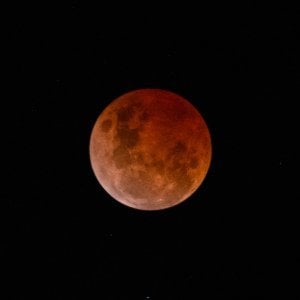
...stopped here for a few minutes while looking for a thread about some unusual behavior with a 5DMk3 while shooting the recent lunar eclipse [it was working sort of fine but acting abnormally in the way it was metering (I think)]; after switching lenses a couple of times it is back to normal (I hope).

In the meantime, a short eclipse .gif made using hand-held images collected with M6Mk2/70-300 IS II gear--still recovering from the midnight-3am effort:sleep::(:

211119 near total lunar eclipse.gif

My experience with third-party battery grips, batteries, and a/c adapter-battery replacement gizmos has been virtually 100% positive, using batteries and grips for Rebel XT (350D), 40D, 5DMk3; M, M2, M10, M6 and M6Mk2, and a/c adaptors for 40D, 5DMk3 and M6Mk2. Third-party batteries for Powershot ELPH 300, S90 and S95 (this is at least a decade ago) were not as reliable and subject to swelling. It is important to read reviews for these sorts of purchases...it would be far simpler to just buy Canon. I don't mind skimming reviews while reading/learning about a whole range of things along the way.

The a/c adaptor for the 40D enables its usage as a webcam for at-home Zoom teaching; when mated to a 17-55 2.8 IS EF-S lens, the set-up (with fifteen year-old gear) produces Zoom imagery far superior to most any webcam (or iPad/iPhone for that matter), with side-by-side comparisons (even within the compressed Zoom signal) revealing the abysmal dynamic range of most webcams.

=====

(Somewhat) off-topic: I do not recommend third-party ink for Canon's wide format ink-jet printers. Canon's ink & paper live quite nicely together, in terms of print longevity.

On the other hand, at least for the Canon laser printer listed below, third-party toner cartridges works very well...

=====

And completely off-topic (but related to 5DMk3 issues): any recommendations for shutter count software?

Thanks for reading.
Upvote 0

RF 14-35mm f/4L IS – Distortion Correction Testing

It seems like the EF 15-35 wins at the edges. But EF 14-35 is certainly "good enough". In addition to Gordon Liang's RF 16 f/2.8 video where he compares all there, there is this one showing the similar results between the RF 15-35 v RF 14-35.

But, looking at Neuro's and the images in this video, it isn't that the 14-35 is bad in the corners at 14-16 mm, just that the 15-35 is better.
Just be aware when looking at a comparison that the quality observed is relative to the quality of the other lens lens, and not necessarily an absolute perfect standard. Remember that the rating of the centre, mid, periphery and corners of a lens can be rated as excellent/outstanding, very good, good, fair and poor. We first need to know where the other lens sits on this scale to assess where its IQ sits on the scale. We can do this a bit more objectively than just say it looks fairly okay in the corners.

In Neuro's test, to my eyesight, the very the extreme corners of the RF 14-35 look soft compared to the EF 11-24 at 14mm f/4 and f/8 which looks quite clear. The difference can be seen in the edges of the bricks and mortar, which are more sharply and clearly defined, with better contrast in the EF lens images.

How clear is the EF 11-24 in absolute terms?

According to the extract from the Optical Limits review, at 14mm the center is 'outstanding' but the borders are just 'good' to 'very good', and the corners are only 'fair' at f/4, but when stopped down to f/5.6 the corners become sharp.

MTF (resolution) at 50 megapixels
The resolution characteristic varies substantially across the zoom range. Of course, the most difficult setting remains the 11mm setting. The center quality is absolutely stellar even at f/4. However, the borders/corners are soft here. The extreme corners show CAs with a width of up to 8 (!) pixels which has certainly also affected our tool here . Stopping down lifts the quality in the outer image region but not quite as much as you would have hoped. The best quality is reached at f/8 with good to very good borders and fair corners. At f/11 diffraction is already limiting the results.
The situation changes completely at 14mm and 18mm. The center remains outstanding but the borders/corners are MUCH better. The borders are good to very good at f/4 whereas the corners are fair here. However, the corners are boosted to sharp quality at f/5.6 already.
The performance goes a little downhill at 24mm again with softer results at f/4 and f/5.6 but f/8 is decent actually. The centering quality of the tested sample was good but not perfect.


If this evaluation is correct, then the comparison against the 11-24mm @ 14mm and f/4, which is only rated as 'fair' in the corners at these settings, shows that the 14-35mm can't match that, and in absolute terms, must be producing corners that would be rated less than 'fair'.

Whether that performance rates as 'good enough' for a particular individual's needs is a completely different matter.

Hope that provides some clarity in terms of absolute vs relative performance.
Upvote 0

Canon Professional Print and Layout issues with MacOS Monterey

That's interesting that it fell back to Adobe. Was that printing direct from adobe using the PP&L plugin or direct from PP&L?

The rep I spoke to insinuated this was an apple problem, so I've just been using my old computer in the interim. Not ideal, but at least the prints will keep moving for now.
I've got to be honest and say we tried so many combinations of PS-LR-PP&L and even Preview I couldn't tell you, I spent literally days reloading firmware etc etc. I do know the only way I could print borderless with the Pro-2000 at one point was to use an older version of PS.

The weirdest bit was when you got the 'preview' in PP&L it showed the print extending to the edge and you could adjust the overlap, just like normal, but when it actually printed it printed with a 0.25" border.
  • Like
Reactions: 1 user
Upvote 0

Filter

Forum statistics

Threads
37,274
Messages
967,098
Members
24,634
Latest member
Mcsnows

Gallery statistics

Categories
1
Albums
29
Uploaded media
353
Embedded media
1
Comments
25
Disk usage
982.4 MB