Problem on Face detection with 15-35mm RF 2.8
- EOS R
- 2 Replies
Thanks for the suggestion. That might clear up some of my issues with AF!
Upvote
0

Ha...sounds like you have one in hand. How warm would you say it gets compared to ~20 min of 8k video?I will take that bet, the grip gets warm shooting bursts. Nothing crazy but I sure do feel it more on my R5 then my R and RP. The CFexpress card, Processor and VRAM are all in the grip and it adds up quick to be a warm camera.
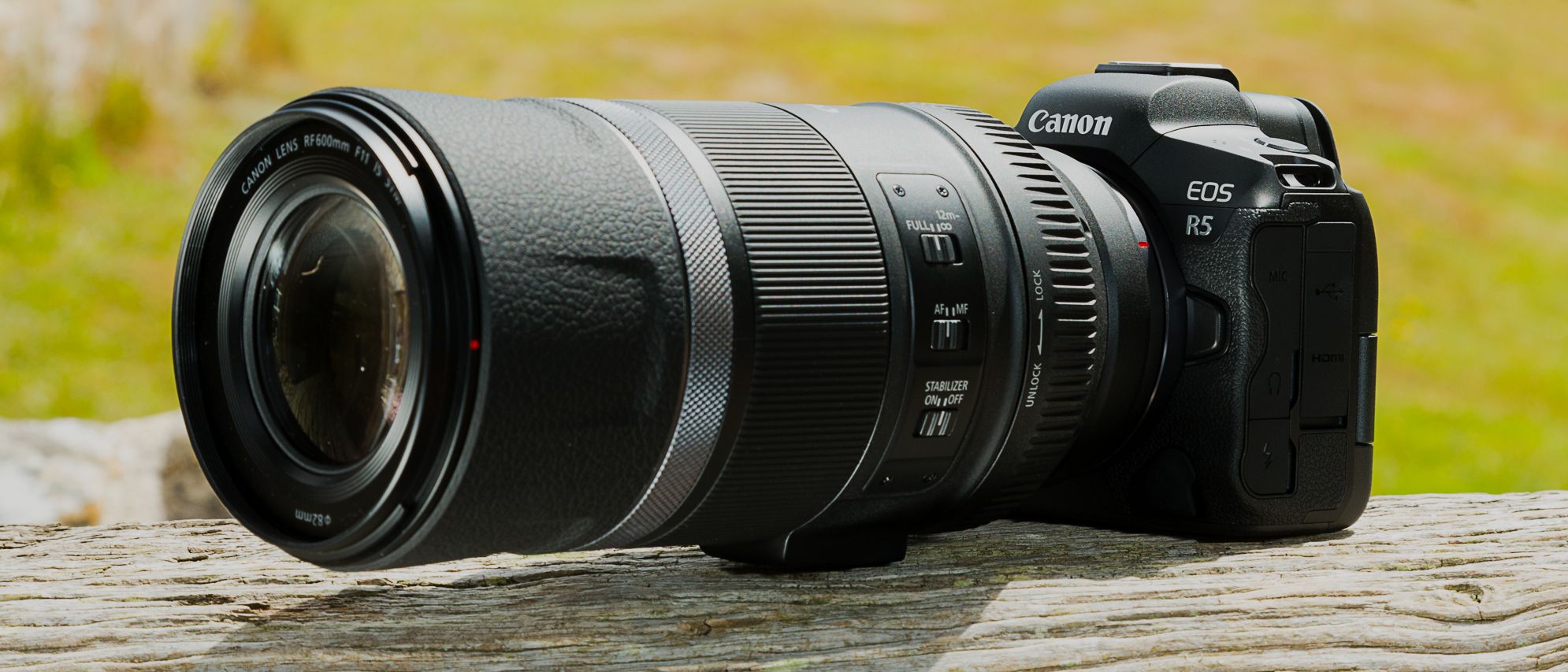
Took it to the zoo for a visit and was pleasantly surprised and happy with the results...does have it's limitations..but still great bang for the buck!How do you like the 600mm?
IBIS would need to be removed to enable any cooling of the sensor itself and I guess a heatpipe directly connected to the back of it to conduct heat somewhere external. The heat spreader to the tripod is at the back of the circuit boards if I follow Brian's teardown correctly. It isn't connected to the front spreader which is closest to the sensor, processors and card slots.Yes, it would make a fun project. But what would interest me is if they came out with a astronomy specific version of the camera (R5 or R6) - with different sensor filter and an add-on ability (by Canon or others) for a Peltier cooler through the tripod socket or additional bottom electrical interface, with 120/240V wall cord, or else DC cables to a big car or lithium battery(s).
I totally agree, the days of not so great wide lenses from Canon is a mantra from over 10 years ago and completely dispelled from the launch of the TS-e 17mm onwards. Going back the the EF lens history...Just to add to your innovation list here....Canon were in fact the first manufacturer to deliver a constant aperture 28-70 f2.8 (1993) then later a 24-70 f2.8 (2002 - pre digital). They also produced the first 80-200 f2.8 aka the magic drain pipe in 1989. it was the first constant f2.8 design. The more familiar 70-200 f2.8 (1995) and a 70-200 f2.8 LIS (2001). Both the original 24-70 f2.8 L and 70-200 f2.8 L were so revolutionary and so far ahead of the competition it look a long time for anyone else to even come close. When Nikon finally made their fantastic 24-70 f2.8 variant...it was a total rip off of Canon's novel design, although newer and sharper..but some 10 years later...what does one expect? In fact these two Canon lenses stayed in Canon's front line lens catalogue for a lot longer than any of the competition's...which point to how Canon innovates. They get it SO right...the first time.Which companies have delivered a...
A) 11-24mm f/4 zoom lens
B) 17mm f/4 tilt shift lens
C) 8-15mm f/4 fisheye zoom lens
D) 24-70mm f/2 zoom lens
On the way, could you also check how often do other companies' patents actually come out, and after how long? IIRC, it took Nikon ~7 years to come out with an ultra wide perspective control lens, and it isn't as wide as Canon's.
I posted some months ago that the viewfinder stutter was the biggest issue I had with the R and how I couldn't believe/understand how RF lenses would help compared to EF lenses. Well I now replaced my EF 24-105/4L with the RF version. Switching on high speed display with the RF lens now makes a big difference and I no longer consider this a major issue with this lens/camera combo.I'm confused by this thread. Universally the freeze frame/stutter of the R was universally panned. But a lot of people jumping in here to say that the blackout that replaced it is worse? I'm trying to understand that and just can't since blackout is more akin to a DSLR experience.
This is what someone would assume if reading only the specs.I assume the stepless aperture is for videographers, and the shift function is for architecture photographers. I do not presume to speak for either audiences, so I'll pass on any further comments.
The reviews of the 15mm Laowa are good examples why i prefer the experience of owners:the reviews you can read just as well as I do?
If you are refering to my click-baity title, it is just that. I have seen posts recently that had doubts about Canon's choice to put a 32 MP sensor in upcoming EF-M cameras. Of course more pixels will yield an improvement, but images are more convincing than words. And they also show the degree of improvement, which is dependend on the lens. So when I wanted to show how even a lowly EF-M prime can make great use of such a sensor, I discovered that TDP lens comparison tool doesn't feature the M6 II for the primes. So I thought this video was worth sharing for the skeptics, as it is the first such test I have seen with this lens and sensor.If a person is asking the question, I'd go elsewhere because they don't know how MTF works. Every component in a photography system can be assigned a MTF. Even film had a MTF. The electronics processing a digital signal can have a MTF.
The final result is always lower than the MTF of the weakest link, be it the lens, sensor, Monitor, printer or whatever is part of the system The final MTF is equal to the product of the individual MTF values.
So, given a lens MTF of 0.8 and a sensor MTF of 0.7, the system MTF is 0.56. Without changing the lens, increasing the resolution of the sensor to say 0.8 will increase the system MTF to 0.64 all using the same lens. Improving the sensor always improves the system MTF as does improving the lens, but a lens does not out resolve a sensor, thats nonsense.
I've looked at buying one of those but haven't pulled the trigger yet. I bought a Flashpoint Zoom Li-on R2 TTL On-Camera Flash Speedlight (V860II-C) to use as a small flash and really like it. With the popout batteries, it's easy to replace batteries and keep shooting. I typically use my AD360 which is 360 watt-seconds and reminds me of the old days with my Metz 202 potato mashers. That's the one thing I dislike on the AD360 is that it is heavy. If they would pull the capacitors and put them in the battery pack like the Metz, it would be much easier to use.If you can afford it, get a Godox V1. The round head makes beautiful light, and the flash can be charged via USB.
The accessory pack that you can buy has some very useful things in it that connect magnetically too.
Since getting one, I've basically stopped using my Canon flashes.
To give the option to look at all options but in the end I could not leave Canon. I had the RF 24-105 F4 and 35mm 1.8. Figured I would entertain 24-70 2.8 and/or 50mm 1.2 but in the end decided not to switch my lens setup. I did not know the lenses would be in short supply.If you were planning to stay within the R series, why did you sell your lenses?
A lens won't be softer on a higher MP camera, indeed it will often be sharper. But you will gain more with a sharpwr lens on a high MP camera.How can there be no loss of image quality using an old EF lens on a high resolution Mirrorless camera such as the R5? Wouldn’t certain glass that’s soft on a DSLR be just if not more soft on the R5?
I’ve never seen Canon refurbished sales in the UK. Have I been missing out?Maybe they can close the Canada store as well. No one ever buys there due toi the insane prices and the fact that they never do deals on useful stuff like they do in the US and UK. If they close the Canada store maybe we will finally be able to order from Canon US and get in on the deals. You have never been able to buy refurbed any thing in Canada for example. So when CR posts great deals on refurbed lenses for example the only effect it has is to piss me off because I know Canon will never allow Canadians to buy them. NAFTA never worked the way it was supposed to.