New Nikon 70-200 Fail

$2,800? LOL.

It remains to be seen whether this lens will meet, let alone beat the mighty Canon 70-200 2.8 II

Even if it has finally met it, it will do so at nearly $850 more. Ouch! $850 is a whole other premium pro lens.

Nikon "went full retard" (see Tropic Thunder) with the reversal of the zoom and focus rings, which will aggravate anyone who has a pro lineup of lenses. I can see wedding pros having a dandy time slinging a 24-70 and 70-200 with different zoom ring / focus ring positions.

I wonder if this lens has finally fixed the unacceptable focus-breathing issue of the VRII version? A 70-200 that only really does 70-135ish for headshots at $2,300 is a joke. Maybe this fixes that.

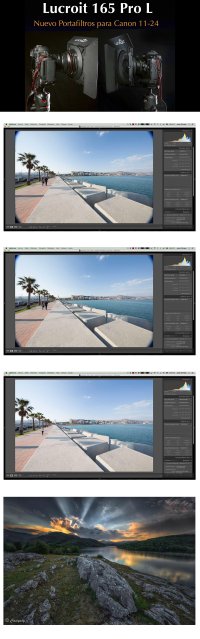
I suspect the optics will be solid. Sharp, clean, contrast, low distortion and all that. But again, at $2,800? We're not talking a special high end wide like the 11-24. This is a 70-200. That kind of money buys you a 11-24 which will open up options not possible with other glass.

Canon has for all intents and purposes, the perfect 70-200 and does it for just under $2,000, and $200 less when rebate season is on.

LensTip Review: Sigma A 12-24 mm f/4 DG HSM

Thar she blows:
http://www.lenstip.com/488.1-Lens_review-Sigma_A_12-24_mm_f_4_DG_HSM.html

  • Sharp, but not the 'Art sharp' we've come to expect -- the 11-24L outperforms it, esp. in the center of the frame
  • Coma is decent -- similar to the 11-24L
  • For the Sigma AF wary shopper, the autofocus did not miss (0%) in testing, but one would hope an ultrawide + slower lens should get this result. (Still, it's good to know.)

From what I've read (please correct me if I'm wrong), the new Sigma lacks the 11-24L's rear ND slot and it isn't weather sealed, but otherwise it looks a solid and affordable alternative to the 11-24L.

- A

Why Focus Peaking Would be Useful on a DSLR Camera

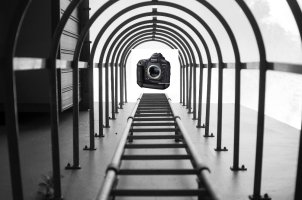
It seems that Canon's attitude is that they make autofocus lenses and for that reason they don't need focus peaking on their DSLR bodies. It seems that as far as EF mount lenses go, Canon's attitude is that they make no manual focus lenses.

However, that isn't entirely true. In fact there are several manual focus lenses on offer in their current catalogue, namely their tilt-shift lenses:

TS-E17mm F4L
TS-E24mm F3.5L II
TS-E45mm F2.8
TS-E90mm F2.8

I can imagine Canon's attitude here. You are meant to set them up on a tripod and use live view, zooming in to check your focus as you shoot architecture. The trouble is that this is hardly the only use for a tilt-shift lens. I belong amongst a growing number of people who use tilt-shift lenses for creative portraiture etc.

There are lots of articles on the subject:

https://www.slrlounge.com/creating-artistic-portraits-using-tilt-shift-lens/

https://fstoppers.com/review/my-new-favorite-lens-not-found-very-many-photographer-bags-3186

It is hardly a situation where you would want to be forced to set up on a tripod and use live view to focus. Nor would you want to use autofocus confirm, which just isn't accurate on this type of lens.

The best solution is to get some sort of guidance from focus peaking. While you can install it using Magic Lantern, this may invalidate any warrantee. My solution? Use a Metabones adapter and shoot with Canon tilt-shift lenses mounted on a Sony a7II, and use its native focus peaking ability. But I wish Canon didn't force me to do that. I would prefer to forgo the cumbersome adapter and mount my tilt-shift lenses on my 5DsR.

The bizarre thing is that the EOS M5 has focus peaking even though that mount has not had a single manual focus native lens released for it, whereas the EF mount has several.

That's not all. Canon make macro lenses too don't they? At least I seem to own a couple of them and they still list them in their catalogue. The Canon MP-E65mm macro is a manual focus only model as well bringing the number of manual focus native lenses up to five in their current catalogue. We all know that it's a pretty basic aspect of macro that it is often preferable to override the autofocus and focus manually because the depth of field gets so shallow. Focus peaking isn't perfect either, but it can act as a useful guide.

If Canon are utterly petrified that their users will abandon their native autofocus lenses in droves and replace them with Zeiss manual focus lenses instead, couldn't they at least make it so that the body recognises a native tilt-shift or macro lens and permit focus peaking to be activated only then? Even better if Canon would additionally allow the activation of focus magnification. Unless Canon want to restrict use of their tilt-shift lenses to architecture and landscape only? Don't they want to let people explore creative uses of Canon tilt-shift lenses so that they appeal to a wider audience?

I really wish that Canon wouldn't ignore niche users for trivial reasons and just put focus peaking into all of their bodies. Or maybe Canon want to encourage me to shoot more with my tilt-shift lenses adapted to my Sony? Sometimes, I just wonder...

Replacements for Einsteins: Elincrom? Profoto?

I've had a shocking month with my previously totally reliable PCB Einsteins. Three expensive failures inside a month. It's shattered my confidence in them. Luckily I have six of them so breakdowns while on jobs have been limited to annoying changeovers rather than ruining the shoot. I always take spare everything!

It's got me looking at alternatives. I'd get four heads initially. On the list being considered are:
Elinchrom ELC PRO 500 (looks good, premium price)
Elinchrom BRX 500 (half the price, what's missing?)
Profoto D1 500 Air (I dumped unreliable & heavy Profoto Compact 600's to get Einsteins)

Then there are dozens of Chinese alternatives which I don't know whether to trust or not.

Anyone been down this road? Whatever I get will be used solidly, carted from studio to locations and occasionally air-freighted. I don't necessarily need battery power, TTL or HSS. Fully manual is fine.

What I did love about the Einsteins is their huge power range, compact dimensions and light weight, not to mention low price and inexpensive modifiers. But reliability is paramount when your business depends on it.

-pw

Review: Canon EF 16-35mm f/2.8L III

HTML:
<p>Roger at Lensrentals.com has completed his bench test of the Canon EF 16-35mm f/2.8L III wide angle zoom lens. It looks like the lens performance is the new pinnacle for wide angle zoom lenses and you should probably go ahead and buy one!</p>
<p>From Roger:</p>
<blockquote><p>This summary is quick and simple. From a resolution standpoint, the <a href="http://www.lensrentals.com/rent/canon/lenses/wide-angle/canon-16-35mm-f2.8l-iii" target="_blank">Canon 16-35mm f/2.8 Mk III</a> is the best f/2.8 wide-angle zoom available. You might be better served with the f/4 IS and some money in your pocket. There are also some very good wide-angle f/2.8 zooms available from third party manufacturers that are a lot less expensive and might offer more bang-for-the-buck. But if your style of photography needs the highest resolution you can get with a wide-angle lens, well this is it. I don’t use a wide-angle zoom all that often, but when I do, it will be this one. <a href="https://www.lensrentals.com/blog/2016/10/canon-16-35mm-f2-8l-mark-iii-optical-bench-tests/">Read the full review</a></p></blockquote>
<p>It looks like the EF 16-35mm f/2.8L III is in stock across most retailers.</p>
<p>Canon EF 16-35mm f/2.8L III: <a href="https://www.bhphotovideo.com/c/product/1274708-REG/canon_ef_16_35mm_f_2_8l_iii.html/BI/2466/KBID/3296">B&H Photo</a> | <a href="http://amzn.to/2bPL0jq">Amazon</a> | <a href="http://www.adorama.com/CA16353.html?KBID=64393">Adorama</a> | <a href="http://bit.ly/2bkKGfQ">Canon Store</a> | <a href="https://mpex.com/canon-ef-16-35mm-f-2-8l-iii-lens.html?acc=3">Midwest Photo</a></p>
<span id="pty_trigger"></span>

Cold weather wide-angle re-hash

I have searched the threads and seen this issue danced around a bit... but not the exact issue discussed (as far as I could find).

I'm planning a trip to Trømso (northern Norway) in February 2017. I've got a handful of good-ish lens choices, but I'd like to hear what the group thinks. My main photographic goal at the time will be to photograph the (almost-everpresent) night sky if/when it's clear and the northern lights are active.

Of course, fast and wide are important. However, I think cold and moist are also a realistic concern. So with those factors in mind here's what we have available today.

  • 5Ds R: Really my only choice for main body. Seems a better option than the 7Dii for light capture, wide angle, resolution, etc.
  • Rokinon 14mm f/2.8: Would probably be the best option for combination of wide-angle, fast-ish lens, low-coma. But there's that pesky issue of lack of weather sealing. I would imagine I'd be putting myself in great danger of trashing my equipment in those conditions without a weather-sealed system.
  • 16-35mm f/2.8 L ii: We all know the issues with this lens. Good stopped down, not great wide open. It is weather sealed though!
  • 16-35mm f/4 L IS: Not fast, but weather sealed and relatively sharp wide open.
  • Sigma Art 24mm f/1.4: Again not weather sealed but a nice combination or relatively wide and quite fast.
  • 24-70mm f/2.8 L ii: Neither the widest nor the fastest lens of the bunch. But it's weather sealed, has good coma performance, and I swear my copy is the sharpest lens I own. It consistently amazes me how much detail I can get with this one on a tripod.

I've gone back and forth about upgrading to the 16-36mm f/2.8L iii. However, I'm really happy with the f/4 IS version that it seems like a much lower priority right now. Not ready to pull that trigger yet.

Anyway - I'd appreciate anyone's perspective on the best choice for this situation, taking both performance and equipment into consideration.

Speaking of weather-sealing. I hear the extreme cold makes the battery life decrease dramatically. I've got plenty of authentic Canon batteries to keep the camera going. But how to change the batteries without completely negating all that concern about keeping the camera weather-sealed? I'd appreciate any advice you may have on how to handle this.

Thanks as always!

Error 70 Message

Colleagues:
My well-used but very well cared-for 5D Mark 3 just spouted an 'error message 70.' I have done everything can think of: cleaned contacts, changed lenses, changed battery, cards, turned off/on several times.
Short of sending to CPS (I'm gold) does anyone have insight into this?
I have a 1Dx but I use both cameras daily.
Thank you for your time/suggestions.
If anyone wants to e mail me directly, feel free.

See addendum here, the next morning:

Thanks, each and all, for the error 70 suggestions.
I called CPS this morning and got excellent advice:
Since the error 70 message is triggered by an image defect, he suggested trying the cards one at a time, alone in the camera. So:
1. I took both cards out, turned camera on; the menu said it would not shoot without a card (which is of course how I set up the menu.) So far, so good.
2. I put in a different CF card. It worked.
3. I put in the same CF card. It worked.
4. I put in the SD card (alone); error 70. Camera unusable.
5. I put in a different SD card. It worked.
6. I put in new SD card and CF card. It worked.
So I think it is the original SD card.

A round of applause for Mill's Method of Concomitant Variation (and CPS!!)

The SD card is a Lexar Professional 64G 633X card, which, curiously, I have used for 3-4 months without any problems. So it all of a sudden got the vapors. I will have a chat with them.

Has anyone else experienced this with that type of Lexar card?

Thanks all, again.

Bali Indonesia - Island of the Gods

Hello everyone,

I wanted to share my most recent short film. This time focusing on the magical world of Bali Indonesia. This film was one of the lucky 10 minute films accepted into the San Diego Undersea Film Exhibition. It's got a good variety of dialogue, aerial shots, and of course underwater, macro and wide angle.

Curious to hear what your feedback is. Any constructive criticism is always appreciated.
Enjoy!

Dustin

https://www.youtube.com/watch?v=olydfi1BQQc

Wildlife Photographer of the Year 2016

The Natural History Museum, London, has anounced the "Wildlife Photographer of the Year2016".

The "Grand title winners":
http://www.nhm.ac.uk/visit/wpy/gallery/2016/index.html

The "Adult awards":
http://www.nhm.ac.uk/visit/wpy/gallery/2016/adult.html

The "Young awards":
http://www.nhm.ac.uk/visit/wpy/gallery/2016/young.html

The "Grand title winner", Dr. Tim Laman was working with EOS-1D C and EOS 5D Mark III,
which is stated in the Canon's CPN:
http://cpn.canon-europe.com/content/news/wildlife_photographer_of_the_year_2016_revealed.do?utm_source=newsletter_october_3_16&utm_medium=email&utm_campaign=Newsletter

Look through and enjoy the galeries. There are - once again - some great pictures, no matter what gear was used ;)

Review - Canon EF 16-35mm f/2.8L III Lens by TDP

HTML:
The-Digital-Picture has completed their review of the brand new Canon EF 16-35mm f/2.8L III. As you would expect from a latest generation Canon L zoom, the lens is a stellar performer and worthy of its hefty price tag.</p>
<p>From Bryan:</p>
<blockquote><p>The MTF charts predicted excellence in regards to 16-35 L III image quality and the good news is that I think you will find that expectation fully delivered. With a pair of Canon EF 16-35mm f/2.8L III USM Lenses going through formal and informal testing, we have not been left disappointed. This lens is absolutely razor sharp across the entire full frame sensor at 16mm f/2.8, showing very impressive resolution and contrast. Stopping down makes very little 16mm sharpness difference in the center of the plane of sharp focus. <a href="http://www.the-digital-picture.com/Reviews/Canon-EF-16-35mm-f-2.8L-III-USM-Lens.aspx">Read the full review</a></p></blockquote>
<p>The Canon EF 16-35mm f/2.8L III is in stock at most retailers listed below.</p>
<p>Canon EF 16-35mm f/2.8L III: <a href="https://www.bhphotovideo.com/c/product/1274708-REG/canon_ef_16_35mm_f_2_8l_iii.html/BI/2466/KBID/3296">B&H Photo</a> | <a href="http://amzn.to/2bPL0jq">Amazon</a> | <a href="http://www.adorama.com/CA16353.html?KBID=64393">Adorama</a> | <a href="http://bit.ly/2bkKGfQ">Canon Store</a> | <a href="https://mpex.com/canon-ef-16-35mm-f-2-8l-iii-lens.html?acc=3">Midwest Photo</a></p>
<span id="pty_trigger"></span>

Sigma Announces Cine High Speed Zoom Lens Pricing and Availability

HTML:
<em><span class="s1">Cine High Speed Zoom 18-35mm T2 and 50-100mm T2 lenses begin shipping on December 9 for a retail price of $3999.00 USD</span></em></p>
<p class="p2"><span class="s1"><strong>New York, NY – October 20, 2016</strong><b> –</b> <a href="http://sigma.cmail19.com/t/r-l-yhlitrg-dkikkjelh-e/"><span class="s2"><b>Sigma Corporation of America</b></span></a>, a leading DSLR lens, camera, flash and accessory manufacturer, announced today that <a href="http://sigma.cmail19.com/t/r-l-yhlitrg-dkikkjelh-s/"><span class="s2"><b>the Cine High Speed Zoom 18-35mm T2 and 50-100mm T2</b></span></a> lenses will begin shipping on December 9, 2016 for a retail price of $3999.00 USD. Born from the new Sigma Cine family of products, the High Speed Zoom lenses leverage the outstanding optical design of the company’s world-renowned Global Vision still photography lenses. Combined with the 100% new mechanical lens body design, the Cine lenses meet needs of advanced 6k and 8k cinema production with the core optical quality DNA that has defined the Sigma benchmark of imaging excellence.</span></p>
<p class="p2"><!--more--></p>
<p class="p2"><span class="s1"><strong>See the Sigma Cine Family of Products at PDN/PPE 2016 Expo</strong>

Demonstrated for the first time to the public in the United States, attendees to the 2016 PDN PhotoPlus International Conference + Expo (PPE), held at the Javits Convention Center in New York City from October 20-22, 2016, can see first-hand the new Sigma Cine family of lenses:</span></p>
<p class="p2"><span class="s3"><a href="http://sigma.cmail19.com/t/r-l-yhlitrg-dkikkjelh-g/"><b>Cine High Speed Zoom Line – 18-35mm T2 and 50-100mm T2</b></a></span><span class="s1">

The high speed zoom line, which is compatible with the Super35 image size standard, offers the constant aperture of T2 throughout the zoom range with superior optical performance that is capable of high-resolution 6K-8K shooting. Delivering the highest image quality in its class, the High Speed Zoom is ergonomically compact and designed for E, EF and PL camera system mounts.</span></p>
<p class="p2"><span class="s3"><a href="http://sigma.cmail19.com/t/r-l-yhlitrg-dkikkjelh-w/"><b>Cine FF Zoom Line – 24-35mm T2.2 FF</b></a></span><span class="s1">

Compatible with a full-frame image sensor, the FF Zoom’s outstanding optical performance also supports 6K-8K shooting. Because so few lenses cater to the requirements of the latest digital cinema cameras’ image sensors, this line provides a rare option for cinematographers. The FF Zoom is designed for E and EF camera system mounts.</span></p>
<p class="p2"><span class="s3"><a href="http://sigma.cmail19.com/t/r-l-yhlitrg-dkikkjelh-yd/"><b>Cine FF High Speed Prime Line – 20mm T1.5 FF, 24mm T1.5 FF, 35mm T1.5 FF, 50mm T1.5 FF and 85mm T1.5 FF</b></a></span><span class="s1">

The Cine High Speed Prime lineup features lenses ranging from 20mm to 85mm, with all five touting an aperture of T1.5. Highly compact and compatible with full-frame sensors, these lenses offer superior resolution. They bring a consistent level of light to the production, offering greater consistency to any film’s color, contrast and overall look before it enters post-production. The FF High Speed Prime line is designed for E, EF and PL camera system mounts.</span></p>
<p class="p2"><span class="s1">For more information on the Sigma Cine Lenses, please visit <a href="http://sigma.cmail19.com/t/r-l-yhlitrg-dkikkjelh-yh/"><span class="s2"><b>https://www.sigmaphoto.com/cinema-lenses/?link=Sept-M-cine</b></span></a>.</span></p>
<span id="pty_trigger"></span>

Leica Launches the Q in Titanium Gray

HTML:
<em>A perfect fusion of technology, design and style</em></p>
<p>Leica Camera has revealed the Leica Q ‘Titanium gray’, bringing a brand new, alternative design to its successful, high-performance compact camera, the Leica Q, which features a fixed fast prime lens and full-frame sensor.</p>
<p>In contrast to the discreet black of the body, lens and leather-style trim of the original Leica Q, this stunning new model offers a titanium grey paint finish on the top and base plate and back of the camera, combining the premium look of precious metal with classic black elements.</p>
<p>Elegant, yet extremely durable, the Leica Q ‘Titanium gray’ includes a series of striking design features not found on the standard model. For example, the distance scale in feet and the focal length on the lens are highlighted in red. Furthermore, the colour-coordinated carrying strap supplied with the camera has been manufactured from strong, robust material most commonly used to make climbing ropes.</p>
<p>Offering the same impressive performance and technical specifications of the black Leica Q model, the Leica Q ‘Titanium gray’ features intuitive handling and an exceptionally fast lens. The perfect camera for street, architectural and landscape photography, its Leica Summilux 28mm f/1.7 ASPH. lens makes the Leica Q ideal for available light shooting and has an angle of view that reproduces scenes with natural perspectives and proportions.</p>
<p><!--more--></p>
<p>With a 24 MP, full-frame CMOS sensor precisely matched to its lens, the Leica Q ‘Titanium gray’ delivers richly detailed exposures with low noise at optimum quality, at ISO sensitivities of up to 50,000. This outstanding camera allows the greatest possible creative freedom for even the most demanding photographic ambitions, enabling the photographer to switch effortlessly between macro, automatic and manual focusing.</p>
<p>Ensuring the decisive moment is never missed, the Leica Q full-frame compact camera has the fastest autofocus in its class and offers precision focusing almost in real-time. Furthermore, its Leica ultra-fast Maestro II image processor enables continuous shooting at up to ten frames per second at full resolution. Allowing reliable control of subject composition at this speed, the Leica Q also features an integrated viewfinder with a resolution of 3.68 MP – displaying even the finest details without any perceptible lag, as soon as the camera is brought up to the user’s eye.</p>
<p>All functions of the camera are clearly laid out and logically placed, making it exceptionally ergonomic to use. The clear and logical menu provides rapid access to all essential functions and also enables photographers to programme their own personalised settings.</p>
<p>In addition, the Leica Q delivers movie recording in full-HD quality. Depending on the scene and subject, users can choose between 30 and 60 full frames per second for video recording in MP4 format. The camera also features an integrated Wi-Fi module for wireless transmission of still pictures and video to other devices, and remote control by WLAN from a smartphone or tablet.</p>
<p>The Leica Q app enabling these features can be downloaded free of charge from the Leica web site. As well as providing a remote release function and display of the viewfinder image, the app also allows the setting of parameters such as aperture and shutter speed from the device employed.</p>
<p>Full product specifications can be found at: uk.leica-camera.com.</p>
<p>Pricing and availability</p>
<p>The Leica Q ‘Titanium gray’ is scheduled to be available from mid-November 2016, at a suggested retail price of £3,800 including VAT.</p>
<span id="pty_trigger"></span>

The Return of a Classic: Leica Announces Summaron-M 28mm f/5.6

HTML:
<p><strong>October 19, 2016</strong> – With the Leica Summaron-M 28 mm f/5.6, Leica Camera expands the lens portfolio of the Leica M rangefinder system with the modern reincarnation of a classic Leica lens. First introduced as a screw mount lens in 1955, the predecessor of this new lens is still one of the most compact wide-angle lenses in the Leica M-System and is famed for its characteristic visual signature. The new Summaron-M 28 mm f/5.6 takes its lead from the classically compact construction of its ancestor and brings the unique, analog look of its pictures into the age of digital photography.</p>
<p>The optical design and mechanical construction of the Summaron-M 28 mm f/5.6 are identical to those of its predecessor, which was manufactured at the Leitz factory in Wetzlar until 1963. The perfect fusion of the latest optical developments, such as the highest quality finishing and manufacturing techniques, with this classic optical design make this new edition of the Summaron-M 28 mm f/5.6 much more than a reconstruction of an existing lens. While only slightly modernizing the shape and design of the lens, the new version of the Summaron-M 28 mm f/5.6 is reduced to the essentials but loses none of the character of its legendary ancestor. Its exceptionally short length of less than two centimeters makes it incredibly unobtrusive, and together with the inherent unassuming nature of a Leica M it is an ideal lens for street photography. The combination of a clearly laid out depth of field scale and long focus throw allow for very precise and easy zone focusing.</p>
<p><!--more--></p>
<p>The optical design of 6 elements in 4 groups, arranged symmetrically around the iris of the new Leica Summaron-M 28 mm f/5.6, is identical to that of its ancestor. The historic optical design of the original lens has remained completely unchanged. When shot at wide-open aperture, the new Leica Summaron-M 28 mm f/5.6 renders subjects with rich contrast across nearly the entire image field. The combination of a large depth of field, natural contrast rendition, excellent resolution of details and a slight visible vignetting create a unique visual signature, and lend pictures a special classic look reminiscent of earlier days of analog photography.</p>
<p>The outward appearance of the new Leica Summaron-M 28 mm f/5.6 has been harmonized with the contemporary look and mechanics of the current portfolio of Leica M-Lenses. This is exemplified in the Leica M bayonet mount with 6-bit coding, the shape of the focusing lock button, the diameter of the aperture ring and the style of the knurling on the barrel and rings. The style and construction of the lens hood reflects the original, and recalls memories of the beginnings of rangefinder photography. It is machined from solid brass and finished in an elaborate manufacturing process.</p>
<p>As is the case for all other Leica lenses, the Leica Summaron-M 28 mm f/5.6 was designed and developed by the precision engineers and optical specialists in Wetzlar. As a product made to stand the test of time with enduring value, the lens is made in Germany from only the finest materials, and assembled entirely by hand. The combination of cutting-edge technologies and painstaking manufacturing processes guarantees consistently excellent quality and long-lasting reliability.</p>
<p>Customers wishing to purchase a Leica Summaron-M 28 mm f/5.6 lens must place a pre-order with a Leica Store, Boutique or Dealer. Deliveries will follow according to the sequence in which the orders are received. Due to the strong demand, long delivery times must be taken into account, especially in the first few months.</p>
<span id="pty_trigger"></span>

Filter

Forum statistics

Threads
37,439
Messages
973,575
Members
24,805
Latest member
chrisgphoto

Gallery statistics

Categories
1
Albums
29
Uploaded media
372
Embedded media
1
Comments
25
Disk usage
1 GB