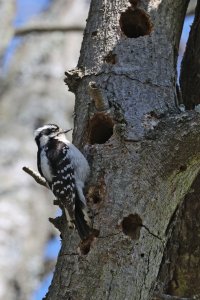
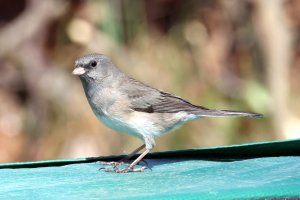
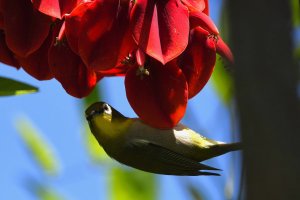
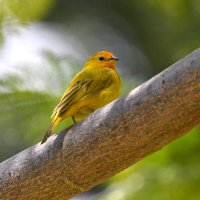
Show your Bird Portraits

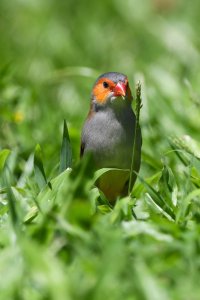
Long story short: I was planing to go today on the other side of the Island but landed in Waikiki: decided to give one more chance to the Orange-Cheeked Waxbil (last seen 2025.12.31! Few more attempts later were unsuccessful) before I check it "eventually lost". It was there!!
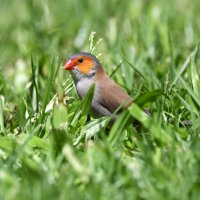
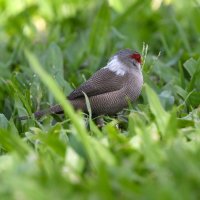
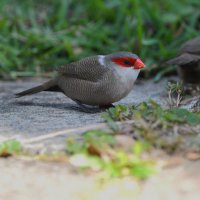
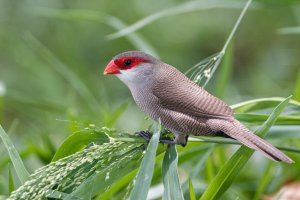
Took some photos but my attention got on another Waxbill (for sure the Common Waxbill but "strange"!). I took bunch of photos to document the bird, posting just two.

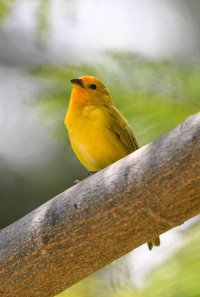
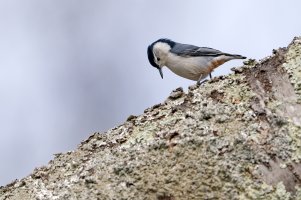
Starting with photos of Japanese White Eye and Saffron Finch. The last photo is how the Common Waxbill should look.

DSC_2156.jpgDSC_2199.jpgDSC_2240.jpgDSC_2356.jpgDSC_2445.jpgDSC_2548.jpgDSC_2667.jpg
DSC_0856_DxO.jpg
 
  • Like
Reactions: 9 users
Upvote 0
Nice photos! Avilist considers American and Eurasian Teals to be subspecies of the Green-winged Teal.
On many such international forums the politics are directed by those who are on the top and dictate the money flow.

The main scientific argument against the Teals being two different species is the "high gene flow". In the same time there are species that are preserved by humans from the same "high gene flow" - to preserve their species integrity. In other words the science is acknowledging their single species identity!
From my point of view the "gene flow" between the Eurasian and the Green-winged Teals is a secondary factor and the reason for this is the character of the mitochondria - with their often circular DNA that is like the bacterial (for me it looks like an ancestral difference!!!)! In other words the mtDNA differences are more significant for me. If there is a secondary, species unifying "gene flow" that is polluting the original genome DNA - it's a different question!
 
Upvote 0
On many such international forums the politics are directed by those who are on the top and dictate the money flow.

The main scientific argument against the Teals being two different species is the "high gene flow". In the same time there are species that are preserved by humans from the same "high gene flow" - to preserve their species integrity. In other words the science is acknowledging their single species identity!
From my point of view the "gene flow" between the Eurasian and the Green-winged Teals is a secondary factor and the reason for this is the character of the mitochondria - with their often circular DNA that is like the bacterial (for me it looks like an ancestral difference!!!)! In other words the mtDNA differences are more significant for me. If there is a secondary, species unifying "gene flow" that is polluting the original genome DNA - it's a different question!
Their genetics is really interesting. You are right, the US Green Teal mitochondrial DNA differs from the European Common Teal by a massive 5.9%. So, the maternal line, down which the the mitochondrial DNA passes, is very different, having diverged some 2.6 million years ago. The nuclear DNAs are much more similar, like 99.7% the same. This may be due to the females always going back to the same place to breed whereas the males travel widely to mate. Interestingly, birds are the opposite of humans for sex linked chromosomes. Whereas human men are XY and women YY, male birds are ZZ and females WZ.

 
  • Like
Reactions: 1 user
Upvote 0
Long story short: I was planing to go today on the other side of the Island but landed in Waikiki: decided to give one more chance to the Orange-Cheeked Waxbil (last seen 2025.12.31! Few more attempts later were unsuccessful) before I check it "eventually lost". It was there!!
Took some photos but my attention got on another Waxbill (for sure the Common Waxbill but "strange"!). I took bunch of photos to document the bird, posting just two.

Starting with photos of Japanese White Eye and Saffron Finch. The last photo is how the Common Waxbill should look.

a025.gif


I really like your series. Well done, Isv.
 
  • Like
Reactions: 1 user
Upvote 0
Long story short: I was planing to go today on the other side of the Island but landed in Waikiki: decided to give one more chance to the Orange-Cheeked Waxbil (last seen 2025.12.31! Few more attempts later were unsuccessful) before I check it "eventually lost". It was there!!
Took some photos but my attention got on another Waxbill (for sure the Common Waxbill but "strange"!). I took bunch of photos to document the bird, posting just two.

Starting with photos of Japanese White Eye and Saffron Finch. The last photo is how the Common Waxbill should look.

View attachment 228653View attachment 228654View attachment 228655View attachment 228656View attachment 228657View attachment 228658View attachment 228659
View attachment 228660
Nice photos! Where in Waikiki did you see the Orange-Cheeked Waxbill?
 
Upvote 0
Upvote 0
Great pics! :)

Btw: What is your experience with the R5(ii) + RF 200-800mm combo? I´d really like to know what your experience is. Maybe compared to the RF 100-500mm? :) thx in advance!
I tested carefully the RF 200-800mm vs 100-500mm on the R5, and since then found the AF of the RF 200-800mm is significantly improved on the R5ii so it is fast and reliable at 800mm.
and earlier threads, linked within.
 
  • Like
Reactions: 1 user
Upvote 0
Nice photos! Where in Waikiki did you see the Orange-Cheeked Waxbill?
Most of the tourists know the Ford DeRussy Park in Waikiki. Across the street against that park is situated the Ainahau triangle (big grass field) and next to it is the Brothers in Valor Memorial - also a grass field, small. It's where You have to look for flock(s) of Common Waxbills. The Orange-cheeked is between them.
Look for a red rump and off course for that orange cheeks.
 
Upvote 0
Their genetics is really interesting. You are right, the US Green Teal mitochondrial DNA differs from the European Common Teal by a massive 5.9%. So, the maternal line, down which the the mitochondrial DNA passes, is very different, having diverged some 2.6 million years ago. The nuclear DNAs are much more similar, like 99.7% the same. This may be due to the females always going back to the same place to breed whereas the males travel widely to mate. Interestingly, birds are the opposite of humans for sex linked chromosomes. Whereas human men are XY and women YY, male birds are ZZ and females WZ.
The similarity of the protein coding DNA of the Humans and Mouse is about 85%. Taken the entire genome DNA (incl. non protein codding DNA) similarity is ~50%. It looks like the mouse is 85% Human :p. And yes, I'm suppose to know that it's all about the regulation (aka non-protein codding DNA).
 
  • Like
Reactions: 1 user
Upvote 0
Thank you very much. I'll be on Oahu this week and will definitely check out that area.
Most of the tourists know the Ford DeRussy Park in Waikiki. Across the street against that park is situated the Ainahau triangle (big grass field) and next to it is the Brothers in Valor Memorial - also a grass field, small. It's where You have to look for flock(s) of Common Waxbills. The Orange-cheeked is between them.
Look for a red rump and off course for that orange cheeks.
 
Upvote 0