Show your Bird Portraits

Their genetics is really interesting. You are right, the US Green Teal mitochondrial DNA differs from the European Common Teal by a massive 5.9%. So, the maternal line, down which the the mitochondrial DNA passes, is very different, having diverged some 2.6 million years ago. The nuclear DNAs are much more similar, like 99.7% the same. This may be due to the females always going back to the same place to breed whereas the males travel widely to mate. Interestingly, birds are the opposite of humans for sex linked chromosomes. Whereas human men are XY and women YY, male birds are ZZ and females WZ.
Women have XX chromosomes, no body can survive without at lest one X chromosome. YY without X is not survival. I'm pretty sure you know this - need extra coffee:)?
 
Upvote 0
Thank you very much. I'll be on Oahu this week and will definitely check out that area.
Look for the Brothers in Valor Memorial on the map of Waikiki. And take your time to look carefully in the flocks of Common Waxbill. The Orange-cheeked Waxbill is a single bird between 10-30 Commons. In the grass it takes time to see it!
 
  • Like
Reactions: 1 user
Upvote 0
I tested carefully the RF 200-800mm vs 100-500mm on the R5, and since then found the AF of the RF 200-800mm is significantly improved on the R5ii so it is fast and reliable at 800mm.
and earlier threads, linked within.
Thx you very much for these comparisons! Seems like the RF 200-800mm is a very good option for the R5.
 
Upvote 0
Thx you very much for these comparisons! Seems like the RF 200-800mm is a very good option for the R5.
It's my go-to lens for birding, but I keep my RF 100-500mm as it smaller and lighter and still has an edge if I am just doing BIF. The RF 200-800mm has been adopted by lots of us here as the extra native 300mm makes a real difference, and is good enough for most BIF. (For fast BIFs, I usually zoom out to 500mm anyway. I got some good flying Puffin shots with the RF 200-800mm on the R5 at 500mm, and they are not easy).
 
  • Like
Reactions: 1 user
Upvote 0
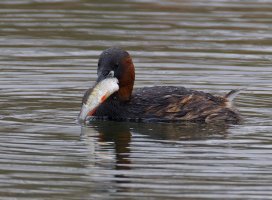
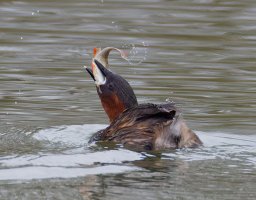
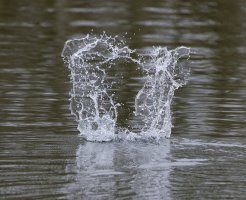
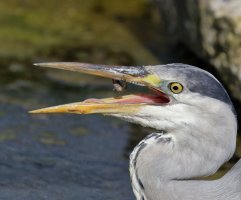
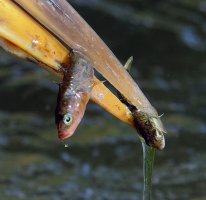
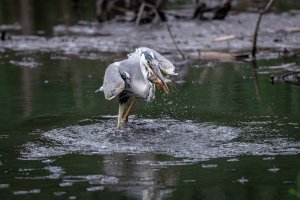
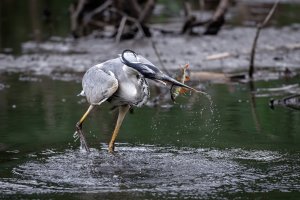
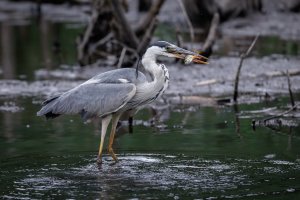
A Little Grebe was trying to swallow a fish that was too large. It bit off its head, a gull swooped to steal the fish, and the Grebe dived faster than a U-boat (R5ii + RF 200-800mm).

View attachment 228683View attachment 228684View attachment 228685
Nice photos/story with happy ending :). I don't like the gulls when they behave like kleptoparasites! On other hand I have a lot of fun watching videos of them stilling from people on the beech:ROFLMAO:
 
Upvote 0
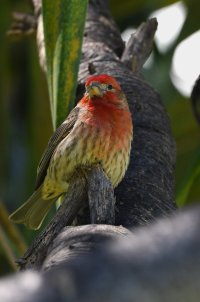
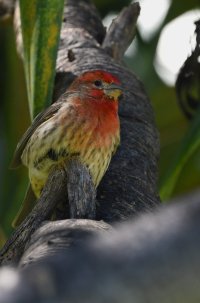
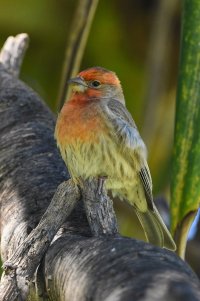
I don't know if @foda has success with the Orange-cheeked Waxbill but today I didn't (~40 min. searching). Took just few photos of House finch (two different males separable not only by the color: different amounts of dirt on the bill :)! They did choose the same broken branch for posing. I still have no photo of House finch with yellow instead of orange/red colors on the head, despite seen few!

DSC_2702.jpgDSC_2706.jpgDSC_2790.jpg
 
  • Like
  • Love
Reactions: 9 users
Upvote 0
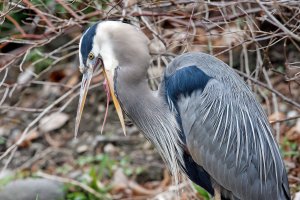
If you like GBH tongues...

view


EOS 1D X II, EF 500mm f/4L IS II USM
 
Last edited:
  • Like
Reactions: 7 users
Upvote 0
Great pics! :)

Btw: What is your experience with the R5(ii) + RF 200-800mm combo? I´d really like to know what your experience is. Maybe compared to the RF 100-500mm? :) thx in advance!
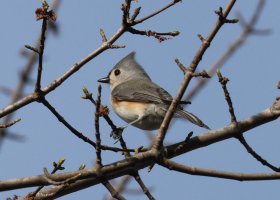
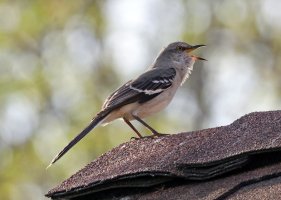
Here are cropped images acquired the other day with the R5ii + 200-800@800 combination.

The first one (tufted titmouse) was quite far away--the range offered by the 800 was valuable here in the unedited image below:

K41A3648 picasa crop.JPG

I did edit/pretty up the image for the Northern Mockingbird a bit (I kind like the lighting). The 800 range here is useful because I like to print these at 13x19 and need all the pixels I can get.

K41A3800 picasa 2 crop-topaz2-denoise ps fix.jpg

I like the 200-800 lens. A lot. Your question here has so many dimensions. In a sense, what you are asking (primarily) is...are there particular situations where the extra reach (to 800) is valuable?

For me, the extra reach is valuable (sometimes ;)).

But I never owned the R5 nor do I own the RF 100-500; there are many comparisons on this site between the 200-800 and 100-500...

Also, I rely on an adapted EF 100-400 II when appropriate (instead of the RF 100-500).

I also own (and use) the very good RF 100-400.

=====

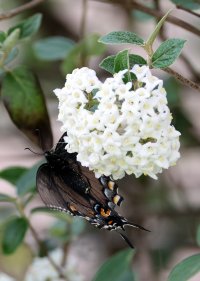
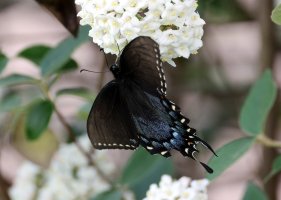
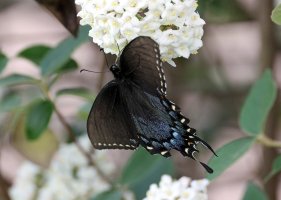
Two butterfly R5ii + 200-800@800 straight out of camera jpegs (but cropped) are here:


If/when you purchase the 200-800, you can post your own thoughts and comparisons!
 
Last edited:
  • Like
Reactions: 4 users
Upvote 0
Here are cropped images acquired the other day with the R5ii + 200-800@800 combination.

The first one (tufted titmouse) was quite far away--the range offered by the 800 was valuable here in the unedited image below:

View attachment 228726

I did edit/pretty up the image for the Northern Mockingbird a bit (I kind like the lighting). The 800 range here is useful because I like to print these at 13x19 and need all the pixels I can get.

View attachment 228727

I like the 200-800 lens. A lot. Your question here has so many dimensions. In a sense, what you are asking (primarily) is...are there particular situations where the extra reach (to 800) is valuable?

For me, the extra reach is valuable (sometimes ;)).

But I never owned the R5 nor do I own the RF 100-500; there are many comparisons on this site between the 200-800 and 100-500...

Also, I rely on an adapted EF 100-400 II when appropriate (instead of the RF 100-500).

I also own (and use) the very good RF 100-400.

=====

Two butterfly R5ii + 200-800@800 straight out of camera jpegs (but cropped) are here:


If/when you purchase the 200-800, you can post your own thoughts and comparisons!
I do a lot of butterfly and dragonfly photography and much prefer the RF 100-500mm for that, or even the RF 100-400mm (or adapted EF 100-400mm for you), unlike for birds where I prefer the RF 200-800mm. The best shots are when you are close up, and you can get to about 1.2-1.1 meter away with the 100-500mm and 100-400mm, with magnifications of ~0.3x and ~0.4x, respectively. The mfd of the 200-800mm at 800mm is 3.3m and you get much less magnification, and have to zoom out to get closer and boost the magnification. It's relatively infrequent that you can't get close, and some of the keen ones use macro lenses. With the 100-400 and 100-500mm, you can get sufficiently close to dragonflies to resolve the individual lenses on their eyes, and I've never been able to do that with the 200-800mm. Even better is that the RF 100-500 takes the 2xTC well and you can get ~0.6x magnification at 1000mm.
 
Upvote 0