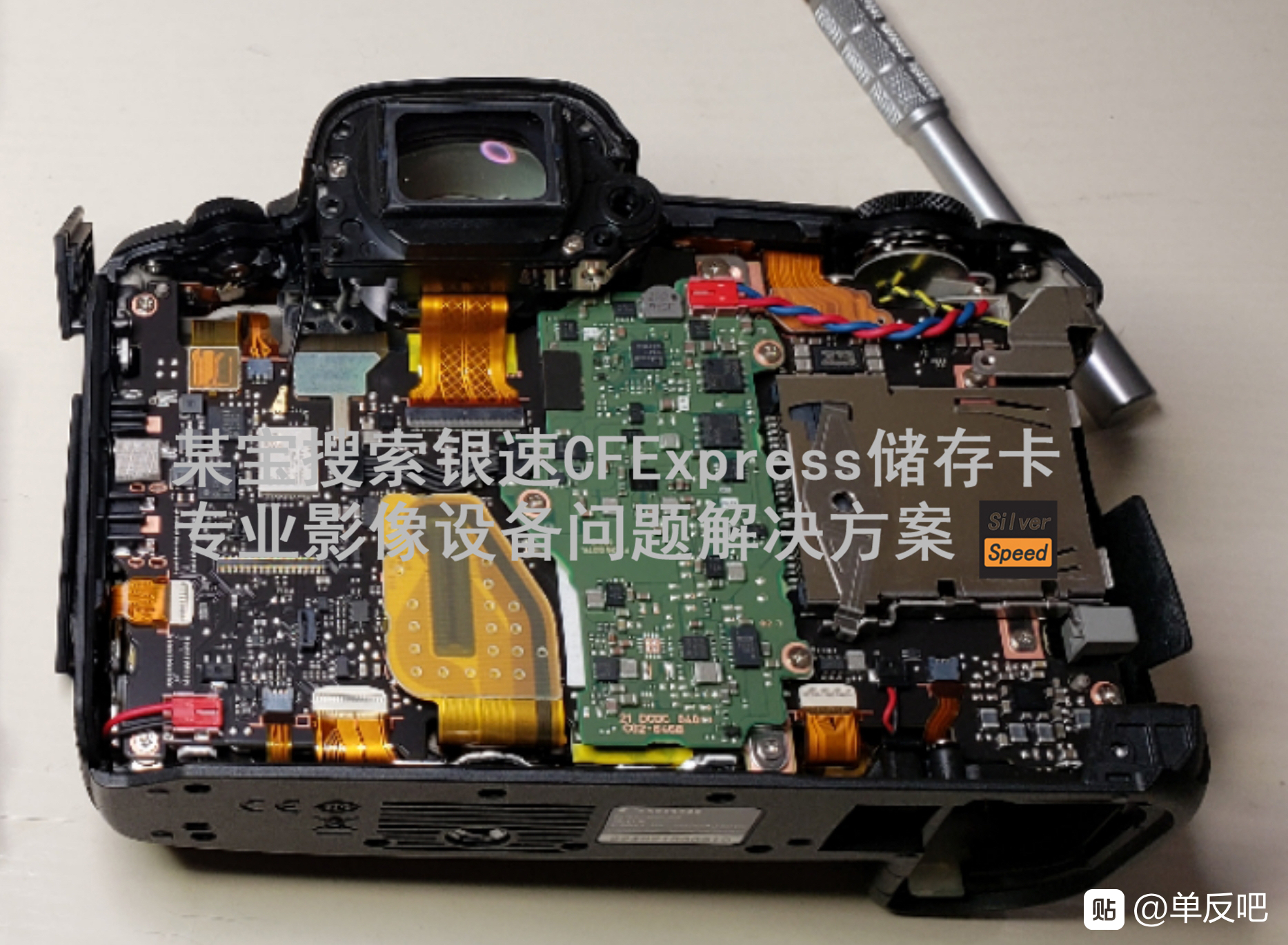
Teardown: The Canon EOS R5 gets an autopsy

That is just a link to the same table, it isn't a link to a copy of the manual you say is now missing. I'm sorry but you are just making this stuff up.
No, post 228 does not have the table. 228 is what I said to look at (not 229). It's a link to someone else saying he cannot find it anymore. My point is I AM NOT THE ONE that started saying/asking if it is missing. Sorry you got off the wrong side of the bed.
 
Upvote 0
Upvote 0
For those that want the first R5 manual, document CT2-D091-A you can find it here


For those that want to compare it to RevB you can find that that document CT2-D091-B pretty much anywhere.

@Baron_Karza, you are going across multiple threads making false and incorrect accusations. The chart, or something similar, was never in either version of the manual, so IT HAS NOT BEEN TAKEN OUT! Whether you started it or not you are the one perpetuating it across threads, what you are saying it is not true.

If you want to continue I'd suggest you find the table in the first manual to prove it, or something similar, is/was there, I gave you the link.
 
Upvote 0
Woke up to hysterical ranting in some parts.. decided to come here.

I wrote up my thoughts on all this. I don't think it's as simple as some are attempting to make it out to be.


Ya, that might be the combination of all factors.
Just want to add something, which he mentioned in the post later. " he was recording 15 minutes of 8K without the overheating sign. He shut off the camera and rest for 10 minutes, and then was able to record 8K until his 512G CFE is filled ( 27 minutes of recording)"
 
  • Like
Reactions: 1 user
Upvote 0
Do you own the R5?

I do. It’s exactly what I wanted. I wanted my 5Dmkiv to be as big as my EOS R. I expect this to be as reliable as all my 5D’s.


Poor/mediocre cooling certainly does not promote longvity.

This is a photography tool first. Look at the sensor resolution, shutter speed, and photography features. Canon has a cinema line. In order to keep this at budget as a midrange professional camera, the engineers avoided exotic and unproven cooling techniques that would be required to keep this weather sealed.

When it hits a safety limit, the camera shuts off to protect the longevity of the sensor and components. I expect to get 4-5 years without a major issue, unacceptable hot pixels, or performance degradation.

I’m excited to have a lightweight professional body I can use in hot and humid environments for art prints. If I wanted to shoot primarily video, I would pick up a cinema body. I’m excited to mix in some BTS with my photography work. This is a stellar tool.
 
Last edited:
  • Like
  • Love
Reactions: 4 users
Upvote 0
For those that want the first R5 manual, document CT2-D091-A you can find it here


For those that want to compare it to RevB you can find that that document CT2-D091-B pretty much anywhere.

@Baron_Karza, you are going across multiple threads making false and incorrect accusations. The chart, or something similar, was never in either version of the manual, so IT HAS NOT BEEN TAKEN OUT! Whether you started it or not you are the one perpetuating it across threads, what you are saying it is not true.

If you want to continue I'd suggest you find the table in the first manual to prove it, or something similar, is/was there, I gave you the link.


The CONTENT is still THERE! Look at the very last 2 bullets on page 902. It doesn't cover all modes, but 8K and 4K60.

WTF would I want to make up stuff like that? Don't understand why you keep arguing with me and you keep getting so mad. Having a bad day I guess. WTF did I ever do to you.
 
Upvote 0
The CONTENT is still THERE! Look at the very last 2 bullets on page 902. It doesn't cover all modes, but 8K and 4K60.

WTF would I want to make up stuff like that? Don't understand why you keep arguing with me and you keep getting so mad. Having a bad day I guess. WTF did I ever do to you.
What a complete croc, you said "the table similar to this DPR table is what is now gone". Now you are saying bullet points that are still there were there? Listen to yourself, just listen to yourself...
 
Upvote 0
If the shutdown temp is in fact 104 degrees at the key components, that's not an issue.
you want to grip tightly 104 degree'ed metal? and i doubt it's that high. the EU is apparently legislating a far lower external temperature on equipment.

Oh you are talking 104F .. which of course no one in the world uses really.

that's40 degrees.

" A burn is damage to your skin caused by a temperature as low as 44 degrees Celsius (109.4 Fahrenheit) for a long time. "

so if thermally the outside temp gets above 40 degrees it's a problem.
 
Last edited:
  • Like
Reactions: 1 user
Upvote 0
it would work if you weren't concerned about people getting burned.

put the heat pipes to places where you don't grip like the bottom of the camera (laptops get much hotter and I don't see people making a fuzz over it) and you can create more surface area at the bottom using slots (fins)

With heat pipes, you remove heat much better from the component, and with an all-metal body, you can dissipate to the exterior.
 
  • Like
Reactions: 1 users
Upvote 0
put the heat pipes to places where you don't grip like the bottom of the camera (laptops get much hotter and I don't see people making a fuzz over it) and you can create more surface area at the bottom using slots (fins)

With heat pipes, you remove heat much better from the component, and with an all-metal body, you can dissipate to the exterior.

heat pipe works if you don't have a sealed enclosed space. otherwise, it's just another radiator inside of the camera.

again, size, weight etc is a criteria for a stills camera, that shoots video as well.

because of thermal conductivity with a solid metal and the relative size of a camera, it's unlikely if you sink to any one area versus another it's going to make a dramatic difference.

this isn't a computer, it's not a laptop. they have fans. you don't grip hard on them for hours on end. if you did you'd get burned. especially if they didn't have active ventilation.
 
  • Like
Reactions: 1 user
Upvote 0
put the heat pipes to places where you don't grip like the bottom of the camera (laptops get much hotter and I don't see people making a fuzz over it) and you can create more surface area at the bottom using slots (fins)

With heat pipes, you remove heat much better from the component, and with an all-metal body, you can dissipate to the exterior.
This is actually totally sensible solution. Anything under 50C is not hot to touch. Is warm to hot but not burning. Attaching an L-plate with fins will further assist cooling down camera faster if heat was directed to the bottom plate.
 
  • Like
Reactions: 1 user
Upvote 0