
5DS-R DR test on DPReview

AmselAdans said:
Sporgon said:
[...]The third one is how I would present this as a picture in terms of exposure balance. There is no noise etc etc. I post this to show how much a two stop lift is in reality.

Sorry for digging up this old post, but there is something that bothers me since you provided this example shot, Sporgon. As you write, this third image (seen below) is the picture as you would represent it with an balanced exposure.

It is just me, or doesn't this look completely off in the foreground? It has this weird "HDR look", where something just doesn't seem right.

As I often visit your website just to gaze in awe at your work, I wonder, if you really would post-process that picture this way, if it was intended to be sold (of course, as this is a pure example shot about exposure, I explicitely do not consider composition). Is this the adjustment at which the picture looks best in terms of exposure in your opinion? If not, what would it look like then?
(I think, my confusion might result from misunderstanding what "balanced exposure" actually means...)

You are absolutely right; I'd never want to produce a picture like that. I shot that as an exercise to see how far I could go, and I would never shoot into a clear sun at that angle unless I was wanting a silhouette of anything in the foreground. It does look like a weird HDR, but that was the point really; even when holding the (very bottom of) the direct sun in a picture even a two stop lift gives an 'HDR' effect, and you can lighten shadows more than the vast majority of people (with any taste whatsoever) would want.

My comment on a 'balanced exposure' was directed at the fact that even if I wanted to see full detail in the gatepost I'd be coming down from the two stop lift anyway, so apologies for that. It was all done in the context of the DPR six stop lift, which I consider to be a totally academic exercise.

The only picture that I can think of that I have shot straight into the sun is the Flamborough Head one, but this was literally just after sunrise, there was a sea fret (mist) and it's a double exposure anyway.

To get the most range out of the Canon sensor I have found that you do need to push to the very limit of highlight recording, and this does mean that you have to be within half a stop right - in fact one third if possible if you are going to want shadow detail in a scene which has an EV range of around 12 stops.

Thanks for your comments !
 
Upvote 0
Marsu42 said:
Unfortunately some apps, including Lightroom, don't really seem to be optimized for a shot filling the histogram

Don't want to put the cat among the pigeons, but when dealing with a raw file that is of a maximum contrast scene I prefer to convert using DPP, (ensuring everything is set to zero, including in the back where it will carry forward the jpeg 'picture style' by default unless un-checked).

I find ARC can be too aggressive in its default profile for this type of scene.
 
Upvote 0
meywd said:
jrista said:
meywd said:
I am sorry so that last one has shadows lifted or?

Actually, the shadows were not lifted in these. They were shot "for" the shadows. Having worked with my 5D III for astro, I generally know where the read noise ends and the image data begins when looking at my histograms. I try to expose such that the darkest tones are separated from the left-hand edge of the histgram by a couple columns. It's kind of a twist on ETTR...basically applying an astrophotography technique of "swamping the read noise" with photon shot noise. To do that, you need the darkest tones in the image to be about 3x brighter than the read noise.

IF (and I stress IF) I can do that, and it's not all that often I can in the daylight, then I don't need to lift the shadows at all...the are already G2G. I just need to recover the highlights, or, I reduce exposure by a stop or two, then recover shadows a bit, recover highlights a bit, and tweak the tone curve to restore contrast. If I can do this, I prefer to, as it effectively eliminates color noise, color blotch and banding in the shadows, right down to the darkest ones. It makes it very difficult to capture the highlights, though. I've learned the 5D III starts to act poorly in the highlights when they approach the clipping point. Color balance in the highlights can get wonkey, they start to burn out, and other odd things can occur when you get right up to the clipping point.

It also seems as though the 5D III has a strange reaction when you actually hit the clipping point...instead of simply clipping, it actually seems to "bounce" back, and fully clipped whites actually darken a bit. I first noticed this with M106 galaxy subs I gathered a few months ago...the brightest stars ended up clipping, however the centers of the stars were just a few tones dimmer than the first part of the halos, which were pure white. Some CCD sensors respond the same way, they will hit the clipping point, then they will actually rebound just a bit, and the fully-clipped tone is actually a few notches below pure white. That is usually because anti-blooming gates kick in, so there is a well-understood reason it occurs in a CCD. I'm not sure why the 5D III behaves that way, and unlike a mono CCD, it seems to behave slightly differently in each color channel, so that actually costs you a little bit more dynamic range, a you can't use all of the highlights. It's better to keep the highlights no brighter than about 250-252 (8-bit), leaving some headroom.

So, anyway. The last one had the highlights recovered. However, since the highlights were so close to the clipping point, their recovery is not "clean"...Lightroom leaves an unnatural harsh edge where the nearly-clipped white feathers border the darker feathers of the birds head. The white feathers should transition abruptly but smoothly into the darker feathers, without that harsh edge. Just one of the consequences of trying to get the darkest tones above the read noise so you don't have to worry about banding or blotch. The alternative is simply to sacrifice some of the darker tones...which is what I usually end up doing with the buffleheads. (Bummer, too...love those birds. They are so much easier to photograph when the sky is lightly overcast...not patchy, fully covered, just lighter, so sunlight shines through...then you can get some amazing shots of the buffleheads.)

I understand, but the noise seems high even in the background, that's why I asked, I get the highlight part, when the highlights are clipped I keep it or increase it so it won't be odd, in the picture below you can see that the clouds in the right corner are clipped and have darker edges.


Tree by Mahmoud Darwish, on 500px

If you had under exposed the image with a view to meter for the clouds...then the greens of the tree could easily have been pulled with quite low noise. Only a stop would have been needed.
 
Upvote 0
AmselAdans said:
Sporgon said:
[...]The third one is how I would present this as a picture in terms of exposure balance. There is no noise etc etc. I post this to show how much a two stop lift is in reality.

Sorry for digging up this old post, but there is something that bothers me since you provided this example shot, Sporgon. As you write, this third image (seen below) is the picture as you would represent it with an balanced exposure.

It is just me, or doesn't this look completely off in the foreground? It has this weird "HDR look", where something just doesn't seem right.

As I often visit your website just to gaze in awe at your work, I wonder, if you really would post-process that picture this way, if it was intended to be sold (of course, as this is a pure example shot about exposure, I explicitely do not consider composition). Is this the adjustment at which the picture looks best in terms of exposure in your opinion? If not, what would it look like then?
(I think, my confusion might result from misunderstanding what "balanced exposure" actually means...)

Hmm that image has some strange dark shadows for no reason, one under the tree (which should be bright) and one on the field to the right...
 
Upvote 0
GMCPhotographics said:
AmselAdans said:
Sporgon said:
[...]The third one is how I would present this as a picture in terms of exposure balance. There is no noise etc etc. I post this to show how much a two stop lift is in reality.

Sorry for digging up this old post, but there is something that bothers me since you provided this example shot, Sporgon. As you write, this third image (seen below) is the picture as you would represent it with an balanced exposure.

It is just me, or doesn't this look completely off in the foreground? It has this weird "HDR look", where something just doesn't seem right.

As I often visit your website just to gaze in awe at your work, I wonder, if you really would post-process that picture this way, if it was intended to be sold (of course, as this is a pure example shot about exposure, I explicitely do not consider composition). Is this the adjustment at which the picture looks best in terms of exposure in your opinion? If not, what would it look like then?
(I think, my confusion might result from misunderstanding what "balanced exposure" actually means...)

Hmm that image has some strange dark shadows for no reason, one under the tree (which should be bright) and one on the field to the right...
I think that's an artifact of the angle of view: if you were up close on the tree it would be ropes of shadow from the limbs; from the low angle you're seeing the ropes compressed in space. Similarly for the field to the right, the shadows are caused by the blades of grass themselves: they cast light shadows on their neighbors due t the low angle and the decline of the hill. The shadows appear normal to me.
 
Upvote 0
Marsu42 said:
...

Hint: you have 14.5+ ev at iso 100, it's called dual_iso. I keep being stunned how many people ignore it, even though it's obviously just what would fix their problem w/o buying a Sonikon or waiting for a new Canon sensor.

Personally I don't find it usable. The noise reduction is impressive, but the detail removal is not. Even scaled down to 1080 lines my test pictures had an obvious lack of detail in the shadows compared to similar shot from my A7R.
 
Upvote 0
msm said:
Marsu42 said:
...

Hint: you have 14.5+ ev at iso 100, it's called dual_iso. I keep being stunned how many people ignore it, even though it's obviously just what would fix their problem w/o buying a Sonikon or waiting for a new Canon sensor.

Personally I don't find it usable. The noise reduction is impressive, but the detail removal is not. Even scaled down to 1080 lines my test pictures had an obvious lack of detail in the shadows compared to similar shot from my A7R.
A7R is 36Mpixel so aren't you comparing apples to oranges somehow?
 
Upvote 0
GMCPhotographics said:
meywd said:
jrista said:
meywd said:
I am sorry so that last one has shadows lifted or?

Actually, the shadows were not lifted in these. They were shot "for" the shadows. Having worked with my 5D III for astro, I generally know where the read noise ends and the image data begins when looking at my histograms. I try to expose such that the darkest tones are separated from the left-hand edge of the histgram by a couple columns. It's kind of a twist on ETTR...basically applying an astrophotography technique of "swamping the read noise" with photon shot noise. To do that, you need the darkest tones in the image to be about 3x brighter than the read noise.

IF (and I stress IF) I can do that, and it's not all that often I can in the daylight, then I don't need to lift the shadows at all...the are already G2G. I just need to recover the highlights, or, I reduce exposure by a stop or two, then recover shadows a bit, recover highlights a bit, and tweak the tone curve to restore contrast. If I can do this, I prefer to, as it effectively eliminates color noise, color blotch and banding in the shadows, right down to the darkest ones. It makes it very difficult to capture the highlights, though. I've learned the 5D III starts to act poorly in the highlights when they approach the clipping point. Color balance in the highlights can get wonkey, they start to burn out, and other odd things can occur when you get right up to the clipping point.

It also seems as though the 5D III has a strange reaction when you actually hit the clipping point...instead of simply clipping, it actually seems to "bounce" back, and fully clipped whites actually darken a bit. I first noticed this with M106 galaxy subs I gathered a few months ago...the brightest stars ended up clipping, however the centers of the stars were just a few tones dimmer than the first part of the halos, which were pure white. Some CCD sensors respond the same way, they will hit the clipping point, then they will actually rebound just a bit, and the fully-clipped tone is actually a few notches below pure white. That is usually because anti-blooming gates kick in, so there is a well-understood reason it occurs in a CCD. I'm not sure why the 5D III behaves that way, and unlike a mono CCD, it seems to behave slightly differently in each color channel, so that actually costs you a little bit more dynamic range, a you can't use all of the highlights. It's better to keep the highlights no brighter than about 250-252 (8-bit), leaving some headroom.

So, anyway. The last one had the highlights recovered. However, since the highlights were so close to the clipping point, their recovery is not "clean"...Lightroom leaves an unnatural harsh edge where the nearly-clipped white feathers border the darker feathers of the birds head. The white feathers should transition abruptly but smoothly into the darker feathers, without that harsh edge. Just one of the consequences of trying to get the darkest tones above the read noise so you don't have to worry about banding or blotch. The alternative is simply to sacrifice some of the darker tones...which is what I usually end up doing with the buffleheads. (Bummer, too...love those birds. They are so much easier to photograph when the sky is lightly overcast...not patchy, fully covered, just lighter, so sunlight shines through...then you can get some amazing shots of the buffleheads.)

I understand, but the noise seems high even in the background, that's why I asked, I get the highlight part, when the highlights are clipped I keep it or increase it so it won't be odd, in the picture below you can see that the clouds in the right corner are clipped and have darker edges.


Tree by Mahmoud Darwish, on 500px

If you had under exposed the image with a view to meter for the clouds...then the greens of the tree could easily have been pulled with quite low noise. Only a stop would have been needed.

you are correct, while processing I pulled the exposure 1 stop down and raised shadows by 50+, I think maybe a half stop even would have been fine to avoid the highlight clipping, tbh I am finding it hard to check the exposure on the camera screen in day light, I don't check the histogram after every shot, but it seem that is needed even if it slows me down.
 
Upvote 0
meywd said:
I understand, but the noise seems high even in the background, that's why I asked, I get the highlight part, when the highlights are clipped I keep it or increase it so it won't be odd, in the picture below you can see that the clouds in the right corner are clipped and have darker edges.

Where noise shows up entirely depends on how the tones of the image are distributed. There are bright white feathes in my image...then everything else is barely a midtone, or darker. There aren't really any other brighter tones outside of the feathers, whereas in your image, your entire sky and the background in general are much brighter than the water reflections in my bird image.

I've also said this in the past on many occasions...detail eats noise for breakfast, but noise eats smooth surfaces and gradients for breakfast, lunch, and dinner. The background of my image is more on the smooth side than the detailed side, and since it is in the midtones and darker, noise is more readily apparent. Another consequence of bird photography, as you often have smooth, darker backgrounds...or even just smooth backgrounds (a soft blue sky, even if it is brighter than midtones but not quite a highlight, will usually exhibit more noise.)

Finally, these birds were more distant. I was at 1200mm f/11, and even then, the birds still did not fill even 50% of the frame. Fewer pixels on target, more apparent noise.

With my 5D III, once tones drop below a midtone 18% gray, they start to appear more noisy. One of the things I don't like about it.
 
Upvote 0
tron said:
msm said:
Marsu42 said:
...
Hint: you have 14.5+ ev at iso 100, it's called dual_iso. I keep being stunned how many people ignore it, even though it's obviously just what would fix their problem w/o buying a Sonikon or waiting for a new Canon sensor.
Personally I don't find it usable. The noise reduction is impressive, but the detail removal is not. Even scaled down to 1080 lines my test pictures had an obvious lack of detail in the shadows compared to similar shot from my A7R.
A7R is 36Mpixel so aren't you comparing apples to oranges somehow?

Indeed it is, dual_iso is an emergency fix for Canon sensors, and it provides more detail than clipping for sure - plus you have a 16bit file, so the tonality should be just fine. If you want the highest quality low iso shots with high dynamic range in a single exposure, go buy a Sonikon, no doubt 'bout that, I'm no Canon fanboi.

Btw I *am* a Magic Lantern fanboi though :-) and being able to program your camera yourself plus other features (like raw video) are a reason to stay with Canon. Next up with ML: user scripting in lua so you don't have to know any C to make your camera do what *you* want.
 
Upvote 0
meywd said:
LOALTD said:
Here's another:


Before:


After edits:


100% view, rainbow rocks!


I could literally post these all day long. Again, the photo was moderately pushed. I didn't even push 1 stop and already got banding and noise.

I see the issue, but you don't need to push shadows that much, they are shadows, so they should be dimmer then than area in the background


Cool, turns out it's not the camera, I just suck at photography!


In all seriousness, the rock was not black in real life. I climbed it, afterall, I didn't have any problems looking for holds. I could see all the various colors of lichen and imperfections of the rock.
 
Upvote 0
LOALTD said:
meywd said:
LOALTD said:
Here's another:


Before:


After edits:


100% view, rainbow rocks!


I could literally post these all day long. Again, the photo was moderately pushed. I didn't even push 1 stop and already got banding and noise.

I see the issue, but you don't need to push shadows that much, they are shadows, so they should be dimmer then than area in the background


Cool, turns out it's not the camera, I just suck at photography!


In all seriousness, the rock was not black in real life. I climbed it, afterall, I didn't have any problems looking for holds. I could see all the various colors of lichen and imperfections of the rock.

Well each to his own, if you *need* to push shadows by that much, then getting a sensor with more DR is better for you.
 
Upvote 0
tron said:
msm said:
Marsu42 said:
...
Hint: you have 14.5+ ev at iso 100, it's called dual_iso. I keep being stunned how many people ignore it, even though it's obviously just what would fix their problem w/o buying a Sonikon or waiting for a new Canon sensor.
Personally I don't find it usable. The noise reduction is impressive, but the detail removal is not. Even scaled down to 1080 lines my test pictures had an obvious lack of detail in the shadows compared to similar shot from my A7R.
A7R is 36Mpixel so aren't you comparing apples to oranges somehow?

Indeed it is, dual_iso is an emergency fix for Canon sensors, and it provides more detail than clipping for sure - plus you have a 16bit file, so the tonality should be just fine. If you want the highest quality low iso shots with high dynamic range in a single exposure, go buy a Sonikon, no doubt 'bout that, I'm no Canon fanboi.

Btw I *am* a Magic Lantern fanboi though :-) and being able to program your camera yourself plus other features (like raw video) are a reason to stay with Canon. Next up with ML: user scripting in lua so you don't have to know any C to make your camera do what *you* want.

LOALTD said:
Cool, turns out it's not the camera, I just suck at photography!

Well, there's some room for improvement :-) ...
1. it could be argued there's really no reason not to handhold-bracket these scenes if the shadow detail is of such importance as nothing's moving in the scene.
2. the rainbow rock is underexposed by about 1ev (you raised it 2/3ev right in Lightroom, and if you'd have used ettr with 100% highlight recovery that's another 1/3ev).
3. I advise not to use +black but (at least in combination with) the tone curve as the former raises zero resolution data which is nearly only noise.

Having said that, I do agree it's every photog's privilige to raise shadows as much as he/she likes for his/her creative vision, it's not up to the camera to make that decision just because it doesn't deliver clean shadows.
 
Upvote 0
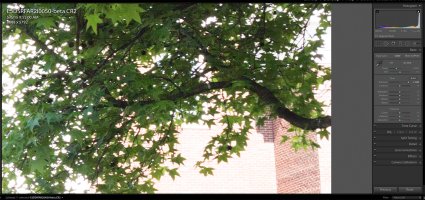
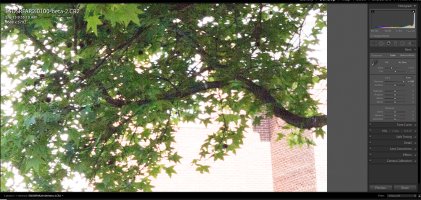
I am sure this has been discussed before and I just missed it, but why does the ISO 50 on the 5DSr have better shadow recovery than ISO 100? I thought ISO 50 was an expanded ISO and therefore had less DR. What am I missing here? I downloaded two RAW files from Imaging Resource and pushed them both +5 in exposure. ISO 50 looks much much better for some reason. Here are two screen shots.
 

Attachments

  • Screen Shot 2015-05-20 at 12.09.15 PM copy.jpg
    Screen Shot 2015-05-20 at 12.09.15 PM copy.jpg
    661 KB · Views: 151
  • Screen Shot 2015-05-20 at 12.09.27 PM copy.jpg
    Screen Shot 2015-05-20 at 12.09.27 PM copy.jpg
    731.5 KB · Views: 139
Upvote 0
Marsu42 said:
tron said:
msm said:
Marsu42 said:
...
Hint: you have 14.5+ ev at iso 100, it's called dual_iso. I keep being stunned how many people ignore it, even though it's obviously just what would fix their problem w/o buying a Sonikon or waiting for a new Canon sensor.
Personally I don't find it usable. The noise reduction is impressive, but the detail removal is not. Even scaled down to 1080 lines my test pictures had an obvious lack of detail in the shadows compared to similar shot from my A7R.
A7R is 36Mpixel so aren't you comparing apples to oranges somehow?

Indeed it is, dual_iso is an emergency fix for Canon sensors, and it provides more detail than clipping for sure - plus you have a 16bit file, so the tonality should be just fine. If you want the highest quality low iso shots with high dynamic range in a single exposure, go buy a Sonikon, no doubt 'bout that, I'm no Canon fanboi.

Btw I *am* a Magic Lantern fanboi though :-) and being able to program your camera yourself plus other features (like raw video) are a reason to stay with Canon. Next up with ML: user scripting in lua so you don't have to know any C to make your camera do what *you* want.

LOALTD said:
Cool, turns out it's not the camera, I just suck at photography!

Well, there's some room for improvement :-) ...
1. it could be argued there's really no reason not to handhold-bracket these scenes if the shadow detail is of such importance as nothing's moving in the scene.
2. the rainbow rock is underexposed by about 1ev (you raised it 2/3ev right in Lightroom, and if you'd have used ettr with 100% highlight recovery that's another 1/3ev).
3. I advise not to use +black but (at least in combination with) the tone curve as the former raises zero resolution data which is nearly only noise.

Having said that, I do agree it's every photog's privilige to raise shadows as much as he/she likes for his/her creative vision, it's not up to the camera to make that decision just because it doesn't deliver clean shadows.


This is just a demo image, to show that you can easily encounter noise with even moderate pushing of exposure.


E.g. to combat the "LOL Y WULD YOU NEED TO PUSH 6 STOPS ANYWAY? LEARN TO SHOOT LOL!" rhetoric of all the people that have a bad case of: http://en.wikipedia.org/wiki/Post-purchase_rationalization


I usually merge exposures like this, but with a better sensor, I wouldn't have to.
 
Upvote 0
LOALTD said:
I usually merge exposures like this, but with a better sensor, I wouldn't have to.

With the whole dual_iso hassle, I'm 100% agree ...

... but on the other hand, which *each* new sensor no matter how good it is people will push the boundaries and state "if my equipment would be able to do x, I wouldn't have to do x or switch to brand z". I already envision the future threads "Why only 15ev of dr? With 20ev, I wouldn't have to care about exposure at all!".

jaayres20 said:
I am sure this has been discussed before and I just missed it, but why does the ISO 50 on the 5DSr have better shadow recovery than ISO 100? I thought ISO 50 was an expanded ISO and therefore had less DR.

I didn't look at the raw files myself, but if your tests are valid the 5ds might have a tweaked imaging pipeline that has more benefits at iso50 than older cameras. This is not impossible, after all iso 100 isn't the exact "base iso" of any camera anyway so there's room for improvement how native iso gets translated to the chosen full stop iso settings.
 
Upvote 0
Marsu42 said:
LOALTD said:
I usually merge exposures like this, but with a better sensor, I wouldn't have to.

With the whole dual_iso hassle, I'm 100% agree ...

... but on the other hand, which *each* new sensor no matter how good it is people will push the boundaries and state "if my equipment would be able to do x, I wouldn't have to do x or switch to brand z". I already envision the future threads "Why only 15ev of dr? With 20ev, I wouldn't have to care about exposure at all!".

exactly
 
Upvote 0
Marsu42 said:
LOALTD said:
I usually merge exposures like this, but with a better sensor, I wouldn't have to.

With the whole dual_iso hassle, I'm 100% agree ...

... but on the other hand, which *each* new sensor no matter how good it is people will push the boundaries and state "if my equipment would be able to do x, I wouldn't have to do x or switch to brand z". I already envision the future threads "Why only 15ev of dr? With 20ev, I wouldn't have to care about exposure at all!".


Yeah, I agree. If there weren't sensors on the market with better DR capability, I likely would not be bitching. I was perfectly happy with my 5D classic, and with my 5D Mk II....it all changed when the great Nikon D800/D600 refresh came out and I shot a wedding with both my 5D Mk III and a friend's D600... It was easy to tell which photos were shot with which camera.


And when I have the time, I love the results of a carefully blended multiple exposure shot. I just don't have time (or want to carry a tripod) when I'm running and gunning in the mountains! Although..usually the software is good enough these days to get decent exposure merging hand-held.
 
Upvote 0
jaayres20 said:
I am sure this has been discussed before and I just missed it, but why does the ISO 50 on the 5DSr have better shadow recovery than ISO 100? I thought ISO 50 was an expanded ISO and therefore had less DR. What am I missing here? I downloaded two RAW files from Imaging Resource and pushed them both +5 in exposure. ISO 50 looks much much better for some reason. Here are two screen shots.

My understanding is that selecting ISO50 doesn't do anything but trick the meter; the gain is the same as ISO100. So, for those of us who shoot manual (and likely that's how those test images were created), changing from ISO 100 to ISO 50 and nothing else will yield an equivalent exposure. However, the ISO 100 image you posted has 1/2 the exposure time, thus it's 1 stop darker, thus there is more visible noise when you boost.
 
Upvote 0