Canon EOS-1D X Mark II Studio Tests

David_in_Seattle said:
I don't understand why DPR would consider the Sony A7Rmk2 a peer to the Nikon D5 and Canon 1DXmk2 – these two cameras are for a totally different professional. Sony doesn't have a camera & lens combo that competes with the D5 or 1DXmk2. And don't tell me the a99 competes.

More a peer when comparing sensors ..... full frame, recently released sensors. The cameras are quite different otherwise
 
Upvote 0
dilbert said:
krisbell said:
Refurb7 said:
"The Canon EOS-1D X Mark II shows very similar amounts of noise to the excellent sensor in the Sony a7R II up until a 3EV push, with the Canon dropping behind after a 4EV push." — DPR

Is that meaningful to anyone? If you're doing a 4EV push (or even 3EV), it means you really messed up the exposure. It means you have no clue about metering and probably suck as a photographer. If DPR stopped their testing at 3EV, they would say "The Canon EOS-1D X Mark II shows very similar amounts of noise to the excellent sensor in the Sony a7R II". Period. But for some reason they feel the need to go beyond 3EV to prove that Canon drops behind. It seems like a test designed for Sony rather than for actual photography.

Who goes through life doing 4EV (or higher) pushes on their digital files? Anyone? Can you stop or is this a chronic condition?

An outrageously ignorant post.
...

Understand that the attitude in that post has probably been developed from reading many comments on CR which say the same thing. This is what happens when "group think" takes over from rational and independent thinking :( It's not Refurb7's fault as much as it is all of the others here that repeat it ad nauseum.
I think we all are human beings: almost all of us (Canon_Fanboys, DR_Only_Guys, Tech_Geeks etc.) tend to ignore other's point of views, because they don't reflect the way we perceive reality.
 
Upvote 0
JohanCruyff said:
dilbert said:
krisbell said:
Refurb7 said:
"The Canon EOS-1D X Mark II shows very similar amounts of noise to the excellent sensor in the Sony a7R II up until a 3EV push, with the Canon dropping behind after a 4EV push." — DPR

Is that meaningful to anyone? If you're doing a 4EV push (or even 3EV), it means you really messed up the exposure. It means you have no clue about metering and probably suck as a photographer. If DPR stopped their testing at 3EV, they would say "The Canon EOS-1D X Mark II shows very similar amounts of noise to the excellent sensor in the Sony a7R II". Period. But for some reason they feel the need to go beyond 3EV to prove that Canon drops behind. It seems like a test designed for Sony rather than for actual photography.

Who goes through life doing 4EV (or higher) pushes on their digital files? Anyone? Can you stop or is this a chronic condition?

An outrageously ignorant post.
...

Understand that the attitude in that post has probably been developed from reading many comments on CR which say the same thing. This is what happens when "group think" takes over from rational and independent thinking :( It's not Refurb7's fault as much as it is all of the others here that repeat it ad nauseum.
I think we all are human beings: almost all of us (Canon_Fanboys, DR_Only_Guys, Tech_Geeks etc.) tend to ignore other's point of views, because they don't reflect the way we perceive reality.

It really would be great if everyone would read up on worldviews. We all live with a huge number of assumptions that never get challenged, or that make us "very upset" if someone does challenge them.

I say having more than 8 stops of DR is useless unless you need it.
 
Upvote 0
Mt Spokane Photography said:
Refurb7 said:
"The Canon EOS-1D X Mark II shows very similar amounts of noise to the excellent sensor in the Sony a7R II up until a 3EV push, with the Canon dropping behind after a 4EV push." — DPR

Is that meaningful to anyone? If you're doing a 4EV push (or even 3EV), it means you really messed up the exposure. It means you have no clue about metering and probably suck as a photographer. If DPR stopped their testing at 3EV, they would say "The Canon EOS-1D X Mark II shows very similar amounts of noise to the excellent sensor in the Sony a7R II". Period. But for some reason they feel the need to go beyond 3EV to prove that Canon drops behind. It seems like a test designed for Sony rather than for actual photography.

Who goes through life doing 4EV (or higher) pushes on their digital files? Anyone? Can you stop or is this a chronic condition?

You misunderstand what they are trying to tell you. Have you ever shot a scene outdoors in harsh bright light and had difficulty with people or objects in shadows? Sometimes, you have no control over your position or the lighting, and need to pull up shadows in post processing. Being able to pull up shadows without ugly noise appearing is a definite benefit. It does not happen to me often, but I have tried to capture some photos at outdoor events in extremely bright light where I could not control the shadows. This ability would be great. Like everything else, it does not make the total camera, but I certainly will welcome lower noise in my images.
The way I read the test is its simply a sensor performance test and doesnt really compare the cameras on overall performance. I used the 5DS in South Africa just before it was completely dark but with still a fair amount of light low in the sky shooting into that direction in crop mode to get a distant leopard. When lifting the shadows to get more of the natural colors of the leopard it introduced noise their was nothing I could have done to alter that but better low ISO DR would have been a huge help.
The Sony a7 r II is not a competitor to the Canon 1D X MKII it is to the Canon 5D MKIII but both of the Canon camera as indeed my 5DS have way better AF tracking, better battery performance and a host of other features the Sony lacks. Last but not least Sony optics G Master excepted are inferior to many of Canon optics both optically & mechanically.
 
Upvote 0
Personally I think the review is incomplete and quite useless for all practical purposes. It would not have made me change my decision one way or another. My initial real world tests on the 1dxii are that as a system it is much improved over the 1DX for pretty much all reasons. Still a loud machine gun though even in silent mode. For 4K video I relalize that I'm going to need much larger memory cards. :) Maybe 34 minutes on a 128GB card at 4K 29.98fps. That wont get through one half of a complete sporting event.

I'll give it its first real test shooting stills at a sporting event tomorrow. It's supposed to rain and I'm feeling nervous taking it out the first week in such conditions. 8) However it will be a great high ISO test.
 
Upvote 0
Mt Spokane Photography said:
Refurb7 said:
"The Canon EOS-1D X Mark II shows very similar amounts of noise to the excellent sensor in the Sony a7R II up until a 3EV push, with the Canon dropping behind after a 4EV push." — DPR

Is that meaningful to anyone? If you're doing a 4EV push (or even 3EV), it means you really messed up the exposure. It means you have no clue about metering and probably suck as a photographer. If DPR stopped their testing at 3EV, they would say "The Canon EOS-1D X Mark II shows very similar amounts of noise to the excellent sensor in the Sony a7R II". Period. But for some reason they feel the need to go beyond 3EV to prove that Canon drops behind. It seems like a test designed for Sony rather than for actual photography.

Who goes through life doing 4EV (or higher) pushes on their digital files? Anyone? Can you stop or is this a chronic condition?

You misunderstand what they are trying to tell you. Have you ever shot a scene outdoors in harsh bright light and had difficulty with people or objects in shadows? Sometimes, you have no control over your position or the lighting, and need to pull up shadows in post processing. Being able to pull up shadows without ugly noise appearing is a definite benefit. It does not happen to me often, but I have tried to capture some photos at outdoor events in extremely bright light where I could not control the shadows. This ability would be great. Like everything else, it does not make the total camera, but I certainly will welcome lower noise in my images.

One example is shooting sports. 10% of the time I have officials telling me I cant shoot from the desired side of the field and have to settle with shooting toward the sun. You either HAVE to push the shadows to the extreme or blow out highlights and hope you can recover. Which way you choose largely depends on the camera you use. It's not a matter of personal preference, it's sometimes what you HAVE to do to get paid.
 
Upvote 0
I guess they like to compare the camera to the best one in each class but it makes this camera sound worse than it is. It's like a review of CAR X that goes like this.

CAR X is fast but the Ferrari is faster.
CAR X improved its towing capacity but the F150 pulls more.
CAR X improved it passenger capacity but Canyonero holds more.
CAR X with its snowtires handles well on snowy roads but the 2 year old Snowmobile still has it beat.
CAR X still has no water capabilities. Yamaha has been making boats for years.

Overall the CAR X has improved but still lags behind the competition in many ways.
 
Upvote 0
East Wind Photography said:
Mt Spokane Photography said:
Refurb7 said:
"The Canon EOS-1D X Mark II shows very similar amounts of noise to the excellent sensor in the Sony a7R II up until a 3EV push, with the Canon dropping behind after a 4EV push." — DPR

Is that meaningful to anyone? If you're doing a 4EV push (or even 3EV), it means you really messed up the exposure. It means you have no clue about metering and probably suck as a photographer. If DPR stopped their testing at 3EV, they would say "The Canon EOS-1D X Mark II shows very similar amounts of noise to the excellent sensor in the Sony a7R II". Period. But for some reason they feel the need to go beyond 3EV to prove that Canon drops behind. It seems like a test designed for Sony rather than for actual photography.

Who goes through life doing 4EV (or higher) pushes on their digital files? Anyone? Can you stop or is this a chronic condition?

You misunderstand what they are trying to tell you. Have you ever shot a scene outdoors in harsh bright light and had difficulty with people or objects in shadows? Sometimes, you have no control over your position or the lighting, and need to pull up shadows in post processing. Being able to pull up shadows without ugly noise appearing is a definite benefit. It does not happen to me often, but I have tried to capture some photos at outdoor events in extremely bright light where I could not control the shadows. This ability would be great. Like everything else, it does not make the total camera, but I certainly will welcome lower noise in my images.

One example is shooting sports. 10% of the time I have officials telling me I cant shoot from the desired side of the field and have to settle with shooting toward the sun. You either HAVE to push the shadows to the extreme or blow out highlights and hope you can recover. Which way you choose largely depends on the camera you use. It's not a matter of personal preference, it's sometimes what you HAVE to do to get paid.

And to get the shutter speed you need with the focal length you use what iso are you using?
 
Upvote 0
JohanCruyff said:
About DPR appartent bias

"In 2007 Digital Photography Review was acquired by Amazon.com."
Source: http://www.dpreview.com/about
Why would an independent gear seller emphasize the (comparatively) weak points of a brand and the (comparatively) strong points of another? Do we have to presume that Canon grants Amazon lower margins than Sony-Nikon? :o

I've been told independently by two retail camera store owners (one owns a solo outlet, the other owns a small chain) that Canon does, in fact, give them lower margins compared to other manufacturers. I have no idea if that applies to large retailers, and of course it may not (those same owners indicated that Canon's policies strongly favor large retailers over the smaller outlets, leading one owner to drop Canon consumer-products entirely and only sell broadcast video gear from Canon).

But I don't think anyone here is suggesting some sort of grand conspiracy theory – certainly I'm not. The reviewers/writers simply have a personal bias and are unable to avoid it influencing their reviews and conclusions.

DPR and DxO are similar in many ways. Both perform generally reliable testing, DxO's is quantitative, DPR's is qualitative, they're complementary and both are useful. Both have a similar glaring flaw, DxO claims to be 'scientific' and they're clearly not, DPR claims (at least, Rishi claims) to be unbiased. Both have a bias that influences their conclusions. The 'advantage' DxO has is that while their Scores are biased, their measurements are objective; with DPR's subjective testing (outside the studio), there's no way to be sure the biases aren't affecting the testing itself in addition to the conclusions.

 
Upvote 0
neuroanatomist said:
JohanCruyff said:
About DPR appartent bias

"In 2007 Digital Photography Review was acquired by Amazon.com."
Source: http://www.dpreview.com/about
Why would an independent gear seller emphasize the (comparatively) weak points of a brand and the (comparatively) strong points of another? Do we have to presume that Canon grants Amazon lower margins than Sony-Nikon? :o

I've been told independently by two retail camera store owners (one owns a solo outlet, the other owns a small chain) that Canon does, in fact, give them lower margins compared to other manufacturers. I have no idea if that applies to large retailers, and of course it may not (those same owners indicated that Canon's policies strongly favor large retailers over the smaller outlets, leading one owner to drop Canon consumer-products entirely and only sell broadcast video gear from Canon).

But I don't think anyone here is suggesting some sort of grand conspiracy theory – certainly I'm not. The reviewers/writers simply have a personal bias and are unable to avoid it influencing their reviews and conclusions.

DPR and DxO are similar in many ways. Both perform generally reliable testing, DxO's is quantitative, DPR's is qualitative, they're complementary and both are useful. Both have a similar glaring flaw, DxO claims to be 'scientific' and they're clearly not, DPR claims (at least, Rishi claims) to be unbiased. Both have a bias that influences their conclusions. The 'advantage' DxO has is that while their Scores are biased, their measurements are objective; with DPR's subjective testing (outside the studio), there's no way to be sure the biases aren't affecting the testing itself in addition to the conclusions.

Absolutely spot on, couldn't say it better.

It was DPR's 'objective testing' that was the final nail in the coffin for me. Implying that the 'issues' in the shadows here (http://www.dpreview.com/reviews/canon-eos-5ds-sr/12) are the best the 5DS/R could perform is a blatant lie.

If I know somebody is lying to me about one thing, how do I not know their biases are not leading them to misinform me about the questions I actually want answered? I can't, all credibility is lost.
 

Attachments

  • Lena-Sunset-DR_Limitation-576.jpg
    Lena-Sunset-DR_Limitation-576.jpg
    140.3 KB · Views: 1,115
Upvote 0
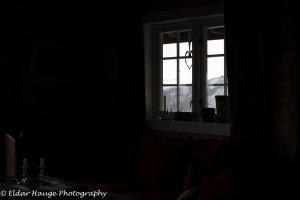
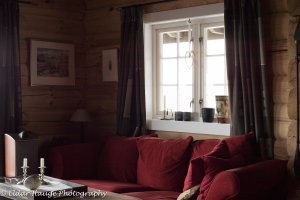
I am currently in the mountains and nothing is happening outside, so I thought I´d entertain myself indoors. I was trying to remember if I had ever shot an image that needed more than 3 stops of lift in post. I don´t believe I have, unless it was totally off in the first place. So I thought I´d find a scene with extreme contrast and see what it took.

The first image below is straight RAW to JPEG with default LR settings. The image is exposed just when the outside clouds clipped. I believe we can agree that this is a rather extreme example and I don´t believe many of us would make it a habit of shooting something like this.
 

Attachments

  • DV4I0219.jpg
    DV4I0219.jpg
    2.6 MB · Views: 212
Upvote 0
"I don´t believe many of us would make it a habit of shooting something like this"

I do on a very regular basis :) Below is the image I was working on when I saw your comment!

Anyway, with regards the excessive pulling, in my experience even when you get relatively low noise in these extreme lifts you still lose a lot of tonality, which limits the practical application for this type of shot.

I am glad the shadow image quality is improved, but from one who does a lot of very wide DR shooting I still can't see a point where 12 bit RAW capture in 14 bit files are going to make that much difference for me.
 

Attachments

  • 1.jpg
    1.jpg
    130.8 KB · Views: 209
Upvote 0
privatebydesign said:
"I don´t believe many of us would make it a habit of shooting something like this"

I do on a very regular basis :) Below is the image I was working on when I saw your comment!
Sure Scott, there are cases like this. But, since the image is rather static, I believe I would have made that one of my rare HDR images ;)
 
Upvote 0
East Wind Photography said:
Mt Spokane Photography said:
Refurb7 said:
"The Canon EOS-1D X Mark II shows very similar amounts of noise to the excellent sensor in the Sony a7R II up until a 3EV push, with the Canon dropping behind after a 4EV push." — DPR

Is that meaningful to anyone? If you're doing a 4EV push (or even 3EV), it means you really messed up the exposure. It means you have no clue about metering and probably suck as a photographer. If DPR stopped their testing at 3EV, they would say "The Canon EOS-1D X Mark II shows very similar amounts of noise to the excellent sensor in the Sony a7R II". Period. But for some reason they feel the need to go beyond 3EV to prove that Canon drops behind. It seems like a test designed for Sony rather than for actual photography.

Who goes through life doing 4EV (or higher) pushes on their digital files? Anyone? Can you stop or is this a chronic condition?

You misunderstand what they are trying to tell you. Have you ever shot a scene outdoors in harsh bright light and had difficulty with people or objects in shadows? Sometimes, you have no control over your position or the lighting, and need to pull up shadows in post processing. Being able to pull up shadows without ugly noise appearing is a definite benefit. It does not happen to me often, but I have tried to capture some photos at outdoor events in extremely bright light where I could not control the shadows. This ability would be great. Like everything else, it does not make the total camera, but I certainly will welcome lower noise in my images.

One example is shooting sports. 10% of the time I have officials telling me I cant shoot from the desired side of the field and have to settle with shooting toward the sun. You either HAVE to push the shadows to the extreme or blow out highlights and hope you can recover. Which way you choose largely depends on the camera you use. It's not a matter of personal preference, it's sometimes what you HAVE to do to get paid.

Being compelled to shoot toward the sun isn't some hardship that requires a special sensor. If you're shooting toward the sun, the light on your subjects is less contrasty than if you're shooting with the sun behind you or (especially) to the side of you. If the sun is behind your subject, then the side of the subject that you see is lit by softer reflected light rather than by strong direct light. In that situation, you expose for the subject but underexpose a little, allowing the highlights to "just" clip. You may have to lift your subject a whole 1.0 stop — no big deal with any DSLR. The highlights that blow out are typically the lighter edges of very light subjects. With today's software, you can recover most of the highlights. Trust me, you will still get paid.
 
Upvote 0
I think with the whole DPR force-for-good-or-force-for-bias issue, it's useful to talk about in a couple narrow ways:

1) We all know that making a camera is a series of compromise choices. You can tune a camera to be stronger at high ISO at the expense of low ISO; you can increase resolution, but you may well limit the frames per second; etc. These tradeoffs represent educated guesses that the camera companies make. If DPR takes those pairs of factors and emphasize primarily the downsides to each pair, then what they're doing is implicitly saying that these were poor choices in the early design phase. That could be a valid opinion, and gets to point #2 below.

Now, if DPR criticizes the downsides of each of those factors for one camera, and selectively show better examples from several different competing cameras - one for each factor in which the competing camera happens to excel - what you've done is hidden the necessity of design compromise and given the impression that the camera being reviewed isn't - as they all are - a set of compromises with pros and cons, but rather is just plain bad.

I think it's fair to say that this beginning of their 1DX2 review shows in the least a sloppiness in framing these consumer choices, which happens to leave the impression the 1DX2 is less of a camera than it is. I also think it is eyebrow raising that the review does seem to have inverted the importance of low- versus high- ISO performance corresponding precisely with Canon and Nikon having swapped their own design priorities in their respective refreshes. One of our number here on CR actually (jokingly) suggested before-hand that DPR would do this if Canon ever went to on-chip circuitry to provide better low-ISO noise reduction.

I suspect that there is no real motive to be biased, but that - like someone who likes Chevy over Ford, etc. - one has to justify to oneself why after reviewing a competing brand one still prefers the favorite brand. That dialog in one's mind winds up focusing on negatives of the thing being reviewed. This is why DPR needs a few more people who primarily own the Canon system.

2) DPR didn't review the Canon and Nikon flagship cameras last time around ostensibly because it perceives itself to be a review site for normal people, not photojournalists. This suggests a certain deliberate audience, and I speculate that this might be where DPR gets some things a little wrong. Some of the testing it does implies that the user is going to be someone who is absolutely bonkers for raising shadows and such. Those tests, in my mind, would be more appropriate for a very specific sort of professional or - more to the point - for a bunch of landscape and street photography buffs who do a lot of post processing. These aren't average consumers, and the reviews don't appear to be actually written with the interests of those people in mind when they concentrate on factors like the 5-stop push.

I've been involved with a lot of publications over the years, and I know it's difficult to generate a "voice" for a publication, especially along with a rigorous quality control regime and consistency. I do not get the sense that DPR has had someone in recent years experienced in this global voice sort of thing. This isn't a put-down, it's just a perception from someone who is a publishing geek. It's hard, and I applaud DPR for keeping at it. With good intentions, they'll keep getting better.

In sum, no, I don't think the impressions of bias are meritless. But, no, I really doubt this is deliberate. I bet with guys like Rishi and Barney doing this, they get better and better.
 
Upvote 0
privatebydesign said:
"I don´t believe many of us would make it a habit of shooting something like this"

I do on a very regular basis :) Below is the image I was working on when I saw your comment!

Anyway, with regards the excessive pulling, in my experience even when you get relatively low noise in these extreme lifts you still lose a lot of tonality, which limits the practical application for this type of shot.

I am glad the shadow image quality is improved, but from one who does a lot of very wide DR shooting I still can't see a point where 12 bit RAW capture in 14 bit files are going to make that much difference for me.
Those reflections on the table are overexposed!!!! :'(
 
Upvote 0
Refurb7 said:
East Wind Photography said:
One example is shooting sports...It's not a matter of personal preference, it's sometimes what you HAVE to do to get paid.

Being compelled to shoot toward the sun isn't some hardship that requires a special sensor... The highlights that blow out are typically the lighter edges of very light subjects. With today's software, you can recover most of the highlights. Trust me, you will still get paid.

That response makes me wonder how often you shoot sports. Let's try another example: a baseball player wearing a white uniform and a cap on a bright sunny day. Getting detail in the uniform while also capturing the player's expression under that cap will make you yearn for every bit of dynamic range you can get.
 
Upvote 0