Canon EOS R6 Mark III & RF 45 F1.2 STM November 6

Why not buy a cheap Sony body just for that one lens? Since bodies don't matter, anyway?

Keep your Canon gear for all your other use cases. No need to "switch".
I do weddings, I need total interchangeability between lenses and accessories among all the bodies I have; Cannot have Canon body dying on me and not be able to use its lenses on the other brand's body, and viceversa.
The moment I buy a Sony body (or Nikon, or anything else) for a single lens, then it's all in with the new mount, and all Canon stuff would go.
 
Upvote 0
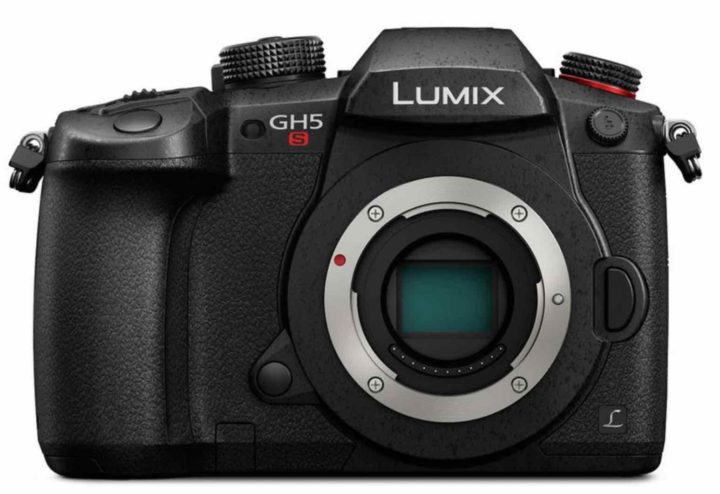
With the GH5S Panasonic made the same no-IBIS decision, because that's what videographers wanted.

I don't know what Panasonic does or say but it would be great to have active cooling and IBIS in a small cinema body! That's why Fx3 became so popular.. for it's size and ease of use! I work in the last couple of years with C70 and Fx3 and I'm really thinking to sell my c70 and buy another fx3! Image wise c70 is much better but the weight and the lack of ibis makes my work harder.
 
Upvote 0
Pay attention to prices!
Some lenses, I don't know why, can cost much more than sold by conventional stores. The RF 50mm f/1,8 costs Euro 402 at Panamoz! Twice as much as what you'd pay to conventional online seller. Usually, you can save a lot on the more expensive items, not so on basic ones.
Thx for the warning :) I always pay attention to prices. Apparently, the RF 135mm F1.8, the 28-70mm F2 and the 70-200mm F2.8 have great prices at Panamoz, the rest is basically priced the same as in Germany or higher. 135mm sounds tempting, but I´d more or less get the lens to play around with. Since I am planning on getting the 70-135mm F2 (or something similar) once it comes out (whenever that is), I´d dump the 135mm anyway.
So, a used EF version will do for now.
 
  • Like
Reactions: 1 user
Upvote 0
And yet, there are cameras and lenses which are, for instance IP 53 certified, like OMs or Leica's IP 54.
Still better than relying on hollow "weather resistant" promises.
No, not even they should be submerged, but, at least, they meet an official norm unlike all Canons, Sonies, Fujis etc...

We don't know that those other camera do not meet the required norms, we just know that they haven't been submitted for the rather expensive certification process.
 
Upvote 0
But they did eventually abandon M and then EF(-S). In the same fashion there were a lot of people in denial about that fact even after Canon stopped releasing anything for those systems. Same with Sony users when Sony stopped making A cameras or 4/3 users when Olympus moved to micro4/3

Not releasing any new lenses (or camera bodies) for a system while continuing to manufacture and sell some of the lenses (and bodies) in that system is not the same thing as discontinuing those existing products and no longer making or selling them. Many, though apparently not you, were crying that their system had already been "abandoned" when Canon was still manufacturing and selling existing lenses (and bodies) in that system. Even now, many EF-M lenses (and bodies) are still being serviced when needed by Canon.
 
Upvote 0
It sucks. Life passes far too quickly.

I tend to be a cynic about most things. But in terms of aging I've always been more thankful that it even happened than that my time is much closer to the ending than it is to the beginning. Compared to the vast majority of humans who have ever lived, I've had an immensely fortunate, long, and enjoyable life.
 
  • Like
Reactions: 3 users
Upvote 0
Well, I don't think anybody expects a full line of RF-s lines that exactly duplicate their full frame counterparts.

Agreed than no single person expects a counterpart for every EF lens, but a lot of folks want an EF-S equivalent for whatever particular EF "equivalent" lens they want. When taken collectively from all of them, it just about covers the entire range.
 
  • Like
Reactions: 1 user
Upvote 0
Not releasing any new lenses (or camera bodies) for a system while continuing to manufacture and sell some of the lenses (and bodies) in that system is not the same thing as discontinuing those existing products and no longer making or selling them. Many, though apparently not you, were crying that their system had already been "abandoned" when Canon was still manufacturing and selling existing lenses (and bodies) in that system. Even now, many EF-M lenses (and bodies) are still being serviced when needed by Canon.

M and EF(-S) gear will be serviced till 7 years have passed from when they have been discontinued. So your M gear is still being serviced by Canon but the clock is ticking. And Canon does that because a) they are bound by law and b) it would be bad customer karma to not support older gear till the expiration date set by law. Not because they want to keep the M system alive further.

Regardless, when a manufacturer stops developing new gear for a system, the writing is on the wall and the managed descent into the inevitable decline starts. Obviously the manufacturer will not say that openly since they want to keep selling unsold inventory as long as possible. They will use careful language to give the impressions that the system is not being abandoned, while in reality it is. I've seen many people quoting Canon or Sony execs saying that they were still supporting M or A or whatever every time the future of their system was put into question. Sorry to say, but those people were drinking the company's Kool-Aid.

We may call a system dead or abandoned or obsoleted or discontinued or on an undetermined hiatus or whatever term you find not offensive. But the fact of the matter is that such systems are not being developed further and they will be inevitably left behind as technology marches on and new offerings are not compatible anymore.

Having said that, those discontinued cameras and lenses can still take great images till they keep working. I know very well that the HC system is dead. But I still happily use my H5X till it will give up the ghost. I am looking at a H2D II though. Because my H5X is not in great shape and getting it repaired, while still possible, is getting more and more expensive (like $1500 to replace a faulty leaf shutter - it gets to the point where it's cheaper to buy a replacement used lens than to repair one).

I do not harp on a system being on the way to oblivion, because I do not think it's great to lose choices, nor it is great for the ones who have invested in such system, but at the same time I do not put great hopes in the goodwill of manufacturers.
 
Last edited:
Upvote 0
We don't know that those other camera do not meet the required norms, we just know that they haven't been submitted for the rather expensive certification process.
Yet, I prefer getting a certification by an official organism over relying on vague marketing promises...
I think we know for instance the value of Sony's "weather resistance" in the past...
 
  • Like
Reactions: 1 user
Upvote 0
What I hope for and expect with any lens, especially L lenses, is for the actual images they produce, using whatever corrections they are designed for (optical, digital, or both) to be really good. Since the images from the VCM lenses are not just really good, but actually outstanding, I also think they are a remarkable accomplishment. I own and use four of them (24, 35, 50, 85), so I actually know what I'm talking about (unlike people who tiresomely scream "but digital corrections, but digital corrections" over and over and over, without actually owning and using the lenses). When I bought my 50 F1.4, I thought I might hang onto my RF 50 F1.2, which is a truly wonderful lens. However, I just didn't find myself using it. The results from the VCM version are just as good, no-one notices the 1/3 stop difference between F1.2 and F1.4, and the VCM version is so much smaller and lighter. So I've just sold my F1.2. The latest, which is the 85 F1.4, is my favorite 85 ever. It's just superb. You can, of course, stick your head in the mud, ignore the fact that designing lenses for digital corrections (which the VCM lenses employ to a greater or lesser extent, depending on which lens we're talking about--the 85 probably the least) makes possible not just particular body designs but also the kinds of optical performance that would be hard, if not impossible, to achieve with optical corrections only, and thereby miss out on some fabulous lenses. Your choice.
Hi Alistair, you seem to praise anything Canon does and take it personally when anyone has a criticism of their products, a self-proclaimed Canon online spokesman. If Canon released a toilet roll tube with cling wrap on the end and an RF mount at the end you will be pre-ordering it and singing its praises from the rooftops. Your bias is so off the charts you're a perpetual source of bad guidance and advice to readers! I've seen your antics on dpreview, especially in the old days when you used to intentionally try to fill any thread critical of Canon with dozens of frivolous nonsense posts to reach the thread post limit prematurely and shut it down so nobody else could comment. Stupid fanboy antics. Did you get banned or reprimanded for that behavior on the old dpreview forum??? ;)

Do you even understand what VCM lenses are for? People need to understand that the Canon VCM lenses were designed primarily with video production in mind, not stills photography, and that this focus shapes the compromises inherent in the series. Unlike mid-tier stills lenses, which prioritize optical sharpness, high-resolution performance, and minimal aberrations across individual lenses, VCM lenses are engineered to maintain consistent size, weight, and handling across the entire zoom range to suit professional cinematography workflows. This design emphasis also aims to minimize focus breathing and facilitate smooth rack focusing, which are critical for video but largely irrelevant in stills work. As a result, optical tradeoffs such as slightly lower corner sharpness, chromatic aberration control, or distortion correction may be present—compromises that would not be tolerated in a stills-focused lens at the same price point. The series’ price positioning reflects not just the lens optics but the engineering needed for consistent form factor, video-friendly operation, and reliable performance across the zoom range, meaning that buyers prioritizing stills might encounter characteristics that differ from what they would expect in similarly priced photography lenses.

Just accept that there is a big gap in Canon's mid-tier photography lenses, and even some in its top tier. Where is the 35mm to match the top tier 85's? It's not here yet. The 50mm VCM is correctly compromised for video, and it's not clear what Canon's lens strategy is, as they're wanting to cash in on the increasing interest in videography at all tiers, but leave stills photographers with a mish-mash of varying quality consumer lenses, and really expensive pro-level lenses.
 
Last edited:
  • Like
Reactions: 1 user
Upvote 0

Do you even understand what VCM lenses are for? People need to understand that the Canon VCM lenses were designed primarily with video production in mind, not stills photography, and that this focus shapes the compromises inherent in the series.
. … As a result, optical tradeoffs such as slightly lower corner sharpness, chromatic aberration control, or distortion correction may be present—compromises that would not be tolerated in a stills-focused lens at the same price point. … meaning that buyers prioritizing stills might encounter characteristics that differ from what they would expect in similarly priced photography lenses.
I use a RF 24mm 1.4 L VCM only for stills. It is ideal for me in every respect. Price is slightly higher than the EF 24mm L II version was years ago.
I never had a better 24mm from any manufacturer. I have no need for another 24mm lens from Canon for stills only.
My EF 85mm will be replaced by the VCM version also.
 
  • Like
Reactions: 1 user
Upvote 0
Hi Alistair, you seem to praise anything Canon does and take it personally when anyone has a criticism of their products, a self-proclaimed Canon online spokesman. If Canon released a toilet roll tube with cling wrap on the end and an RF mount at the end you will be pre-ordering it and singing its praises from the rooftops. Your bias is so off the charts you're a perpetual source of bad guidance and advice to readers! I've seen your antics on dpreview, especially in the old days when you used to intentionally try to fill any thread critical of Canon with dozens of frivolous nonsense posts to reach the thread post limit prematurely and shut it down so nobody else could comment. Stupid fanboy antics. Did you get banned or reprimanded for that behavior on the old dpreview forum??? ;)

Do you even understand what VCM lenses are for? People need to understand that the Canon VCM lenses were designed primarily with video production in mind, not stills photography, and that this focus shapes the compromises inherent in the series. Unlike mid-tier stills lenses, which prioritize optical sharpness, high-resolution performance, and minimal aberrations across individual lenses, VCM lenses are engineered to maintain consistent size, weight, and handling across the entire zoom range to suit professional cinematography workflows. This design emphasis also aims to minimize focus breathing and facilitate smooth rack focusing, which are critical for video but largely irrelevant in stills work. As a result, optical tradeoffs such as slightly lower corner sharpness, chromatic aberration control, or distortion correction may be present—compromises that would not be tolerated in a stills-focused lens at the same price point. The series’ price positioning reflects not just the lens optics but the engineering needed for consistent form factor, video-friendly operation, and reliable performance across the zoom range, meaning that buyers prioritizing stills might encounter characteristics that differ from what they would expect in similarly priced photography lenses.

Just accept that there is a big gap in Canon's mid-tier photography lenses, and even some in its top tier. Where is the 35mm to match the top tier 85's? It's not here yet. The 50mm VCM is correctly compromised for video, and it's not clear what Canon's lens strategy is, as they're wanting to cash in on the increasing interest in videography at all tiers, but leave stills photographers with a mis-mash of varying quality consumer lenses, and really expensive pro-level lenses.

Thanks. I needed a condescending diatribe to read today. The mind reading trick was nice, too.
 
  • Like
  • Haha
Reactions: 2 users
Upvote 0
I use a RF 24mm 1.4 L VCM only for stills. It is ideal for me in every respect. Price is slightly higher than the EF 24mm L II version was years ago.
I never had a better 24mm from any manufacturer. I have no need for another 24mm lens from Canon for stills only.
My EF 85mm will be replaced by the VCM version also.
That's great news, then it works for what you need in stills photography. That's fortunate as it wont work for everyone who uses that focal length, depend on what you use it for. Enjoy your new lens. From the early reviews the RF 85mm VCM looks really decent and one of the least compromised by the uniform size video form factor. :)
 
Last edited:
  • Haha
Reactions: 1 user
Upvote 0
Thanks. I needed a condescending diatribe to read today. The mind reading trick was nice, too.
Maybe check out Alistair's posts of dpreview, he has been called out countless times for jumping to Canon's defense at the slightest hint of criticism of a product. His modus operandi is the basic Argument from Ignorance logical fallacy - "I can't see any problem with it, so there are no problems, so nobody should say anything negative about it". People on that forum have also said to him after looking at how bad his photos are, that he shouldn't be advising anyone about anything. Just a pre-emptive post to stop him polluting this forum in the way he does over there, best to call it out. You need to understand, when someone has very low photography skills it is easy for the gear to far exceed their abilities, so naturally, everything looks good to them, and so they tell everyone that gear is good for EVERYONE, and nobody should complain. No mind reading needed, just a simple logical inference (drawing conclusions based on evidence and reasoning), exaggerated with a little hyperbole for amusement, to sum up Alistair's typical posts and behavior on the other forum - if you don't believe me look it up. Anyway, enjoy your day! :)
 
Upvote 0
That's great news, then it works for what you need in stills photography. That's fortunate as it wont work for everyone who uses that focal length, depend on what you use it for. Enjoy your new lens. From the early reviews the RF 85mm VCM looks really decent and one of the least compromised by the uniform size video form factor. :)
I am sorry to hear that your lens is not working as desired. Perhaps you received a defective unit. I would have it checked by Canon Service.
 
Upvote 0
Maybe check out Alistair's posts of dpreview, he has been called out countless times for jumping to Canon's defense at the slightest hint of criticism of a product. His modus operandi is the basic Argument from Ignorance logical fallacy - "I can't see any problem with it, so there are no problems, so nobody should say anything negative about it". People on that forum have also said to him after looking at how bad his photos are, that he shouldn't be advising anyone about anything. Just a pre-emptive post to stop him polluting this forum in the way he does over there, best to call it out. You need to understand, when someone has very low photography skills it is easy for the gear to far exceed their abilities, so naturally, everything looks good to them, and so they tell everyone that gear is good for EVERYONE, and nobody should complain. No mind reading needed, just a simple logical inference (drawing conclusions based on evidence and reasoning), exaggerated with a little hyperbole for amusement, to sum up Alistair's typical posts and behavior on the other forum - if you don't believe me look it up. Anyway, enjoy your day! :)
Sane people don't wander around the net getting in pissing contests about what's better, making accusations, or requiring others to see things exactly like they do. I don't shivagit what someone says somewhere else.
 
  • Like
Reactions: 1 users
Upvote 0
M and EF(-S) gear will be serviced till 7 years have passed from when they have been discontinued. So your M gear is still being serviced by Canon but the clock is ticking. And Canon does that because a) they are bound by law and b) it would be bad customer karma to not support older gear till the expiration date set by law. Not because they want to keep the M system alive further.

Regardless, when a manufacturer stops developing new gear for a system, the writing is on the wall and the managed descent into the inevitable decline starts. Obviously the manufacturer will not say that openly since they want to keep selling unsold inventory as long as possible. They will use careful language to give the impressions that the system is not being abandoned, while in reality it is. I've seen many people quoting Canon or Sony execs saying that they were still supporting M or A or whatever every time the future of their system was put into question. Sorry to say, but those people were drinking the company's Kool-Aid.

We may call a system dead or abandoned or obsoleted or discontinued or on an undetermined hiatus or whatever term you find not offensive. But the fact of the matter is that such systems are not being developed further and they will be inevitably left behind as technology marches on and new offerings are not compatible anymore.

Having said that, those discontinued cameras and lenses can still take great images till they keep working. I know very well that the HC system is dead. But I still happily use my H5X till it will give up the ghost. I am looking at a H2D II though. Because my H5X is not in great shape and getting it repaired, while still possible, is getting more and more expensive (like $1500 to replace a faulty leaf shutter - it gets to the point where it's cheaper to buy a replacement used lens than to repair one).

I do not harp on a system being on the way to oblivion, because I do not think it's great to lose choices, nor it is great for the ones who have invested in such system, but at the same time I do not put great hopes in the goodwill of manufacturers.

Today's newest bright and shiny just released model will one day be discontinued and then, some time after that, be dropped from support. So even the hottest brand new products are beginning their "descent into the inevitable decline" the day they are introduced.

How long products "must be supported by law" varies greatly from one locale to the next. Most companies cover themselves by reserving the right to substitute an "equivalent" or "improved" product in lieu of fixing an outdated product still under warranty.

People who claimed "EOS M is dead!" in 2015 or so were premature. People who claimed "DSLRs are dead!" in 2012 were premature. Everything eventually "dies". That doesn't mean everything no longer being made today is already dead today, though.
 
Upvote 0
Today's newest bright and shiny just released model will one day be discontinued and then, some time after that, be dropped from support. So even the hottest brand new products are beginning their "descent into the inevitable decline" the day they are introduced.

How long products "must be supported by law" varies greatly from one locale to the next. Most companies cover themselves by reserving the right to substitute an "equivalent" or "improved" product in lieu of fixing an outdated product still under warranty.
All true, but there is a difference between a single model going out of support and a whole system being discontinued. If you can't see that, not sure what I can say further.
People who claimed "EOS M is dead!" in 2015 or so were premature. People who claimed "DSLRs are dead!" in 2012 were premature. Everything eventually "dies". That doesn't mean everything no longer being made today is already dead today, though.
Agreed, in 2015 Canon was still releasing new M gear... but the last one was in 2020 and after that it was totally clear that Canon was focusing only on R(-S). The same year saw the last EF new gear.
Of course gear doesn't have a secret kill switch that makes it stop to work when the system is discontinued. But I hope you would agree that it is better to buy something in a system which is being actively developed vs something in a discontinued system
 
Upvote 0
But I hope you would agree that it is better to buy something in a system which is being actively developed vs something in a discontinued system

I categorically do not agree with that statement. Sometimes it is "better". Sometimes it is not.

If gear from a system recently removed from a manufacturer's catalog that still qualifies for warranty/repair work meets a buyers needs at a much lower cost than the brightest, shiniest, expensive new products then I think the better choice is the older system. I've cameras and lenses from the EOS EF system that have not been produced in well over a decade. They all still work as well as when they were new and are sometimes as good a choice as any of my newer gear for many use cases.

One of my most used lenses to this day is the EF 24-70mm f/2.8 L discontinued in 2012. Is it as clinically sharp as the 2012 replacement EF 24-70mm f/2.8 L II? No, it isn't. But unless you've got the later on a camera mounted on a tripod using mirror lockup and wired cable release you can rarely tell the difference in real world usage. The difference in resolution between the two, assuming both are in proper optical alignment, is less than what you lose shooting handheld in medium or marginal light.

Probably my second most used lens is an EF 70-200mm f/2.8 L IS II bought in 2010. It was discontinued in 2018. I had the IS unit replaced in 2019 when it began to vibrate in certain orientations with respect to gravity. The repair cost around $400 from CPS. Today it's as sharp, maybe even slightly sharper, than when it was brand new over 15 years ago. And it's sharper than the RF 70-200mm f/2.8 L IS according to most online tests I've seen. It isn't as light or as compact when zoomed out to 70mm as the newer RF model, but that's never bothered me.
 
  • Like
Reactions: 1 user
Upvote 0