

Quick Google - he is rightThat 35% number seems insanely high. Where are you getting that data from?
Upvote
0
Quick Google - he is rightThat 35% number seems insanely high. Where are you getting that data from?

Well, I learnt something today. I had no idea that there were "Australian" Labradoodles vs normal labradoodles and it actually has a lineage that is Australian.I use my R7 for birding and wildlife...i live on a farm and see lots of wild animals sitting on my back yard deck everyday. I also use it to shoot our Labradoodles. We breed Australian Labradoodles. So i use it to shoot them playing ball fetch. Also puppy portraits for clients on a weekly basis as the puppies grow in the first 8 weeks
I just wish that my R5 could re-mapping the Rate button to something useful. It would be much more ergonomic to press to switch from EVF to rear screen (as my underwater housing blocks the EVF sensor) compared to using the M-Fn button which is tricky to reach underwater with gloves on.Which bodies are you using? I really like on the R5/R5ii being able to switch from C1-C2-C3-A Programmed mode by assigning the Mode button to the M-Fn button. It takes just a fraction of a second with the shutter finger and better than having to turn the Mode dial knob on the top of earlier bodies and the R7.
Seems hard to believe... not least of which that 96m people would actually respond to a survey about birding.Quick Google - he is right
I think they are being very generous with their birder definition my personal belief is a very small percentage pick up a camera and actually spend time photographing birds.Seems hard to believe... not least of which that 96m people would actually respond to a survey about birding.
That is more than all the voters for the republicans or separately, the democrats.
By their definition, I would be a birder because I have taken a few shots of Rainbow Lorikeets in my backyard as they love when our Grevillea are flowering.. Skittish and fast but very photogenic. Love how they twitter to their partner who is always close.
I may have been on one Puffin tour in Iceland 3 years (which was a blast) but I wouldn't call myself a birder.
You're somewhat true.I think they are being very generous with their birder definition my personal belief is a very small percentage pick up a camera and actually spend time photographing birds.
Still... that is the same rationale as someone who takes pictures on their phone of people being then a portrait photographer.You're somewhat true.
Yet, if you include phones cameras, it becomes higher. After reading the article it seems accurate with my limited American experience.
I know many people who are passive birdwatching, enjoying from their daily life, "Oh look it's a blue jay!" if you're with them when they see it. Some will try to get a photo with their phone. Dedicated cameras are intimidating to many and the cost is higher than many want to spend (hence rf 75-300), but the interest is there.
Same as what is a "professional". 96m birders in the US just seems to be a very big claim to make. Getting a quarter of the population to fill in a non-consequential survey doesn't pass the pub test IMOThe titles you give are generally reserved for people asking for money as an occupation. Birding as I understand it is more of a hobbyist activity. In contrast, I don't know how many people I have met who claim to be writers or artists but haven't sold anything. Is there an objective line or simply subjective?
Edit: Changed a wrong word
It is hardly less accurate than people in a pub or on a forum spouting estimates on absolutely no basis whatsoever!Same as what is a "professional". 96m birders in the US just seems to be a very big claim to make. Getting a quarter of the population to fill in a non-consequential survey doesn't pass the pub test IMO
Are you drunk?Same as what is a "professional". 96m birders in the US just seems to be a very big claim to make. Getting a quarter of the population to fill in a non-consequential survey doesn't pass the pub test IMO
A different way to answer:Thanks for the answers about the audience.
The summary seems to be:
* Wildlife
* Sports
* Macro ?
* Anything that needs a telephoto
Is Macro right ?
I crop 90%+ of the time! But, for difficult BIF, flying dragonflies etc, I love the luxury of the wider angle of FF or if the bird gets too close before I can zoom out. Some of my best BIF shots have been close to the edges of FF as I have struggled to turn fast enough to get it in frame. For static shots, APS-C usually has no disadvantage most of the time for me.A different way to answer:
1 When photographer knows beforehand s/he would be likely to crop.
While obviously the US Fish and Wildlife service is going to be more reliable than posters on CanonRumors, do they actually discuss their methodology to determine that number anywhere?It is hardly less accurate than people in a pub or on a forum spouting estimates on absolutely no basis whatsoever!
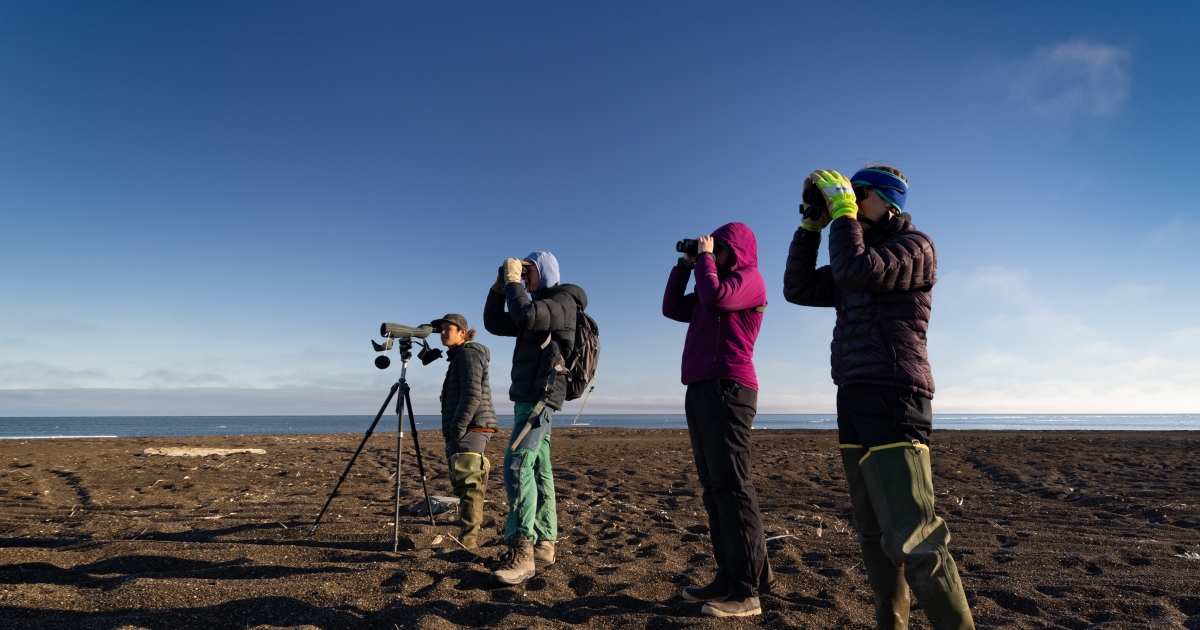
They discussed the source of their data at the beginning of the article in the linked site I posted. You can examine the referred-to source by Googling "2022 National Survey of Fishing, Hunting, and Wildlife-Associated Recreation". To save you the effort, you can download a summary from here https://www.fws.gov/sites/default/f...onal-Survey_101223-accessible-single-page.pdf though I am sure that some do not believe .gov sites.While obviously the US Fish and Wildlife service is going to be more reliable than posters on CanonRumors, do they actually discuss their methodology to determine that number anywhere?
For a deep-dive into the study, including its methodology, you can read the publication at https://www.fws.gov/sites/default/f...onal-Survey_101223-accessible-single-page.pdf .While obviously the US Fish and Wildlife service is going to be more reliable than posters on CanonRumors, do they actually discuss their methodology to determine that number anywhere?
Ooops! It seems we were typing at the same time.They discussed the source of their data at the beginning of the article in the linked site I posted. You can examine the referred-to source by Googling "2022 National Survey of Fishing, Hunting, and Wildlife-Associated Recreation". To save you the effort, you can download a summary from here https://www.fws.gov/sites/default/f...onal-Survey_101223-accessible-single-page.pdf though I am sure that some do not believe .gov sites.
I don't think that sensor cost is nearly as big a factor now as it was even back in the DSLR days. There simply isn't $2k in savings to be realized on an R5II by dropping down to APS-C. The closest thing on the market to what the "true successor to the 7DII" crowd is asking for is a Fuji X-H2S which is a $2900 body (albeit with a fully stacked sensor). I think we'd be looking at $2500 for an APS-C variant of the R5II, which obviously would entail a complete re-thinking of the APS-C lineup.Nonsense. The Nikon D500 was effectively a D5 with a crop sensor and no built in grip. Both were the flagship for their respective sensor size. The D500 was about 2.5x less expensive. An R7 2 with R5 2 features won’t cost more than the R6 2. The old Canon 7 series was about $1800. Add in inflation.
Profit margin on the 5 series is likely considerably higher in general. They have room to cut the price for an ape-c equivalent.I don't think that sensor cost is nearly as big a factor now as it was even back in the DSLR days. There simply isn't $2k in savings to be realized on an R5II by dropping down to APS-C. The closest thing on the market to what the "true successor to the 7DII" crowd is asking for is a Fuji X-H2S which is a $2900 body (albeit with a fully stacked sensor). I think we'd be looking at $2500 for an APS-C variant of the R5II, which obviously would entail a complete re-thinking of the APS-C lineup.


