How (and why) does sensor size change DOF?

Status
Not open for further replies.
As per usual: "full of sound and fury..." ;D No need to get your panties in a twist, but do you CR people actually take pictures too, or just blablabla your days away??? 8) How about posting some (good!) shots to prove your point? Especially you Neuro, you are always acting like you are the most knowledgable photographer on CR, but we haven't seen much of your great volume of work now haven't we? How about accepting my challenge and go out somewhere, shoot a number of pictures to prove your theory (what ever that was) and impress us with your work instead of your words...?
 
Upvote 0
shashinkaman said:
As per usual: "full of sound and fury..." ;D No need to get your panties in a twist, but do you CR people actually take pictures too, or just blablabla your days away??? 8) How about posting some (good!) shots to prove your point? Especially you Neuro, you are always acting like you are the most knowledgable photographer on CR, but we haven't seen much of your great volume of work now haven't we? How about accepting my challenge and go out somewhere, shoot a number of pictures to prove your theory (what ever that was) and impress us with your work instead of your words...?

It's actually not neuro's theory. The question was, "does sensor size affect DOF?" (admittedly highly evolved since the OP's question). There is only one correct and objective answer, and the answer is YES. What more needs to be said? At least he is trying to educate and offer an explanation. This concept is not some unknown or magical theory. Anyone knows sensor size affects DOF.

What is highly ironic, is that you refer to the thread as "you CR people" wasting time when in fact you yourself have contributed absolutely nothing to the thread. I highly doubt neuro, or anyone really for that matter, cares about your challenge and owes absolutely nothing to you.

With that aside, DOF is affected by sensor size. Ok?
 
Upvote 0
How do you define 'DOF'?

Q1. If you shoot photo A using FF+50, then photo B using APS+35, at same F number DoF of photo B > photo A

Q2. If you shoot a photo A, then crop the border out leaving a smaller photo B, magnify it back to original size, DoF of photo B < A, but since the framing has changed, it's not the same photo anymore.

And that's it. DoF on two different format has two trends fighting against each other. One tends to decrease DoF (entrance pupil size), another tends to increase it (magnification or CoC). So here's the answer:

Answer 1. When comparing using the same Angle of View (effective focal length), larger sensor always has less DoF.

Answer 2. When comparing using different Angle of View, like comparing two different photos, it DOESN'T MAKE SENSE.

It seems most of the arguments and 'confusions' are around point 2, which is not a valid argument at all. Different Angle of View can never give you the same photo, you are comparing apple to orange.
 
Upvote 0
Speaking about sensor size changing the DOF is a bit misleading. Do we keep everything else the same? This is actually impossible. You cannot keep the AOV and the FL the same. If we just swap the bodies, without changing (physically) anything else, smaller sensors have less DOF.

For the same AOV and same f/stop, larger sensors with the corresponding lenses have less DOF because the "physical aperture" is larger. For example, 80/2>50/2. There is no rule saying you must shoot at the same f-stops with both sensors, and if you shoot with equivalents ones (like 80/3.2 vs. 50/2) DOF is the same. That means "faster" lenses for the smaller sensor. They do not always exists, but sometimes, they do. For example, the m43 system has f/2 zooms, eq. to f/4 ones. They also have a f/0.95 prime, eq. to an f/2 one. But they do not have a match for f/1.4 on FF.

Bottom line: it is not the sensor size, it is the lens and the sensor but lenses with less DOF for larger sensors are easier to make, more common, cost less, and resolve more.
 
Upvote 0
Depth of Field refers to the plane of focus within a photograph. A photo with a large depth of field might have much of the photo in focus, whereas a photo with a shallow depth of field might only have a few inches in focus.

The definition of "Depth of field" that you care about, is a collaboration between the sensor size, the focal length, and the aperture used to capture an image. Given the same focal length, with the same aperture, with the subject of focus the same distance away - a larger sensor will always have the shallower perceived depth of field. The actual depth of field is the same, but the narrower field of view caused by a smaller sensors' crop factor makes it seem as though the background is less blurred.

Put another way, if you were to frame a subject equally with a large sensor and a small sensor. The full frame would have to be much closer to the subject to have equal framing. Being closer to the subject causes the full frame's plane of focus to be shallower, therefore creating more blur in the background compared to the smaller sensor.

That's the key to the perceived depth of field advantage of full frame. Capturing a larger scene with a bigger sensor forces you to be closer to the subject to maintain the same framing as a small sensor, thereby shrinking the depth of field plane, and creating more background blur.

Everybody arguing about this seemingly simple, yet oddly complex question are forgetting that this started out as an innocent request for knowledge. We shouldn't be so quick to jump all over each others' cases - it only makes people hesitant to post thinking they'll be attacked with one misplaced word.
 
Upvote 0
BozillaNZ said:
How do you define 'DOF'?

Q1. If you shoot photo A using FF+50, then photo B using APS+35, at same F number DoF of photo B > photo A

Q2. If you shoot a photo A, then crop the border out leaving a smaller photo B, magnify it back to original size, DoF of photo B < A, but since the framing has changed, it's not the same photo anymore.

And that's it. DoF on two different format has two trends fighting against each other. One tends to decrease DoF (entrance pupil size), another tends to increase it (magnification or CoC). So here's the answer:

Answer 1. When comparing using the same Angle of View (effective focal length), larger sensor always has less DoF.

Answer 2. When comparing using different Angle of View, like comparing two different photos, it DOESN'T MAKE SENSE.

It seems most of the arguments and 'confusions' are around point 2, which is not a valid argument at all. Different Angle of View can never give you the same photo, you are comparing apple to orange.

Q2. If you shoot a photo A, then crop the border out leaving a smaller photo B, magnify it back to original size, then in relativity to reality DoF A = DoF B, but in relativity to dimensions of the photograph DoF A < DoF B, because you are not getting closer, you are magnifying it as well as the DoF.
 
Upvote 0
ecka said:
Q2. If you shoot a photo A, then crop the border out leaving a smaller photo B, magnify it back to original size, then in relativity to reality DoF A = DoF B, but in relativity to dimensions of the photograph DoF A < DoF B, because you are not getting closer, you are magnifying it as well as the DoF.

No need to cross my text just because you don't agree with me. Photo is always relative to dimensions of the output, there is no relative to 'reality' to speak of, otherwise your are just muddying the water. When you are comparing two photographs, you compare them at the same output size, otherwise the comparison is just wrong.

"Yeah, put those two photo side by side, B has 2 times larger blur circle in the background, but when you make photo B 2 times smaller, the blur will look just the same!" Well, you are essentially manipulating objectivity to make it suit your theory.
 
Upvote 0
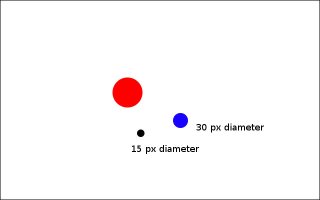
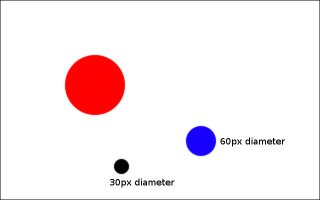
Image 1 FF, with various blur circles

Image 2 M4/3, with the same image cropped 2x in the center

If you measure them, the blur circles in M4/3 image are twice as larger as in FF image, hence it's DoF is smaller. If you don't agree with this, then telephoto provides shallower DoF should also be false to you, since "zoom in" in optical and digital terms are just the same. And shooting a 50mm f1.4 on M4/3 would be similar to shooting 100mm f2.8 on FF, so those two images can also be interpreted as:

Image 1 FF, 50 f1.4

Image 2 FF, 100 f2.8

Now it becomes interesting to ask: which one is shallower? ;D (the answer: it depends.)
 

Attachments

  • dof_ff.jpg
    dof_ff.jpg
    12 KB · Views: 630
  • dof_m43.jpg
    dof_m43.jpg
    14.6 KB · Views: 619
Upvote 0
BozillaNZ said:
ecka said:
Q2. If you shoot a photo A, then crop the border out leaving a smaller photo B, magnify it back to original size, then in relativity to reality DoF A = DoF B, but in relativity to dimensions of the photograph DoF A < DoF B, because you are not getting closer, you are magnifying it as well as the DoF.

No need to cross my text just because you don't agree with me. Photo is always relative to dimensions of the output, there is no relative to 'reality' to speak of, otherwise your are just muddying the water. When you are comparing two photographs, you compare them at the same output size, otherwise the comparison is just wrong.

"Yeah, put those two photo side by side, B has 2 times larger blur circle in the background, but when you make photo B 2 times smaller, the blur will look just the same!" Well, you are essentially manipulating objectivity to make it suit your theory.

I'm just stating facts. Blur circles ≠ DoF.
DoF A is shallower in both cases, except when you are measuring it in blur circles. By your logic: P&S camera has the biggest blur circles (sometimes they don't fit inside the image :) ), therefore it produces the thinnest DoF when compared with the same focal length lens on a DSLR. This is wrong in all theories, not just mine.
 
Upvote 0
ecka said:
BozillaNZ said:
ecka said:
Q2. If you shoot a photo A, then crop the border out leaving a smaller photo B, magnify it back to original size, then in relativity to reality DoF A = DoF B, but in relativity to dimensions of the photograph DoF A < DoF B, because you are not getting closer, you are magnifying it as well as the DoF.

No need to cross my text just because you don't agree with me. Photo is always relative to dimensions of the output, there is no relative to 'reality' to speak of, otherwise your are just muddying the water. When you are comparing two photographs, you compare them at the same output size, otherwise the comparison is just wrong.

"Yeah, put those two photo side by side, B has 2 times larger blur circle in the background, but when you make photo B 2 times smaller, the blur will look just the same!" Well, you are essentially manipulating objectivity to make it suit your theory.

I'm just stating facts. Blur circles ≠ DoF.
DoF A is shallower in both cases, except when you are measuring it in blur circles. By your logic: P&S camera has the biggest blur circles (sometimes thei don't fit inside the image :) ), therefore it produces the thinnest DoF when compared with the same focal length lens on a DSLR. This is wrong in all theories, not just mine.

"thinnest DoF when compared with the same focal length" < This, if you can somehow manage to put a 100mm lens on a P&S, it gives you a huge telephoto equivalence, then DoF will also be a lot thinner than when the lens is mounted on a DSLR. Think about it...
 
Upvote 0
shashinkaman said:
As per usual: "full of sound and fury..." ;D No need to get your panties in a twist, but do you CR people actually take pictures too, or just blablabla your days away??? 8) How about posting some (good!) shots to prove your point? Especially you Neuro, you are always acting like you are the most knowledgable photographer on CR, but we haven't seen much of your great volume of work now haven't we? How about accepting my challenge and go out somewhere, shoot a number of pictures to prove your theory (what ever that was) and impress us with your work instead of your words...?

Perhaps if you clicked on the flickr link at the bottom of Neuro's profile you would find the body of pictures you seek?

What a stupid comment to make. Perhaps you should check your facts before making such remarks.
 
Upvote 0
BozillaNZ said:
ecka said:
BozillaNZ said:
ecka said:
Q2. If you shoot a photo A, then crop the border out leaving a smaller photo B, magnify it back to original size, then in relativity to reality DoF A = DoF B, but in relativity to dimensions of the photograph DoF A < DoF B, because you are not getting closer, you are magnifying it as well as the DoF.

No need to cross my text just because you don't agree with me. Photo is always relative to dimensions of the output, there is no relative to 'reality' to speak of, otherwise your are just muddying the water. When you are comparing two photographs, you compare them at the same output size, otherwise the comparison is just wrong.

"Yeah, put those two photo side by side, B has 2 times larger blur circle in the background, but when you make photo B 2 times smaller, the blur will look just the same!" Well, you are essentially manipulating objectivity to make it suit your theory.

I'm just stating facts. Blur circles ≠ DoF.
DoF A is shallower in both cases, except when you are measuring it in blur circles. By your logic: P&S camera has the biggest blur circles (sometimes thei don't fit inside the image :) ), therefore it produces the thinnest DoF when compared with the same focal length lens on a DSLR. This is wrong in all theories, not just mine.

"thinnest DoF when compared with the same focal length" < This, if you can somehow manage to put a 100mm lens on a P&S, it gives you a huge telephoto equivalence, then DoF will also be a lot thinner than when the lens is mounted on a DSLR. Think about it...

Yes, you can put a 100mm lens on a P&S (try Pentax Q or Nikon 1) and you are still wrong. I always measure DoF in relativity to reality, not "bokeh balls". :)
 
Upvote 0
ecka said:
Yes, you can put a 100mm lens on a P&S (try Pentax Q or Nikon 1) and you are still wrong. I always measure DoF in relativity to reality, not "bokeh balls". :)

Due to different standards, I still call this comparison apples to oranges.

Result: When talking about format affecting DoF, always compare same angle of view, or effective focal length, since comparing different angle of view doesn't make sense.

We are still in disagreement but that's okay.
 
Upvote 0
BozillaNZ said:
ecka said:
Yes, you can put a 100mm lens on a P&S (try Pentax Q or Nikon 1) and you are still wrong. I always measure DoF in relativity to reality, not "bokeh balls". :)

Due to different standards, I still call this comparison apples to oranges.

Result: When talking about format affecting DoF, always compare same angle of view, or effective focal length, since comparing different angle of view doesn't make sense.

We are still in disagreement but that's okay.

These are small apples vs big apples of the same taste :)

When comparing different formats using the same lens at the same distance and aperture (different FoV) - DoF is the same.
When comparing different formats using different but equivalent lenses and apertures at the same distance (like APSC+50/1.8 vs FF+80/2.8, same FoV) - DoF is the same.
Cropping the image doesn't change the DoF.

When comparing different formats using the same lens and aperture at equivalent distance (same FoV) - FF DoF is thinner.
When comparing different formats using different but equivalent lenses at the same distance and aperture (like APSC+85/2 vs FF+135/2, same FoV) - FF DoF is thinner.
 
Upvote 0
ecka said:
When comparing different formats using the same lens and aperture at equivalent distance (same FoV) -

That's just not possible. It is not possible to have same lens (assume prime) mounted on different sensor format and still achieve same FoV. Physics doesn't work like that.

If by 'same FoV' you mean same subject framing, then background would have different magnification. That's my point, different perspective can't be compared.

Also from your above post, you seem to indicate that under all circumstances FF will always have equal or shallower DoF, I and a lot others couldn't agree on that.
 
Upvote 0
BozillaNZ said:
ecka said:
When comparing different formats using the same lens and aperture at equivalent distance (same FoV) -

That's just not possible. It is not possible to have same lens (assume prime) mounted on different sensor format and still achieve same FoV. Physics doesn't work like that.

If by 'same FoV' you mean same subject framing, then background would have different magnification. That's my point, different perspective can't be compared.

Yes, same FoV means same angle and, of course, the perspective in some cases will be different.

Also from your above post, you seem to indicate that under all circumstances FF will always have equal or shallower DoF, I and a lot others couldn't agree on that.

That is correct and the whole lot of others is misinformed.
 
Upvote 0
Wow...this became a way bigger discussion than i intented it to be. :o

So if i got everything right it is like that:

Same focal length + same aperture + same distance to subject on different formats = different FoV but with same same DoF. And that makes total sense to me because the lens projects the same image as before but on a smaller area to capture it.

And same focal length + same aperture + same object framing (which means bigger distance to subject on smaller formats) = bigger DoF on small formats because the focal distance is further away and smaller DoF on bigger formats because the focal distance is closer to MFD.

I hope my english is good enouh so everybody undertood what i meant... :-[

Greetings from Germany,
Knut Skywalker
 
Upvote 0
Status
Not open for further replies.