Patent: Canon EF 10mm f/2.8

Pixel said:
I can barely get anything usable from the 11-24 at 11mm let alone 10mm!
Just because the lens is rectilinear doesn't mean it's always going to render correctly on the edges. If there are people near the edges in your 11mm frame forget about it.

Yup...11 is already too wide for a rectilinear is a very large majority of cases. 14-16 is about my limit for rectilinear ultrawides. I often prefer slightly defished fisheye shots at 14mm and wider in full-frame rectilinear equivalent terms.
 
Upvote 0
The 14mm Canon is "useless" in astrophotography due to bad Koma effects (oval Stars at the corner). The much cheaper 14mm Samyang/Rokinon/Walimex/whatever is only MF (who needs AF for Astro?), but better in Koma than the 6x more expensive Canon one.
If Canon don't think about Koma again, only for vignetting or distortion (not so important for Astro), this isn't a great deal.
 
Upvote 0
davidcl0nel said:
The 14mm Canon is "useless" in astrophotography due to bad Koma effects (oval Stars at the corner). The much cheaper 14mm Samyang/Rokinon/Walimex/whatever is only MF (who needs AF for Astro?), but better in Koma than the 6x more expensive Canon one.
If Canon don't think about Koma again, only for vignetting or distortion (not so important for Astro), this isn't a great deal.
The version II is not useless. It has coma but it is not huge. For example it is nothing like Canon 24 1.4 II.
 
Upvote 0
Pixel said:
I can barely get anything usable from the 11-24 at 11mm let alone 10mm!
Just because the lens is rectilinear doesn't mean it's always going to render correctly on the edges. If there are people near the edges in your 11mm frame forget about it.
If you are using a true rectilinear lens and keep a reasonable working distance (5-6m) from people then they should remain in proportion (even at the edge of frame) regardless of the focal length you use. Of course, with using such a wide angle they will look tiny in the frame at 5m away but that is the price you pay if you want to minimize the keystone effect on them. If you want to fill the frame with the people and not have the heavy keystone effect then you probably should not be using an ultra-ultra-ultra-wide lens.
 
Upvote 0
neuroanatomist said:
Strategic move: release an 'inexpensive' (for FF) 6Da for astrophotography, then follow up with a lens that would be great for astro work (assuming no/minor coma issues) and charge >$3K. 8)

Sound like a cool lens, if it ever becomes a product.

Cheaper than having to start with a regular 6D, modifying it, and then still needing a lens?
 
Upvote 0
Simen1 said:
H. Jones said:
Wow. Now that'd be crazy to see. I've been blown away with the 11mm images coming from the 11-24 at f/4, but can you imagine a 10mm f/2.8 for astrophotography? Longer exposures without any startrails, all while at f/2.8.
If its priced similarly astronomicaly i will prefer the Samyang 8mm f/3.5 SCII without the hood mounted. I would have to accept 0,67 stop behind the Canon, fisheye and dark corners and dark short sides. If that saves me 90% i wouldn't doubt a moment. Fisheye is easily defished, at the same time that dark corners are stretched to be much less pronounced.

AF for astrophoto? On a 10mm? That must be a joke. Lets just hope the Canon pricing board didn't get inspired by Leica.

For wideangle starshots, I prefer a fish-eye rather than a rectilinear. No need to keep lines straight when looking at starts. You're better off with an equal-area projection fisheye.

In my view, a dream astrophotography would be an f/2 diagonal fisheye. A 10/2.8 rectilinear's purpose is architecture (primarily) and landscape.
 
Upvote 0
StudentOfLight said:
Pixel said:
I can barely get anything usable from the 11-24 at 11mm let alone 10mm!
Just because the lens is rectilinear doesn't mean it's always going to render correctly on the edges. If there are people near the edges in your 11mm frame forget about it.
If you are using a true rectilinear lens and keep a reasonable working distance (5-6m) from people then they should remain in proportion (even at the edge of frame) regardless of the focal length you use. Of course, with using such a wide angle they will look tiny in the frame at 5m away but that is the price you pay if you want to minimize the keystone effect on them. If you want to fill the frame with the people and not have the heavy keystone effect then you probably should not be using an ultra-ultra-ultra-wide lens.

At the edges, they'll be egg-heads if you use a rectilinear. If you use a fisheye, they won't.

Egg head rectilinear:
CousinsCrop.jpg


Normal head fisheye:
Cousins%20FE%20crop.jpg
 
Upvote 0
Lee Jay said:
Pixel said:
I can barely get anything usable from the 11-24 at 11mm let alone 10mm!
Just because the lens is rectilinear doesn't mean it's always going to render correctly on the edges. If there are people near the edges in your 11mm frame forget about it.

Yup...11 is already too wide for a rectilinear is a very large majority of cases. 14-16 is about my limit for rectilinear ultrawides. I often prefer slightly defished fisheye shots at 14mm and wider in full-frame rectilinear equivalent terms.

I've been curious about the 11mm but can't see using anything wider than an effective 14mm (17mm TS-E stitched) and getting good results. That super wide exaggerated look doesn't fly on work images.
 
Upvote 0
Lee Jay said:
StudentOfLight said:
Pixel said:
I can barely get anything usable from the 11-24 at 11mm let alone 10mm!
Just because the lens is rectilinear doesn't mean it's always going to render correctly on the edges. If there are people near the edges in your 11mm frame forget about it.
If you are using a true rectilinear lens and keep a reasonable working distance (5-6m) from people then they should remain in proportion (even at the edge of frame) regardless of the focal length you use. Of course, with using such a wide angle they will look tiny in the frame at 5m away but that is the price you pay if you want to minimize the keystone effect on them. If you want to fill the frame with the people and not have the heavy keystone effect then you probably should not be using an ultra-ultra-ultra-wide lens.

At the edges, they'll be egg-heads if you use a rectilinear. If you use a fisheye, they won't.

Egg head rectilinear:
CousinsCrop.jpg


Normal head fisheye:
Cousins%20FE%20crop.jpg
Your images were not taken from 5-6 meters away from the people.
 
Upvote 0
StudentOfLight said:
Lee Jay said:
StudentOfLight said:
Pixel said:
I can barely get anything usable from the 11-24 at 11mm let alone 10mm!
Just because the lens is rectilinear doesn't mean it's always going to render correctly on the edges. If there are people near the edges in your 11mm frame forget about it.
If you are using a true rectilinear lens and keep a reasonable working distance (5-6m) from people then they should remain in proportion (even at the edge of frame) regardless of the focal length you use. Of course, with using such a wide angle they will look tiny in the frame at 5m away but that is the price you pay if you want to minimize the keystone effect on them. If you want to fill the frame with the people and not have the heavy keystone effect then you probably should not be using an ultra-ultra-ultra-wide lens.

At the edges, they'll be egg-heads if you use a rectilinear. If you use a fisheye, they won't.

Egg head rectilinear:
CousinsCrop.jpg


Normal head fisheye:
Cousins%20FE%20crop.jpg
Your images were not taken from 5-6 meters away from the people.

Which, of course, is totally irrelevant to the distortion of circles in the corners of a wide rectilinear lens, only the size of those circles. Distance affects things like big noses and distant, hidden ears, but that wasn't the topic I was addressing.
 
Upvote 0
Lee Jay said:
StudentOfLight said:
Lee Jay said:
StudentOfLight said:
Pixel said:
I can barely get anything usable from the 11-24 at 11mm let alone 10mm!
Just because the lens is rectilinear doesn't mean it's always going to render correctly on the edges. If there are people near the edges in your 11mm frame forget about it.
If you are using a true rectilinear lens and keep a reasonable working distance (5-6m) from people then they should remain in proportion (even at the edge of frame) regardless of the focal length you use. Of course, with using such a wide angle they will look tiny in the frame at 5m away but that is the price you pay if you want to minimize the keystone effect on them. If you want to fill the frame with the people and not have the heavy keystone effect then you probably should not be using an ultra-ultra-ultra-wide lens.

At the edges, they'll be egg-heads if you use a rectilinear. If you use a fisheye, they won't.

Egg head rectilinear:
CousinsCrop.jpg


Normal head fisheye:
Cousins%20FE%20crop.jpg
Your images were not taken from 5-6 meters away from the people.

Which, of course, is totally irrelevant to the distortion of circles in the corners of a wide rectilinear lens, only the size of those circles. Distance affects things like big noses and distant, hidden ears, but that wasn't the topic I was addressing.
The ratio of distances of near elements and far elements is what creates a keystone effect. If the subject is 5-6m away then the ratios are essentially equalized even with an extreme ultra-wide angle lens. I recommend you try doing what I said (at 5-6 meters) and see what your kids look like at the edge of frame. I'm willing to bet that their heads will look pretty natural in shape.
 
Upvote 0
StudentOfLight said:
The ratio of distances of near elements and far elements is what creates a keystone effect.

No, it's not. The stretching in the corners of a rectilinear lens is driven by angle of view and the rectilinear projection, not subject distance.
If the subject is 5-6m away then the ratios are essentially equalized even with an extreme ultra-wide angle lens. I recommend you try doing what I said (at 5-6 meters) and see what your kids look like at the edge of frame. I'm willing to bet that their heads will look pretty natural in shape.

You'd be wrong.
 
Upvote 0
Lee Jay said:
StudentOfLight said:
The ratio of distances of near elements and far elements is what creates a keystone effect.

No, it's not. The stretching in the corners of a rectilinear lens is driven by angle of view and the rectilinear projection, not subject distance.
If the subject is 5-6m away then the ratios are essentially equalized even with an extreme ultra-wide angle lens. I recommend you try doing what I said (at 5-6 meters) and see what your kids look like at the edge of frame. I'm willing to bet that their heads will look pretty natural in shape.

You'd be wrong.
How about you prove it with a picture at 5m.
 
Upvote 0
StudentOfLight said:
Lee Jay said:
StudentOfLight said:
The ratio of distances of near elements and far elements is what creates a keystone effect.

No, it's not. The stretching in the corners of a rectilinear lens is driven by angle of view and the rectilinear projection, not subject distance.
If the subject is 5-6m away then the ratios are essentially equalized even with an extreme ultra-wide angle lens. I recommend you try doing what I said (at 5-6 meters) and see what your kids look like at the edge of frame. I'm willing to bet that their heads will look pretty natural in shape.

You'd be wrong.
How about you prove it with a picture at 5m.

Go prove it to yourself. Take a shot of any round object (like a clock) in the corner of an ultrawide. Do it up close with a small object, and far away with a larger object, with the centers in the same place in the frame.

You'll believe it if and when you do the test yourself. I already know the answer.
 
Upvote 0
Lee Jay said:
StudentOfLight said:
Lee Jay said:
StudentOfLight said:
The ratio of distances of near elements and far elements is what creates a keystone effect.

No, it's not. The stretching in the corners of a rectilinear lens is driven by angle of view and the rectilinear projection, not subject distance.
If the subject is 5-6m away then the ratios are essentially equalized even with an extreme ultra-wide angle lens. I recommend you try doing what I said (at 5-6 meters) and see what your kids look like at the edge of frame. I'm willing to bet that their heads will look pretty natural in shape.

You'd be wrong.
How about you prove it with a picture at 5m.

Go prove it to yourself. Take a shot of any round object (like a clock) in the corner of an ultrawide. Do it up close with a small object, and far away with a larger object, with the centers in the same place in the frame.

You'll believe it if and when you do the test yourself. I already know the answer.

I was just reading an article about that kid that shot up the people in that black church. Sad. But the article included a picture, that proves my point.

https://s.yimg.com/ny/api/res/1.2/3hdxd1Wcm53YAacJbzQ1tQ--/YXBwaWQ9aGlnaGxhbmRlcjtzbT0xO3c9ODAwO2lsPXBsYW5l/http://media.zenfs.com/en_us/News/Reuters/2015-06-18T204016Z_1492641496_TM3EB6I19EW01_RTRMADP_3_USA-SHOOTING-SOUTH-CAROLINA.JPG.cf.jpg
 
Upvote 0
Lee Jay said:
StudentOfLight said:
Lee Jay said:
StudentOfLight said:
The ratio of distances of near elements and far elements is what creates a keystone effect.

No, it's not. The stretching in the corners of a rectilinear lens is driven by angle of view and the rectilinear projection, not subject distance.
If the subject is 5-6m away then the ratios are essentially equalized even with an extreme ultra-wide angle lens. I recommend you try doing what I said (at 5-6 meters) and see what your kids look like at the edge of frame. I'm willing to bet that their heads will look pretty natural in shape.

You'd be wrong.
How about you prove it with a picture at 5m.

Go prove it to yourself. Take a shot of any round object (like a clock) in the corner of an ultrawide. Do it up close with a small object, and far away with a larger object, with the centers in the same place in the frame.

You'll believe it if and when you do the test yourself. I already know the answer.

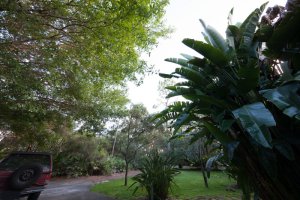
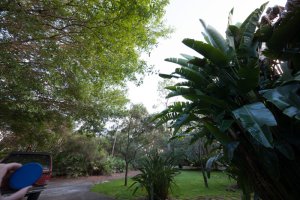
Here are two shots, camera is set exactly the same for both at 11mm on FF. back of SUV is around 6m, the blue circle is a cap off a peanut jar and is a few inches from the lens, they are both distorted the same.

Meanwhile, 'keystoning' has nothing to do with focal length and everything to do with sensor and subject being perpendicular.
 

Attachments

  • 12.jpg
    12.jpg
    213.5 KB · Views: 517
  • 13.jpg
    13.jpg
    212 KB · Views: 562
Upvote 0
privatebydesign said:
Here are two shots, camera is set exactly the same for both at 11mm on FF. back of SUV is around 6m, the blue circle is a cap off a peanut jar and is a few inches from the lens, they are both distorted the same.

A very effective demonstration.

Either StudentOfLight needs to study a bit more, or the problem is that spare tires and peanut jar caps aren't people. ;)
 
Upvote 0