Show me a SHARP 5D Mark IV photo

Mancubus said:
.....
However, I am very careful when buying a new camera because I was "very" disappointed with my 7D2 when it came out, the image quality was nowhere near as good as my 70D (at the time) and I felt cheated. I tried to find what was wrong with it, blamed myself, the lens, the situation...at one point I sent the 7D2 to Canon and they returned it to me weeks later saying there was nothing wrong.
....

I know the 7D2 you had was disapointing, and I will say that I stay on single point AF with mine, I don't know that I seem to get the pretty complicated AF system it has... while it can get to 'acceptably sharp' or 'good enough' in other modes, I find my best shot is single user selected AF - and I shoot that way anyways so I'm fine with my copy.

When paired with my 100L, this is the result I can get, when paying attention and good technique. When this combo hits, I have to remember NOT to add any sharpening.
SOOC jpg - I had to crop it in MS Paint so the file size wasn't above 5000kb. no other edits, and no changes to the picture style or sharpening in camera. The Raw in lightroom is even sharper.

I also have a 5D3, and aside from DOF, I find the cameras pretty equal - except for Buffer/Fps/anti-flicker and some other updates the 7D2 has.

Exif is
7Dmark II
F/4
1/200
iso-160
100mm L
 

Attachments

  • IMG_1250cropped.jpg
    IMG_1250cropped.jpg
    2 MB · Views: 218
Upvote 0
I think that's more on the 100L than on the 7D - hands down, I think the 100 must be one of Canon's sharpest lenses. It is simply phenomenal even on the demanding 5DSR - high detail all the way to max ISO and even in softer light. The 100L was also fantastic on the 5D3, and on the 60D I had beforehand.
 
Upvote 0
Act444 said:
I think that's more on the 100L than on the 7D - hands down, I think the 100 must be one of Canon's sharpest lenses. It is simply phenomenal even on the demanding 5DSR - high detail all the way to max ISO and even in softer light. The 100L was also fantastic on the 5D3, and on the 60D I had beforehand.

I'd question that. My 50 f1.4 is every bit as sharp (actually sharper) as the 100L Macro at f5.6 and my copies aren't the only ones that show that.

http://www.the-digital-picture.com/Reviews/ISO-12233-Sample-Crops.aspx?Lens=674&Camera=979&Sample=0&FLI=0&API=3&LensComp=115&CameraComp=979&SampleComp=0&FLIComp=0&APIComp=5
 
Upvote 0
One technique to use for tack sharp 5x7 and 8x10 prints
AFTER you have chosen a decent lens (i.e. almost ANY
Sigma Art Series 50mm and 85mm!), is to RESAMPLE your
image to EXACTLY HALF the original horizontal and vertical
size in pixels. YOU MUST USE the Lanczos-3 or Lanczos-5
resampling/resizing algorithms since I have found that the
default Bicubic resize functions on most Adobe software just
doesn't cut it for me! You may have to go for a 3rd party resizer.
I use Corel Photopaint (which is part of Coreldraw) which has
a fantastic resizer.

THEN AS THE MOST IMPORTANT STEP, you need to use an
edges-only sharpening filter. In Photopaint and in many others
it is called "UNSHARP MASK" which is a convolution filter which
is technically part of a spatial filtering algorithm.

THe DOWNSCALING of an image by one-half the
X-axis (Width) and Y-axis (Height) creates a sort
of natural anti-aliasing and the UNSHARP MASK
restores the contrast on the edges-only of any photo.

AND FINALLY for the BEST QUALITY hardcopy prints,
use Epson or Canon 2400 dpi inkjets and print using
ERROR DIFFUSION SET TO ON (or BEST QUALITY if
that is the only menu option available), and print at
2400 dots per inch. I would also suggest you print
with the "Perceptual Color Rendering" setting which
will try to emulate what is currently displayed on
your monitor so that what you see is what you get!

If you already have proper display and printer
colour matching setups than use whatever
colourspace rendering intent that you desire
for your final printouts!

For Canon camera-originated photos, I usually increase
overall brightness by 20% first, contrast by 5 to 10%,
Increase saturation by 10% to 15% and boost the
shadows by 5 to 10% BEFORE I do the downsampling
and unsharp mask.

My example photo below is just a little oversharpened
BUT when printed at 8x10 on an Epson or Canon inkjet
at 2400 dpi on Photo Glossy paper is looks GREAT because
the Error-Diffusion setting smooths out the oversharpening!
For printouts vs monitor display you need to process your
images slightly differently to take into account the differences
between CMYK printing and RGB displays.
 

Attachments

  • Seaspan Discovery Pull on Line.jpg
    Seaspan Discovery Pull on Line.jpg
    931.4 KB · Views: 343
Upvote 0
HarryFilm, thanks for that, although it's presently over my head. Not sure I have enough years left to learn all the good stuff but I won't give up.

Scott, that's good to know. As I've said it seems to me the ON1 folk are trying really hard and are moving in the right direction.

Jack
 
Upvote 0
privatebydesign, that was a great link. It really helped me understand the different techniques and suggested settings to start. It also helped me understand the other posts about differences in sharpening for output vs viewing on the computer.
Harryfilm, thanks for the detailed outline. I plan to do some further checking onOn1Raw to see what resampling algorithm is used. Hopefully it is the one you recommend and that would seem to indicate that would be a great choice for me since it interfaces with Elements.
 
Upvote 0
Here are lessons by Nicolesy on ON1 RAW if anyone is interested.

https://nicolesyblog.com/zqrfng42n1bj/lesson-1/?mc_cid=cd000b3b47&mc_eid=d6cc89c3dd


https://nicolesyblog.com/zqrfng42n1bj/dfpw_lesson-2/?mc_cid=3f585f8de3&mc_eid=d6cc89c3dd


https://nicolesyblog.com/zqrfng42n1bj/rpzq_lesson-3/?mc_cid=49c4165e76&mc_eid=d6cc89c3dd


https://nicolesyblog.com/zqrfng42n1bj/tp3e_lesson-4/?mc_cid=9120ab0b05&mc_eid=d6cc89c3dd


https://nicolesyblog.com/zqrfng42n1bj/lymsk_lesson-5/?mc_cid=59068152d1&mc_eid=d6cc89c3dd

Jack
 
Upvote 0
KeithBreazeal said:
While the 5D Mark IV could be considered an incremental improvement over the 5D Mark III, there are some areas that I find it a substantial leap forward. The color metering system is awesome and nails skin tones over a wide range of conditions. In real world conditions, the deep shadow noise and colors are much improved.
I have shot the Reno Air Races for many years starting with film, then went digital with a 40D. Over time, I grew through 50D's, the 7D,(I still have) 5D III, and now the 5D IV & 5DS.
The old 7D is still a great shooter for good lighting with a high keeper rate.
The 5DS will produce great results shooting action but the keeper rate is lower than the 7D.
The 5D IV and 7D have about the same keeper ratio. If I need a long reach in good lighting, the 7D is the camera of choice. If I'm shooting under varied conditions, the Mark IV is the "go to" workhorse.

The "technical" dynamic range numbers for the Mark IV are a bit better than the Mark III, but the real world performance seems to indicate a greater performance improvement when it comes to being able to process the image and control light and color.
This image was a revelation for me. Despite the light being filtered through a yellow canopy, the Mark IV nailed the skin tones. The ability to dive into the deep shadows was an eye opener.
A lot of the performance comparisons are accurate, but I think the 5D Mark IV is the strongest "all-around" contender for now.

Reno 2016 Steve working on Voodoo 4255 © Keith Breazeal by Keith Breazeal, on Flickr

Canon 5D Mark IV test LR6 3255 © Keith Breazeal by Keith Breazeal, on Flickr

Canon 5D Mark IV 5 stop push LR6 3379 © Keith Breazeal by Keith Breazeal, on Flickr
I only get to use a company owned 5D MKIV, I own a 6D and 5DS. Frankly I'm a bit bemused by the argument. Most of my shots at some point are reduced to 3MB jpeg files for uploading and I find if I'm uber critical that the detail is sharper in the 5DS, followed by the 5D MKIV followed by the 6D (which was marginally better than the 5D MKIII). However I would not consider any of them to be "soft".
The 5DS requires low ISO to be stellar and good shooting technique, the 5D MKIV is the true all rounder both it and the 5DS have the same metering system and similar AF systems. The 6D is a remarkable low light camera given its the cheapest FF camera in Canon line-up but does suffer in the wrong conditions from low level banding.
The true acid test is the quality of the lenses and our own technique at minimising camera shake, the 5DS requires lenses like the EF 16-35mm f4L IS USM or the EF 100mm f2.8L IS USM to maximise the sharpness it can give, the same is true of the 5D MKIV or indeed any FF camera.
Canon would have carried out thousands of shots with prototype 5D MKIV cameras I think they would have noticed softer shots than the 5D MKIII so I don't buy their is an issue in my experience there is not.
 
Upvote 0
Jack Douglas said:
jeffa4444, very true. It's called obsessive compulsive. Many, including myself, have a lifelong battle with it! ;)

Jack

Sometime ago I began to suspect that the most successful photographers must have obsessive compulsive disorder. Of course OCD doesn't ensure success (far from it!), but I believe it applies more to photography--a constant way of viewing the world and its inhabitants, always thinking in terms of framing and lighting--than to other endeavors. Here on CR, we add in GAS!
 
Upvote 0
jeffa4444 said:
....the 5DS requires lenses like the EF 16-35mm f4L IS USM or the EF 100mm f2.8L IS USM to maximise the sharpness it can give, the same is true of the 5D MKIV or indeed any FF camera.

That is just not true. The 50 f1.4 is sharper across the frame than the 100L Macro at f5.6.

Technique and appropriate camera settings are way more important than lens choice.
 
Upvote 0
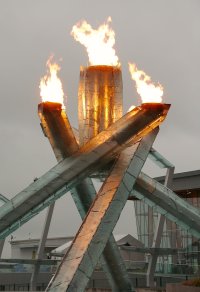
And to show just how good Smartphones can be if you process their images correctly, I give you a version of the lit Winter Olympic Flame cauldron which Vancouver re-lit in 2015 if I remember correctly. I resized the horizontal and vertical resolution to 50% of the original pixel size after a hard crop and then I did a simple exposure and black-levels boost and some UNSHARP MASK to bring out the edges better. For a SMARTPHONE photo, it ain't bad quality in terms of sharpness!
 

Attachments

  • Vancouver 2010 Olympic Flame.jpg
    Vancouver 2010 Olympic Flame.jpg
    313.5 KB · Views: 173
Upvote 0
privatebydesign said:
Why shout "UNSHARP MASK" and "SMARTPHONE"? That isn't a sign of coffee in your keyboard that would be random.

---

I subscribe to the personal motto of WINNING BY YELLING!
If it ain't LOUD or BBBBB IIIIII GGGGGG !!!!!!! with LOTS !!!!!!!
of Exclamation Points !!!! it ain't worth YELLING ABOUT!!!!

See this commercial on HOW TO WIN AT YELLING!
https://www.youtube.com/watch?v=Tbxq0IDqD04

;-) :-) ;-) ;-)
 
Upvote 0
HarryFilm said:
privatebydesign said:
Why shout "UNSHARP MASK" and "SMARTPHONE"? That isn't a sign of coffee in your keyboard that would be random.

---

I subscribe to the personal motto of WINNING BY YELLING!
If it ain't LOUD or BBBBB IIIIII GGGGGG !!!!!!! with LOTS !!!!!!!
of Exclamation Points !!!! it ain't worth YELLING ABOUT!!!!

See this commercial on HOW TO WIN AT YELLING!
https://www.youtube.com/watch?v=Tbxq0IDqD04

;-) :-) ;-) ;-)

I found a better link.
 

Attachments

  • Screen Shot 2017-04-20 at 8.28.03 PM.png
    Screen Shot 2017-04-20 at 8.28.03 PM.png
    52.2 KB · Views: 193
Upvote 0