
You are using an out of date browser. It may not display this or other websites correctly.
You should upgrade or use an alternative browser.
You should upgrade or use an alternative browser.
Show your Bird Portraits
- Thread starter 1982chris911
- Start date

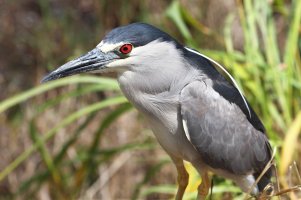

a Pacific-slope Flycatcher..taken at Casper's Park..southern California.

Pacific-slope Flycatcher (7142) by Revup67, on Flickr
Pacific-slope Flycatcher (7142) by Revup67, on Flickr
Upvote
0
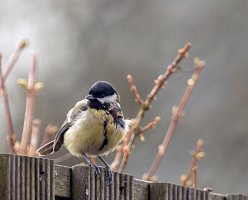
Not a particularly well lit (against the sun) or sharp shot. And he's a long way off. Saw this guy in our garden about a week ago looking very bloody, today he does look somewhat better. Obviously something got him. But I think he's going to survive.
Cheers
Cheers
Attachments
Upvote
0
bjd said:Not a particularly well lit (against the sun) or sharp shot. And he's a long way off. Saw this guy in our garden about a week ago looking very bloody, today he does look somewhat better. Obviously something got him. But I think he's going to survive.
Cheers
I think what got your bird was avian pox.
Upvote
0
ajf said:bjd said:Not a particularly well lit (against the sun) or sharp shot. And he's a long way off. Saw this guy in our garden about a week ago looking very bloody, today he does look somewhat better. Obviously something got him. But I think he's going to survive.
Cheers
I think what got your bird was avian pox.
Is that a joke? Obviously not I just googled it. I got another shot this afternoon and it is a growth of some sort.
Last time it was very bloody, now seems to have a crust.
Had another one in the garden a few years ago that had something similar growing out of one eye.
It got very tame when it realized that food could be had very easily. Hung around for at least 8 weeks.
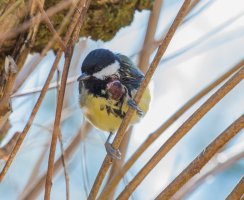
Here's a better shot taken this afternoon:
Attachments
Upvote
0

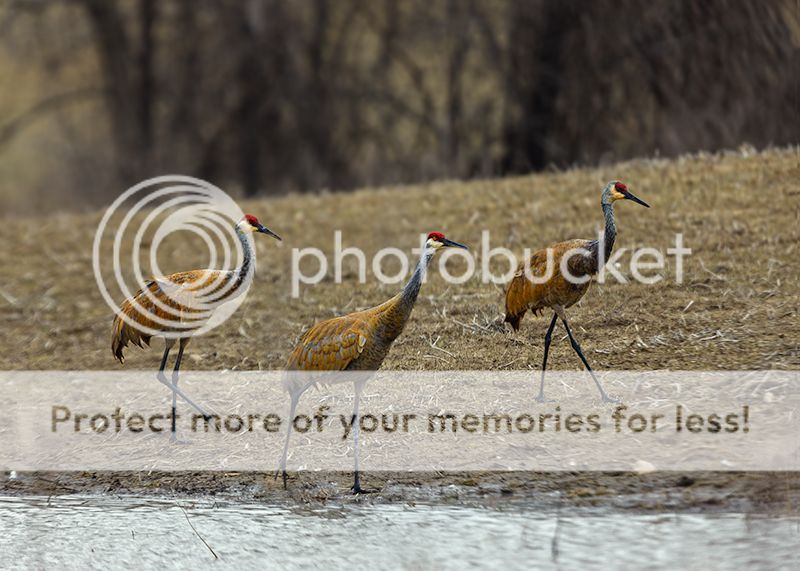


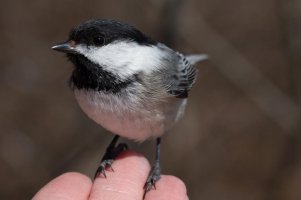
I had asked a while ago for advice on photographing Chickadees. I got lots of useful advice on setting up blinds, use of long lenses, remote triggers, etc. It turns out that what I needed was a pocket full of sunflower seeds.
Taken with a 60D, 100L macro lens, ISO320....while using the camera one handed This is the full picture, no cropping.
Taken with a 60D, 100L macro lens, ISO320....while using the camera one handed
This is the full picture, no cropping.Attachments
Upvote
0


Don Haines said:I had asked a while ago for advice on photographing Chickadees. I got lots of useful advice on setting up blinds, use of long lenses, remote triggers, etc. It turns out that what I needed was a pocket full of sunflower seeds.
Taken with a 60D, 100L macro lens, ISO320....while using the camera one handed
this is awesome, nothing like having them eat out of the palm of your hand
Upvote
0

So Don is a bird whisperer too! Wow! We have at least two on this forum. Gary Samples was the first I thought.atosk930 said:Don Haines said:I had asked a while ago for advice on photographing Chickadees. I got lots of useful advice on setting up blinds, use of long lenses, remote triggers, etc. It turns out that what I needed was a pocket full of sunflower seeds.
Taken with a 60D, 100L macro lens, ISO320....while using the camera one handed
this is awesome, nothing like having them eat out of the palm of your hand
I hope I am not missing any one...
Upvote
0
Hi, I've managed it with Blue Tits, Great Tits, Thrushes and I'm now working on a Robin.Don Haines said:I had asked a while ago for advice on photographing Chickadees. I got lots of useful advice on setting up blinds, use of long lenses, remote triggers, etc. It turns out that what I needed was a pocket full of sunflower seeds.
Taken with a 60D, 100L macro lens, ISO320....while using the camera one handed
For most birds Mealyworms are the way to go, obviously they must be insect eaters.
I get the birds to associate me with food and can call some with a whistle (through my lips).
Some even sit on the patio and call me if there is no other food out.
The best time is coming up when they are in feeding stress with their young, then they are easier
to "Persuade". Keep fairly quiet, provide a safe place for them to feed (where you sit) and try to give
them a reproducable situation at the start, makes them less nervous.
A good way to start is a white saucer with a few worms on it under/near the normal feeding spot,
they'll notice the movement pretty quickly. Then you move the saucer gradually in your direction.
Going onto my hand was a big step for most birds, but they would fairly quickly sit in the bush next
to me and take worms out of my hands, while still sat on a branch.
And in the end you keep hold of the worm, meaning it gets torn apart between your fingers, but keeping
the bird closer for a longer period.
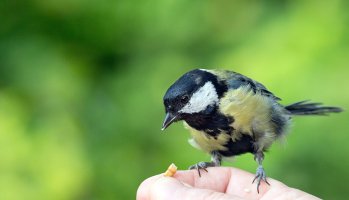
Here's fluffy, been a around a while now.
Cheers
Attachments
Upvote
0
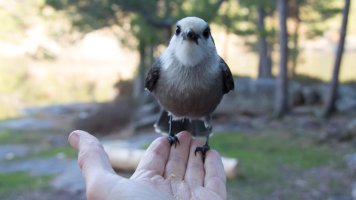
It works on Grey Jays too.... And no, I am NOT going to try this with the eagles at work.......atosk930 said:Don Haines said:I had asked a while ago for advice on photographing Chickadees. I got lots of useful advice on setting up blinds, use of long lenses, remote triggers, etc. It turns out that what I needed was a pocket full of sunflower seeds.
Taken with a 60D, 100L macro lens, ISO320....while using the camera one handed
this is awesome, nothing like having them eat out of the palm of your hand
Attachments
Upvote
0


Wow Don! That's one surprising photo! Wish the birds here were as friendly!

Luzon Hornbill (Penelopides manillae) by alabang, on Flickr
The Luzon Hornbill (Penelopides manillae), sometimes called Luzon Tarictic Hornbill, is a species of hornbill in the Bucerotidae family. It is endemic to forests on Luzon and nearby islands in the northern Philippines. As is the case with all Philippine tarictic hornbills, it has been considered a subspecies of P. panini.[2]
There are two subspecies of the Luzon Hornbill: The relatively widespread nominate, and subniger from the islands of Polillo and Patnanongan.[2] It was hunted for meat, but now is considered to be safe as a new hunting ban has been enforced.
Source: Luzon Hornbill - Wikipedia, the free encyclopedia
Taken: Ternate, Cavite - Wikipedia, the free encyclopedia
Settings: Exif | Luzon Hornbill (Penelopides manillae) | Flickr - Photo Sharing!
Luzon Hornbill (Penelopides manillae) by alabang, on Flickr
The Luzon Hornbill (Penelopides manillae), sometimes called Luzon Tarictic Hornbill, is a species of hornbill in the Bucerotidae family. It is endemic to forests on Luzon and nearby islands in the northern Philippines. As is the case with all Philippine tarictic hornbills, it has been considered a subspecies of P. panini.[2]
There are two subspecies of the Luzon Hornbill: The relatively widespread nominate, and subniger from the islands of Polillo and Patnanongan.[2] It was hunted for meat, but now is considered to be safe as a new hunting ban has been enforced.
Source: Luzon Hornbill - Wikipedia, the free encyclopedia
Taken: Ternate, Cavite - Wikipedia, the free encyclopedia
Settings: Exif | Luzon Hornbill (Penelopides manillae) | Flickr - Photo Sharing!
Upvote
0

Here are 2 of my bird portraits (slightly cropped and downsized). The Rook is shot with the 400/5.6L and the Black-headed Gull's shot with the 70-200/4L IS. Both were taken on my Canon 7D.
Upvote
0
Similar threads


- Replies
- 118
- Views
- 99K
