
You are using an out of date browser. It may not display this or other websites correctly.
You should upgrade or use an alternative browser.
You should upgrade or use an alternative browser.
Show your Bird Portraits
- Thread starter 1982chris911
- Start date


bwfishing said:Eastern Screech Owl
85mm 1.2L on a 5D Mark II
That's a great shot! Love those big eyes.
Upvote
0

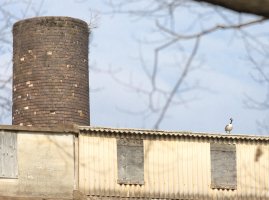



I can't tell you how much I really love this image BW! Composition is awesome, the charred tree, it's overall just a really great image, congratulations!bwfishing said:Eastern Screech Owl
85mm 1.2L on a 5D Mark II

Upvote
0
That's cool!Jackson_Bill said:maybe a little off topic but its got a bird in it!
7D 500 f4 IS USM 1.4x II
Upvote
0
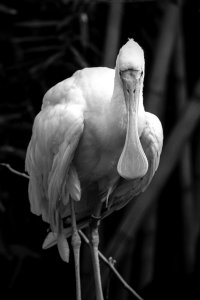
I tend to like it Chauncey. I think the radius setting could be pulled in a bit though in order to reduce that edging around their heads and necks... great attempt. As I said, I tend to like it myself...chauncey said:Tried a high key look with this one...

Upvote
0
Their bodies are beautiful though! Seems to serve no purpose, not to have feathers on their heads! I would love to see one sometime that was just a freak of nature with a full head of feathers, just for giggles! Nice image! Good head study!Jackson_Bill said:Pretty Bird (NOT!)
Upvote
0

Great image Steven! I caught some images a few weeks ago of one, haven't looked at them yet but mine had almost a blue color to him, where yours is darker, almost black... interesting how they vary like that! That's a real beauty!steven kessel said:A little bird that I've had a great deal of difficulty photographing. Yellow Rumped Warbler. They don't sit still for very long, that's for sure.
Upvote
0
Don, that's really cool! I see a lot of Turkeys out here, just not Tom's, not in full show regallia anyway! Great job!Don Haines said:Wild turkey.... in ten years they have gone from a rare sighting to a common visitor. This fellow had about a dozen hens keeping him company.
Upvote
0
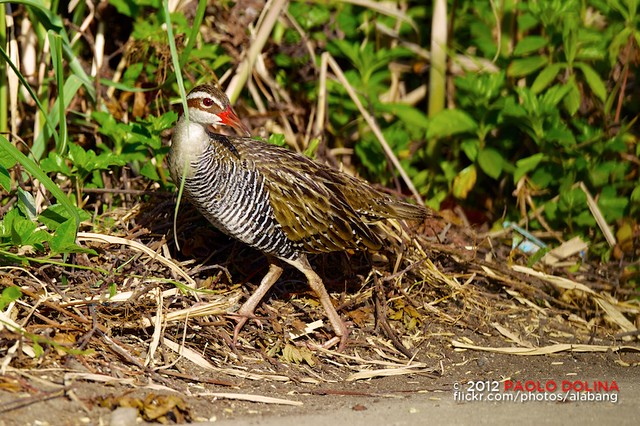
That's a beautiful bird Dolina! Thanks for sharing!dolina said:
Buff-banded Rail (Gallirallus philippensis) by alabang, on Flickr
The Buff-banded Rail (Gallirallus philippensis) is a distinctively coloured, highly dispersive, medium-sized rail of the family Rallidae. This species comprises several subspecies found throughout much of Australasia and the south-west Pacific region, including the Philippines (where it is known as Tikling), New Guinea, Australia, New Zealand (where it is known as the Banded Rail or Moho-pereru in Māori),[2] and numerous smaller islands, covering a range of latitudes from the tropics to the Subantarctic.
It is a largely terrestrial bird the size of a small domestic chicken, with mainly brown upperparts, finely banded black and white underparts, a white eyebrow, chestnut band running from the bill round the nape, with a buff band on the breast. It utilises a range of moist or wetland habitats with low, dense vegetation for cover. It is usually quite shy but may become very tame and bold in some circumstances, such as in island resorts within the Great Barrier Reef region.[3]
The Buff-banded Rail is an omnivorous scavenger which feeds on a range of terrestrial invertebrates and small vertebrates, seeds, fallen fruit and other vegetable matter, as well as carrion and refuse. Its nest is usually situated in dense grassy or reedy vegetation close to water, with a clutch size of 3-4. Although some island populations may be threatened, or even exterminated, by introduced predators, the species as a whole appears to be safe and its conservation status is considered to be of Least Concern.
Source: http://en.wikipedia.org/wiki/Buff-banded_Rail
Taken: http://en.wikipedia.org/wiki/Los_Ba%C3%B1os,_Laguna
Settings: http://www.flickr.com/photos/alabang/8640215278/#meta/

Upvote
0
You guys definitely have some cool birds! 8)dolina said:Wow Don! That's one surprising photo! Wish the birds here were as friendly!
Luzon Hornbill (Penelopides manillae) by alabang, on Flickr
The Luzon Hornbill (Penelopides manillae), sometimes called Luzon Tarictic Hornbill, is a species of hornbill in the Bucerotidae family. It is endemic to forests on Luzon and nearby islands in the northern Philippines. As is the case with all Philippine tarictic hornbills, it has been considered a subspecies of P. panini.[2]
There are two subspecies of the Luzon Hornbill: The relatively widespread nominate, and subniger from the islands of Polillo and Patnanongan.[2] It was hunted for meat, but now is considered to be safe as a new hunting ban has been enforced.
Source: Luzon Hornbill - Wikipedia, the free encyclopedia
Taken: Ternate, Cavite - Wikipedia, the free encyclopedia
Settings: Exif | Luzon Hornbill (Penelopides manillae) | Flickr - Photo Sharing!

Upvote
0

Similar threads
- Replies
- 118
- Views
- 99K
